Table of Contents
- The Roar from the Depths: Dawn of the Corinth Gulf Tsunami
- Ancient Greece Shaken: Geological and Historical Background
- The Earthquake that Shattered a Civilization: A Prelude to the Tsunami
- The Great Wave Unleashed: Chronology of Catastrophe
- Witness Testimonies and Ancient Records: Voices from the Past
- The Devastation of Coastal Settlements: Human and Material Losses
- Religious and Cultural Aftershock: Interpretations of the Disaster
- The Immediate Political Fallout: Cities in Turmoil
- Socio-economic Effects in the Corinthian Gulf Region
- Comparisons with Other Ancient Tsunamis: Patterns and Peculiarities
- Geological Evidence Today: Traces of the 373 AD Event
- The Tsunami’s Ripple Through Mediterranean History
- Natural Disasters in Antiquity: Understanding Ancient Vulnerabilities
- Lessons Learned: Scientific Advances from Studying the Corinth Gulf Tsunami
- Resilience and Reconstruction: Life After the Great Wave
- How the 373 Tsunami Shaped the Legacy of Ancient Greece
- Modern Greece and the Memory of Ancient Disasters
- Rediscovering the Event: Archaeological Discoveries and Their Significance
- Unraveling Myth and Reality: The Tsunami in Greek Mythology and Folklore
- The Corinth Gulf Tsunami in Contemporary Scientific Discourse
- Collective Memory and Cultural Heritage: Remembering the 373 AD Disaster
- Conclusion: Echoes of the Great Wave
- FAQs: Decoding the Corinth Gulf Tsunami
- External Resource
- Internal Link
1. The Roar from the Depths: Dawn of the Corinth Gulf Tsunami
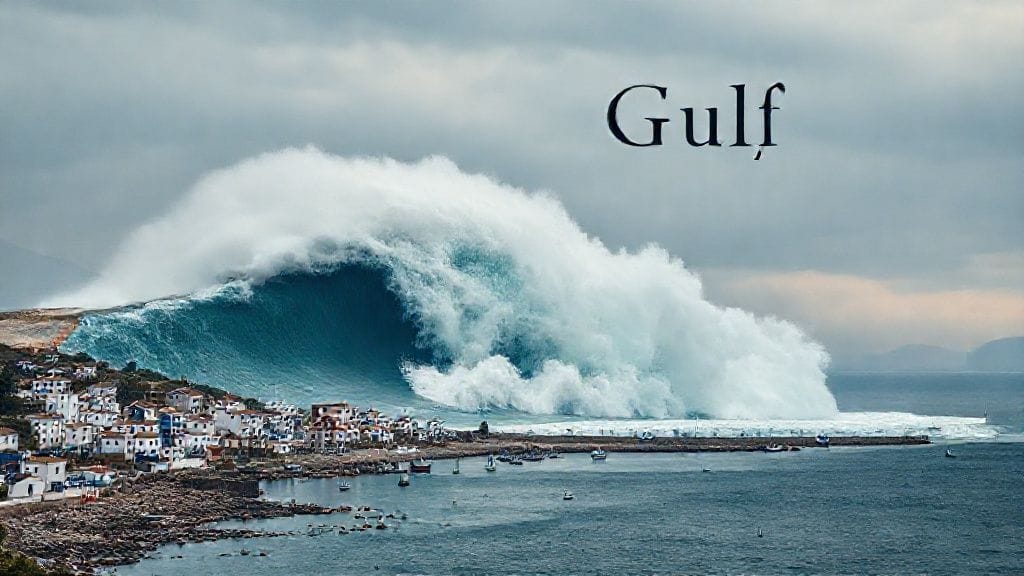
The sky was unusually still over the blue waters of the Corinthian Gulf on that fateful day in 373 AD. The sun, high and cruel, cast shimmering rays upon a tranquil sea—unaware that the serenity was a fragile veil over a gathering storm. Without warning, the earth beneath the gulf convulsed, a violent tremor that shattered the region’s fragile peace. The sea withdrew abruptly from the shore, exposing the seabed in a ghostly spectacle, and then, with a thunderous fury that echoed off the ancient hills, surged back—engulfing the coastline in a devastating tsunami.
For the coastal inhabitants of ancient Greece, this was no mere natural event but an apocalyptic reckoning. In the blink of an eye, bustling ports and vibrant communities were swallowed by churning waters, while the earth’s trembling marked the land itself as unstable and fearsome. The Corinth Gulf Tsunami of 373 AD would go down in history as one of the most significant seismic maritime disasters in antiquity—its ripples felt for centuries in the collective memory of the Mediterranean world.
2. Ancient Greece Shaken: Geological and Historical Background
To understand the catastrophe of 373, one must journey into the complex geological fabric of Greece—a land sculpted by the restless collision of the African and Eurasian tectonic plates. The Hellenic Arc, a seismic hotspot stretching across the southern Aegean, has been the birthplace of countless earthquakes and volcanic eruptions throughout history. The Corinthian Gulf sits precariously atop this restless zone where land and sea meet in violent, unpredictable dance.
Historically, the region was a mosaic of thriving city-states such as Corinth, Mycenae, and smaller coastal settlements that depended heavily on maritime trade and agriculture. The era was marked by fluctuating power dynamics within the Roman Empire, which governed provincial Greece; prosperity mingled uneasily with undercurrents of political tension and social unrest.
Seismic activity, while not uncommon, had never before delivered a blow of such magnitude to this vibrant corridor—reminding even the most hardened citizens that nature’s forces were beyond human control.
3. The Earthquake that Shattered a Civilization: A Prelude to the Tsunami
Just before the towering wave tore through the coastline, the ground announced its fury. Earthquakes often signal the birth of tsunamis, and in 373, a massive quake struck beneath the Corinthian Gulf. The violent shaking cracked the earth, toppling buildings and wreaking havoc on urban centers perched perilously close to the shoreline.
Ancient writers and modern seismologists agree that this initial tremor was catastrophic—unleashing subterranean energy that would displace volumes of water with apocalyptic force. The earthquake lasted moments but its impact was etched into the psyche of survivors; many would later describe the earth as tearing open and swallowing entire districts in the blink of an eye.
This seismic upheaval served as the catalyst for the ensuing tsunami, a relentless force that swept away anything the quake had spared.
4. The Great Wave Unleashed: Chronology of Catastrophe
Accounts from antiquity, pieced together by scholars, allow a reconstruction of the tsunami’s deadly timeline. The quake struck first, shaking the foundations of towns so violently that many inhabitants were caught fleeing collapsing homes. Amidst the dust and cries, an eerie calm fell over the gulf waters as the sea suddenly receded—pulling ships from their moorings and revealing the otherwise hidden seabed.
Within minutes, the tsunami wave formed: a towering wall of dark, frothing water, racing inland. The wave’s speed and height made escape nearly impossible. The cities lining the gulf—Corinth, Lechaion, Kenchreai—were overwhelmed in a matter of moments. Harbors, marketplaces, and homes vanished under the surging floodwaters.
Contemporary witnesses spoke of the sea turning black and the sky darkening as if the very heavens mourned. The combination of earthquake and tsunami amplified the disaster's horror, a fearsome double strike that Greece would remember for millennia.
5. Witness Testimonies and Ancient Records: Voices from the Past
Though many ancient texts have perished, some fragments survive through historians such as Ammianus Marcellinus and regional chroniclers who recounted the devastation in vivid detail. Descriptions of ruptured earth, engulfed cities, and the “mountainous waves” that destroyed coastal life evoke a powerful image of the disaster.
One account, preserved in the writings of a later Byzantine chronicler, speaks of survivors crawling amid ruins, hearts pounding from both fear and loss, staring at a changed landscape where the sea now encroached far beyond its former borders.
Greek poets of the time even wove the catastrophe into their works, mingling grief and superstition by interpreting the tsunami as wrath from the gods.
6. The Devastation of Coastal Settlements: Human and Material Losses
The scale of destruction was staggering. Corinth, a gateway between mainland Greece and the Peloponnese, bore the brunt of the tsunami’s fury. Harbors were destroyed, ships smashed upon rocks, and homes reduced to rubble.
Casualty estimates, though difficult to verify, point to thousands lost—men, women, and children; merchants, sailors, farmers. The lifeblood of the region's economy—trade, fishing, agriculture—was disrupted severely. Croplands were flooded with saltwater, rendering soils infertile for years.
Archaeological findings reveal layers of sediment deposited by the waves, confirming the large-scale intrusion of seawater far inland. Entire communities ceased to exist, displaced or fragmented by nature’s rage.
7. Religious and Cultural Aftershock: Interpretations of the Disaster
To the Greeks, the boundary between natural and supernatural was porous. The tsunami was not merely a geological event but a cosmic signal. Temples reportedly abandoned, or worse, destroyed, symbolized fallen favor of the gods.
Some texts suggest the people interpreted the tsunami as Poseidon’s wrath—the god of the sea and earthquakes—a terrible reminder of the volatile relationship between humans and the divine elements they revered. Religious rituals and sacrifices ensued, aimed at placating these unsettled powers.
This spiritual trauma shaped local culture profoundly, influencing myths and religious practices for generations, embedding the event deeply into the cultural psyche.
8. The Immediate Political Fallout: Cities in Turmoil
The tsunami's destruction affected more than just physical structures; it destabilized the political landscape. Corinth, a key administrative and economic hub, was crippled overnight. Regional governors struggled to maintain order, distribute aid, and secure affected territories.
Rival city-states saw opportunities to exploit Corinth’s vulnerability, leading to brief unrest and power shifts. Rome’s provincial authorities sent limited relief but faced challenges of distance and logistics.
The disaster exposed fragility in local governance, contributing to longer-term regional shifts in power and influence—an important ripple effect of the natural catastrophe.
9. Socio-economic Effects in the Corinthian Gulf Region
Beyond the immediate devastation, the tsunami reshaped the economic fabric. Shipping routes suffered, with harbors requiring extensive reconstruction. Trade slowed, and many merchants abandoned their ventures.
Agriculture, the backbone of local sustenance, faced years of hardship due to salinized land. Food shortages sparked price spikes and social tension. Populations either migrated inland or to other coastal cities perceived as safer.
Such shifts altered demographic patterns, reducing Corinth’s prominence for decades and reshaping the Corinthian Gulf’s social geography.
10. Comparisons with Other Ancient Tsunamis: Patterns and Peculiarities
While tsunamis were known phenomena in the Mediterranean, the 373 event stands out for its intensity and documented impact. Comparisons with the Minoan tsunami of circa 1600 BC and later events show a pattern of seismic instability in the region.
Yet, the Corinth Gulf tsunami uniquely combined earthquake and wave devastation so close to political centers, magnifying its consequences.
Studying these events in parallel enriches understanding of ancient societies’ vulnerability to natural disasters and their adaptive responses.
11. Geological Evidence Today: Traces of the 373 AD Event
Modern science has confirmed ancient accounts through geological surveys, sediment analysis, and underwater archaeology. Sediment cores reveal tsunami deposits consistent with historical records.
Fault lines beneath the Corinthian Gulf remain highly active. Bathymetric studies show underwater landslides likely triggered the sudden sea displacement.
These scientific revelations not only corroborate historical texts but also highlight ongoing tsunami risks in the Mediterranean—a sobering reminder from the past.
12. The Tsunami’s Ripple Through Mediterranean History
The 373 Corinth tsunami reverberated beyond Greece’s shores. Trade and communication with neighboring regions—Italy, Asia Minor, Egypt—were temporarily disrupted.
The event contributed to a growing awareness of natural disasters as agents of change, influencing early understandings of geological phenomena.
It remains a milestone in the ancient history of natural catastrophes, affecting regional politics and economies long into the later Roman period.
13. Natural Disasters in Antiquity: Understanding Ancient Vulnerabilities
This tsunami is a case study in the vulnerabilities of ancient urban centers—densely packed, reliant on maritime commerce, and technologically limited in disaster mitigation.
Ancient societies’ connections to natural cycles were intimate but often fatal. The Corinth tsunami underlines how seismic activity could dismantle the fragile infrastructure of an advanced civilization.
Exploring such events enriches historical narratives by incorporating human struggle against nature’s unpredictability.
14. Lessons Learned: Scientific Advances from Studying the Corinth Gulf Tsunami
Recent interdisciplinary research—combining geology, archaeology, and history—has sharpened knowledge of ancient tsunamis and seismic activity.
Understanding the Corinth event aids in modern hazard assessment for the Greek coastline, improving risk mitigation strategies today.
Moreover, it informs global tsunami models by providing long-term historical baselines and demonstrating the capacity of ancient communities to record and respond to disaster.
15. Resilience and Reconstruction: Life After the Great Wave
Despite ruins and despair, the people of the Corinthian Gulf region rebuilt. Archaeological layers show signs of reconstruction—homes restored, harbors rebuilt, and agriculture revived.
This resilience speaks to human determination and adaptability in the face of nature’s fury. Communities reorganized trade networks, adjusted urban layouts, and modified construction techniques to better withstand future calamities.
Such efforts laid early foundations for disaster preparedness that would echo through medieval and modern Greek history.
16. How the 373 Tsunami Shaped the Legacy of Ancient Greece
Beyond immediate losses, the tsunami contributed to the narrative of decline in classical Greek civilization. It symbolized the precariousness of human achievement amid a volatile Earth.
Cultural memory embedded the event in art and literature, framing it as a lesson on humility and respect for natural forces.
Ultimately, the tsunami became part of the mosaic shaping Greece’s historical identity—a tragic yet defining moment linking nature and human fate.
17. Modern Greece and the Memory of Ancient Disasters
Today, Greece honors its ancient past and the lessons it offers. The Corinth Gulf tsunami is studied in schools, museums, and scientific forums.
Modern awareness campaigns and emergency preparedness reflect centuries-old wisdom about seismic risk.
Commemorations and archaeological sites keep the memory alive, connecting past and present in a dialogue of survival.
18. Rediscovering the Event: Archaeological Discoveries and Their Significance
Recent underwater excavations have uncovered sunken ships and ancient harbor remains, artifacts swallowed by the tsunami.
These findings not only validate historical accounts but provide tangible links to the lives disrupted by the disaster.
They offer insights into ancient maritime technology, trade patterns, and urban life frozen in a moment of catastrophe.
19. Unraveling Myth and Reality: The Tsunami in Greek Mythology and Folklore
The boundary between history and myth blurs in the stories born from the disaster. Tales of gods’ anger, monstrous sea creatures, and apocalyptic floods entwine with the real event.
This fusion enriched Greek cultural heritage, offering explanations and comfort amid tragedy.
Decoding these myths allows historians to tease out kernels of truth and appreciate the human need to narrate catastrophe.
20. The Corinth Gulf Tsunami in Contemporary Scientific Discourse
In scientific circles, the 373 tsunami remains a benchmark for studying ancient natural disasters.
It informs seismic hazard maps, oceanographic models, and emergency management in seismically active Mediterranean zones.
Interdisciplinary conferences and publications continue to shed light on its dynamics and long-lasting implications.
21. Collective Memory and Cultural Heritage: Remembering the 373 AD Disaster
The tsunami has become part of Greece’s intangible cultural heritage. Oral traditions, local legends, and scholarly discussions preserve its memory.
It prompts reflection on humanity’s fragility and the ever-present dialogue between nature and society.
The disaster serves as a cultural touchstone, reminding Greeks and the world of resilience amidst ruin.
Conclusion: Echoes of the Great Wave
The Corinth Gulf Tsunami of 373 AD was more than a natural disaster—it was a cataclysmic crossroads where earth’s geologic anger met human ambition, forever altering a vibrant world. Its roar from the depths silenced thriving cities and humbled civilizations, yet it also sparked stories of resilience, faith, and renewal.
In revisiting this ancient catastrophe, we confront the limits of human control and the power of nature’s will. We glimpse the lives torn asunder—families, merchants, sailors—each a thread in the vast tapestry of history unraveled by a single, monstrous wave.
Yet, from the ruins rose reconstruction, from despair sprung hope. The disaster’s memory permeates time, offering lessons for today’s societies standing on equally unpredictable shores.
Ultimately, the Corinth Gulf Tsunami is a haunting chapter in the saga of human endurance—a story of loss and recovery, written not only in stones and scrolls but in the enduring spirit of those who survived the great wave.
FAQs: Decoding the Corinth Gulf Tsunami
Q1: What caused the Corinth Gulf Tsunami of 373 AD?
The tsunami was triggered by a massive earthquake beneath the Corinthian Gulf, caused by tectonic activity along the Hellenic Arc, which displaced a large volume of water and generated destructive waves.
Q2: How severe was the impact on ancient Greek cities?
Cities like Corinth, Lechaion, and Kenchreai suffered extensive destruction. Thousands perished, harbors and homes were destroyed, and the local economy and agriculture faced decades of disruption.
Q3: Are there ancient accounts describing the tsunami?
Yes, several ancient historians and later Byzantine chroniclers recorded the disaster. Their vivid descriptions of the earthquake, sea recession, and flooding provide valuable eyewitness insights.
Q4: How do modern scientists study this ancient tsunami?
Through geological surveys, sediment analysis, underwater archaeology, and cross-referencing historical texts, scientists reconstruct the event’s timeline, magnitude, and effects.
Q5: Did the tsunami influence Greek culture and religion?
Indeed, it reinforced beliefs about the gods’ power, especially Poseidon. The disaster was interpreted as divine punishment and influenced myths, rituals, and artistic expressions.
Q6: What lessons does the Corinth Gulf Tsunami offer for today?
It highlights the ongoing seismic risks in Greece and the Mediterranean, underscoring the importance of disaster preparedness, scientific research, and respecting natural forces.
Q7: How did the affected communities recover?
Survivors rebuilt towns and infrastructure, adjusted urban planning, and resumed agricultural and trading activities, demonstrating resilience over the ensuing decades.
Q8: Is the tsunami still remembered in modern Greece?
Yes, it remains part of Greece’s historical consciousness, taught in education, commemorated in museums, and respected as a pivotal moment of natural catastrophe and human endurance.