Table of Contents
- The Echoes of a City Divided: Carthage at the Dawn of the 5th Century
- The Donatist Controversy: A Church Torn Apart
- The Roman Context: Empire, Faith, and Politics in Africa
- The Road to 411: Rising Tensions in the Christian Community
- The Summons to Carthage: Gathering the Contending Parties
- Arrival of the Bishops: A Clash of Convictions
- Augustine of Hippo: The Titan Among Theologians
- The Council Opening: Ceremony and Symbolism
- The Donatist Defense: Claims of Purity and Persecution
- Catholic Arguments: Unity and the Validity of Sacraments
- The Interrogations: Voices Raised and Tempers Flared
- Imperial Intervention: The Role of Emperor Honorius
- The Verdict Delivered: The Council’s Decision and Its Immediate Impact
- Reactions in Africa: From Jubilation to Rebellion
- Donatism Underground: Persistence Beyond Official Suppression
- Augustine’s Pen and the Intellectual Campaign
- Broader Implications: Church Unity and Roman Authority
- The Legacy of the Council: Religious, Social, and Political Reverberations
- The Council in Historical Memory: How Modern Scholarship Views It
- Lessons in Faith and Power: Reflections for Today
The city of Carthage in the year 411 stood at a crossroads. The sun beat down on its ancient walls, shadows lengthening over dust-laden streets where merchants and citizens alike whispered anxiously about the gathering storm. In the grand basilicas and humble chapels of this North African city, echoes of discord rang louder than hymns. A spiritual war had been waged for nearly a century, but now, in this moment, it would be brought to a decisive confrontation — the Council of Carthage against the Donatists. This gathering was not merely a theological debate; it was a battle for the soul of Christianity in Africa, for the legitimacy of Church authority, and for the fragile unity of an empire imperiled by internal fractures and external threats.
Carthage was ancient and proud, a jewel of Roman Africa, reborn from the ashes of Punic defeat to become a center of commerce and culture. Yet beneath this veneer of prosperity lay tensions that threatened to unravel its very fabric. The Donatists — rigorists who had broken away from the mainstream Church — challenged everything about Christian practice, from the efficacy of sacraments to the integrity of the clergy. Their defiance was not just religious dissent; it was deeply intertwined with identity, politics, and a fierce resistance to Roman imperialism that many Africans still felt in their bones.
This article explores the Council of Carthage of 411 in all its complexity. From the roots of Donatism to the fiery debates between its bishops and their Catholic counterparts, from Augustine of Hippo’s towering presence to the decisive imperial decree, the council was a defining moment that would ripple through centuries. The story is one of faith clashing with power, unity wrestled from fragmentation, and a city—and an empire—struggling to find their way forward.
The Echoes of a City Divided: Carthage at the Dawn of the 5th Century
The streets of Carthage in 411 were a mosaic of contrasts. Statues and columns rose alongside bustling market stalls crowded with vendors hawking olive oil, grain, and embroidery. Above all, the city throbbed with religious energy. Churches and basilicas were not just places of worship; they were stages for a deeper conflict dividing the faithful. The Donatists and Catholics lived virtually separate existences, each community fiercely loyal to its bishops and doctrines.
Carthage’s position was emblematic of Roman Africa at large: a province steeped in tradition yet riven by ideological conflict. The Donatist movement, born from a schism almost a century before, had matured from a protest into a powerful alternative church. Its followers were often rural peasants and Berber populations who felt alienated by the Romanized Catholic Church perceived as complicit with imperial authorities.
The city itself was a hub where these tensions converged. Donatist strongholds neighbored official Catholic quarters; processions would intersect, sometimes sparking violent clashes. The Council, called under imperial auspices, was an attempt to resolve this festering wound once and for all.
The Donatist Controversy: A Church Torn Apart
To understand the Council, one must grasp the origins of Donatism. In 311, during Diocletian’s persecution, some bishops and priests had handed over sacred texts or denied their faith to save themselves. When peace returned, questions arose: Could these “traditores” validly administer sacraments? The Donatists said no. For them, the Church had to be a sanctuary of purity, cleansed from any taint.
This uncompromising stance led to a schism. Donatist bishops set up rival hierarchies, especially in North Africa, and claimed to represent the true Church. Catholics, however, insisted on the universality and forgiveness of the Church, arguing that sacraments’ efficacy did not depend on the sanctity of the clergy.
This conflict was not just theological; it was deeply political. Many Africans saw Donatism as symbolic resistance against Roman domination and cultural alienation. It became an identity marker, a cause embraced by those who felt marginalized.
The Roman Context: Empire, Faith, and Politics in Africa
At this time, the Roman Empire was in decline, fractured and increasingly fragile. Africa, the breadbasket of Rome, was vital but far from stable. The imperial government viewed religious unity as essential for political stability, fearing that sectarian strife weakened imperial control.
Emperor Honorius, ruling over the Western Roman Empire, had reasons to intervene. As the Donatist-Catholic split fomented unrest, imperial officials pushed for a council that could enforce unity and consolidate power under a single Church loyal to Rome.
The Road to 411: Rising Tensions in the Christian Community
The years leading to 411 were rife with violence and political maneuvering. Donatists had repeatedly defied imperial decrees to accept Catholic primacy. Catholics, backed by imperial rulers, sought to suppress Donatism by law and sometimes by force.
Bishops from both sides appealed to the emperor and the people. The scene was set for confrontation. The Council was designed as an official hearing where each faction would lay bare their cause.
The Summons to Carthage: Gathering the Contending Parties
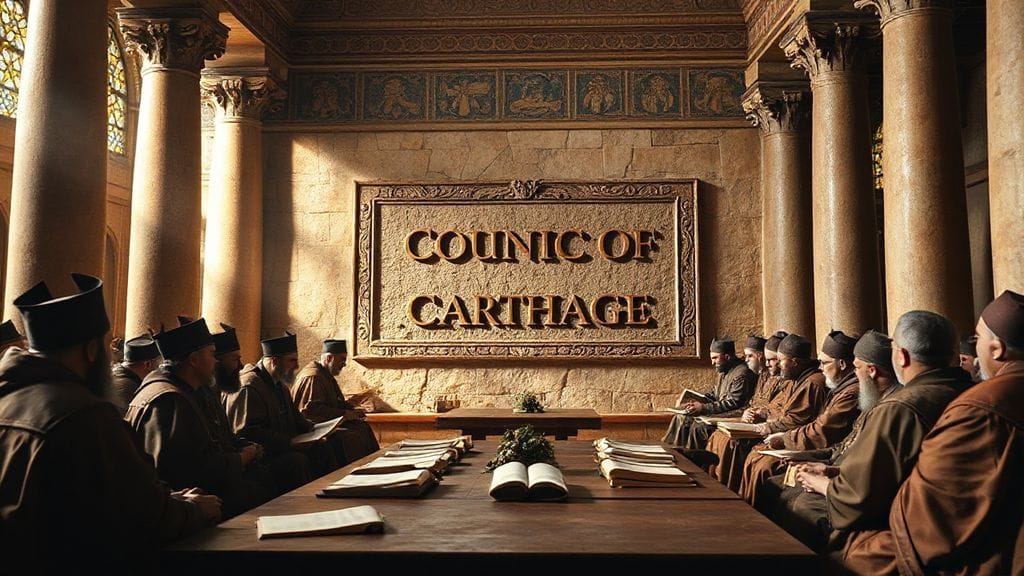
In the spring of 411, over 600 bishops from across Africa and even beyond converged on Carthage. Among these, approximately 286 were Donatist bishops and over 270 from the Catholic Church, underscoring the movement’s widespread support.
The gathering was unprecedented. The city filled with clerics, officials, scribes, and observers. Diplomacy, intrigue, and theological arguments would fill the air in the coming weeks.
Arrival of the Bishops: A Clash of Convictions
The bishops arrived with high stakes and heavy expectations. Donatists brought with them compelling narratives of persecution and martyrdom; Catholics arrived with imperial documents affirming their supremacy.
Opposing camps eyed one another warily, each convinced their cause was righteous and the other’s heretical.
Augustine of Hippo: The Titan Among Theologians
Among the Catholic bishops, few figures shone as brightly as Augustine of Hippo. At 56 years old, the towering theologian and former Donatist opponent was renowned for his intellect, oratory, and steadfast commitment to unity.
Augustine’s presence was not merely symbolic but instrumental. His eloquent arguments, recorded by contemporaries, would shape the council’s debates and the Church’s trajectory for centuries.
The Council Opening: Ceremony and Symbolism
The council opened with grandeur befitting a trial of such consequence. Imperial representatives presided; prayers sought divine guidance; documents were read aloud.
Tensions simmered beneath the surface, as many awaited the first verbal exchanges.
The Donatist Defense: Claims of Purity and Persecution
The Donatist bishops spoke passionately. They described a Church besieged by corrupt clergy who sacrificed principle for political expediency. To them, Catholic bishops were traitors, and their sacraments invalid.
Their rhetoric was emotive, calling for justice and recognition of their “true” Church.
Catholic Arguments: Unity and the Validity of Sacraments
Catholic bishops refuted these claims methodically, arguing that the Church’s holiness drew not from human merit but divine grace. They maintained that schism endangered salvation and societal order.
Legality and tradition buttressed their claims — the Roman Church was the legitimate heir to apostolic authority.
The Interrogations: Voices Raised and Tempers Flared
Council sessions were intense. Accusations flew; evidence was examined; gestures grew impassioned. Augustine’s cross-examinations cut through the rhetoric, emphasizing unity and the dangers of division.
Despite the gravity, moments of personal drama surfaced. Some Donatist bishops wept, while others raged.
Imperial Intervention: The Role of Emperor Honorius
Emperor Honorius’s legates were firm in their approach. They sought not just theological clarity but political compliance.
The imperial hand was unmistakable — religious unity was a weapon to enforce imperial power and territorial cohesion.
The Verdict Delivered: The Council’s Decision and Its Immediate Impact
The council ruled decisively in favor of Catholicism, condemning Donatism as heretical and ordering suppression of its followers.
Imperial edicts followed swiftly, sanctioning punishments and property confiscations. Yet, the decision was only the beginning of a tumultuous aftermath.
Reactions in Africa: From Jubilation to Rebellion
While Catholic factions celebrated, Donatist communities resisted fiercely. Riots and armed rebellions erupted in rural areas. The council’s verdict deepened divides rather than healed them.
For many Africans, Donatism remained a marker of identity and defiance.
Donatism Underground: Persistence Beyond Official Suppression
Despite imperial repression, Donatism survived underground for decades. Secret meetings, clandestine worship, and persistent dissent outlasted the council’s mandate.
This resilience complicated the imperial Church’s efforts to impose unity.
Augustine’s Pen and the Intellectual Campaign
Beyond the council, Augustine embarked on a literary crusade. His treatises refuted Donatist theology with rigor, appealing to both clergy and laity.
His writings shaped Christian thought well into the medieval era, solidifying the norms of Church orthodoxy.
Broader Implications: Church Unity and Roman Authority
The council was a pivotal moment in the fusion of ecclesiastical authority and imperial power. It reinforced the idea that religious unity was vital to political stability.
The relationship between Church and state deepened, setting precedents that would echo throughout European history.
The Legacy of the Council: Religious, Social, and Political Reverberations
Long after 411, the impact of the Council of Carthage shaped North African Christianity and the wider Roman world. The Donatist schism faded but left scars in African identity and church history.
The council influenced debates on purity, forgiveness, authority, and dissent, themes that remain relevant.
The Council in Historical Memory: How Modern Scholarship Views It
Today, historians see the council as emblematic of early Christian struggles for authority and unity. It exemplifies the tensions between faith, politics, and culture in Late Antiquity.
Modern analysis also recognizes the Donatists as more than heretics — as representatives of a culturally distinct and socially marginalized community.
Lessons in Faith and Power: Reflections for Today
The Council of Carthage offers enduring insights into how religious conviction intersects with political authority. It warns of the dangers when faith becomes a tool of state control but also celebrates the resilience of belief.
Its story continues to invite reflection on the nature of community, dissent, and reconciliation.
Conclusion
The Council of Carthage in 411 was far more than a meeting of bishops hammering out doctrinal disputes. It was a collision of visions for the future of Christianity, the role of the Church in society, and the very meaning of unity in diversity. In the dust and heat of Carthage’s streets, amidst ancient columns that had witnessed empires rise and fall, humanity grappled with questions that resonate still: How pure must faith be? Who holds the right to judge? What price is paid for unity?
Augustine’s commanding presence and the imperial mandate sealed a verdict that shaped the Christian world for generations. Yet, beneath this triumph lay a complex, often tragic story of communities torn apart, identities forged in rebellion, and the eternal tension between authority and conscience.
Looking back, the council invites us to cherish dialogue over division and to seek unity without erasing difference. The echoes of Carthage remind us that history is not only about winners and losers but about enduring human struggles for meaning and belonging.
FAQs
1. What was the main cause of the Donatist schism?
The Donatist schism originated from disputes over whether clergy who had renounced their faith during persecution could validly administer sacraments. Donatists demanded a pure church free from such “traitors,” leading to a lasting split.
2. Why was the Council of Carthage convened in 411?
The council was called by imperial authorities to resolve the religious division in North Africa between Catholics and Donatists, aiming to restore unity and maintain political stability.
3. Who was Augustine of Hippo and what role did he play?
Augustine was a key Catholic bishop and theologian renowned for his intellectual rigor and persuasive oratory. He was a central figure in the council’s debates, defending Catholic unity and refuting Donatist claims.
4. What was the council’s verdict regarding the Donatists?
The council condemned Donatism as heresy, declared the Catholic Church as the only legitimate Christian body in Africa, and called for imperial action against Donatist communities.
5. Did the Donatist movement end after the council?
No, despite suppression, Donatism persisted underground for decades, especially in rural areas, maintaining its identity and practices despite official prohibition.
6. How did the council affect Church and imperial relations?
It reinforced the alliance between Church authority and imperial power, establishing religious unity as essential for political cohesion in the Roman Empire.
7. Why is the Council of Carthage significant in Christian history?
It represents a defining moment in early Church history where competing visions of authority, purity, and community collided, shaping doctrines and church-state relations for centuries.
8. What lessons does the Council offer for contemporary religious and political thought?
The council highlights the complexities of managing diversity within religious communities and warns against using faith as a tool for political domination, inviting reflection on tolerance and pluralism.

