Table of Contents
- The Dawn of a New Era: November 27, 1095, at Clermont
- The Political and Religious Climate of Late 11th Century Europe
- Pope Urban II: The Man Behind the Call
- The Turmoil of the Byzantine Empire and the Seljuk Threat
- The Gathering Storm: Europe on the Brink
- Clermont’s Great Assembly: Setup and Atmosphere
- Urban II’s Speech: From Spiritual Appeal to Martial Crusade
- The Cry of “Deus Vult!”: Echoes Through the Crowd
- The Immediate Reaction: Nobles, Clergy, and Commoners Respond
- The Mobilization Begins: The First Steps Toward the Holy War
- The Role of the Knights, Peasants, and Pilgrims
- Religious Zeal and Political Ambition: A Complex Mix
- The People's Crusade: The Unexpected Prelude
- The March Eastward: Challenges and Early Battles
- Jerusalem as the Ultimate Prize: Myth, Faith, and Reality
- Consequences Across Christendom and Beyond
- The Legacy of the First Crusade in Medieval Europe
- The Crusading Ideal’s Influence on Later History
- Memory, Myth, and Interpretation Through the Centuries
- Conclusion: The First Crusade’s Unfolding Human Story
- FAQs: Understanding the First Crusade and Its Resonance
- External Resource
- Internal Link
The Dawn of a New Era: November 27, 1095, at Clermont
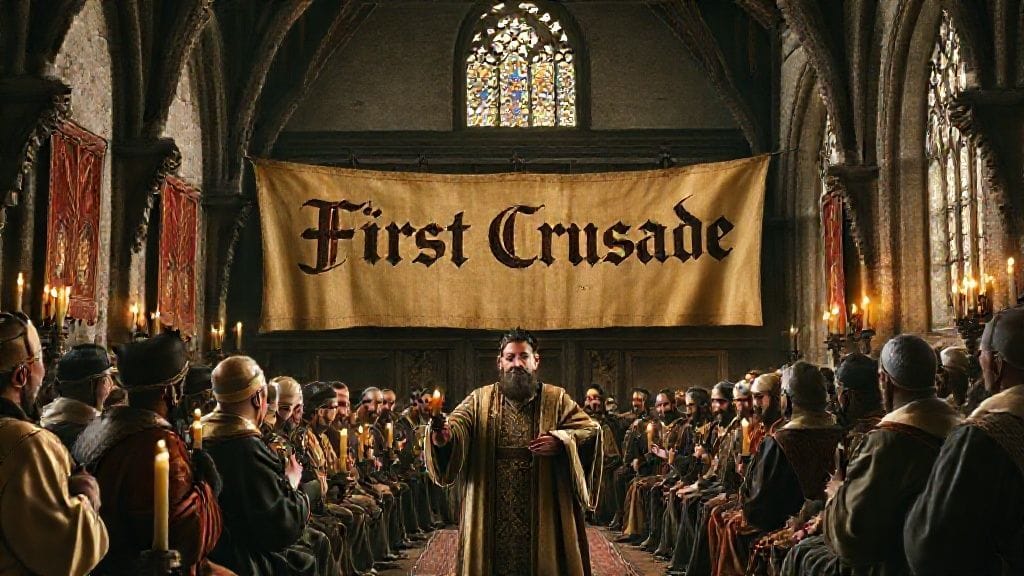
The cold November air hung heavy over the verdant hills surrounding Clermont, a modest town in southern France, on that fateful day in 1095. The grand assembly convened in the shadow of the cathedral was unlike any seen before — a convocation of bishops, nobles, knights, and common folk, all drawn together by a magnetic sense of impending change. Amidst the murmurs and prayers, Pope Urban II ascended the pulpit, capturing the gaze of thousands.
“Clercs and warriors, men and priests, brethren in Christ,” he thundered, “the holy lands, our spiritual inheritance, weeps under the tyrannous sword of the infidel.” This was not just a sermon; it was a summons, a clarion call destined to ripple through centuries. The proclamation of the First Crusade was about to set Europe—and the wider world—on a path of violence, faith, and transformation.
The Political and Religious Climate of Late 11th Century Europe
To grasp the magnitude of this moment, one must first explore the weave of factors converging at the century’s close. Europe was a patchwork of feudal territories, ruled by dynamic lords balancing power and piety. Christianity had permeated daily life, but spiritual fervor coexisted uneasily with baronial battles and shifting alliances. The papacy itself was embroiled in contests for authority — between emperor and pope, secular and sacred.
The Church, seeking to reclaim moral dominance after decades of internal corruption and schism, wielded religious zeal as a unifying force. Meanwhile, the eastern edge of Christendom was hemorrhaging; the Byzantine Empire, the Eastern Christian bastion, struggled under the relentless pressure of the Seljuk Turks, who controlled much of Asia Minor.
On the continent, waves of pilgrims journeyed perilously to Jerusalem, the heart of Christian spirituality, which now lay under Muslim control. Reports of harassment and violence against these pilgrims fueled the growing cry for armed intervention.
Pope Urban II: The Man Behind the Call
Urban II, born Odo of Lagery, was no ordinary pope. A reformer and diplomat, he harbored a vision of a revitalized, pastoral papacy, asserting spiritual leadership over Christendom’s fractious rulers. With his sharp mind sharpened by years in monastic orders and political wrestling, Urban saw both opportunity and obligation in the Byzantine plea for assistance.
He was deeply involved in the Gregorian Reform movement, which aimed to purify the Church of simony and clerical marriage while curbing secular interference. His pontificate (1088–1099) was marked by efforts to strengthen papal influence, but the failure to stem the advance of the Seljuks threatened the unity and soul of Christendom.
The Turmoil of the Byzantine Empire and the Seljuk Threat
In 1071, the Byzantine forces had suffered a devastating defeat at the Battle of Manzikert, losing vital territory to the Seljuk Turks. Emperor Alexios I Komnenos, struggling to maintain his precarious hold over the empire, dispatched envoys westward to seek assistance.
But these requests carried risks: inviting western knights, known for their unpredictability and desire for spoils, posed a political gamble. Yet the alternative—loss of the sacred city of Constantinople’s influence over the eastern Mediterranean—was untenable. The Byzantine plea became the spark igniting wider events at Clermont.
The Gathering Storm: Europe on the Brink
Europe’s feudal realms were far from unified. Rivalries permeated noble courts; kings competed for territory and prestige; peasants labored under varying degrees of hardship. Yet beneath this fractured social order bubbled a potent religious enthusiasm. The papacy’s push for reform had awakened many to a sense of spiritual purpose.
Adding to this tension were economic factors. Younger sons of nobility, without lands or inheritance, sought adventure and fortune. The Church’s offer of indulgences—promises of forgiveness and eternal reward—became a tantalizing incentive to take up arms. Religious fervor blended with practical motives: land, wealth, honor.
Clermont’s Great Assembly: Setup and Atmosphere
The gathering at Clermont was orchestrated with a mixture of solemnity and theatricality befitting a historic reckoning. The city’s cathedral, a repository of sacred art and Christian tradition, set the spiritual tone. The higher echelons of Church hierarchy sat alongside regional lords, clerics, and representatives of various communities.
Onlookers felt the weight of history pressing down. Chroniclers later described an atmosphere thick with anticipation and awe, a sense that destiny was about to be reshaped. Urban’s presence carried spiritual authority; his voice, reportedly booming and impassioned, summoned the faithful to a cause both divine and worldly.
Urban II’s Speech: From Spiritual Appeal to Martial Crusade
Contemporary accounts, though filtered through hagiography and the fog of time, reveal that Urban’s sermon was a masterstroke of rhetoric and conviction. He appealed to Christian compassion, describing the suffering of Eastern Christians and the desecration of holy shrines. The message was unmistakable: the time had come to reclaim Jerusalem.
He framed the conflict as a penitential exercise, offering forgiveness for sins committed in the defense of Christendom—the first instance granting plenary indulgences to warriors. His words transformed pilgrimage into crusade, binding spiritual salvation to martial action.
The Cry of “Deus Vult!”: Echoes Through the Crowd
The rallying cry “Deus Vult!” (“God wills it!”) exploded from the crowd, an eruption of shared resolve. This slogan became a banner under which knights and peasants alike would march eastward. It symbolized the merging of faith, violence, and purpose that defined the crusading movement.
For many, this was a moment of transcendence, a call to participate in something larger than themselves. It forged a sense of collective identity across class and region, uniting diverse groups under the banner of Christendom’s defense and expansion.
The Immediate Reaction: Nobles, Clergy, and Commoners Respond
Reactions to the call varied. Some nobles saw opportunity cloaked in religious guise; others embraced the crusade as a spiritual obligation. Clergy across Europe preached the cause, mobilizing their flocks.
Perhaps most remarkable was the surge of enthusiasm among commoners and lower nobility, eager to prove their faith and stake a claim in the immense enterprise. This groundswell, however, foreshadowed chaotic elements, as not all participants were equipped for warfare or aware of the political complexities to come.
The Mobilization Begins: The First Steps Toward the Holy War
Mobilization erupted across European realms. Knights donned armor, forged pacts, and assembled retinues. Peasants gathered in masses, often under charismatic, if ill-prepared, leaders. Wealthy magnates negotiated with monarchs, while clergy prepared supplies and spiritual sustenance.
Logistical challenges were immense: feeding, equipping, and transporting tens of thousands over thousands of kilometers of hostile terrain required innovation and tremendous resources. The spread of news from Clermont catalyzed a nightmare and a dream—a perilous journey with the promise of eternal reward.
The Role of the Knights, Peasants, and Pilgrims
The crusade’s fabric was complex. The knights brought martial skill and codes of chivalry; peasants brought rivalry, devotion, and unpredictability. Pilgrims sometimes merged into combatants, blurring roles.
The blend of professionals and amateurs created both strength and fragmentation, leading to issues of discipline and leadership on the long road to the Levant. This melting pot would both enable stunning successes and doom portions of the crusading effort to catastrophic failure.
Religious Zeal and Political Ambition: A Complex Mix
The First Crusade was more than a purely spiritual endeavor. It was deeply entangled with political ambitions—territorial expansion, assertion of authority, and personal glory.
Nobles jockeyed for position in the future spoils; the papacy aimed to extend influence; kings sought to harness or curtail the energies of their vassals. Understanding this entanglement is key to grasping why crusading became a recurrent phenomenon rather than a singular episode.
The People's Crusade: The Unexpected Prelude
Before the official armies set out, a popular movement known as the People’s Crusade surged forward. Led by figures like Peter the Hermit, this mass of zealots and peasants marched toward the east with inadequate preparation, weapons, and leadership.
Their tragic exploits—marked by violence, starvation, and devastating defeats—highlighted the chaotic and raw human dimensions of the crusading fervor. This spontaneous uprising was a prelude, casting a shadow over the more organized campaigns that followed.
The March Eastward: Challenges and Early Battles
As the crusaders journeyed across Europe and Asia Minor, they encountered harsh climates, hostile forces, and diplomatic quandaries. Siege warfare, skirmishes with Seljuk Turks, and difficult relations with the Byzantines tested both morale and strategy.
Yet, these hardships forged a new warrior-identity, fueled by the boundless hope of reclaiming Jerusalem. Each battle and negotiation shaped the evolving narrative of the crusade, blending heroism with tragedy.
Jerusalem as the Ultimate Prize: Myth, Faith, and Reality
Jerusalem embodied more than a strategic city; it was the soul of Christian devotion, a place of pilgrimage and reverence. Its capture represented a symbolic and literal restoration of Christian dominion.
The city’s fall in 1099 was a climactic, brutal event, accused of massacres and revelry alike. It fulfilled Urban II’s vision but marked the beginning of a new chapter of violent occupation and cultural encounter.
Consequences Across Christendom and Beyond
The First Crusade reshaped medieval society. It invigorated papal authority, altered European and Near Eastern geopolitics, and accelerated trade routes and cultural exchanges. It also sowed seeds of long-lasting enmities among Christians, Muslims, and Jews.
Politically, crusader states were established, creating new power centers. Economically, contact with the East introduced new products, ideas, and challenges. Socially, the crusades affected chivalry, religious practice, and notions of holy war.
The Legacy of the First Crusade in Medieval Europe
The crusade’s legacy was one of myth and memory as much as of history. It became a model of Christian heroism and sacrifice, inspiring literature, art, and subsequent crusading endeavors. Urban II’s sermon echoed beyond his era, shaping medieval and later Western consciousness.
But it also revealed the perils of religious extremism and political opportunism, leaving a complicated heritage that continues to be re-examined by historians.
The Crusading Ideal’s Influence on Later History
The idea of holy war, forged at Clermont, influenced centuries of conflict, from subsequent crusades to colonial expansions. It shaped notions of martyrdom, chivalry, and intercultural relations.
The First Crusade set precedents for papal calls to arms, legitimizing violence under religious pretenses and highlighting the potent merger of faith and politics—a dynamic still resonant today.
Memory, Myth, and Interpretation Through the Centuries
From chroniclers like Fulcher of Chartres to modern historians, the First Crusade has been refracted through countless lenses. Medieval propaganda painted it as righteous and glorious; modern scholarship often critiques it in light of its violence and consequences.
The tension between myth and reality ensures the crusade remains a living topic for reflection on faith, power, and humanity’s dual impulses toward creation and destruction.
Conclusion: The First Crusade’s Unfolding Human Story
The proclamation at Clermont in 1095 was far more than a historical footnote; it was a transformative event that mobilized thousands to traverse continents in pursuit of a spiritual and martial ideal. It blended hope and horror, piety and ambition.
Though the crusade concluded with a momentous victory, its human cost and geopolitical reverberations remind us of the complexities beneath grand narratives. The First Crusade was a testament to the power of belief and the tragic consequences when faith and warfare intertwine—a chapter that forever altered the course of history.
FAQs
1. What motivated Pope Urban II to call the First Crusade at Clermont?
Urban II sought to aid the Byzantine Empire against the Seljuk Turks, reclaim Christian holy sites, strengthen papal authority, and unite fractured Christian Europe under a common cause.
2. How did the political landscape in Europe affect the crusade’s launch?
Fragmented feudal rivalries and younger nobles’ ambitions created both obstacles and incentives for participation, while the Church's reformist agenda sought to redirect violence outward against a common enemy.
3. Who were the main groups participating in the First Crusade?
The crusade drew knights, nobles seeking land, peasants driven by religious zeal, clergy who preached the cause, and bands of pilgrims, creating a diverse and unstable coalition.
4. What was the significance of the cry “Deus Vult!”?
“God wills it!” became the ideological and spiritual rallying cry of crusaders, symbolizing divine sanction and uniting participants under a shared religious purpose.
5. How did the Byzantine Empire influence the crusade?
The empire’s plea for military aid against the Seljuks was the immediate trigger, but Byzantine aims to control incoming Western forces added layers of diplomatic tension.
6. What were the immediate consequences of the First Crusade?
Jerusalem was captured and several crusader states established, reshaping Near Eastern politics and triggering cycles of conflict, cultural exchange, and long-term religious tension.
7. How has the First Crusade been remembered over time?
It has oscillated between heroic legend and critical scrutiny, reflecting changing attitudes toward religious violence, colonialism, and intercultural relations in historical narratives.
8. Why is the First Crusade important for understanding medieval and modern history?
It epitomizes the complex interplay of faith, power, and society, setting precedents for religiously motivated conflict that reverberate in world history.

