Table of Contents
- The Dawn of a Fragile Hope: Florence, 1439
- The Great Schism and the Long Road to Reunion
- The Political Chessboard: Europe on Edge
- Calling the Council: A Quest for Unity
- The Arrival in Florence: A Meeting of Worlds
- Key Figures: The Titans of Faith and Diplomacy
- Theological Debates: Dogma under Deliberation
- The Issue of Papal Primacy: The Crux of Contention
- The Filioque Controversy: A Subtle but Deadly Rift
- The Eastern Delegation’s Predicaments and Motivations
- The Western Church’s Ambitions and Expectations
- The Declaration of Union: Hope Inked on Paper
- Public Reception: Triumph, Skepticism, and Fury
- The Aftermath: Resistance and Fragmentation
- The Fall of Constantinople: Union and Tragedy Entwined
- The Union’s Brief Reverberations in Eastern Christendom
- Cultural and Artistic Exchanges Fueled by the Council
- The Political Fallout: Alliances Shattered and Forged
- Legacy of the Council: Between Idealism and Realpolitik
- Historical Assessments: From Contemporary Chroniclers to Modern Scholars
- Conclusion: A Dream Deferred but Not Forgotten
- FAQs: Unraveling the Council’s Mysteries
- External Resource
- Internal Link
1. The Dawn of a Fragile Hope: Florence, 1439
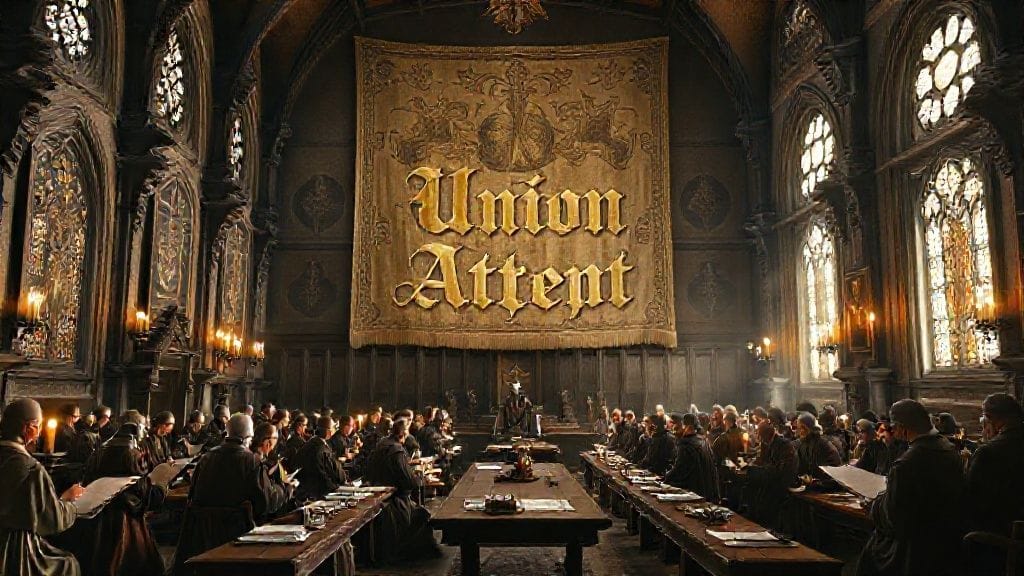
It was a shimmering spring day in Florence when the city’s grand halls brimmed with clashing languages, robed dignitaries, and a tremor of cautious optimism. The air was thick with incense and anticipation, the kind that comes when centuries-old animosities might be cast aside. On July 6, 1439, after months of intense deliberations, the Council of Florence proclaimed a historic union between the Eastern Orthodox and Western Roman Catholic Churches. Yet this declaration was less a triumphant ending than a fragile hope balanced on unsteady ground.
The year was 1439, and the city of Florence—blessed by Renaissance light and humanist fervor—stood as both a witness and a participant in one of the grandest chapels of Christian reconciliation. Ambassadors from Constantinople to Rome had gathered, their faiths divided for nearly a millennium, wrestling with dogma, jurisdiction, politics, and survival. Their negotiations swirled amid tapestries and frescoes illustrating the divine, while outside the city walls, empires teetered, and faiths clung desperately to identity.
This was not merely a religious event. It was a crossroads of civilizations, beliefs, and existential fears — where unity was both a balm to a shattering world and an unrealized dream.
2. The Great Schism and the Long Road to Reunion
The roots of church division traced back to 1054, when mutual excommunications by Cardinal Humbert and Patriarch Michael Cerularius formalized the East-West Schism. Political rivalries, cultural misunderstandings, and theological divergences like the inclusion of the Filioque clause in the Nicene Creed had woven a tapestry of mistrust.
Over centuries, sporadic attempts to heal the rift faltered, tangled in crusades, mutual suspicion, and wars of influence. Yet by the early 15th century, the rising threat of Ottoman Turks to Byzantium and the political fragmentation of Christendom forced a reconsideration. The impending doom of Constantinople pushed Byzantine emperors to seek unity with the Western Church as a lifeline.
3. The Political Chessboard: Europe on Edge
It was an era when faith and politics were inseparable. The Byzantine Empire was a shadow of its former glory—fragmented, besieged, and desperate for help. The Ottoman Empire was expanding inexorably, threatening to engulf the last bastion of Eastern Christianity.
In the West, the Catholic Church grappled with its own turmoil. The Avignon Papacy and the Western Schism had fractured papal authority, culminating in the Council of Constance (1414-1418), which sought to restore unity within the West itself. By 1439, Pope Eugenius IV faced a Europe cautious about foreign entanglements but eager to reclaim spiritual authority.
The union was not just ecclesiastical—it was survival, diplomacy, and geopolitical strategy in a volatile world.
4. Calling the Council: A Quest for Unity
Following the footsteps of previous councils, Pope Eugenius IV called the Council of Basel in 1431 to address church reform and theological disputes. However, after conflicts with the council’s conciliarists, Eugenius transferred it to Ferrara in 1438, seeking a more favorable environment. Later, it relocated to Florence due to a plague outbreak, where the majority of the council convened in 1439.
At this juncture, Byzantine Emperor John VIII Palaiologos sent a delegation led by patriarchs and theologians, expressing urgency to resolve differences and obtain Western military aid against the Ottomans.
The stage was thus set for a dialogue spanning rituals, doctrine, and dogma.
5. The Arrival in Florence: A Meeting of Worlds
Florence in 1439 was alive—cosmopolitan and radiant, a cradle of Renaissance art and thought. Into this vibrant city poured Greek clergy chanting ancient hymns, decked in vestments resplendent with Byzantine silk and gold embroidery. They met Latin priests clad in their austere western robes, generating a collision of traditions as palpable as the clamor in the marketplace.
Diplomatic entourages mingled with merchants and scholars. The Medici family, Florence’s de facto rulers, watched attentively, aware that this religious spectacle could ripple far beyond ecclesiastical corridors.
The city, a microcosm of tension and hope, buzzed with anticipation. Could these fractured brethren knit together?
6. Key Figures: The Titans of Faith and Diplomacy
The council’s proceedings were shaped by formidable personalities, each driven by faith, ambition, or political necessity.
Pope Eugenius IV, the Roman pontiff, was determined to assert papal primacy and reestablish Catholic unity.
Patriarch Joseph II of Constantinople and Emperor John VIII Palaiologos represented a Byzantine church desperate for Western allies.
Greek theologians like Mark of Ephesus embodied resistance to compromise, later becoming symbols of opposition to union.
On the Western side, cardinal diplomats like Bessarion—a former Greek monk turned Catholic cardinal—acted as bridges, glorifying the union as an unprecedented historic achievement.
7. Theological Debates: Dogma under Deliberation
Discussions were dense, technical, and fervent. The Greek delegates demanded mutual recognition of their rituals and theological positions, while the Latins pressed for doctrinal conformity.
The council tackled issues such as purgatory, the nature of the Holy Spirit, and ecclesiastical authority. Every word carried weight, as centuries of tradition hung in balance.
Negotiation was not mere compromise but a battle with centuries of accumulated theological identity.
8. The Issue of Papal Primacy: The Crux of Contention
Central to the union was the question: Could the Eastern Church accept the supreme authority of the Pope over the entire Christian world?
For the West, papal primacy was non-negotiable.
The East insisted on a model of pentarchy—a shared authority among five patriarchates.
Despite these tensions, a covenant was forged declaring the Pope as “the one true universal bishop.”
This concession was both groundbreaking and controversial, lifting the union onto a precarious tightrope.
9. The Filioque Controversy: A Subtle but Deadly Rift
One of the most debated theological points was the Filioque clause—the Western addition to the Nicene Creed stating that the Holy Spirit proceeds from the Father “and the Son."
The Eastern Church staunchly opposed this insertion.
At Florence, Greek delegates agreed to accept the clause, citing Thomistic theology and papal authority.
But this did not cement genuine consensus; rather, it fanned embers of later dissent.
10. The Eastern Delegation’s Predicaments and Motivations
The Byzantine delegation’s mission was laden with desperation. Facing overwhelming Ottoman pressure and dwindling resources, the Emperor and the Patriarchs saw union as an existential pact.
Yet many in the East viewed the concessions as capitulations and betrayals of Orthodox truth.
Subterfuge, secret dissent, and strategic calculation defined their participation, reflecting the tragic tightrope between faithfulness and survival.
11. The Western Church’s Ambitions and Expectations
For Rome, the council was an assertive act to restore spiritual unity and leverage political alliances.
Pope Eugenius IV believed the union would not only heal Christian divisions but also catalyze a crusade against the Turks.
There was also an impetus to reassert papal authority, gained after the disruptive Western Schism.
Yet Western hopes were tinged with naïveté about Eastern resistance and the medieval realities of faith communities.
12. The Declaration of Union: Hope Inked on Paper
On July 6, 1439, the formal decree “Laetentur Caeli” pronounced the reunification of the churches.
Crafted in Latin and Greek, it confirmed shared doctrines and papal primacy, marking a symbolic victory for diplomacy and dialogue.
Celebrations erupted in Florence, with bells ringing and proclamations trumpeting a new chapter for Christendom.
But behind these joyous exteriors, doubts lingered.
13. Public Reception: Triumph, Skepticism, and Fury
While the Western clergy and Florentines hailed the union, news sent to Constantinople provoked mixed feelings.
Orthodox monks, bishops, and laity rebelled against concessions, particularly papal supremacy.
Mark of Ephesus, absent during the signing, led the opposition, gaining a legendary status as the guardian of Orthodox purity.
This fracture within the Eastern Church undermined the union’s foundation almost immediately.
14. The Aftermath: Resistance and Fragmentation
Despite triumphalism, the Council's declaration failed to achieve widespread acceptance in the East.
Constantinople’s populace and monastic communities largely rejected it, viewing the union as subservience to Rome.
Efforts to implement reforms met resistance, deepening fractures within Byzantine society.
The division between official unionists and traditionalists widened, foreshadowing further strife.
15. The Fall of Constantinople: Union and Tragedy Entwined
In 1453, just fourteen years after the union was proclaimed, Constantinople fell to the Ottomans.
The union had neither brought salvation nor effective Western military support.
The dramatic fall cemented the division between East and West, with Orthodox Christians retreating from the unionist ideal for centuries.
16. The Union’s Brief Reverberations in Eastern Christendom
Although short-lived, the union left ripples in Orthodox lands.
Certain Eastern churches and hierarchies maintained delicate ties with Rome.
The union also influenced theological dialogues and ecclesiastical diplomacy for centuries, resurfacing in various unionist movements.
17. Cultural and Artistic Exchanges Fueled by the Council
The gathering brought Greek scholars and artists to Florence, enriching the Renaissance’s humanistic spirit.
The exchange of texts, manuscripts, and artistic traditions sowed seeds for later European Enlightenment.
Figures like Bessarion promoted classical Greek knowledge, bridging East and West beyond theological disputes.
18. The Political Fallout: Alliances Shattered and Forged
Politically, the union altered alliances and enmities.
Western support for Byzantium was tepid, constrained by domestic conflicts.
Ottoman rulers capitalized on Christian disunity.
The fragile alliance underscored the limits of religious unity in shaping political realities.
19. Legacy of the Council: Between Idealism and Realpolitik
The Council of Florence stands as a testament to human aspiration for unity against the tide of division.
It demonstrated the complexity of reconciling faith and power across vastly different traditions.
Its successes and failures reflect the enduring challenge of dialogue amid deep-rooted identity.
20. Historical Assessments: From Contemporary Chroniclers to Modern Scholars
Contemporaries were divided: Catholic chroniclers celebrated the union as restoration of Christendom, Orthodox voices lamented betrayal.
Modern historians view the council as a microcosm of Late Medieval tensions, mixing idealism, pragmatism, and tragedy.
It serves as a poignant chapter in the long history of East-West relations.
21. Conclusion: A Dream Deferred but Not Forgotten
The Council of Florence’s declaration of union in 1439 was a monumental moment of hope, courage, and earnest dialogue. While ultimately unsuccessful in establishing lasting ecclesiastical unity, it illuminated the persistent human yearning to bridge chasms, the costs of division, and the intricate dance of faith and politics.
This episode reminds us that reconciliation is never straightforward — it demands more than treaties and decrees, requiring the hearts and wills of peoples. The echoes of Florence continue to inspire ongoing dialogues seeking understanding beyond ancient divides.
Conclusion
In the spring of 1439, Florence became a crucible where centuries of division were temporarily bridged by the vision of Christian unity. The Council of Florence was both a religious summit and a political gamble, imbued with the hopes of survival against an encroaching darkness. Its declaration, inscribed in the annals of history, stands testament to the difficulty of reconciling doctrinal disputes and cultural identities shaped by time and trauma.
Yet, more than a failed union, the council symbolizes the resilience of dialogue and the human yearning to overcome estrangement. The story of Florence is a mirror reflecting humanity’s struggles to harmonize conviction with compromise, tradition with transformation. It resonates today as a luminous beacon that even amidst profound divisions, the pursuit of common ground endures.
FAQs
Q1: What was the main goal of the Council of Florence in 1439?
The principal aim was to reconcile theological differences between the Eastern Orthodox and Western Roman Catholic Churches, chiefly to secure Byzantine military aid against the Ottomans through ecclesiastical unity.
Q2: Why was there a division between the Eastern and Western Churches?
The division, known as the Great Schism of 1054, resulted from theological disputes such as the Filioque clause, differing liturgical practices, political rivalries, and competing claims of ecclesiastical authority, especially papal primacy.
Q3: Who were the key figures at the council?
Notable figures included Pope Eugenius IV, Byzantine Emperor John VIII Palaiologos, Patriarch Joseph II, cardinal Bessarion, and Mark of Ephesus—a vocal opponent of the union.
Q4: Did the Council of Florence’s union last?
No, the union was largely rejected in the East, especially by monks and laypeople. The fall of Constantinople in 1453 and persistent theological opposition rendered it short-lived.
Q5: What was the Filioque controversy?
It concerned the Western Church’s addition of the phrase “and the Son” to the Nicene Creed, declaring the Holy Spirit proceeds from both the Father and the Son—rejected by the Eastern Church as unauthorized and theologically unsound.
Q6: How did the fall of Constantinople affect the union?
The fall ended Byzantine hopes of Western military support and concretized the ecclesiastical split. The union was effectively nullified as the Orthodox Church solidified its independence under Ottoman rule.
Q7: What cultural impacts did the council have?
The council facilitated Greek scholars’ arrival in the West, enriching the Renaissance and promoting classical knowledge, thereby influencing European culture beyond religious affairs.
Q8: How is the Council of Florence viewed by modern historians?
It is seen as a pivotal but ultimately unsuccessful attempt at Reconciliation, illustrating the complexities of faith, power, and identity in Late Medieval Christendom.

