Table of Contents
- The Dawn of a Tumultuous Era: Setting the Scene at Piacenza, March 1095
- Who Convened at Piacenza? The Players and Powers Behind the Council
- A Fragmented Christendom: The Western Church on the Eve of Crisis
- The Byzantine Empire’s Dire Plea: Facing the Rise of the Turks
- Pope Urban II: The Pontiff with a Vision
- Summoning the West: The Strategy and Urgency of the Council
- Walls and Battlegrounds: The Byzantine Struggle Against the Seljuk Turks
- The Language of Plea and Promise: Diplomacy at the Council
- The Unseen Audience: Who Else Heard the Call?
- Echoes Through Europe: Responses to the Byzantine Appeal
- Seeds of a Movement: How Piacenza Set the Stage for Clermont
- The Broader Context: Church Reform and Papal Ambition in 11th Century Europe
- Between Faith and Politics: The Dual Nature of the Appeal
- Pilgrimage, Warfare, and the Idea of Holy War Before 1095
- The Immediate Aftermath: How Piacenza Shaped the First Crusade
- Myths, Misconceptions, and Historical Realities of the Piacenza Assembly
- Voices from the Time: Chroniclers and Letters Illuminate the Council
- The Council of Piacenza in the Collective Memory of Christendom
- Legacy of the Appeal: Piacenza as a Prelude to Crusades and Conflict
- Reflections on Unity and Division in Medieval Christendom
- Conclusion: The Council as a Turning Point in Medieval History
- FAQs: Understanding the Council of Piacenza and Its Impact
- External Resource
- Internal Link
The Dawn of a Tumultuous Era: Setting the Scene at Piacenza, March 1095
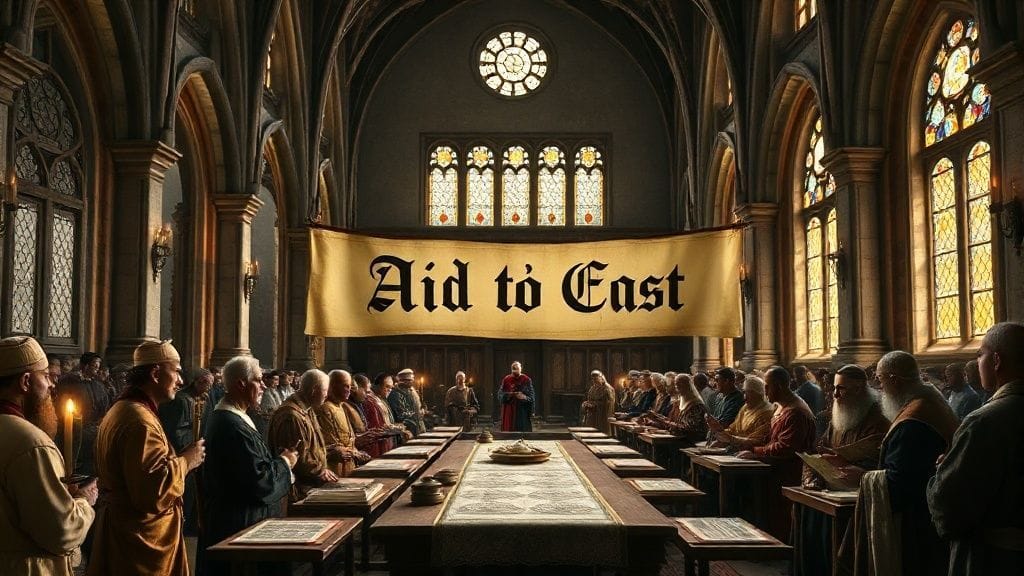
In early spring of 1095, the city of Piacenza, nestled along the fertile banks of the Po River in northern Italy, found itself transformed into a crucible of ecclesiastical power and political urgency. The air was thick with anticipation and unrest, as princes, bishops, and emissaries gathered in the solemn halls of the cathedral. Candles flickered under painted arches, casting shadows on the faces of men whose decisions would ripple across continents.
Beyond the marble and stone of Piacenza, an ancient empire was gasping for breath. The Byzantine world, the remaining stronghold of Eastern Christendom, faced overwhelming pressure from the relentless advance of the Seljuk Turks in Asia Minor. Their pleas for aid went unheard—or ignored—by the fractured Latin West. The epoch was demanding something extraordinary, something that would bind the splintered Christian world together.
It was here, in this atmosphere of peril and hope, that the Council of Piacenza unfolded. This convocation was not merely an ecclesiastical meeting but a clarion call—a desperate appeal for aid that would ignite passions and shape history for centuries. What transpired within those cloistered chambers in March 1095 was far more than a diplomatic entreaty; it was the spark that would kindle the torch of the First Crusade.
Who Convened at Piacenza? The Players and Powers Behind the Council
The Council of Piacenza was convened under the authority of Pope Urban II, who had recently ascended to the papal throne after a turbulent period of rivalry and reform within the Church. Urban was a man of dynamic vision and decisive action, urgently seeking to assert papal leadership over fractious European kingdoms and ambitious noblemen.
In addition to the pope himself, attendees included numerous bishops, abbots, and secular leaders from across Italy and the wider Holy Roman Empire. Notably, emissaries from the Byzantine Emperor Alexios I Komnenos had made the arduous journey westward—messengers carrying urgent letters and firsthand accounts of harrowing defeats to their Eastern lands.
These representatives embodied the complex intersection of faith, politics, and military necessity. Often at odds in previous decades, the Latin and Byzantine churches now found themselves momentarily united against a common existential threat. Yet beneath the surface, tensions simmered: centuries-old rivalries between East and West threatened cooperation, while ambitious Western princes eyed the prospect of new lands and glory.
A Fragmented Christendom: The Western Church on the Eve of Crisis
The state of Western Christendom in 1095 was far from united or serene. The Gregorian Reform movement, championed by Pope Gregory VII and continued by Urban II, aimed to eradicate corruption such as simony and clerical marriage, asserting papal supremacy over secular rulers. This agenda had sparked conflicts with emperors and nobles, leaving the Church in a delicate balance of power.
Politically, Europe was a patchwork of fragile kingdoms, duchies, and principalities, bound loosely by feudal ties yet bristling with local ambitions. The investiture controversy—a fierce dispute over who held the right to appoint bishops—had undermined coordinated action. Many Christian lords were embroiled in internecine quarrels or consolidating power at home.
Amid this fragmentation, the Byzantine Empire represented a distant and culturally distinct branch of the Church. The Great Schism of 1054 had formalized the division between Eastern Orthodoxy and Roman Catholicism, deepening mistrust. Yet now, desperate necessity compelled dialogue, forcing old animosities to be momentarily set aside at Piacenza.
The Byzantine Empire’s Dire Plea: Facing the Rise of the Turks
The Seljuk Turks, fierce nomadic warriors from Central Asia, had swept through Asia Minor and conquered vast swaths of Byzantine territory. Their decisive victory at the Battle of Manzikert in 1071 shattered Byzantine defenses and cast the empire into crisis. Cities were lost, populations displaced, and the very survival of the empire was at stake.
Emperor Alexios I Komnenos, a skilled leader burdened with stabilizing a beleaguered realm, understood that Western military and financial support was crucial. His appeal to the West was thus a sober call for help, seeking soldiers and resources to reclaim lost lands and protect Christian pilgrims traveling to the Holy Land.
The Byzantine envoys who traveled to Piacenza carried testimonies filled with urgency and sorrow—describing waste, carnage, and the erosion of Christendom's eastern bulwark. Their presence was both a diplomatic plea and a challenge: could the divided Christian world unify in the face of a common foe?
Pope Urban II: The Pontiff with a Vision
Urban II arrived in Piacenza with both resolve and opportunity in his grasp. Having been elected pope only a few months prior, he was intent on reaffirming papal primacy while addressing the wider crises confronting Christendom. The Byzantine appeal provided an opening to pursue a double aim: aid the East, and simultaneously unify the West under the banner of the papacy.
Urban’s background as a reform-minded cleric endowed him with persuasive charisma and organizational skill. Knowing the stakes, he sought to turn the Byzantine crisis into a catalyst for reinforcing religious zeal and papal authority. His presence at Piacenza was more than ceremonial; it was strategic.
The pope’s rhetoric and diplomacy at the council sowed seeds that would bloom just months later in Clermont, where he would deliver his famous call for a crusade. But the journey began here—in the deliberations and decisions forged in northern Italy’s cathedral halls.
Summoning the West: The Strategy and Urgency of the Council
The Council of Piacenza was both convocation and summons. Urban II used the platform to inform the assembled bishops and nobles of the severity of the Eastern plight and to solicit their commitment. He spoke not just of defense but of opportunity: restoring Christian lands, aiding brethren in faith, and reclaiming sacred sites.
His messages wove together appeals to faith, duty, and ambition. The rhetoric emphasized the spiritual rewards bestowed upon those who would take up arms—indulgences, forgiveness of sins, and eternal glory.
The atmosphere at Piacenza was electric. For many Western nobles, the council opened the door to new possibilities—military glory, expansion of influence, and participation in a cause that transcended individual rivalries. Some were skeptical; others were galvanized.
This council was less about decisions taken on the spot, more about setting intentions and framing the narrative for future mobilization. It was the crucial moment when the idea of a "holy war" took institutional shape.
Walls and Battlegrounds: The Byzantine Struggle Against the Seljuk Turks
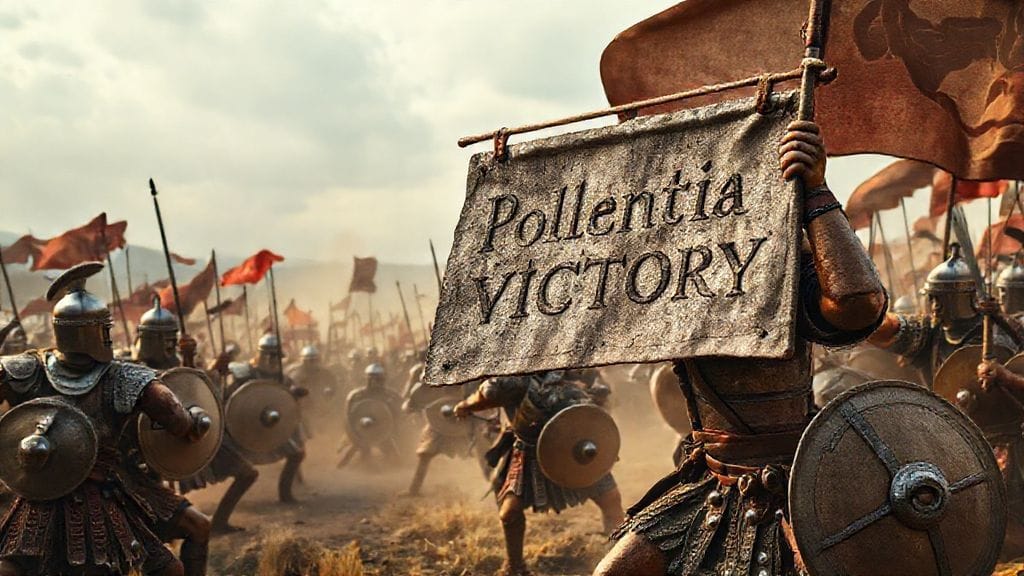
Behind the diplomatic dialogues at Piacenza lay grim realities on the battlefield. The Byzantine military had been humbled but not annihilated. Under Alexios’s dynamic leadership, the empire was attempting to recover, fortify cities, and rally local forces.
The Seljuks, although formidable, faced their own difficulties: internal tribal rivalries, stretched supply lines, and governance challenges in newly conquered lands. Byzantine resilience offered a slender thread of hope.
The plea for Western aid was thus grounded in a military crisis that demanded external reinforcement. The hope was that Latin knights and soldiers, famed for their chivalry and martial prowess, might turn the tide. However, the question remained: would a fragmented, quarrelsome West heed the call?
The Language of Plea and Promise: Diplomacy at the Council
At Piacenza, the Byzantine envoys delivered letters from Emperor Alexios, entreaties imbued with both desperation and hope. Their words spoke of shattered cities, endangered pilgrims, and the survival of the Christian faith itself.
The response from Latin bishops and the pope wasn’t merely charitable. The call for aid was laden with theological and political overtones. It was a summons to defend Christendom, uphold papal leadership, and pursue spiritual salvation through martial service.
This delicate dance of words reflected the complex diplomacy of the era: the Byzantine East seeking practical help, the Latin West seeking spiritual renewal and political advantage. At Piacenza, these interests momentarily aligned.
The Unseen Audience: Who Else Heard the Call?
While the council gathered in solemnity behind closed doors, the ripple effects soon spread across Europe. Merchants, pilgrims, knights, and chroniclers would carry news of the gathering and its urgent message far beyond Italy’s plains.
Letters dispatched from Piacenza reached courts and cathedrals throughout France, Germany, and beyond. Some lords saw the appeal as a chance to assert their power; some clergy envisioned moral renewal; many common folk later heard of the summons as a call to religious adventure.
Unseen by many at the time was how this initial appeal would catalyze a continent-wide phenomenon: the mass movement that became the Crusades.
Echoes Through Europe: Responses to the Byzantine Appeal
Initial reactions to the Council’s message were mixed. Some rulers were distracted by local conflicts or skeptical of the costs involved. Others, stirred by tales of religious duty and worldly gain, began to prepare armies or excursions to the East.
The appeal also intersected with a growing spirit of pilgrimage and holy zeal. Attendance at Jerusalem—a site sacred to Christians—had been difficult and dangerous, exacerbated by Turkish control of the routes. The idea of reclaiming the Holy Land for Christendom was compelling.
Gradually, this gentle persuasion hardened into organized plans. By late 1095, at the Council of Clermont, Pope Urban II amplified these themes, calling all of Christian Europe to the crusade that the Council of Piacenza had foreshadowed.
Seeds of a Movement: How Piacenza Set the Stage for Clermont
Though often overshadowed by the dramatic events of Clermont in November 1095, Piacenza was the foundational moment. It was here that Pope Urban II received the Byzantine appeal in person, engaged with his bishops and noblemen, and began to articulate the vision of a unified Christian military expedition.
Piacenza set the parameters—linking eastern defense to western religious and political aspirations. It created a shared narrative of Christian solidarity under threat, laying the ideological groundwork that Clermont would transform into a clarion call to arms.
Without Piacenza, the First Crusade as we know it might have lacked the biblical and majestic legitimacy that enabled its mass mobilization.
The Broader Context: Church Reform and Papal Ambition in 11th Century Europe
The Council of Piacenza did not occur in isolation. It unfolded within a broader tapestry of religious reform and papal assertion. The Investiture Controversy was reshaping notions of authority between emperor and pope. Monastic reforms such as those from Cluny were renewing spiritual fervor.
Pope Urban II, aware of these currents, saw the eastern appeal as a way to strengthen the Church’s hand domestically and internationally. By uniting Christian princes and knights in a common cause, he could enhance papal prestige and influence.
The council was thus an intersection of faith, power, and geopolitics—the high medieval world’s tumultuous stew.
Between Faith and Politics: The Dual Nature of the Appeal
At its core, the Byzantine plea to Piacenza was practical: military aid was needed to counter Turkish advances. Yet, the Latin Church’s reception of this plea transformed it into a higher calling, blending pragmatic and spiritual motivations.
This duality—military crusade as both defense and sacred mission—would define the Crusades. Piacenza reveals this tension early on, showing how political necessities were dressed in religious language that galvanized popular participation.
It also planted the seeds of later conflicts and misunderstandings between East and West, as differing priorities and suspicions complicated cooperation.
Pilgrimage, Warfare, and the Idea of Holy War Before 1095
The notion of fighting for faith was not novel in 1095. Pilgrimages had brought Christians face-to-face with danger for centuries, and the Church had developed ideas about just war and penance.
However, before Piacenza and Clermont, these concepts had not yet crystallized into a pan-European military endeavor framing a new genre of holy war—war with spiritual rewards attached.
The Council of Piacenza marked a turning point in how pilgrimage and warfare intertwined, transforming individual acts of devotion into collective militant crusade.
The Immediate Aftermath: How Piacenza Shaped the First Crusade
Following the council, momentum built steadily. Pope Urban II traveled extensively, disseminating the message. Nobles prepared retinues, and peasants heard rumours of adventure and holy reward.
The Council’s impact was less immediate than the later Clermont speech, but indispensable. Piacenza had shown that the Church was willing to engage actively in eastern politics, to orchestrate cooperative defense, and to sanctify military endeavors.
This groundwork paved the way for the First Crusade’s mobilization, eventual arrival in the Levant, and the establishment of Crusader states.
Myths, Misconceptions, and Historical Realities of the Piacenza Assembly
Historical accounts of Piacenza are scarce, and much is colored by later interpretations or agendas. Some chroniclers downplay its significance, focusing on Clermont’s more dramatic rhetoric.
Others have mythologized Piacenza as the singular starting point of crusading ideology, forgetting the decades-long evolutions and earlier calls for aid.
The real story of Piacenza is more nuanced: a diplomatic and ecclesiastical meeting that launched a process rather than a spontaneous declaration. It represents the complexity of medieval politics, where religion, authority, and survival meshed in a fragile alliance.
Voices from the Time: Chroniclers and Letters Illuminate the Council
Our understanding of Piacenza comes largely from letters exchanged between Alexios and Urban, and from chroniclers such as Anna Komnene and later Western chroniclers who referenced the event.
Anna Komnene’s Alexiad offers a Byzantine perspective, highlighting the desperation behind the plea. Meanwhile, Latin sources present the council as a moment of opportunity and resolve.
These fragmentary but vivid voices help us reconstruct the council’s atmosphere—marked by tension, hope, and the calculation of grand ambitions.
The Council of Piacenza in the Collective Memory of Christendom
In later medieval memory, Piacenza was often overshadowed by the holy eloquence of Clermont. Yet for Byzantium, it symbolized a moment of reaching out across cultures and dramas.
For the West, it was the beginning of a long, sweeping movement that would redefine Europe’s relationship to the East, warfare, religion, and identity.
The council’s legacy lives in the stories, artworks, and chronicles that connect faith with imperial destiny and the complex interplay of diplomacy and devotion.
Legacy of the Appeal: Piacenza as a Prelude to Crusades and Conflict
The Council of Piacenza’s appeal laid the foundation for centuries of crusading endeavors, shaping not only military expeditions but also intercultural relations, trade, and perceptions of the “other.”
It also opened new chapters of conflict, tension, and cultural exchange between Byzantine and Latin Christendom, which would both ally and antagonize for generations.
Piacenza thus stands as a pivotal moment—where prayer met politics, and where ideals of holy defense launched movements that transformed medieval history.
Reflections on Unity and Division in Medieval Christendom
Piacenza reveals the paradox of medieval Christendom. Faced with external threats, unity was possible but fragile. Faith offered common ground, but political ambition and cultural difference often undermined cohesion.
The council encapsulates the medieval dance of diplomacy, conflict, and faith, reminding us how human complexity shapes history—the hopeful, the fearful, the opportunists, and the devoted all intertwined in the unfolding narrative.
Conclusion: The Council as a Turning Point in Medieval History
The Council of Piacenza in March 1095 was far more than a regional ecclesiastical assembly. It was a moment of reckoning—a crucible where East and West glimpsed shared fate amid fracturing realities.
This council’s significance lies not only in its immediate diplomatic results but in how it sparked one of history’s most profound movements: the Crusades. The blending of spiritual calling with military endeavor, the awakening of crusading zeal, and the reshaping of Christendom’s map all trace their roots to that moment.
Ultimately, Piacenza stands as a testament to the turbulent human yearning for faith, security, and meaning—a moment illuminating the complexity of medieval worldviews and the enduring impact of their decisions.
FAQs
Q1: Why was the Council of Piacenza convened in 1095?
The council was convened primarily to address the urgent appeal from Byzantine Emperor Alexios I, who sought military aid against the Seljuk Turks threatening his empire. Pope Urban II used this opportunity to mobilize Western Christendom towards a collective response.
Q2: Who were the main figures involved in the Council?
The key participants were Pope Urban II, Byzantine emissaries representing Emperor Alexios I Komnenos, numerous Western bishops, abbots, and some secular leaders from Italian and German territories.
Q3: What was the state of Christendom at this time?
Christendom was deeply divided—religiously between East and West after the Great Schism, politically through feudal fragmentation in the West, and internally due to Church reform movements and conflicts such as the Investiture Controversy.
Q4: How did the Council of Piacenza influence the First Crusade?
Piacenza marked the first formal reception of the Byzantine plea for aid in the West and helped lay the groundwork for Pope Urban II’s call to arms later that year at Clermont, ultimately launching the First Crusade.
Q5: Was the appeal purely religious, or did political motives also play a role?
The appeal combined both religious and political motives. Byzantium needed military help, while the Latin Church saw an opportunity to assert power, unify Christendom, and expand influence through a holy war framework.
Q6: How did the Byzantine and Latin churches relate to each other at the time of the council?
Relations were strained due to the 1054 Great Schism but improved somewhat under the pressure of Turkish advances, leading to a rare moment of cooperation, albeit tinged with mutual distrust.
Q7: Why is the Council of Piacenza less famous than the Council of Clermont?
Clermont was where Pope Urban II made his famous public call for the crusade, which had immediate mass mobilization impact. Piacenza, by contrast, was more a behind-the-scenes diplomatic and ecclesiastical council laying foundational groundwork.
Q8: What long-term impacts did the Council have on East-West relations?
The council initiated a complex legacy of both cooperation and conflict, with crusading expeditions leading to periods of alliance, cultural exchange, but also deepened mistrust and hostility between Byzantine and Western Christian powers.