Table of Contents
- The Fateful Night: Crete Shaken by Nature's Wrath
- In the Eye of the Storm: Early Morning Tremors
- The Eastern Mediterranean’s Seismic Past: A Landscape on Edge
- Ancient Earth, Modern Catastrophe: Geological Setting of Crete
- The Undersea Quake: Origin and Magnitude
- Tsunami Waves Racing Across the Mediterranean
- Coastal Villages in Peril: The Human Face of Disaster
- The Immediate Aftermath: Rescue and Relief Efforts
- Eyewitness Accounts: Voices from the Waves
- The Political Landscape of Greece in the 1920s: Strife Amidst Tragedy
- International Response and Aid: A Glimpse of Global Solidarity
- Scientific Revelations: Understanding Tsunamis in the Early 20th Century
- Reconstruction and Memory: The Island’s Slow Recovery
- Cultural Narratives: How the Tsunami Shaped Local Mythology and Identity
- Lessons Learned: The 1926 Event and Future Preparedness
- Comparing the 1926 Tsunami with Later Eastern Mediterranean Events
- The Long Shadow: Environmental and Economic Aftershocks
- Tsunami Warnings Before Their Time: Greece’s Early Warning System Challenges
- Tsunamis in Mediterranean History: A Pattern of Recurrence
- The 1926 Tsunami in Contemporary Scholarship and Public Memory
The Fateful Night: Crete Shaken by Nature's Wrath
As the clock approached midnight on June 26, 1926, the skies above Crete were calm, the tranquil sea lapping gently against the rocky shores under a canopy studded with stars. It was a summer’s night imbued with the usual quietude—fishermen repairing nets by lantern light, families settling into their homes, and the distant hum of village life settling into rest. However, beneath this serene surface, the earth had already begun to stir. Without warning, a powerful earthquake ruptured along the Hellenic arc deep under the Mediterranean, releasing a force that would ripple far beyond its epicenter. Within minutes, a towering wall of water surged toward the southern coastlines in what would soon be known across the world as the catastrophic Crete–Eastern Mediterranean tsunami.
This was not merely a natural event—it was a profound historical rupture that challenged the resilience of a people and transformed scientific understanding of seismic risks in the Eastern Mediterranean. The long willowy shadows of olive trees danced uneasily in the moonlight as the earth shook. But this seismic drama on a balmy night would quickly escalate into calamity, stealing lives, challenging political authorities, and weaving itself into the island’s collective memory forever.
In the Eye of the Storm: Early Morning Tremors
The night began with low rumbles, scarcely perceptible, registering as mere tremors to those unversed in the language of earthquakes. Yet, those sensitive to the earth’s whispers could feel something was off. At precisely 2:20 a.m., a violent seismic upheaval struck beneath the Mediterranean Sea just south of Crete, sending shockwaves through the island’s rocky terrain. The ground buckled, houses convulsed, and a symphony of cracks and shouts filled the air. This sudden earthquake was the prelude—a terrifying overture—to events far greater in magnitude.
Eyewitnesses recall harrowing moments: children crying out, livestock running wild, and elders warning of bad omens. For many, these tremors recalled the island’s long history of earthquakes but this one stood apart in intensity. The geological forces at work were not just local accidents of the earth but tremors sprung from massive tectonic plate interactions—the grinding of the African plate beneath the Eurasian plate—a violent collision shaping the very face of Crete.
The Eastern Mediterranean’s Seismic Past: A Landscape on Edge
The Eastern Mediterranean has long been a crucible for seismic activity. Its geography is defined by the convergence of several tectonic plates—African, Eurasian, and Arabian—rendering the region one of the most geologically unstable in Europe. Historically, cities and islands in this sun-drenched sea have been repeatedly battered by earthquakes and tsunamis, a recurrent horror etched into their histories and mythologies, from the destruction of ancient Helike to the more recent devastating quakes of Rhodes.
By 1926, local populations were aware of these dangers, but scientific knowledge of tsunamis and earthquake mechanics was still nascent. Geological surveys had mapped fault lines, but the unpredictability of their ruptures remained a pressing fear, a subterranean terror lurking beneath the Mediterranean’s blue surface.
Ancient Earth, Modern Catastrophe: Geological Setting of Crete
Crete itself is a complex mosaic of geology. Its rugged mountains spring from plate collisions, and its southern coast is marked by deep underwater trenches and faults. The Hellenic arc, a curved subduction zone running south of Crete, is responsible for some of the strongest seismic events in the region. In late June 1926, this geological setting became the crucible of catastrophe.
The earthquake that triggered the tsunami had its origins at nearly 50 kilometers depth along this subduction zone—deep enough to unleash a powerful tremor felt across much of the island, but more critically, shallow enough to displace vast amounts of seawater. The resulting wave surged outward, racing along the eastern Mediterranean basin with tragic speed.
The Undersea Quake: Origin and Magnitude
Modern seismic analysis estimates the 1926 earthquake’s magnitude at approximately 7.8 on the Richter scale—a violent jolt that reshaped undersea geography. This slip of geological plates was not merely a crack but a full rupture that caused a deadly displacement of the seafloor, propelling huge volumes of water into motion. Tsunami waves followed, traveling ceiling-high, striking the south coast of Crete with overwhelming force just minutes after the tremor.
Instruments of the era—rudimentary by today's standards—recorded the quake’s seismic waves, but the human cost and scale of damage told a deeper story. The quake’s energy was spread across an area greater than 50,000 square kilometers, causing structural damage and widespread panic not only in Crete but also in surrounding islands and mainland coastal settlements.
Tsunami Waves Racing Across the Mediterranean
The tsunami unleashed by the 1926 earthquake was not confined to the immediate vicinity. Waves radiated rapidly eastwards and westwards, reaching the shores of Rhodes, Cyprus, and even parts of the Turkish coast. The waves traveled at speeds upwards of 500 kilometers per hour in deep water, slowing and growing as they approached shallower shores.
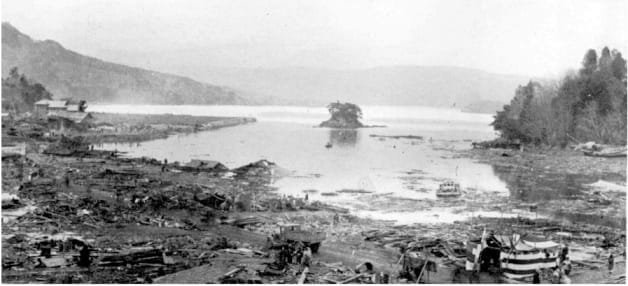
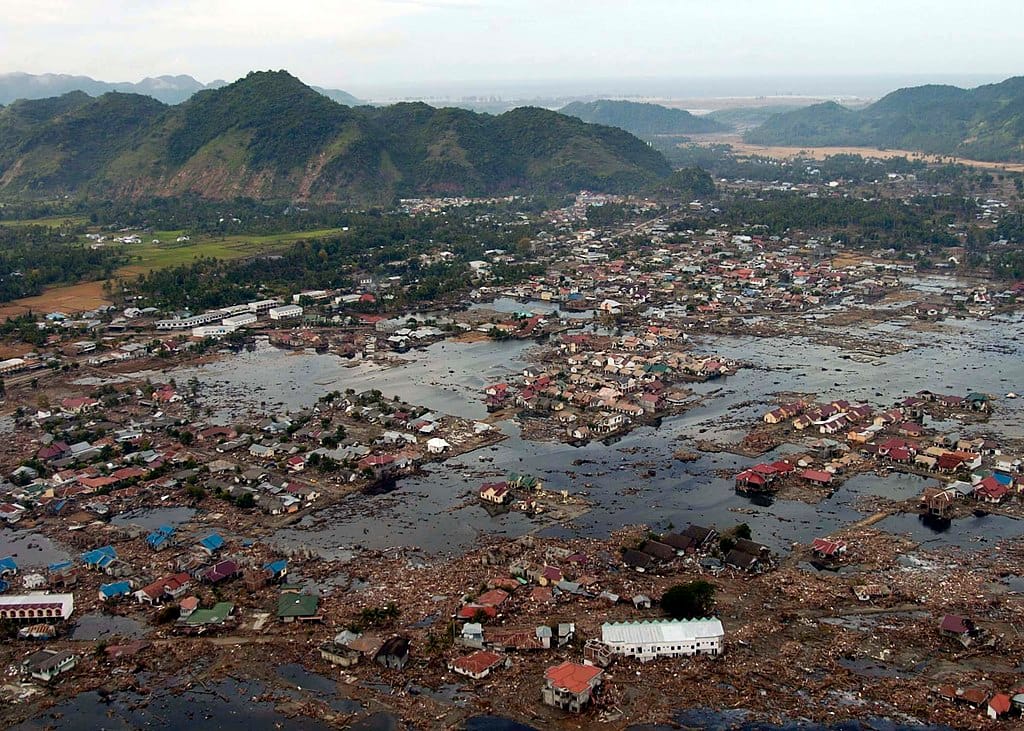
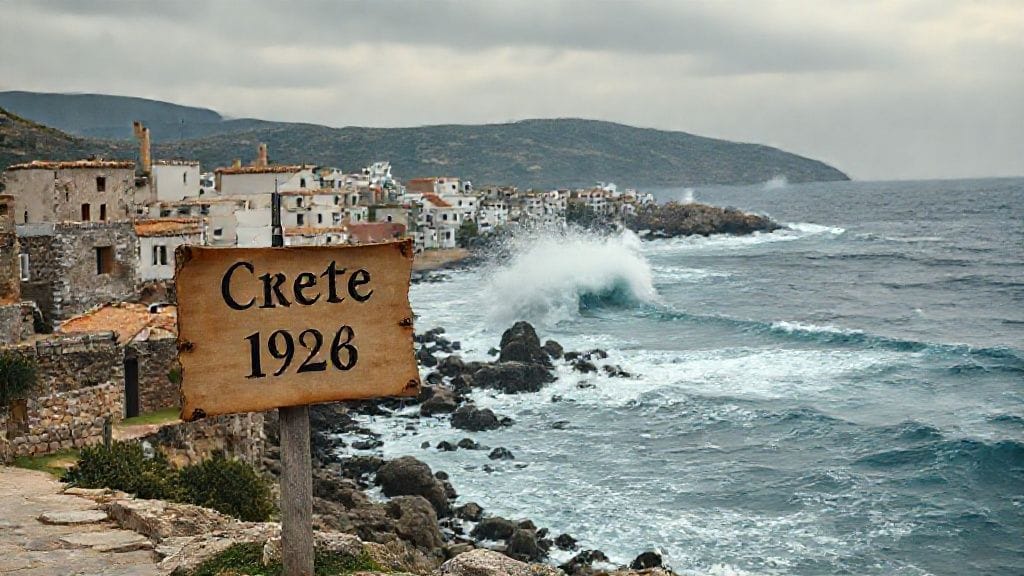
In Crete, the southern villages of Ierapetra, Agios Nikolaos, and Matala bore the brunt as multiple waves crashed ashore. The first waves smashed into fishing boats anchored in sheltered bays, overturning them and sweeping fishermen into the churning sea. Water surged far beyond normal tide lines, flooding homes, and uprooting centuries-old olive trees. For many residents, the waves appeared without warning—the water drawing back into the sea, exposing strange ridges of sand and sea life, only to return with devastating ferocity.
Coastal Villages in Peril: The Human Face of Disaster
Villages dotting the southern coast of Crete had lived balanced lives amid olive groves and rocky coves for centuries—until that morning when nature flexed an unforgiving muscle. The tsunami demolished homes made of stone and wood, drowned livestock, and shattered roads.
Life changed irrevocably in small communities like Pitsidia and Lentas, which suffered heavy casualties. The islanders fought blindly amid the chaos—families desperately pulling each other from flooded homes, neighbors carrying the injured to higher ground. Stories emerged of miraculous survival: a mother who clutched her child while fleeing to a hilltop; a fisherman who used his overturned boat as a raft amidst the surging sea.
Yet the death toll was grim. Official counts recorded hundreds dead and thousands displaced, but with remote hamlets cut off and communication lines down, numbers likely remain underestimates. A shadow of despair fell on Crete, a tangible grief that would linger for decades.
The Immediate Aftermath: Rescue and Relief Efforts
In the dawn’s early light, the full scope of the disaster became apparent. Villagers roamed shells of their former homes, touching broken walls and shattered belongings. The island’s central authorities mobilized quickly but faced immense logistical challenges. Roads were impassable, ports damaged, and fresh water supplies contaminated.
Aid came in the form of local volunteers, clergy, and neighboring communities. Relief efforts organized improvised shelters in schools and churches. The Greek government, then grappling with internal political instability, declared Crete a disaster zone and requested international assistance. Charitable organizations and foreign consuls sent medical supplies and food.
Despite these efforts, survivors recount the harrowing days of scarcity, disease outbreaks, and the struggle to rebuild amid rubble and trauma—a slow stirring back to life in a land forever altered.
Eyewitness Accounts: Voices from the Waves
The tsunami’s story is, above all, a human one. Personal testimonies gathered decades later reveal the fear, confusion, and resilience of those who faced the disaster head-on.
“Suddenly, the sea was gone… It was silent, as if the god had taken the water away… Then came the thunderous roar,” recalled Giorgos Papadakis, a fisherman from Ierapetra. “Our boats overturned, and the water reached the church steps. We all ran to the hills, but some were lost…”
Such eyewitnesses gave a voice to nature’s fury and the fragile humanity caught beneath it. Their accounts became pillars upon which historians and scientists built early models of tsunami behavior in the Mediterranean, bridging folk memory and empirical research.
The Political Landscape of Greece in the 1920s: Strife Amidst Tragedy
The 1920s were a volatile decade for Greece. The nation was still reeling from the Asia Minor Catastrophe of 1922, which saw mass population displacements and political upheaval. The tsunami struck amid a fragile environment—a country marked by political factions, economic uncertainty, and social tensions.
Crete itself was navigating its recent incorporation into the Greek state (dating back to 1913), its population caught between local traditions and national aspirations. The disaster exposed the limits of the government’s reach and resources in peripheral regions, intensifying calls for better infrastructure and disaster preparedness.
International Response and Aid: A Glimpse of Global Solidarity
Remarkably, the 1926 tsunami prompted aid not only from the Greek mainland but from abroad. Countries bordering the Mediterranean—Italy, Egypt, and France—sent funds and supplies, recognizing shared vulnerability in this maritime crossroads.
The League of Nations, still in its infancy, issued statements of sympathy and encouraged cooperation on seismic monitoring—a small but symbolic step towards international scientific collaboration. Newspapers in London and Paris reported the tragedy with somber tones, raising awareness that natural disasters respected no borders.
Scientific Revelations: Understanding Tsunamis in the Early 20th Century
At the time of the 1926 events, tsunami science was still developing. Researchers had identified the Pacific as a high-risk zone, but Mediterranean tsunamis were often underestimated or misunderstood. The Crete event catalyzed a renewed focus on seismic research in the region.
Geologists from Greece and abroad studied the seafloor, wave patterns, and earthquake aftershocks. Their work contributed to early hazard maps and the realization that tsunamis, though less frequent than in the Pacific, were no less catastrophic in confined seas.
This disaster provided crucial data that informed future warning systems and scientific protocols, marking a shift in the Mediterranean’s environmental consciousness.
Reconstruction and Memory: The Island’s Slow Recovery
Rebuilding after the 1926 tsunami was an arduous task. Material aid gave way to decades-long efforts to restore homes, farms, and livelihoods. Many villagers left the hardest-hit areas, migrating to cities or abroad. Those who stayed rebuilt with renewed awareness of nature’s vulnerability.
Communities commemorated the event with memorials and oral histories, embedding the tsunami into the island’s collective identity. Annual remembrances blended grief and hope, a ritual affirming life amid devastation.
Crete’s transformation was not only physical but cultural—a powerful testament to resilience.
Cultural Narratives: How the Tsunami Shaped Local Mythology and Identity
The tsunami entered local folklore—tales grew of wrathful gods, warning spirits, and sacred sites spared from destruction. Elders interpreted the event as divine judgment or a cosmic reminder of humanity’s frailty.
Songs and poems emerged linking the sea’s anger to moral lessons, while art depicted the turbulent waters as both destroyer and purifier. These narratives, passed through generations, preserved memory beyond official records, anchoring the event deeply in the island’s psyche.
Lessons Learned: The 1926 Event and Future Preparedness
The harsh lessons from 1926 highlighted the urgent need for disaster preparedness. Authorities pushed for better building codes, clearer evacuation routes, and public education about earthquake and tsunami risks. Though primitive by modern standards, these measures laid foundations for improvements decades later.
Moreover, the event accelerated Mediterranean cooperation in seismology, prompting networks of seismic stations and early warning proposals that would evolve into today’s sophisticated systems.
Comparing the 1926 Tsunami with Later Eastern Mediterranean Events
The Crete tsunami of 1926 stands out among regional disasters for its scale and influence. Later tsunamis—in 1948, 1956, and more recently in 2017—have echoed this pattern, reminding the Eastern Mediterranean that the threat endures.
Comparing these events reveals both geological consistencies and variations, from wave heights to affected populations. The 1926 tragedy remains a benchmark in understanding the Mediterranean’s seismic hazards and the socio-economic ramifications of such crises.
The Long Shadow: Environmental and Economic Aftershocks
Beyond immediate destruction, the tsunami’s environmental impact reshaped coastal ecologies. Saltwater intrusion damaged agriculture; coastal erosion transformed landscapes; fisheries suffered long-term declines.
Economically, Crete’s economy was battered—tourism, already modest, stalled; infrastructure needed costly repairs; many families lost assets, deepening poverty. Recovery was uneven, with some regions languishing for decades.
These aftershocks underscore how natural disasters ripple through time, torturing lands and livelihoods long after waters recede.
Tsunami Warnings Before Their Time: Greece’s Early Warning System Challenges
In 1926, Greece lacked formal tsunami warning systems. The event made clear that natural signs—unusually receding seas, animals behaving oddly—were all local populations had to rely on. Efforts to develop early warnings faced technological and funding hurdles.
However, the human lessons transcended technology: fostering community awareness and respect for earth’s signals became as vital as scientific detection. Over time, Greece incorporated these lessons into civil defense plans, a slow evolution toward safety rooted in tragedy.
Tsunamis in Mediterranean History: A Pattern of Recurrence
The 1926 tsunami was but one episode in the Mediterranean’s long seismic saga. Ancient writings, archaeological evidence, and geological records attest to a history of tsunamis that have shaped civilizations.
From Pliny the Elder’s descriptions of tidal waves to recent archaeological digs revealing submerged ruins, history shows that Mediterranean tsunamis are cyclical phenomena—a hidden threat beneath the region’s sparkling surface.
The 1926 Tsunami in Contemporary Scholarship and Public Memory
Today, the 1926 Crete tsunami is studied not only as a geological event but as a complex human tragedy. Contemporary scholarship explores its social, cultural, and environmental dimensions, drawing lessons for Mediterranean disaster management.
Yet public memory, especially outside Crete, remains faint—a reminder of how time blurs disasters that lack the immediate global attention of more recent events. Efforts by historians, local museums, and cultural projects aim to restore the tsunami’s place in regional consciousness.
Conclusion
The Crete–Eastern Mediterranean Tsunami of June 1926 is a poignant testament to nature’s power and human resilience. It unfolded silently beneath the waves, transforming a quiet summer night into a moment of terror and upheaval. The event ripped apart communities, altered landscapes, and challenged scientific understanding, leaving an indelible mark on Crete’s history.
Yet, beyond destruction lies a powerful narrative of survival, courage, and learning. The island’s people rebuilt, remembering the lessons etched in stone and sea spray. The tsunami shaped their culture, identity, and preparedness, becoming a silent teacher for generations.
As we reflect on the 1926 disaster nearly a century later, it is impossible not to feel reverence for the fragile balance between humanity and the vast, often violent forces beneath the earth and sea. Crete’s tsunami reminds us all: to listen carefully, prepare diligently, and honor the enduring human spirit in the face of nature’s formidable fury.
FAQs
Q1: What caused the 1926 tsunami near Crete?
A1: The tsunami was caused by a powerful undersea earthquake resulting from the subduction of the African tectonic plate beneath the Eurasian plate along the Hellenic arc. This seismic slip displaced large volumes of seawater, generating the tsunami.
Q2: How strong was the earthquake that triggered the tsunami?
A2: Modern estimates place the earthquake’s magnitude around 7.8 on the Richter scale, making it extremely powerful and capable of causing significant damage.
Q3: Which areas were most affected by the tsunami?
A3: The southern coastal villages of Crete were hardest hit, including Ierapetra, Agios Nikolaos, and Matala. The tsunami waves also reached other parts of the Eastern Mediterranean such as Rhodes, Cyprus, and the Turkish coast.
Q4: How did the Greek government respond to the disaster?
A4: The government declared Crete a disaster zone, mobilized rescue and relief efforts, and requested international aid, despite facing its own political challenges during the unstable 1920s.
Q5: Did the tsunami influence scientific understanding of such disasters in the Mediterranean?
A5: Yes, the event spurred scientific interest in Mediterranean seismicity and tsunami behavior, influencing early hazard mapping and the development of monitoring networks.
Q6: What are some cultural impacts of the 1926 tsunami on Crete?
A6: The tsunami became part of local folklore, inspiring stories, songs, and rituals that reinforced community identity and conveyed moral lessons connected to the sea’s power.
Q7: Are tsunamis common in the Mediterranean region?
A7: While less frequent than in the Pacific, tsunamis have historically occurred in the Mediterranean, often associated with significant earthquakes along its complex plate boundaries.
Q8: How is the 1926 tsunami remembered today?
A8: Though less prominent internationally, the tsunami remains a significant event in Crete’s collective memory and is studied by scholars to understand seismic risk and cultural resilience.