Table of Contents
- Dawn Over Normandy: The Breaking Light of June 6, 1944
- The Road to D-Day: A World at War and the Urgency of Liberation
- The Architects of Invasion: Allied Commanders and Their Relentless Planning
- The Gathering Storm: Logistical Feats and Secrecy Behind the Beaches
- The Night Before: Paratroopers in the Dark and the Calm Before the Storm
- First Light, First Assault: The Airborne Landings That Set the Stage
- The Beaches Ignite: Omaha, Utah, Gold, Juno, and Sword under Fire
- Blood and Sand: The Brutality of Infantry Against Atlantic Wall Defenses
- The Role of Naval Power: Bombardments, Amphibious Landings, and Support
- The Human Stories: Heroism, Fear, and Sacrifice in the Crucible
- Weather, Chance, and Innovation: The Gamble That Made D-Day Possible
- Overcoming Chaos: Command and Control Amidst Explosions and Confusion
- Resistance on the Ground: French Civilians and the Maquis’ Silent Battle
- Breaking Through: The Establishment of the Beachheads and Advancing Inland
- The Larger War: How D-Day Shifted the Tide Toward Victory in Europe
- Political Reverberations: Allied Unity and the Road to Peace Negotiations
- The Legacy of D-Day: Memory, Monuments, and the Passing of Witnesses
- Lessons from Normandy: Strategy, Sacrifice, and the Cost of Freedom
- Conclusion: The Dawn of Liberation and the Human Spirit Undaunted
- FAQs on the Normandy Landings: Insights into the Greatest Invasion
- External Resource
- Internal Link
Dawn Over Normandy: The Breaking Light of June 6, 1944
The fragile morning mist curled over the French coastline like an ephemeral veil, scarcely concealing the immense armada poised offshore. From the quivering grain fields and scattered villages of Normandy rose the distant, murmuring thunder—an orchestra of war instruments tuned to the most decisive overture of the Second World War. At 6:30 AM, the first Allied troops forced their boots into the merciless sands of the Normandy beaches, where every grain would soon soak in the blood and courage of a generation.
D-Day was more than an amphibious assault; it was the moment when hope, desperation, and meticulously crafted strategy collided beneath an unforgiving sky. Soldiers, sailors, and airmen faced their darkest fears in blinding uncertainty, innocent civilians braced for ruin, and a world gripped by conflict inhaled collectively with bated breath. In these early moments of June 6, 1944, the fate of Europe—and indeed, of the free world—hung precariously in balance.
The Road to D-Day: A World at War and the Urgency of Liberation
By 1944, after nearly five brutal years, Nazi Germany’s iron grip had spread across continental Europe like a suffocating shadow. The Soviet Union bled on the Eastern Front, the UK stood stubbornly isolated but resolute, and the United States, freshly thrust into total war, had joined the Allies in a desperate search for a break—an opening in Hitler’s fortress.
The Normandy invasion was born of necessity and vision: a massive second front to win back Western Europe, relieve pressure on Soviet forces, and hasten the end of a war that threatened civilization itself. The OWI (Office of War Information) called it the “Great Crusade,” a fight not just for land but for liberty, democracy, and survival.
Behind the strategic impulse lay complex alliances and tense diplomacy. American, British, Canadian, and forces from Free France and other occupied nations intertwined their destinies. The challenge was immense: to coordinate men, machines, and minds across oceans and time zones and to deceive the enemy into blindness.
The Architects of Invasion: Allied Commanders and Their Relentless Planning
At the heart of the operation was General Dwight D. Eisenhower, Supreme Commander of the Allied Expeditionary Force. His monumental task was to fuse diverse international forces into a coherent machine of war, balancing competing egos, divergent strategies, and unforeseeable hazards.
Beneath Eisenhower were skilled tacticians like British General Bernard Montgomery and American General Omar Bradley. Montgomery would command the ground forces landing on the beaches; Bradley would take charge of the American forces moving inland. Admiral Sir Bertram Ramsay masterminded the naval aspects, while Air Chief Marshal Trafford Leigh-Mallory coordinated the air incursions.
Their months of planning were exhaustive and intricate. Operation Overlord—the codename for the invasion—required synchronizing thousands of ships, tens of thousands of aircraft, and millions of soldiers. Every detail, from the timing of tides to the positioning of artillery, was scrutinized, debated, and rehearsed.
The Gathering Storm: Logistical Feats and Secrecy Behind the Beaches
As May 1944 bled into June, the anticipated invasion brought unparalleled logistical challenges. Ports in southern England became massive hubs where landing crafts, tanks, jeeps, and soldiers were marshaled under intense secrecy and blackout conditions. Dummy camps, inflatable tanks, and decoy transmissions aimed to mislead German intelligence, feeding false leads about the intended beachhead.
The secrecy around the operation was so tight that only a few hundred men knew the exact date. This veil of silence was essential but terrifying—any slip could doom months of preparation. Weather forecasts became pivotal, as the invasion required the rare alignment of favorable tides and moonlight conditions. The meteorological gamble was high, with General Eisenhower reportedly postponing the date from June 5 to June 6 based on a break in the stormy weather.
The Night Before: Paratroopers in the Dark and the Calm Before the Storm
While the majority of the invasion force waited offshore, a crucial element of the plan unfolded hours earlier—under the cloak of darkness. Just after midnight, thousands of paratroopers from the American 82nd and 101st Airborne Divisions and British 6th Airborne dropped into the chaotic fields behind enemy lines. Their mission: to secure key bridges, roadways, and strongpoints to disrupt German counterattacks and facilitate the beach landings.
These drops were fraught with peril. Navigational errors, gunfire, and the thick shadows caused many paratroopers to scatter miles from their intended targets. Yet their courage was undiminished. Despite confusion and isolation, they fought valiantly, relying on training, improvisation, and an indomitable will.
First Light, First Assault: The Airborne Landings That Set the Stage
As dawn broke, the first sounds of war echoed across the skies and dunes of Normandy. Airborne units, though scattered, began to consolidate, securing vital "drop zones" and creating footholds inland. Their actions sowed confusion and disorder among German defenders, sowing the seeds of the fragile but crucial beachhead successes.
Though the air mission was far from perfect—many units were lost, and some objectives missed—their sacrifice was instrumental. Moving swiftly, they cut communication lines and seized strategic points, buying precious time for the infantry pounding the beaches below.
The Beaches Ignite: Omaha, Utah, Gold, Juno, and Sword under Fire
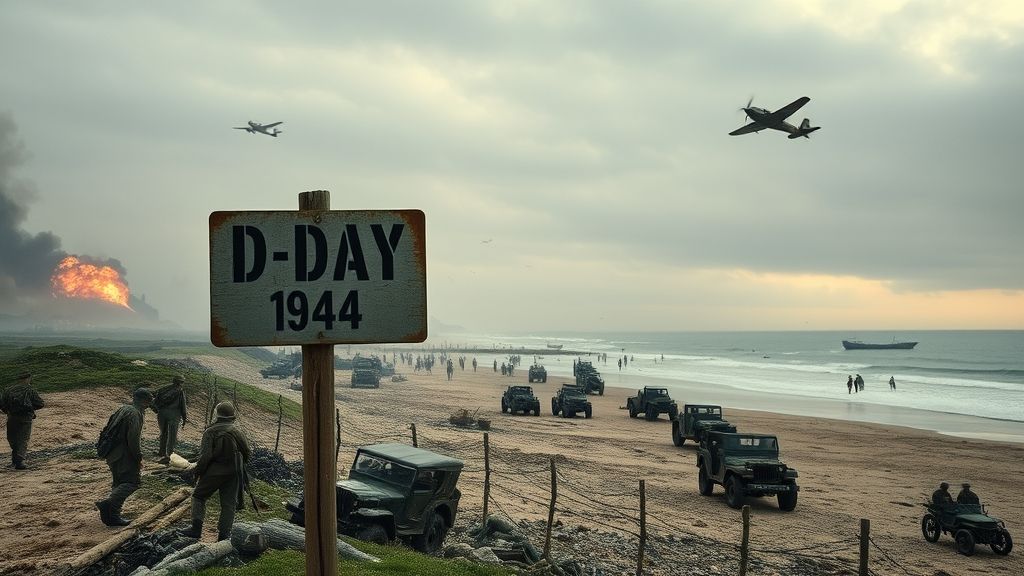
At approximately 6:30 AM, Allied troops began to storm the five designated landing sites along a 50-mile stretch of Normandy’s coast: Utah and Omaha for the Americans; Gold and Sword for the British; and Juno for the Canadians.
The German Atlantic Wall defenses were formidable—steel-reinforced bunkers, minefields, barbed wire, and ramparts designed to annihilate any invading force. On some beaches, especially Omaha, the American forces faced devastating machine gun fire, artillery, and rough surf that capsized landing craft.
Bodies fell, yet waves after waves of soldiers pressed forward. At Utah Beach, comparatively lighter resistance allowed American forces to establish an early foothold, but at Omaha, the fighting was brutal and chaotic. British and Canadian troops also met fierce resistance, particularly at Juno, where the tide and German fire threatened to sweep them back into the sea.
Blood and Sand: The Brutality of Infantry Against Atlantic Wall Defenses
The courage displayed by the infantry in the face of such obstacles was staggering. Men clawed their way over obstacles, disarming mines under fire, and storming pillboxes at immense personal cost. Sergeant Harrison Summers of the 1st Infantry Division famously charged a Flamingo pillbox alone, his actions pivotal in breaking defenses.
Medics, engineering corps, and helpers struggled alongside combat troops in a concert of human determination and suffering. Casualties were staggering: over 4,000 Allied soldiers died, and many more were wounded.
Yet, the relentless push forward showed the invaders’ resolve—each gun silenced, each dune taken, marked progress toward ultimate liberation.
The Role of Naval Power: Bombardments, Amphibious Landings, and Support
Behind the gallantry of foot soldiers stood the colossal effort of the Allied navies. Nearly 7,000 vessels took part, ranging from battleships to landing crafts. Naval gunfire support pummeled German strongpoints, albeit not always as effectively as hoped—particularly at Omaha Beach, where fire support came too late or was inaccurate.
Naval personnel faced their own perils. Mines, coastal batteries, and adverse weather made the crossing and landing treacherous. Nevertheless, the armada delivered men, weapons, and supplies essential for sustaining the assault beyond the beaches.
The Human Stories: Heroism, Fear, and Sacrifice in the Crucible
Amid the grand sweep of strategy and machinery, the human dimension of D-Day pulses vividly. Stories like those of Captain John Miller (later immortalized in popular culture) or the nurse who administered aid under fire remind us of individual bravery.
Fear was natural; many soldiers wrote letters to loved ones forged during lulls, and whispered prayers mingled with the roar of guns. Ordinary men transformed by extraordinary circumstances embodied the fragile line between life and death, heroism and tragedy.
Weather, Chance, and Innovation: The Gamble That Made D-Day Possible
General Eisenhower’s decision to launch on June 6 was a masterstroke of blending meteorology with strategic necessity. Forecasters predicted a brief window between storms—a gamble that could have spelled disaster had the weather shifted again.
Technological innovations such as the "Mulberry harbours," portable harbors shipped across the channel, and "Hobart’s Funnies" (specialized tanks equipped for obstacle clearance) showcased creativity born out of necessity.
Without these advancements, sustaining the beachheads would have been nearly impossible.
Overcoming Chaos: Command and Control Amidst Explosions and Confusion
The fog of war enveloped Normandy. Radio communications faltered; leaders were lost or separated. Yet, initiative from small units enabled progress despite the chaos.
Brigadier General Theodore Roosevelt Jr. famously led troops at Utah Beach despite his health problems, exemplifying leadership amid turmoil.
The ability to adapt, improvise, and coordinate under fire demonstrated the training and resolve that underpinned Allied success.
Resistance on the Ground: French Civilians and the Maquis’ Silent Battle
While guns roared on beaches, silent warriors fought behind enemy lines. French Resistance fighters (the Maquis) undertook sabotage, disrupted communications, and supported paratroopers with intelligence and shelter.
Civilians faced enormous risk: reprisals from the Gestapo, forced labor, and destruction. Their resilience added a critical dimension to the liberation effort—one of courage in occupation and hope in the storm.
Breaking Through: The Establishment of the Beachheads and Advancing Inland
By nightfall, all five beachheads had been secured, though at varying costs and with differing degrees of territorial gain. The objective was to link these beaches to open the way for a full-scale advance toward Paris and beyond.
Tanks and infantry pushed inland, meeting pockets of resistance, but the momentum favored the Allies.
The next weeks would see ferocious battles in Normandy’s bocage country, as German forces scrambled to contain the breach in their fortress.
The Larger War: How D-Day Shifted the Tide Toward Victory in Europe
D-Day was not the end but a defining beginning. It forced Germany to fight a two-front war anew, accelerating the collapse of the Third Reich.
The Soviet advance from the East combined with Western Allied pressure hastened liberation across occupied Europe.
Strategically and symbolically, D-Day galvanized Allied efforts and global resolve, laying groundwork for ultimate victory.
Political Reverberations: Allied Unity and the Road to Peace Negotiations
The invasion solidified cooperation among Allies but also revealed underlying tensions. Churchill, Roosevelt, Stalin, and their generals navigated political complexities alongside military strategy.
Post-invasion, negotiations began to shape the post-war world—from the Yalta Conference to the setting of new international orders.
The Legacy of D-Day: Memory, Monuments, and the Passing of Witnesses
Normandy became a sacred space—graves, cemeteries, and museums remind nations of sacrifice.
Each anniversary calls survivors, descendants, and historians to witness, reflect, and educate.
As living memories fade, these sites embody collective gratitude and solemn remembrance.
Lessons from Normandy: Strategy, Sacrifice, and the Cost of Freedom
D-Day underscores the cost of difficult freedom: bravery, loss, innovation, and international collaboration.
It teaches the necessity of preparation, flexibility, and resolve in facing overwhelming odds.
Its story remains a beacon for understanding the complex interplay of human courage and strategic vision.
Conclusion: The Dawn of Liberation and the Human Spirit Undaunted
June 6, 1944, was not simply a military operation; it was humanity’s statement against tyranny. As the sun cast light upon the bullet-riddled coasts of Normandy, it also illuminated the persistence of hope.
Amid pain and sacrifice, ordinary individuals rose to extraordinary challenges. The LandingCrafts, paratroopers in the dark, medics in the mud, and citizens resisting oppression forged a mosaic of resilience.
D-Day’s enduring message reminds us that even in our darkest hours, unity, courage, and determination can reclaim light. The Battle of Normandy was a monumental turning point—yet, above all, it was a testament to the indomitable human spirit.
FAQs on the Normandy Landings
Q1: What were the main objectives of the D-Day landings?
The primary goal was to establish a secure foothold in Normandy from which the Allies could liberate occupied France and eventually defeat Nazi Germany. This involved securing five beachheads, cutting off German reinforcements, and capturing key terrain inland.
Q2: How did the Allies achieve surprise despite the scale of the invasion?
Through elaborate deception campaigns like Operation Bodyguard, involving fake equipment, misinformation, and radio broadcasts, the Allies convinced the Germans the invasion would occur elsewhere, notably at Pas de Calais, delaying German deployment to Normandy.
Q3: Which nations participated in the Normandy invasion?
Primarily the United States, United Kingdom, and Canada conducted the landings, but troops from Free France, Poland, Belgium, Norway, and other Allied nations also took part in various capacities.
Q4: How significant were the airborne operations to the success of D-Day?
Crucial. Airborne troops disrupted German defenses, secured key positions behind enemy lines, and prevented counterattacks, enabling infantry to advance more effectively on the beaches.
Q5: What were the German forces’ preparations and responses on D-Day?
Germany had fortified the Atlantic Wall and had experienced commanders, but confusion, poor weather, and Allied deception delayed their response. Many German units were understrength or held in reserve due to Hitler’s hesitations.
Q6: How is D-Day commemorated today?
Each year, ceremonies, memorial services, and reenactments honor the veterans and fallen. Normandy hosts several museums and cemeteries dedicated to the event, encouraging education and remembrance for future generations.
Q7: What was the human cost of the Normandy Landings?
Approximately 4,400 Allied soldiers died on D-Day, with thousands more wounded or missing. German casualties are estimated to be higher in the following weeks. The civilian population suffered casualties and displacement.
Q8: How did D-Day influence the outcome of World War II?
It marked the beginning of the end for Nazi Germany by opening a Western front, relieving pressure on Allied armies elsewhere, and bolstering morale among the Allies and occupied peoples.