Table of Contents
- A Scorching Awakening: The Dawn of Dallol’s Fury in 1926
- The Geology of Fire: Understanding the Dallol Landscape
- Ethiopia in the 1920s: A Nation on the Edge of Modernity
- The Pre-Eruption Signs: Whisperings Beneath the Earth
- The First Explosions: When the Desert Roared to Life
- A City of Flames: Witnessing the Inferno in the Afar Depression
- Into the Acidic Mists: The Strange Chemistry of the Eruption
- Human Reactions: Fear, Fascination, and Folklore
- Scientific Expeditions: Seeking Knowledge Amidst Danger
- The Role of Colonial Interest and Global Curiosity
- Aftermath of the 1926 Eruption: Scars on the Landscape
- Environmental Impact: The Permanent Landscape Alteration
- The Death and Life of the Dallol Volcano: Dormant or Sleeping?
- The Eruption’s Place in Ethiopian History
- Dallol in Modern Times: A Living Laboratory of Extremes
- The Legacy of 1926: Lessons on Volcanic Activity and Human Resilience
- Cultural Imprints: How Dallol Shaped Local Mythology
- Economic Shadows: Salt, Sulfur, and Survival in the Rift
- The Global Scientific Significance of Dallol’s Volcanism
- Echoes Through Time: Recollections and Accounts from Witnesses
- Conclusion
- FAQs
- External Resource
- Internal Link
1. A Scorching Awakening: The Dawn of Dallol’s Fury in 1926
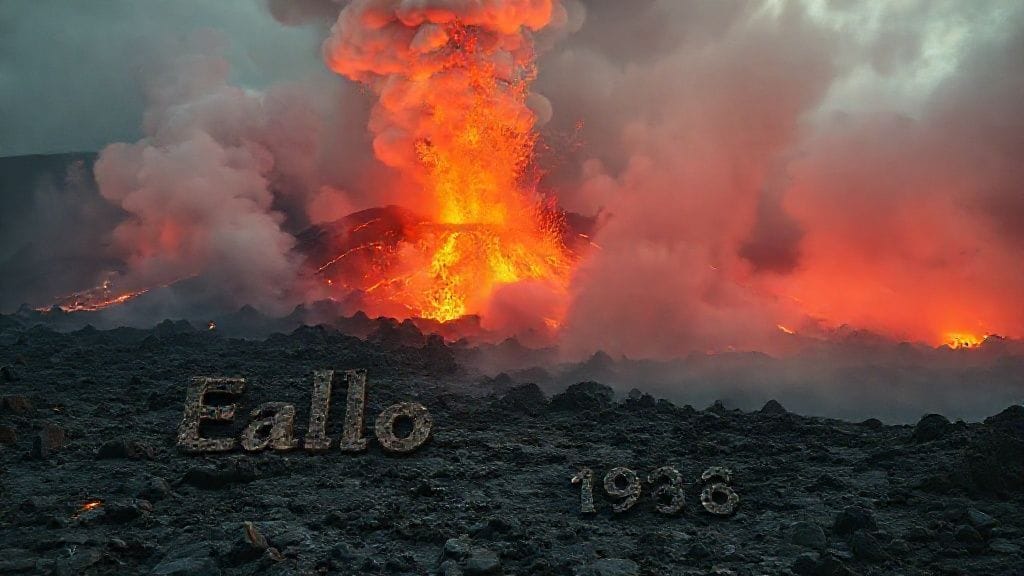
August 1926 arrived across the harsh landscape of Ethiopia’s Danakil Depression with its usual baking heat and bombarding sunlight. Yet beneath the sun-bleached plains of this unforgiving desert, the earth was preparing an otherworldly spectacle—an eruption that would transform this already surreal place into one of the planet’s most enigmatic and hostile volcanic wonders. No thunderous earthquake jolted the region beforehand; no ancient prophecy warned the nomads inhabiting the fringes of this infernal place. Instead, the eruption began suddenly, violently, and unpredictably, like the breath of a sleeping dragon breaking free.
From the fissures of cracked salt flats and dried mud, black smoke billowed. Acidic steam hissed and boiled, painting the air with a sulfurous tang that choked the nostrils and stung the eyes. Flames flickered across mineral deposits, glowing scenes worthy of Dante’s infernos. Locals watched in horrified fascination as the earth cracked open, releasing rivers of molten salt and volatile sulfur into a furnace unlike any other. This was the eruption of Dallol, Ethiopia’s volcanic heart, and the beginning of a narrative that carries echoes of nature’s raw power, human endurance, and scientific discovery to this day.
2. The Geology of Fire: Understanding the Dallol Landscape
Dallol sits precariously within the Afar Triangle—a geological depression where three tectonic plates meet in a slow, relentless dance that tears the Earth’s crust apart. This rift valley, part of the East African Rift system, is one of the hottest places on Earth, and a hotbed of volcanic activity. The area’s geological complexity is staggering: shallow magma reservoirs lurk near the surface, overlain by thick salt deposits left behind by ancient evaporated seas.
Unlike the towering volcanoes that conjure images of fire-spitting mountains, Dallol is a hydrothermal volcano. Its eruptions are driven not only by molten rock but by superheated fluids saturated with minerals—especially sulfur and salt. The volatile interaction between heat, water, and chemical deposits creates strange, colorful chimneys and terraces, effectively painting the landscape with neon yellows, greens, and oranges. Yet this beauty belies an environment of extreme toxicity and danger.
3. Ethiopia in the 1920s: A Nation on the Edge of Modernity
In 1926, Ethiopia was ruled by Emperor Lij Iyasu, a time marked by significant political tension. It was one of the few independent African states resisting full colonial subjugation, an image of pride amidst the European carved-up continent. The country was a mosaic of tribal societies, burgeoning urban centers, and a rugged rural population deeply connected to the land.
The remote Afar Depression, where Dallol is located, was home to pastoralist Afar tribes who lived in relative isolation, governed by oral traditions and intimate knowledge of their harsh environment. For them, the land was not merely a physical space but a realm inhabited by spirits and tempered by history. The eruption’s arrival disrupted this fragile balance, stirring fears of cosmic anger and mysticism.
4. The Pre-Eruption Signs: Whisperings Beneath the Earth
Natural disasters rarely strike without warning, and Dallol was no exception. In the months preceding August 1926, residents reported unusual tremors and distant rumbles echoing through the barren plains. Deep within the earth, the increasing pressure of molten magma forced its way into near-surface fractures. Geothermal activity escalated sharply, warming the groundwater to boiling, causing geysers and fumaroles to spew with new vigor.
Animals became restless; grazing herds scattered, and tribesmen noted the thickening smell of sulfur that predated the eruption. Yet, without formal scientific observation in this remote region, these signs remained word-of-mouth warnings, classified more as omens than natural phenomena.
5. The First Explosions: When the Desert Roared to Life
The eruption’s first outbreak was sudden and dramatic. In early August, columns of steam erupted violently, sending plumes of black smoke piercing an azure sky. The earth convulsed with crackling sounds as fissures tore open—some spanning hundreds of meters. Pools of boiling brine bubbled acid-laden vapors while sulfur crystals crystallized rapidly on newly formed vents, yellow against the dark volcanic rock.
Nomadic Afar tribes watched from a distance, torn between terror and awe. They described the event in oral histories as "the earth’s breath of fire," a phenomenon both destructive and divine. There was no time for organized evacuation; the eruption spread unpredictably in swaths, leaving behind a tableau of devastation and raw geological transformation.
6. A City of Flames: Witnessing the Inferno in the Afar Depression
Dallol itself was no city in the urban sense, but a mining settlement built around salt and sulfur extraction. Moments before the eruption, it was a hub of labor under brutally hot skies, where workers harvested crystalline salt deposits shimmering white against the desert backdrop. But the volcanic upheaval obliterated the operational camps, forcing survivors to flee amid choking smoke and cascading acidic fluids.
Explorers and early photographs from international expeditions reveal images of towering yellow sulfur spires, steaming pools of acid water, and vibrant mineral terraces—an alien landscape where fire met water in perpetual conflict. The horror and beauty of the eruption left indelible marks on all who witnessed it, painting a vision of nature’s duality: creation through destruction.
7. Into the Acidic Mists: The Strange Chemistry of the Eruption
One of the defining features of the Dallol eruption was the chemical symphony playing beneath the volcanic spectacle. The magma’s interaction with mineral-rich layers and saline groundwater produced fumes dense with hydrogen sulfide and sulfur dioxide—gases that transformed into vivid sulfuric acid deposits once cooled.
This acid rain etched the landscape, reshaping the terrain and poisoning water sources. Pools of bright yellow sulfur slush, mixed with salt, solidified into crusts sparkling under the relentless sun. These unusual chemical reactions made Dallol a unique natural laboratory for understanding extremophile life forms and mineralogy, though at the time, scientific knowledge was minimal.
8. Human Reactions: Fear, Fascination, and Folklore
The eruption did not only rupture the geological core of Dallol but also the cultural and spiritual fabric of its inhabitants. The Afar people, deeply spiritual, interpreted the eruption as a potent sign—a harbinger of change or punishment from the spirits governing the volcanic earth.
Storytellers wove narratives about fire demons and subterranean dragons, cautionary tales passed down with trembling voices around campfires. Yet this was also an age of curiosity; European explorers and scientists arrived, drawn by tales of the fiery maelstrom—oscillating between apprehension and fascination.
9. Scientific Expeditions: Seeking Knowledge Amidst Danger
Following the eruption, several daring expeditions ventured into the Afar Depression, attempting to map and understand the phenomenon. French, British, and Italian researchers braved the extreme heat, poisonous gases, and unstable terrain to collect rock samples and observe the hydrothermal activity.
Perhaps the most famous scientist to study Dallol in later decades was geologist William L. Fisher, whose pioneering work laid the foundation for modern volcanic gas analysis. While 1926's eruption caught the world’s attention, it would be decades before comprehensive scientific scrutiny unraveled the volcano’s mysteries.
10. The Role of Colonial Interest and Global Curiosity
Though Ethiopia remained fiercely independent, colonial powers eyed its strategic location and natural wealth with jealousy. The eruption stirred international curiosity—not just scientific but geopolitical. Italy, having territorial ambitions in the Horn of Africa, sought control over mineral resources like sulfur, a valuable commodity, while Britain maintained interests in nearby Somaliland.
Scientific reports and sensational news spread in European papers, intertwining natural history with imperial aspirations. The volcanic spectacle became a symbol of “untamed Africa,” simultaneously feared and coveted.
11. Aftermath of the 1926 Eruption: Scars on the Landscape
The eruption left behind profound changes: miles of cracked earth, new hydrothermal vents, and thick sulfur deposits blanketed the region. Entire salt pans were destroyed or altered. Vegetation, scarce to begin with, was wiped out near the eruption sites, and water sources were contaminated with acid and heavy metals.
Yet the volcanic activity had not ended completely; fumaroles persisted, and the landscape slowly evolved as new minerals precipitated from cooling lava and splashes of brine. The scars were permanent—visible reminders of the earth’s restless energy, testifying to nature’s power beyond human control.
12. Environmental Impact: The Permanent Landscape Alteration
Dallol’s eruption reshaped the fragile ecosystems of the Afar Depression. Though life here is minimal due to aridity and heat, unique microbial communities adapted to the acidic pools and sulfurous mists. The eruption’s chemical aftermath created microhabitats rich in extremophiles—organisms thriving where few others can survive.
For the Afar pastoralists, the altered waters and grazing lands forced adjustments in migration and survival strategies. The volatile environment became a harsh teacher of resilience, adaptation, and respect for nature’s caprices.
13. The Death and Life of the Dallol Volcano: Dormant or Sleeping?
Following the major 1926 eruption, Dallol settled into a quiet phase with intermittent hydrothermal activity. Scientists have debated whether the volcano is truly extinct or merely sleeping. Its low-profile eruptions and steady fumarolic activity suggest an ongoing magma supply, hinting at future unrest.
Modern satellite observations and geothermal studies have confirmed that Dallol remains one of the hottest areas on Earth’s surface, a reminder that beneath the seemingly still landscape lies a volatile underworld waiting to reawaken.
14. The Eruption’s Place in Ethiopian History
Though geographically remote, the 1926 eruption etched its mark in the national consciousness. Amidst Ethiopia’s complex political narrative—marked by modernization efforts and external pressures—the event symbolized both nature’s threat and Ethiopia’s enduring spirit.
It reminded the world that Ethiopia’s landscape encompassed extremes: from lush highlands to burning deserts, each carrying its own story. The Afar people’s resilience and cultural persistence became emblematic of ethnic survival against harsh odds.
15. Dallol in Modern Times: A Living Laboratory of Extremes
Today, Dallol attracts geologists, chemists, astrobiologists, and adventurous tourists who marvel at its acidic geysers, mineral terraces, and surreal colors. The 1926 eruption was the opening chapter of a continuing saga; periodic geysering and salt dome formations persist as scientists probe life in extreme conditions here.
NASA-funded research uses Dallol as an analog for Martian environments, seeking clues about the possibility of life on other planets. The volcano’s fiery awakening almost a century ago laid the foundation for such groundbreaking interdisciplinary studies.
16. The Legacy of 1926: Lessons on Volcanic Activity and Human Resilience
The 1926 Dallol eruption remains a profound lesson on the intricate ties between earth systems and human societies. It exemplifies how geological phenomena shape, disrupt, and sometimes inspire local cultures. It speaks to the need for blending traditional knowledge with scientific inquiry when facing natural disasters.
Moreover, it underlines the capacity for humans to adapt—not just survive, but learn and even find wonder under extreme conditions.
17. Cultural Imprints: How Dallol Shaped Local Mythology
Among the Afar, stories of fire spirits and earth monsters have long accompanied natural eruptions. The 1926 event resurrected and amplified these oral traditions, embedding new layers of meaning. Elders recount the eruption as a “message from the ancestors” and “anger of the earth mother,” reinforcing cultural identity and spiritual reverence for the land.
Music, dance, and rituals incorporate these natural events, celebrating survival and the balance between respect and fear.
18. Economic Shadows: Salt, Sulfur, and Survival in the Rift
Salt mining near Dallol has been a cornerstone of local economy for centuries and remains so. The eruption temporarily halted mining operations but also deposited rich sulfur veins, boosting mineral extraction potential. However, the hazardous environment limits industrial exploitation.
Trade routes adjusted, and people adapted to the shifting terrain—highlighting a dynamic interplay between geological upheaval and economic necessity in one of the world’s most extreme settings.
19. The Global Scientific Significance of Dallol’s Volcanism
Dallol’s 1926 eruption foreshadowed decades of multidisciplinary research that would make this volcano a unique natural laboratory. Insights into hydrothermal chemistry, extremophile organisms, and acid volcanism enriched fields from geology to astrobiology.
Its unparalleled conditions challenge existing models of volcanic behavior and planetary geology—a beacon for progress in understanding Earth’s inner workings and beyond.
20. Echoes Through Time: Recollections and Accounts from Witnesses
Though sparse, historical reports and indigenous narratives bring a human face to the 1926 eruption. Travelers described sensory overload—the unbearable heat, stinging fumes, and vivid colors. Tribesmen’s testimonies preserved the emotional weight: awe, fear, reverence.
These accounts remain crucial for reconstructing the event’s impact, bridging the gap between raw data and lived experience, reminding us that history is not just facts but human stories etched in time.
Conclusion
The 1926 Dallol eruption in Ethiopia was no mere geological incident—it was a dramatic testament to the power and paradox of nature. In a place where life fights against heat, acid, and isolation, the earth shattered its quiet surface to reveal an infernal spectacle of fire and mineral brilliance. This eruption rewrote landscapes and lives, challenged scientific understanding, and deepened cultural narratives.
But beyond the sulfurous columns and boiling pools lies a story of resilience: of people adapting, of landscapes regenerating, and of knowledge expanding. Dallol’s fiery awakening reminds us how closely human destiny is interwoven with geological spectacle—and how, even in destruction, there is wonder and wisdom to be found.
FAQs
Q1: What caused the Dallol eruption in 1926?
A1: The eruption was triggered by tectonic activity in the Afar Triangle, where diverging plates allowed magma to rise close to the surface, interacting with mineral-rich groundwater to produce an explosive hydrothermal event.
Q2: How did the eruption impact local communities?
A2: The eruption disrupted salt mining, forced nomads to alter migration routes, and deeply influenced local spiritual beliefs, blending natural disaster with cultural meaning.
Q3: Is Dallol still volcanically active today?
A3: While the major eruption occurred in 1926, Dallol remains hydrothermally active with ongoing fumaroles and geysers suggesting it is dormant rather than extinct.
Q4: Why is Dallol of interest to scientists today?
A4: Its extreme environment offers unique insights into volcanic chemistry, extremophile life, and planetary analogs useful for astrobiology, especially in conditions similar to Mars.
Q5: How did the 1926 eruption shape Ethiopia’s national history?
A5: Though geographically remote, it symbolized Ethiopia’s rugged resilience and natural extremities within the broader narrative of a nation navigating colonial pressures and modernization.
Q6: What is unique about the chemical composition of Dallol compared to other volcanoes?
A6: Dallol’s eruptions involve acid hydrothermal fluids rich in sulfur and salts, creating vivid mineral formations unlike the typical lava flows of basaltic or andesitic volcanoes.
Q7: Are there any lasting environmental effects from the eruption?
A7: Yes, the eruption altered the landscape permanently, created new mineral deposits, and influenced the local ecosystem by changing water chemistry and habitats.
Q8: How do local Afar people remember the eruption?
A8: Through oral traditions that describe it as a spiritual event with both destructive and sacred dimensions, incorporating it into ongoing cultural identity.

