Table of Contents
- A Fateful Morning in London: The Last Day of Daniel Defoe
- Daniel Defoe: The Man Behind the Pen
- Early Life and Formative Years: The Making of a Writer
- London in the Early 18th Century: A City of Change and Contrasts
- Defoe’s Literary Advent: From Pamphleteer to Novelist
- The Rise of a Revolutionary Pen: Political and Social Commentary
- The Pinnacle of Defoe’s Career: “Robinson Crusoe” and Literary Fame
- Shadows of Controversy: Prison, Politics, and Censorship
- The Final Chapter: Defoe’s Health and Public Life in the 1720s
- April 24, 1731: Witnessing Death in the Heart of London
- Immediate Reactions: Obituaries, Eulogies, and the Public’s Mourning
- Defoe’s Legacy: Shaping the English Novel and Political Discourse
- The Cultural Imprint: How Defoe Influenced Generations of Writers
- From Burial to Myth: The Symbols and Stories after His Death
- Modern Reappraisal: Understanding Daniel Defoe in Today’s Historical Context
- The Resilience of Defoe’s Voice Amidst London’s Everchanging Landscape
- Conclusion: The End of a Life, the Beginning of a Legend
- FAQs About Daniel Defoe’s Death and Legacy
- External Resource
- Internal Link
1. A Fateful Morning in London: The Last Day of Daniel Defoe
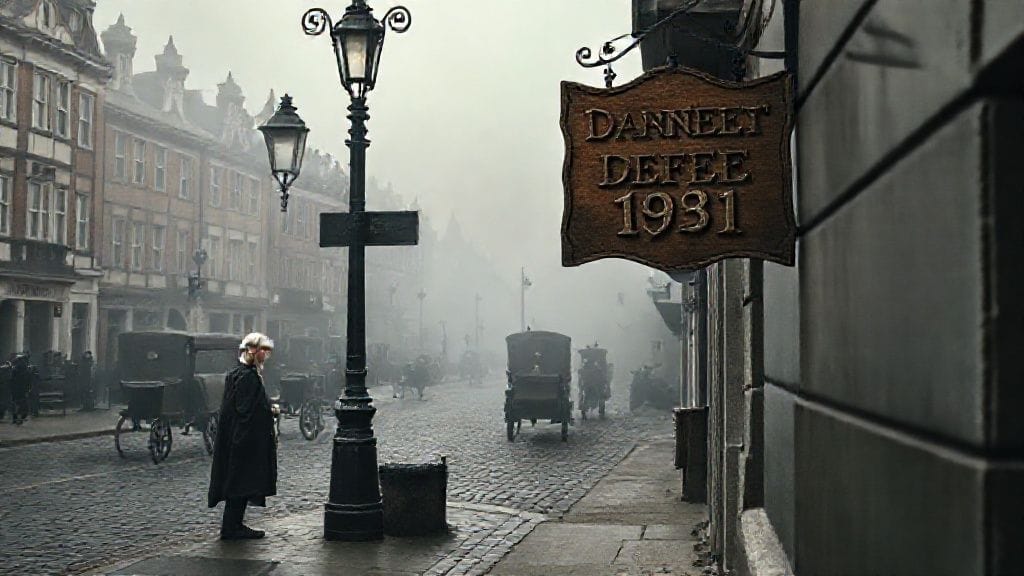
On the morning of April 24, 1731, a peculiar quietness settled over the city of London—a contrast to the otherwise bustling streets filled with merchants, tradesmen, and the ever-present clatter of horse-drawn carts. Amid the narrow alleys and smoky chimneys of Middlesex, Daniel Defoe, one of the literary giants of his century, drew his final breath. The world was perhaps unaware at that moment of the void his passing would create—a man who had chronicled, critiqued, and captured his society with a fractured but piercing insight. This wasn’t merely the end of a life; it was the closing of a turbulent chapter that had shaped the dawn of the English novel, journalism, and political thought.
Defoe’s death was not marked by public grandeur or royal mourning. Instead, it was a modest event, tucked into the fabric of London’s daily life—a death befitting a writer behind countless pseudonyms, whose identity was as mutable as the stories he penned. But the silence that followed his departure echoed loudly through literary circles both at home and abroad for centuries to come.
2. Daniel Defoe: The Man Behind the Pen
To understand the significance of Daniel Defoe’s death, we must first peel back the layers behind the enigmatic figure whose name is etched in the annals of literature and history. Born around 1660, Defoe was a prodigious writer, pamphleteer, merchant, and political activist, who navigated the volatile waters of early 18th-century England with relentless tenacity.
His writing was a mosaic—political satire, adventure tales, philosophical tracts, and social commentary. Defoe was many men in one, adopting countless personas to give voice to the marginalized, provoke debates, or sway public opinion.
Yet, the man’s personal life remained elusive, shadowed by disputes over his true origins, his frequent brushes with authorities, and a life marked by both flamboyant success and financial ruin. His death in London—then the heart of a changing England—heralded the loss of a literary pioneer whose work had indelibly molded the cultural landscape.
3. Early Life and Formative Years: The Making of a Writer
Daniel Defoe’s beginnings were humble and uncertain. Baptized in 1660 in the parish of St. Giles Cripplegate, London, he was born into a family of dissenting Protestants—a background that would deeply influence his worldview. The son of a butcher and a tradesman, he received a modest education, delving into languages, commerce, and theology.
It was this confluence of religious dissent, mercantile acumen, and intellectual curiosity that forged his early career. Defoe initially pursued commerce, traveling and trading goods, but his restless mind gravitated swiftly toward writing and political engagement. By the 1690s, his bold pamphlets defending dissenters and critiquing government policy had garnered considerable attention.
His early years thus crafted the writer who was both insider and outsider—acutely aware of economic realities yet fiercely critical of societal injustice.
4. London in the Early 18th Century: A City of Change and Contrasts
The London into which Defoe was born and where he died was a city transformed by fire, plague, and renewal. The Great Fire of 1666 had razed much of the medieval cityscape, leading to an architectural renaissance, but also a fracturing of community bonds.
By the early 1700s, London was bustling as an epicenter of trade and empire. It was a city of stark contrasts: immense wealth coexisted with dreadful poverty; political intrigue simmered beneath public debates; a growing middle class vied with the aristocracy for influence.
It was within this crucible of shifting power, cultural dynamism, and social upheaval that Defoe’s voice found both opportunity and opposition, his works mirroring the tensions and aspirations of the age.
5. Defoe’s Literary Advent: From Pamphleteer to Novelist
Though we now remember Daniel Defoe largely as the author of Robinson Crusoe, he began his literary career with pamphlets—a popular and powerful medium for political and religious discourse.
Defoe’s pamphlets were characterized by incisive wit and boldness. They tackled issues like trade policy, religious tolerance, and social reform, often courting controversy. He wrote under a plethora of pseudonyms, allowing him to explore divergent viewpoints and evade censorship.
By the early 18th century, Defoe was firmly established as a public intellectual. His keen observations and accessible prose would eventually help birth the English novel, forging narrative techniques that blended realism with imaginative storytelling.
6. The Rise of a Revolutionary Pen: Political and Social Commentary
Defoe was more than a storyteller; he was a commentator and agitator. His writings reflect a man deeply engaged with the epoch’s pressing issues—war, poverty, liberty, and commerce.
In a period marked by the War of Spanish Succession and shifting alliances, Defoe lent his pen to rallying support for national causes. He advocated for economic modernization, critiqued corruption, and championed the rights of minorities, particularly religious dissenters who faced discrimination under the Anglican establishment.
His boldness, however, came at a cost: imprisonment and public censure. Yet, these experiences only sharpened his voice, lending an urgency and authenticity to his prose that continues to resonate.
7. The Pinnacle of Defoe’s Career: “Robinson Crusoe” and Literary Fame
In 1719, Daniel Defoe published Robinson Crusoe, a novel that would forever change the literary world. Presented as a true account, the tale of a shipwrecked sailor’s survival on a desert island captured imaginations not only in England but across Europe.
The novel blended adventure, economic self-reliance, religious reflection, and personal morality—factors reflective of Defoe’s own values and the century’s colonial ambitions.
Robinson Crusoe was a commercial success and elevated Defoe to international fame, although he continued to write prolifically on diverse subjects. The book’s success also obscured the depth and political commitment of much of his other work.
8. Shadows of Controversy: Prison, Politics, and Censorship
Despite literary success, Defoe’s life was never free from political peril. His outspokenness led him into trouble with authorities, culminating in imprisonment around 1703 for sedition—an episode that exemplified the fraught relationship between writers and power at the time.
Defoe’s adaptability and sense of irony saw him survive these storms, but his career was intermittently marred by financial instability, legal battles, and censorship.
This precarious existence makes his body of work all the more remarkable—born from a man who stood at the crossroads of England’s evolving ideas about freedom, governance, and the press.
9. The Final Chapter: Defoe’s Health and Public Life in the 1720s
By the 1720s, Daniel Defoe was nearing his seventies, an advanced age for the period. Reports suggest his health was declining gradually, possibly exacerbated by the strain of his relentless work ethic.
Though no longer the political firebrand of his youth, Defoe maintained his literary productivity. He remained engaged with London’s intellectual circles and continued to write on matters of economy and religion.
Yet, his public stature was more subdued, a quiet fading within the very city whose transformation he had so vividly chronicled.
10. April 24, 1731: Witnessing Death in the Heart of London
The day of Daniel Defoe’s death was unremarkable in outward appearance yet monumental in spiritual weight. On April 24, 1731, Defoe passed away in London, likely at his residence in the Soho area, under the gloomy skies of spring.
Eyewitness accounts are scarce, but letters from acquaintances spoke of a man worn but resolute to the end. His wife and close friends were present in his final moments—silent witnesses to the death of a literary titan.
The city barely paused to mourn, a reflection perhaps of Defoe’s complicated position—a celebrated writer whose life was as contested as the stories he told.
11. Immediate Reactions: Obituaries, Eulogies, and the Public’s Mourning
News of Defoe’s death spread gradually through the literary and political circles of London. Several newspapers and pamphlets commemorated his contributions, praising his versatile intellect and indomitable spirit.
Eulogies noted his unyielding commitment to truth and his pioneering role in English letters. Yet, these tributes were tempered by acknowledgment of his contentious career and the many enemies he had made.
For the general populace, Defoe was both a name and a symbol—the storyteller who had given voice to common men and critiqued the powerful alike.
12. Defoe’s Legacy: Shaping the English Novel and Political Discourse
Daniel Defoe’s death marked not only the end of a life but the solidification of a legacy that would echo into the foundations of modern literature and journalism.
His innovations in narrative form—especially the use of first-person perspective and detailed realism—pioneered what would become the English novel.
Politically, his fearless exploration of dissent shaped public debate on freedom of speech, religious tolerance, and the role of the press.
Through his death, Defoe passed the torch to generations of writers who balanced storytelling with social conscience.
13. The Cultural Imprint: How Defoe Influenced Generations of Writers
The ripples from Defoe’s pen extended far beyond his lifetime. Authors from Samuel Richardson to Charles Dickens acknowledged his influence in crafting believable characters and everyday struggles.
His blending of fact and fiction inspired new genres, including the journalistic novel and political satire. The durability of Robinson Crusoe as a cultural touchstone attests to his storytelling prowess and its relevance across epochs.
In classrooms, theaters, and literary salons, Defoe remains a presence, embodying the restless spirit of early modern England.
14. From Burial to Myth: The Symbols and Stories after His Death
Daniel Defoe was buried in Bunhill Fields, a cemetery known for Nonconformist burials, emblematic of his lifelong affiliations.
Over time, stories and myths accrued around his grave—tales of the 'Father of the English Novel' watching over London, or the mysterious figure behind multiple pseudonyms.
These narratives, woven from fragments of truth and imaginative need, reflect society’s enduring fascination with a man who blurred reality and fiction.
15. Modern Reappraisal: Understanding Daniel Defoe in Today’s Historical Context
Contemporary scholarship reexamines Defoe not merely as a literary figure but as a complex commentator on issues of capitalism, colonialism, and identity.
Modern critics explore the contradictions in his work—the celebration of individualism alongside colonial complicity, the advocacy for liberty shadowed by political expediency.
His death, thus, invites reflection on how historical figures are remembered, contested, and repurposed through the ages.
16. The Resilience of Defoe’s Voice Amidst London’s Everchanging Landscape
London after Defoe continued to evolve—industrializing, expanding, and modernizing. Yet his narratives—of survival, commerce, morality—remain echoes within the city’s ongoing story.
His ability to capture the London spirit—its energy, its turmoil, its diversity—testifies to a writer whose voice, though silenced in 1731, never fully faded.
17. Conclusion: The End of a Life, the Beginning of a Legend
Daniel Defoe’s death on April 24, 1731, closed the life of a man whose restless intellect and fearless pen tore open boundaries—literary, political, and social.
Yet, death did not silence him; it enshrined a legacy that thrives in every novel, newspaper, and discourse on freedom.
He was the chronicler of human struggle and survival, and through his passing, he became immortal—a Londoner whose stories still walk the streets.
FAQs About Daniel Defoe’s Death and Legacy
Q1: What were the main causes leading to Daniel Defoe’s death in 1731?
A1: While exact medical records are scarce, Defoe was in declining health likely due to age-related causes and a lifetime of intense labor and stress. At about 70 years old, this was quite advanced in the 18th century.
Q2: How did London society react to Defoe’s death at the time?
A2: The public reaction was moderate; literary and political circles acknowledged his contributions through obituaries and eulogies, but popular mourning was muted, partly due to his controversial life.
Q3: Why is Daniel Defoe significant in literary history?
A3: Defoe is often credited as one of the founders of the English novel, pioneering narrative techniques and blending fact with fiction in works such as Robinson Crusoe.
Q4: Did Defoe’s death affect the publication or reception of his works?
A4: His death did not immediately alter his literary reputation; however, over time, his works gained classic status, and his influence grew as the novel form matured.
Q5: Where is Daniel Defoe buried?
A5: Defoe is buried in Bunhill Fields Cemetery in London, a burial site for many Nonconformists and dissenters.
Q6: How do modern scholars view Defoe’s legacy?
A6: Modern studies approach him as a complex figure intertwined with issues of colonialism, capitalism, and early journalism, acknowledging both his innovations and contradictions.
Q7: Did Defoe’s political views change throughout his life?
A7: Yes, his political stance evolved with the tumultuous times; he was pragmatic, sometimes contradictory, but consistently engaged with questions of power and liberty.