Table of Contents
- The Fateful Dawn of August 31, 1968
- The Quiet Before the Quake: Ferdows in Context
- Geological Shadows: Why Dasht-e Bayaz was Primed for Disaster
- The Earth Trembles: The Unfolding of the Dasht-e Bayaz Earthquake
- Voices from the Ruins: Eyewitness Accounts of a Shattered Town
- The Immediate Aftermath: Rescue, Loss, and Despair
- A Nation in Shock: Iran’s Response to the Calamity
- International Aid and Solidarity in the Wake of Chaos
- The Hidden Toll: Psychological and Social Impacts on Survivors
- Reconstruction and Healing: Ferdows Rising from the Ashes
- Seismology and Lessons Learned: Advancing Earthquake Science in Iran
- Political Ripples: The Earthquake in the Broader Iranian Context
- Literature and Memory: Commemorating Dasht-e Bayaz in Culture
- Comparing 1968 to Later Iranian Earthquakes: Patterns and Progress
- The Legacy of Dasht-e Bayaz Earthquake in Global Seismology
- Human Resilience in the Face of Nature’s Fury
- The Role of Media: Bridging the Distance Between Disaster and Awareness
- Disaster Preparedness: Iran’s Evolution Since 1968
- Personal Stories: Survivors Who Changed Their Communities
- Scientific Mysteries Surrounding the Event
- Environmental Consequences on the Landscape and Ecosystem
- The Earthquake as a Historical Marker of Change
- Conclusion: Remembering Dasht-e Bayaz Three Decades Later
- FAQs: Unpacking the 1968 Earthquake
- External Resources and Further Reading
- Internal Link: Visit History Sphere
The Fateful Dawn of August 31, 1968
In the chilling quiet of a late summer night, while the inhabitants of Dasht-e Bayaz and the town of Ferdows, nestled in eastern Iran, were entrenched in their usual routines—some tending to sheep under starry skies, others resting after a day’s toil—the earth began its tremble. It started as a subtle vibration, almost imperceptible, like a distant roar caressing the roots of the mountains. Within seconds, that rumble transformed into a merciless upheaval, ripping through the desert plain and shaking the foundations of homes, lives, and generations.
The ground beneath them heaved, cracked, and crumbled with a terrifying force calculated at a magnitude of approximately 7.3. It was as if the earth itself had broken open to exhale an ancient fury, uncontained and relentless. The Dasht-e Bayaz earthquake had struck, leaving devastation in its raw wake: thousands dead, countless injured, entire villages reduced to rubble, and a nation plunged into sorrow and disbelief.
This night—a defining moment for Iran—was about to reshape the collective memory of a land long marked by seismic vulnerability. But what precipitated such a violent convulsion? How did a region nestled in history and tradition come to face such a catastrophe? And how did its people confront the tragedy that followed?
The Quiet Before the Quake: Ferdows in Context
Before the earthquake, Ferdows was a town steeped in tranquil normality, framed by arid deserts and fertile orchards. Dassht-e Bayaz itself, a vast plain whose name translates to "White Plain," conjured images of stark beauty with salt flats shining under the sun like mirrors.
The people here lived mostly rural lives, bound by agricultural work and the rhythms of nature. Their homes—traditional adobe houses—were tightly knit clusters, practical but vulnerable to seismic forces. The social fabric was close-knit; communal ties ran deep through families and tribes, with traditions passed down amid the echoes of Persian history.
But the region had always been tinged by the threat of tectonic unrest. Iran sits on several active fault lines, most notably the Zagros Mountains thrust fault to the west and several strike-slip faults in the east. The Dasht-e Bayaz plain rested atop the complex collision zone between the Arabian and Eurasian tectonic plates, a simmering fault line steadily accumulating strain.
Geological Shadows: Why Dasht-e Bayaz Was Primed for Disaster
The scientific story behind the earthquake involves the intricate dance of colossal land masses beneath the earth’s crust. The Iranian plateau is among the most seismically active regions in the world, locked in a slow but inexorable collision between the Arabian Plate pushing northward against the Eurasian Plate.
Dasht-e Bayaz, positioned near the east-central stretch of these converging plates, sits astride a strike-slip fault—where blocks of earth slide sideways past one another. Throughout millennia, stress on this fault had intensified quietly. Fault lines, invisible yet potent, STORE energy, ultimately unleashing it when the frictional strength is overcome.
The 1968 tremor ruptured a 50-kilometer stretch of this fault, unleashing devastating shaking felt dozens of kilometers away. Scientists later identified it as involving left-lateral strike-slip movement, a type of horizontal slippage that exerts tremendous lateral shearing forces on the ground above.
Such geological context was well-known to some geologists of the era, but the warning systems and building technologies lagged behind this knowledge. The vulnerability of adobe structures compounded the hazard, rendering the region tragically exposed.
The Earth Trembles: The Unfolding of the Dasht-e Bayaz Earthquake
At precisely 00:22 local time, the earth gave way. The shockwaves traveled rapidly, sending ripples that shattered walls, collapsed roofs, and split the ground open. The main quake lasted mere seconds but left an indelible mark — aftershocks rippled for weeks, prolonging fear and making rescue efforts perilous.
Entire villages such as Ferdows, Farahabad, and Dasht-e Bayaz were engulfed in rubble. Accounts describe buildings “folding like paper” as the earth ripped beneath them. Eyewitnesses recall the cacophony of cracking timbers, falling stones, and the terrified screams of families caught in their homes.
This devastating scenario was compounded by the nighttime hour when most residents were asleep and unable to escape. “The shaking stopped for a moment, and then a louder roar followed—it was as if the mountains themselves were collapsing,” said one survivor in a later interview.
Voices from the Ruins: Eyewitness Accounts of a Shattered Town
Amid the ruin, the human stories shone brightest—humanity struggling to survive and rebuild in the face of nature’s wrath. Take the testimony of Fatemeh, a young woman who lost her family in the quake but managed to drag her injured brother out amid collapsing walls.
“Everything fell so fast, but I remember the stars still shining above,” she said decades later. “The earth swallowed our homes, but hope stayed with us in the cold desert night.”
Another survivor recalled how villagers formed chains to rescue neighbors, working by flashlight and the glow of fires sparked by broken gas lines. The resilience and communal spirit amid this tragedy were remarkable.
The Immediate Aftermath: Rescue, Loss, and Despair
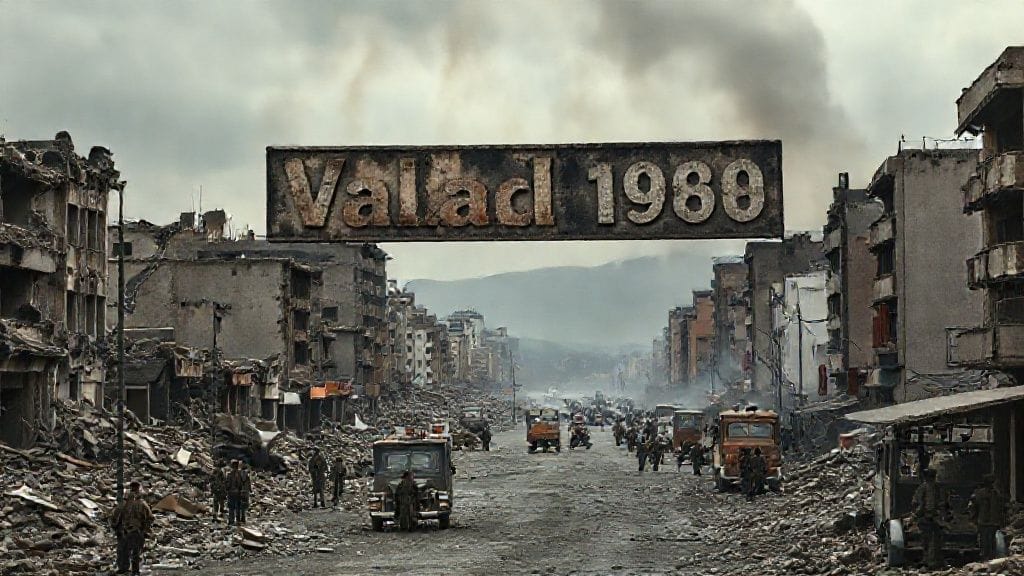
In the hours following the earthquake, the landscape transformed into a scene of desperate chaos. Roads were blocked by landslides, communications severed, and medical facilities overwhelmed. Rescue efforts were hampered by the remoteness of the area and the scale of destruction.
Initial death toll estimates exceeded 12,000, with many more injured or displaced. The dust settled slowly on towns twisted into unrecognizable shapes. Survivors faced the agony of missing loved ones and the heartbreaking decision to burn corpses to prevent disease. The sweltering summer heat only added to their misery.
A Nation in Shock: Iran’s Response to the Calamity
News of the tragedy spread swiftly across Iran, shocking the government and citizens alike. The Shah’s regime ordered emergency assistance, mobilizing military units and volunteers to aid the victims.
Yet the scale of devastation outpaced initial capacities. The disaster underscored weaknesses in infrastructure and emergency preparedness. Nevertheless, the call to action ignited national solidarity, with public donations, relief convoys, and medical teams dispatched to the desert plains.
This earthquake marked one of the worst natural disasters in Iran’s modern history at the time, sparking public debates on governance and state responsibility.
International Aid and Solidarity in the Wake of Chaos
Iran’s tragedy resonated internationally. Neighboring countries and global institutions extended assistance. The Red Cross and Red Crescent were active, alongside contributions of medical supplies and expertise from several nations.
This outpouring revealed the transcendent human empathy that disasters can evoke, transcending political boundaries. Foreign engineers and seismologists also arrived, interested in studying the quake’s mechanics to better predict future events across the seismically volatile region.
The Hidden Toll: Psychological and Social Impacts on Survivors
Beyond the physical ruins, survivors grappled with profound emotional scars. Trauma, grief, and uncertainty clouded entire communities. Many children lost parents; many adults endured survivor’s guilt.
The social fabric was strained as displaced families lived in temporary shelters, cut off from ancestral lands. Sociologists later noted that while many regrouped, the quake altered demographics, with some families permanently relocating.
Psychological aid was minimal in the 1960s Iran, a gap that added to suffering yet planted seeds for future advances in disaster mental health support.
Reconstruction and Healing: Ferdows Rising from the Ashes
With time came rebuilding efforts: new houses erected with improved designs, roads cleared, and schools reopened. Ferdows and neighboring areas slowly pulled themselves from devastation’s grip.
Debates emerged on how to best protect against future tremors. Enhanced awareness led to the introduction of stricter building codes—a slow but critical evolution.
Communities commemorated those lost through ceremonies and monuments, embedding the earthquake in local heritage and collective memory.
Seismology and Lessons Learned: Advancing Earthquake Science in Iran
The 1968 earthquake provided crucial data that enriched Iran’s seismological research. It allowed better mapping of fault lines and improved understanding of strike-slip events.
Iran’s geological institutions expanded their study, advocating for seismic risk management that would influence policies and urban design for decades.
The quake’s analysis contributed to global seismology, informing knowledge about earthquake mechanics in complex collision zones like the Zagros and surrounding plate boundaries.
Political Ripples: The Earthquake in the Broader Iranian Context
Politically, the disaster occurred during the Shah’s White Revolution era—a time of modernization and reform but also deep social tensions.
The earthquake’s impact exposed governmental shortcomings in disaster response and infrastructure resilience. Though genuine relief was deployed, some critics argued the regime missed opportunities to engage rural populations more meaningfully.
These fault lines of governance, social justice, and modernization continued to shape Iran’s trajectory leading into the tumultuous years ahead.
Literature and Memory: Commemorating Dasht-e Bayaz in Culture
The earthquake left marks on Persian literature and oral traditions. Poets wrote elegies mourning the lives lost and praising resilience. Folk stories preserved memories of the night when earth and sky clashed.
Documentaries and memoirs appeared, reminding newer generations of the fragility and strength intertwined in their homeland.
The event occupies a solemn place in Iran’s cultural memory—an enduring reminder of nature’s might and human endurance.
Comparing 1968 to Later Iranian Earthquakes: Patterns and Progress
The Dasht-e Bayaz quake resurfaced in comparisons with subsequent earthquakes in Iran, such as the devastating 1978 Tabas event or the 2003 Bam quake.
Analysis revealed patterns in fault behavior and emphasized persistent vulnerabilities. However, progress in engineering and emergency systems, partly born from lessons of 1968, led to improved survival rates in later disasters.
The Legacy of Dasht-e Bayaz Earthquake in Global Seismology
Internationally, the earthquake contributed valuable case studies on desert strike-slip faults and their potential destructiveness.
Iran’s experience underscored the necessity for integrating geological knowledge with urban planning—a principle now a cornerstone of modern seismic risk policy worldwide.
Human Resilience in the Face of Nature’s Fury
Perhaps the richest legacy of the Dasht-e Bayaz earthquake is the story of its people. Amid destruction, neighbors aided neighbors, survivors rebuilt lives, and communities refused to be erased.
This resilience, a universal human trait, shines as a beacon from the darkest of nights, and the courage displayed in Ferdows endures as inspiration.
The Role of Media: Bridging the Distance Between Disaster and Awareness
Though media in 1968 Iran was limited, newspapers, radio, and international news agencies played critical roles in disseminating information and mobilizing resources.
Images and reports traveled to distant lands, reminding the world of shared vulnerability to natural disasters—and the need for collective preparedness and empathy.
Disaster Preparedness: Iran’s Evolution Since 1968
The earthquake became a watershed moment for enhancing disaster resilience policies in Iran.
From improved building codes to the establishment of seismic monitoring networks, Iran incrementally increased its capacity to confront earthquakes—a journey still ongoing in a geologically restless land.
Personal Stories: Survivors Who Changed Their Communities
Individuals affected by the quake often emerged as community leaders—championing reconstruction efforts, advocating for safety improvements, and preserving memory through education.
Their courage exemplifies how tragedy can breed transformation and hope.
Scientific Mysteries Surrounding the Event
Despite advances, some questions linger: How precisely does stress transfer along strike-slip faults in this region? What triggered the timing of the 1968 rupture?
Ongoing research dives into these puzzles, propelled by the initial data gathered during that fateful night.
Environmental Consequences on the Landscape and Ecosystem
The seismic rupture altered groundwater flows, changed landforms, and affected arid vegetation patterns in the desert plain.
These subtle but enduring transformations remind us that earthquakes shape not only human lives but the natural world as well.
The Earthquake as a Historical Marker of Change
The Dasht-e Bayaz quake sits as a turning point in Iran’s modern history—not simply a natural disaster but a clarion call toward modernization, resilience, and respect for nature’s forces.
Its memory threads through Iran’s collective identity, a milestone on the road of progress and humility.
Conclusion
The Dasht-e Bayaz earthquake on that tranquil night of August 31, 1968, serves as one of history’s most poignant reminders of nature’s unpredictable power and humanity’s indomitable spirit. The seismic shockwaves did more than fracture rock and earth; they rippled through families, communities, and a nation in flux.
Yet from the desolation arose stories of hope—the overshadowed courage of survivors pulling each other from ruins, the resolve of a people rebuilding brick by broken brick, and the tireless efforts of scientists and policymakers to understand and mitigate future calamities.
This tragedy also reflects a timeless dance—between the earth’s restless movements beneath our feet and the fragile structures of human life. The legacy of Dasht-e Bayaz thus lives on, urging remembrance, preparedness, and compassion.
In the desert’s white plains, where once stood shattered adobe houses and broken dreams, a new Ferdows has risen—a testament to the resilience woven into the fabric of humanity’s story.
FAQs
Q1: What caused the Dasht-e Bayaz earthquake in 1968?
The earthquake resulted from a rupture on a strike-slip fault along the collision zone between the Arabian and Eurasian tectonic plates. Stress accumulated over decades until the fault suddenly slipped with a magnitude of around 7.3.
Q2: How many people died in the earthquake?
Estimates suggest around 12,000 fatalities, with thousands more injured and displaced, making it one of Iran’s deadliest seismic events of the 20th century.
Q3: What type of earthquake was it?
It was primarily a left-lateral strike-slip earthquake, meaning the two sides of the fault moved horizontally past each other.
Q4: How did the Iranian government respond to the disaster?
The government mobilized military and emergency services for rescue and relief, but the scale of the disaster exposed weaknesses in infrastructure and preparedness, sparking reforms.
Q5: What has Iran learned since the 1968 earthquake?
The event catalyzed improvements in seismic research, building codes, emergency response, and public awareness about earthquake risks across the country.
Q6: Are there memorials commemorating the earthquake victims?
Yes, several monuments and commemorative events honor the memory of those lost and celebrate the resilience of survivors in the region.
Q7: How is the Dasht-e Bayaz earthquake remembered in Iranian culture?
It is memorialized through literature, poetry, oral histories, and documentaries, serving as a somber chapter in the nation’s historical narrative.
Q8: Did the earthquake affect the natural environment?
Yes, it altered geological features, groundwater flows, and ecosystem patterns in the Dasht-e Bayaz plain, showing earthquakes' broader environmental impacts.