Table of Contents
- The Dead Sea Basin Tsunami: A Forgotten Cataclysm
- May 20, 1202: Dawn of an Unseen Horror
- The Levant in the Early 13th Century: A Region on the Brink
- Geological Faultlines Beneath the Dead Sea: A Perfect Storm
- The Tremors That Shook the Ancient World
- The Rise of the Waters: The Birth of a Catastrophic Tsunami
- Eyewitness Accounts and Chronicles: Voices from the Past
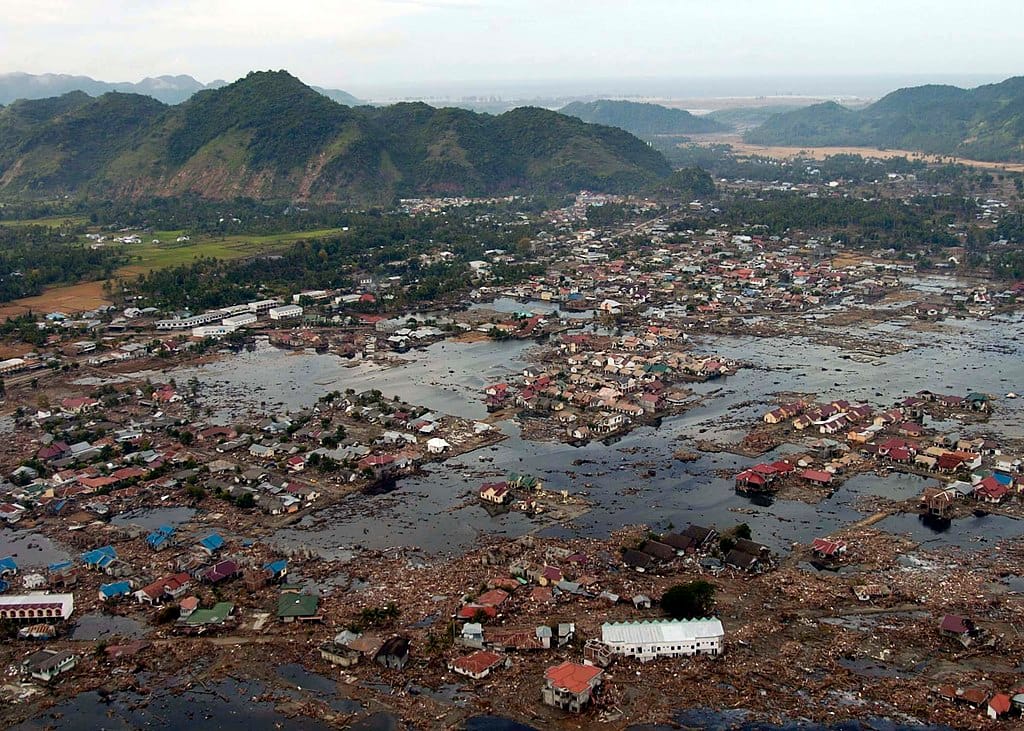
- The Immediate Devastation: Cities Submerged and Lives Lost
- The Crushing Blow to Trade and Daily Life in the Levant
- Political Fallout: How the Tsunami Reshaped Regional Power
- Cultural and Religious Interpretations of the Disaster
- The Tsunami’s Impact on Crusader States and Muslim Territories
- Rebuilding Amidst Ruins: Resilience in the Wake of Disaster
- The Dead Sea Basin Tsunami in Medieval Historiography
- Geologists and Historians: Modern Investigations into the 1202 Event
- Lessons Learned: Earthquakes, Tsunamis, and Human Vulnerability
- Remembering the Dead Sea Tsunami: Why It Matters Today
The Dead Sea Basin Tsunami: A Forgotten Cataclysm
The morning light struggled through heavy clouds on May 20, 1202, as thousands of inhabitants of the Levant awoke to an ordinary day—unaware that within hours, their world would shatter beneath the forces of nature. The Dead Sea basin, a region famed for its still, salty waters and arid surrounds, became the unlikely stage for a disaster unparalleled in medieval Levantine history. A tsunami unlike any other swept through this land of ancient cities and crossroads of empires, causing destruction whose echoes ripple through time.
For centuries, the calamity that befell the Levant on this spring day has been all but forgotten—a whisper buried beneath the sands and history’s grander movements. Yet, the Dead Sea Basin tsunami of 1202 was a cataclysm of immense proportions: an earthquake and its subsequent tidal wave unleashed havoc across the eastern Mediterranean, acting as a harsh reminder of the region’s seismic fragility.
May 20, 1202: Dawn of an Unseen Horror
The sun had barely crested the horizon when the Earth began to tremble near the Dead Sea. What started as subtle vibrations escalated swiftly into a roaring earthquake. Plumes of dust leaped skyward from collapsing walls and crumbled towers, ancient olive trees shook violently, and terrified cries filled the air. The seismic upheaval was the harbinger of a far more sinister threat lurking beneath the waters—an enormous tsunami.
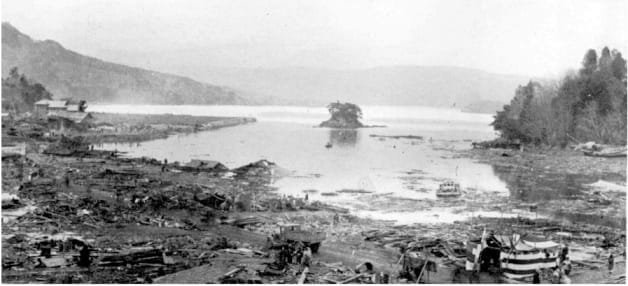
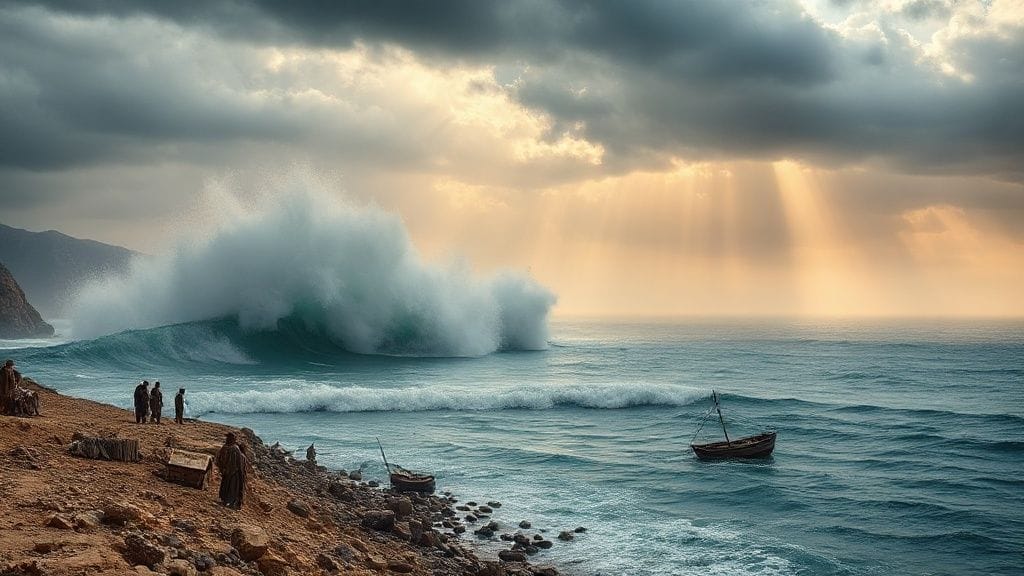
Without warning, the placid waters of the Dead Sea surged violently. A towering wall of water, fed by the upheaval of the lakebed and coastal lands, swept inland, obliterating settlement after settlement. The wave rolled over beaches, consumed river valleys, and overthrew everything that had been constructed through generations of human endeavor. Nearby towns that had thrived on trade and faith were transformed into watery graves.
A local chronicler would later write with trembling hand: “The earth roared and the sea drank the land. We were swallowed by dark waters, and with us, our past and our hope.”
The Levant in the Early 13th Century: A Region on the Brink
To understand the weight of this disaster, one must peer into the mosaic of Levantine life at the dawn of the 13th century. The Levant—stretching from modern-day Israel and Jordan through Lebanon and parts of Syria—was a pivotal crossroads in the medieval world. It was a land of religious fervor, trade routes, shifting political allegiances, and crusader conflicts that made it a powder keg of competing interests.
Coastal cities such as Acre and Tyre buzzed with merchants from Europe, the Middle East, and Asia, dealing in spices, textiles, and precious metals. Inland, smaller towns relied on agriculture and pilgrimage routes. The region’s religious diversity—Christianity, Islam, and Judaism intertwined in intricate patterns—was mirrored by the delicate political balance, punctuated by intermittent warfare and truces between Crusader states and Muslim principalities.
Against this backdrop, a natural disaster of tremendous scale had the potential not only to devastate human settlements but to reshape the regional geopolitics and cultural memory for generations.
Geological Faultlines Beneath the Dead Sea: A Perfect Storm
The Dead Sea is no placid lake isolated from the dynamic forces beneath the Earth’s crust. It sits atop one of the world’s most active and tectonically complex zones—the Dead Sea Transform fault system. Stretching from the Red Sea northwards into Syria, this fault marks the boundary between the African and Arabian tectonic plates.
Throughout history, this geological boundary has unleashed frequent earthquakes, some potent enough to alter the landscape catastrophically. The 1202 event was born from a massive rupture along this fault. Modern seismologists estimate that the quake reached a magnitude of 7.6 or higher—strong enough to rupture the Earth’s crust dramatically and trigger enormous waves.
The combination of a shallow, high-intensity quake beneath a water body as deep and dense as the Dead Sea created ideal conditions for a tsunami. Ancient lands subsided, water surged over shores, and the seismic waves propagated across the eastern Mediterranean basin.
The Tremors That Shook the Ancient World
The first signs came as tremors. Residents of cities along the Dead Sea and Mediterranean coast felt the ground tremble and roar beneath them—sometimes for as long as several minutes. Walls cracked; some houses collapsed, others remained standing but shaken.
Magistrates, priests, and common people alike rushed into the streets, looking skyward and to the horizon in search of explanations, prayers, or divine intervention. But the heavens remained grim and silent.
Scholars from the era later reported that the earthquake was felt as far north as Antioch and as far south as the Sinai Peninsula, illustrating its monumental scale and intensity. Trade routes were severed in the ensuing chaos, caravans were stranded, and merchant ships found navigation impossible amid turbulent seas.
The Rise of the Waters: The Birth of a Catastrophic Tsunami
Perhaps the most terrifying moment came not during the shaking earth, but in the aftermath. As lands collapsed and seismic uplift shifted lakebeds and coastal plains, the Dead Sea’s surface was violently displaced.
From the depths, a ripple grew into a monstrous wave—a chaotic surge of black, turbulent waters ripping through shores with destructive force.
Villages and towns like Jericho, once famed for their fertile fields and biblical histories, were engulfed. The biblical landscape itself, long revered and remembered, was submerged or buried beneath sediment and debris.
Medieval accounts preserve harrowing stories of entire communities swept away, with survivors describing waters rising like walls, pulling down everything in their path—homes, orchards, livestock. The tsunami moved inland for miles, flooding valleys and destroying farmland.
Eyewitness Accounts and Chronicles: Voices from the Past
The 1202 tsunami left an imprint on the chronicles of several historians and travelers of the time, though many accounts were veiled in religious and mystical interpretations.
Ibn al-Athir, a notable Muslim historian, described “a great shaking of the earth followed by a flooding that left the land submerged, as if the wrath of the heavens had been visited upon us.” European chroniclers, involved in Crusader endeavors, similarly recorded “a terrible shaking and a sea that marched onto the land, swallowing ships and men alike.”
These testimonies, though fragmentary and often influenced by the era's spiritual worldview, offer invaluable glimpses into the human experience of the disaster. They provide the raw emotion—the panic, the grief, the bewilderment—that dry statistics cannot fully convey.
The Immediate Devastation: Cities Submerged and Lives Lost
The human toll was staggering. Archaeological surveys indicate that numerous settlements along the eastern shore suffered collapse or abandonment shortly after 1202, consistent with a massive natural catastrophe. Estimates suggest tens of thousands perished or were displaced—an enormous death toll for the relatively small urban population of the time.
Crop fields, orchards, and irrigation systems were destroyed, plunging survivors into famine and poverty. The destruction of infrastructure forced trade into chaotic suspension; coastal ports lay in ruins or were inaccessible for months.
Among the hardest hit were communities at the southern end of the Dead Sea basin, where the tsunami’s force was amplified by local topography and geological shifts.
The Crushing Blow to Trade and Daily Life in the Levant
The Levant's economy was deeply interconnected with Mediterranean and overland trade. The tsunami’s destruction of ports, roads, wells, and markets fractured these lifelines.
Shipwrecks littered harbors; caravan paths became treacherous or impassable. The region’s famed spice and textile trade faltered, throwing merchants into crisis.
Local populations faced severe hardship—not only from loss of physical capital but from the psychological terror of nature’s caprice.
Seasonal pilgrimages slowed, marketplaces closed, and cultural connections frayed as coastal cities struggled to rebuild.
Political Fallout: How the Tsunami Reshaped Regional Power
This natural disaster came during a time of geopolitical tension. Crusader states based around Acre and Tyre were already fragile, surrounded by Muslim emirates led by figures like Al-Malik al-Adil of Egypt and Syria.
The tsunami added a brutal complication, weakening urban strongholds and distracting rulers from broader political and military struggles.
Some Muslim leaders seized the disorder to consolidate power, while Crusader lords found their defensive and economic capabilities diminished.
The disaster thus altered military logistics and territorial control, subtly shifting the balance in a region already fraught with conflict.
Cultural and Religious Interpretations of the Disaster
In medieval Levantine societies, catastrophes were often read as divinely ordained warnings or punishments. The tsunami was no exception.
Christian chroniclers saw the flood as a sign of apocalyptic turmoil, while Muslim scholars debated whether it was an expression of God's will or a test of faith.
Such interpretations shaped responses: spontaneous acts of penance, construction of new religious sites, or re-evaluation of political and spiritual leadership.
Stories of miraculous survivors and saintly interventions became part of local folklore—testaments to human resilience and the search for meaning amid suffering.
The Tsunami’s Impact on Crusader States and Muslim Territories
The 1202 tsunami did not spare the zones of imperial contestation. Crusader fortresses along the coast were damaged; their supply lines disrupted.
Simultaneously, Muslim-controlled cities to the east and south faced similar destruction. The disaster reminded all parties—regardless of faith—of their vulnerability to forces beyond human control.
This shared trauma sometimes fostered moments of cooperation, but often deepened existing divides as leaders prioritized survival or used the chaos for political gain.
Rebuilding Amidst Ruins: Resilience in the Wake of Disaster
Despite overwhelming losses, communities endeavored to rebuild. Reconstruction efforts varied widely—some towns never fully recovered, others flourished anew.
Water management systems, vital in such an arid region, were restored or redesigned. New fortifications were erected, sometimes incorporating lessons learned from the disaster.
Religious institutions played central roles, acting as providers of relief and spiritual solace.
The Levant’s resilience echoed through the centuries, a testament to human fortitude amid nature’s fury.
The Dead Sea Basin Tsunami in Medieval Historiography
The event’s scars faded from popular memory but survived in scholarly writings and oral traditions. Medieval historians often folded the tsunami into larger narratives of divine judgment, crusades, and political change.
Western European chroniclers, fixated on crusader affairs, sometimes overlooked or misunderstood the natural disaster's broader implications.
The Middle Eastern historical canon retained echoes of the event, though often intertwined with religious and moralistic interpretations.
Geologists and Historians: Modern Investigations into the 1202 Event
Centuries later, with the advent of modern geology and seismology, scholars began piecing together the Dead Sea tsunami’s story scientifically.
Sediment layers beneath the lake and surrounding valleys speak silently of inundations and ruptures. Radiocarbon dating and geological modeling align with historical accounts of a massive earthquake and tsunami around 1202.
Today, this disaster is recognized as one of the major seismic events affecting the eastern Mediterranean—a stark reminder of the region’s seismic hazards.
Lessons Learned: Earthquakes, Tsunamis, and Human Vulnerability
The 1202 tsunami provides a sobering lens through which to view human vulnerability to natural disasters. It demonstrates how tectonic forces can instantly upend stable communities and alter histories.
Modern urban planners and disaster agencies study such events to prepare for potential future catastrophes that may arise from the same deadly fault systems.
It also challenges historians to reassess the role of natural events in shaping human affairs—not as mere backdrops but as catalysts of social and political transformation.
Remembering the Dead Sea Tsunami: Why It Matters Today
In an age dominated by concerns over climate change and natural disasters, the story of the Dead Sea tsunami remains ever relevant.
This event, lost to many but preserved through careful study, humanizes the risks faced by millions living in seismically active zones.
Remembering it is more than an academic exercise; it is a call to honor those who suffered and to build more resilient societies for the future.
Through this ancient tragedy, one hears a timeless message—a whisper beneath the waves—that nature’s might cannot be ignored nor forgotten.
Conclusion
The Dead Sea Basin tsunami of May 20, 1202, is a poignant chapter in the story of the Levant—one that intertwines earth’s raw power with human destiny. It stands as a stark testament to the frailty of civilizations in the face of nature’s sudden fury and the enduring spirit of communities that rise again from the depths of destruction.
Though centuries have passed, this forgotten catastrophe echoes in stone and soil, in chronicles and folklore, reminding us that history is not made by men alone but often shaped by the tremors of the earth itself. The Levant’s story is incomplete without the tides of that fateful day—a day when land, sea, and man met in a tragic dance of ruin and resilience.
FAQs
Q1: What caused the Dead Sea Basin tsunami of 1202?
A1: It was triggered by a massive earthquake along the Dead Sea Transform fault system, which created a tsunami when the lakebed and coastal areas suddenly shifted, displacing large volumes of water.
Q2: How large was the earthquake that produced the tsunami?
A2: Modern estimates place the earthquake’s magnitude at approximately 7.6 or higher, making it one of the strongest known seismic events in the eastern Mediterranean region.
Q3: Which areas were most affected by the tsunami?
A3: The eastern shores of the Dead Sea basin, including towns like Jericho, and coastal cities along the Levantine seaboard were devastated, with floodwaters reaching several miles inland.
Q4: How did the tsunami impact the political situation in the Levant?
A4: The disaster weakened both Crusader states and Muslim territories economically and militarily, disrupting trade and fortifications, and thereby influencing power dynamics amid ongoing conflicts.
Q5: Are there contemporary eyewitness accounts of the tsunami?
A5: Yes, chronicles from Muslim historians such as Ibn al-Athir and European chroniclers mention the earthquake and subsequent flooding, often framed in religious terms.
Q6: Why is the Dead Sea tsunami of 1202 not widely known today?
A6: It has been overshadowed by larger historical events like the Crusades and the Mongol invasions, compounded by the scarcity and religious framing of medieval sources.
Q7: How do modern scientists investigate this ancient tsunami?
A7: By studying sediment layers, geological fault activity, radiocarbon dating, and historical records, researchers reconstruct the scale and impact of the event.
Q8: What can we learn from the 1202 tsunami for today’s disaster preparedness?
A8: It underscores the necessity of preparing for natural disasters in tectonically active regions, improving early warning systems, and respecting the power of geological forces.