Table of Contents
- A Sudden Fury Unleashed: The Dead Sea Coast Tsunami of December 1033
- The Lurking Threat Beneath the Waves: Geological and Tectonic Context
- The Land of the Levant in the Early 11th Century: A Mosaic of Cultures and Powers
- Early Signs and Ancient Warnings: Was Disaster Foretold?
- The Morning of December 5, 1033: Ground Tremors and Rising Panic
- The Unseen Menace: How the Earthquake Set the Stage for a Devastating Tsunami
- The Dead Sea’s Deadly Wake: Waves Crashing on Coastal Cities
- Jerusalem, Jericho, and Beyond: The Human Toll Along the Shoreline
- Testimonies Engraved in Stone and Scripture: Chronicling the Disaster
- The Political Earthquake: How Leaders and Kingdoms Reacted to Calamity
- Economic Havoc: Trade Disrupted Amidst the Rising Waters
- Faith and Fear: The Tsunami in the Eyes of Medieval Society
- The Aftermath and Efforts of Recovery: Reconstruction and Memory
- Natural Catastrophes and Political Fragility in the Levant
- Geological Lessons from the 1033 Tsunami: Understanding the Dead Sea Rift
- The Legacy of the 1033 Disaster in Middle Eastern History
- Modern Perspectives: Archaeology and Science Illuminate the Past
- Conclusion: The Enduring Echoes of the Dead Sea Tsunami
- FAQs: Unraveling Myths and Facts about the 1033 Dead Sea Tsunami
- External Resource
- Internal Link
The shores of the Dead Sea lay quietly under the pale winter sun of early December 1033. Fishermen prepared their nets, traders arranged goods in bustling market squares, and townsfolk went about their daily rhythms—unaware that the earth beneath them was about to convulse with a power so sudden and so devastating that the waves of an ancient salt lake would sweep through coastal settlements, rewriting the history of the Levant.
1. A Sudden Fury Unleashed: The Dead Sea Coast Tsunami of December 1033
The story begins on the morning of December 5, 1033, when a massive earthquake rattled the Levant. Unlike previous quakes confined to shaking earth and crumbling walls, this seismic event birthed a rare and deadly tsunami in the Dead Sea region—a body of water typically placid and unassuming. Like an unleashed beast, the flood surged onto the shores with little warning, consuming villages and cities alike.
This event remains one of the most remarkable and tragic natural disasters in the medieval Levant, etched in chronicles, folk memories, and geological records alike. What caused it? How did a tsunami, seemingly impossible in an inland salt lake, come to devastate one of the oldest inhabited regions on Earth?
But before we dive into the ferocity of that fateful day, we must explore the broader stage where this drama unfolded.
2. The Lurking Threat Beneath the Waves: Geological and Tectonic Context
The Levant stands on a tapestry of geological tension—literally. The Dead Sea lies in the deep rift valley of the Dead Sea Transform fault system, a major tectonic boundary between the African and Arabian plates. This fault, stretching hundreds of kilometers, is a source of historical earthquakes and complex seismic phenomena.
Unlike ocean-coast tsunamis generated by submarine faults or landslides, a tsunami in the Dead Sea requires very specific conditions. The earthquake of 1033 was powerful enough to trigger underwater landslips or displacements on the lake bed, sending waves crashing onto shorelines not accustomed to such fury.
Scholars have identified this event as a part of a cyclical series of earthquakes in the region, with notable quakes also recorded in 749 and in later centuries. However, the 1033 quake stood out for the rare tsunami that followed—a grim reminder of the volatile earth beneath this historically rich land.
3. The Land of the Levant in the Early 11th Century: A Mosaic of Cultures and Powers
In 1033, the Levant was a bouleversement of cultures, religions, and power struggles. The Fatimid Caliphate controlled large parts of the region, focusing its administration in Egypt but casting influence eastward. Christian communities, remnants of Crusader precursors and Byzantine influence, mingled alongside Jewish populations.
Cities like Jericho, Jerusalem, and smaller yet vital trading hubs dotted the area. It was a crossroads of commerce, faith, and history—places where caravans met pilgrims, and empires whispered alliances.
The threat of natural disaster was just another facet of the daily uncertainty lived by inhabitants. Political tensions simmered alongside climatic and geological instabilities.
4. Early Signs and Ancient Warnings: Was Disaster Foretold?
Medieval chroniclers often framed natural disasters as divine punishments or omens. Some local monastic texts from the 11th century hinted at tremors felt in the days leading up to December 5, 1033, with references to “the earth groaning beneath our feet.”
Whether these were actual premonitory signs or retrospective explanations, the fact remains that the people were unprepared. The suddenness of the earthquake left townsfolk scrambling, yet no one expected the Dead Sea to retaliate in such a destructive wave.
5. The Morning of December 5, 1033: Ground Tremors and Rising Panic
At dawn, a deep rumbling shook the hills and plains of the Levant. Walls cracked, roofs collapsed, and animals fled. The initial quake lasted several minutes—a lifetime when the ground itself dances beneath your feet.
People rushed into streets and open spaces, seeking safety. But their escape path led tragically toward the shores as the lake suddenly withdrew, exposing unnerving expanses of salty lakebed—an eerie signal sailors and fishermen would recognize as precursor to a tsunami.
Villagers who witnessed the low water wondered, puzzled and scared, what dark forces had unsettled the Dead Sea.
6. The Unseen Menace: How the Earthquake Set the Stage for a Devastating Tsunami
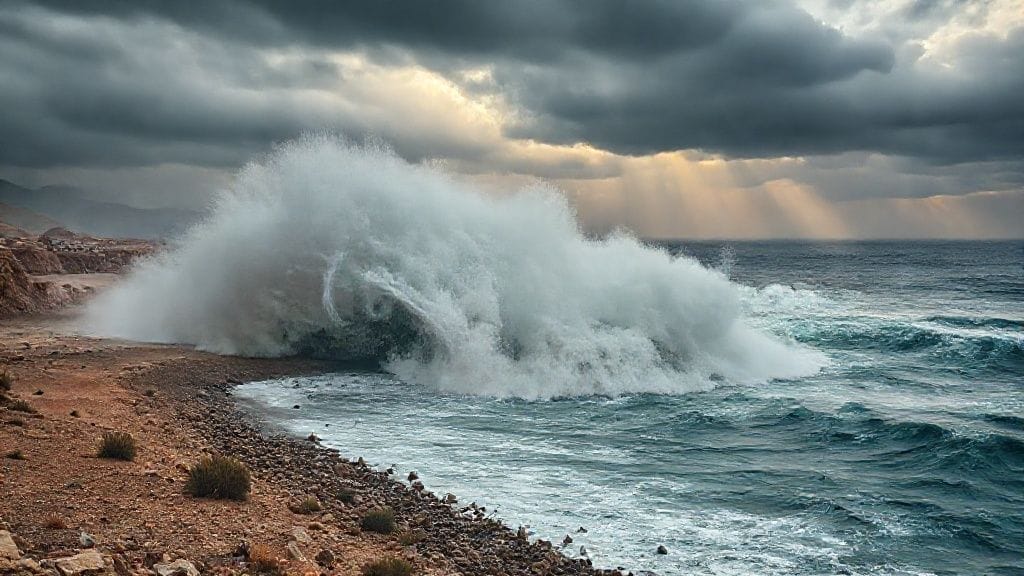
Without warning, after the earth’s tremors subsided, a wall of water surged forth. The waves, reportedly reaching heights of several meters, roared against the coast, sweeping away docks, shoreline homes, and fields.
In an inland lake known for still, glassy calm, the violent upheaval stunned the survivors. Bound by the shape of the rift valley, the tsunami spread rapidly, constricting into bays and river mouths, amplifying its force.
7. The Dead Sea’s Deadly Wake: Waves Crashing on Coastal Cities
Jericho, a city with millennia of history, bore a brunt of the water’s assault. Accounts describe the sudden inundation washing through streets, overturning stone houses and drowning dwellers.
Nearby settlements, smaller villages dotting the salt lake shore, were completely decimated. Archaeological surveys have revealed sediment deposits consistent with a sudden flood event around this period—solidifying these ancient stories in physical evidence.
Some contemporary writers called it “the sea’s revenge” on the land, echoing the horror and awe the catastrophe inspired.
8. Jerusalem, Jericho, and Beyond: The Human Toll Along the Shoreline
While Jerusalem was somewhat protected by its distance from the lake itself, the quake shook its foundations and certainly disrupted life. Reports from religious sources lamented deaths, damage to sacred buildings, and the psychological impact of the disaster.
The surrounding Levantine towns faced a grim scale of human loss unknown in recent memory—a combination of drowning, building collapses, and fires sparked by aftershocks.
Complete figures are impossible to estimate, but chroniclers suggest that thousands were displaced or perished, tipping demographic balances in these contested regions.
9. Testimonies Engraved in Stone and Scripture: Chronicling the Disaster
Few events capture the medieval imagination as vividly as sudden, destructive forces of nature. The Dead Sea tsunami entered local chronicles, religious sermons, and even poetry.
One monastic source recounts: “The waters, risen beyond their bounds, swallowed earth and man alike, as if the world itself wept.”
Though the written records are sparse compared to modern standards, these testimonies provide an emotional insight into the trauma experienced by these ancient communities.
10. The Political Earthquake: How Leaders and Kingdoms Reacted to Calamity
Political authorities in the Fatimid realm faced the pressing task of responding to the widespread destruction. Relief efforts were hampered by damaged infrastructure and ongoing tensions with neighboring powers.
In some cities, local governors organized rebuilding; elsewhere, populations abandoned settlements, moving inland to safer terrain.
This natural disaster acted as a catalyst for shifts in territorial control, depopulation of vulnerable areas, and even altered trade routes as ports and caravan stops suffered.
11. Economic Havoc: Trade Disrupted Amidst the Rising Waters
The Levant’s bustling role as a crossroads of commerce was severely impaired. Ports on the Dead Sea, though less prominent than those on the Mediterranean, were nonetheless vital for regional trade in salt, minerals, and agricultural produce.
Destruction of infrastructure, loss of lives, and displacement reduced productivity and flow of goods. Lingering damage from the tsunami slowed economic recovery for years.
Merchants writing letters and account books described having to reroute caravans, and markets experienced scarcity in staple goods.
12. Faith and Fear: The Tsunami in the Eyes of Medieval Society
In a time when divine will framed much understanding of the world, such a devastating event was difficult to interpret. Was this punishment? A test of faith? The providence of God?
Religious leaders used the calamity to call for repentance, charity, and strengthened communal bonds.
In Jewish, Christian, and Muslim communities alike, prayers were offered for the souls lost and for deliverance from further suffering.
13. The Aftermath and Efforts of Recovery: Reconstruction and Memory
Gradually, the shattered communities on the Dead Sea coast rebuilt what they could. New defensive walls were erected, and some settlements migrated to less vulnerable spots.
The disaster entered regional folklore and was invoked for centuries afterward as a warning of nature’s unpredictable fury.
14. Natural Catastrophes and Political Fragility in the Levant
The 1033 tsunami exemplifies a broader pattern where natural disasters intersected with political instability across the medieval Levant.
Famine, war, and climate fluctuations coexisted with seismic hazards, often amplifying each other’s effects.
Understanding this context adds nuance to historical narrative beyond battles and rulers—to the lived resilience of ordinary people.
15. Geological Lessons from the 1033 Tsunami: Understanding the Dead Sea Rift
Modern geology confirms that the Dead Sea Transform fault remains active and capable of producing earthquakes.
The 1033 tsunami provides crucial clues about the kinds of hazards linked to this unique tectonic environment—information vital to contemporary risk management in the region.
16. The Legacy of the 1033 Disaster in Middle Eastern History
In retrospect, the event marks a moment when natural forces dramatically shook not only the ground but also the social and political fabric.
It is a tale of vulnerability and endurance, remembered partly in material traces and partly in collective memory.
17. Modern Perspectives: Archaeology and Science Illuminate the Past
In recent decades, interdisciplinary research combining geology, archaeology, and history—evidenced by sediment analysis and excavations near the Dead Sea shore—has enriched understanding of the 1033 tsunami.
Such science bridges centuries, allowing us to grasp more clearly the human stories wrapped in the waves.
Conclusion
The Dead Sea Coast Tsunami of December 1033 stands out as a chilling reminder of nature’s volatile character and humanity’s resilience. It highlights a moment when the very earth and water seemed to conspire against the people of the Levant, reshaping their lives in irrevocable ways. But alongside tragedy, this catastrophe forged stronger communities, inspired deep reflection, and left a legacy that resonates in both stone and story. Beyond dates and chronicles, the 1033 disaster invites us to consider the fragile interplay between nature and civilization—past, present, and future.
FAQs
Q1: What caused the tsunami in the Dead Sea in 1033?
A1: The tsunami was triggered by a strong earthquake along the Dead Sea Transform fault system, which caused underwater landslides or sudden displacements in the lake bed, generating waves that flooded coastal areas.
Q2: How common are tsunamis in the Dead Sea?
A2: Tsunamis in the Dead Sea are extremely rare due to its inland and closed nature. The 1033 tsunami is one of the few documented cases, making it a particularly notable geological event.
Q3: Which regions were most affected by the 1033 tsunami?
A3: Coastal settlements along the Dead Sea, especially Jericho and nearby villages, suffered the greatest destruction. Jerusalem felt the earthquake but was less affected by flooding.
Q4: How did the disaster affect the political situation in the Levant?
A4: The disaster disrupted local governance, depopulated vulnerable areas, and altered trade routes, exacerbating existing political tensions and contributing to instability in the region.
Q5: Are there historical records describing the tsunami?
A5: Yes, several medieval chronicles, religious writings, and local testimonies reference the catastrophe, often interpreting it within religious frameworks.
Q6: What role does modern science play in understanding the event?
A6: Geology and archaeology have uncovered sediment layers, fault activity, and settlement disruptions that corroborate historical accounts, shedding light on the tsunami’s scale and causes.
Q7: How has the memory of the tsunami persisted in local culture?
A7: The disaster entered regional folklore and religious discourse, serving as a cautionary tale about the power of nature and the need for spiritual vigilance.
Q8: Could a similar event happen today?
A8: While the Dead Sea region remains seismically active, improved monitoring and infrastructure reduce risks. However, the potential for earthquakes and secondary hazards like tsunamis in enclosed basins still exists, warranting vigilance.