Table of Contents
- A Northern King Meets an Irish Shore: Setting the Scene in Ulster, 1103
- From Norwegian Fjords to Atlantic Ambitions: The Rise of Magnus III
- A World of Kings and Sea Roads: Ireland, Norway, and the Isles Before 1103
- The Road to Ulster: Magnus’s Earlier Campaigns in the Irish Sea
- Alliances, Hostages, and Oaths: Magnus and Muirchertach Ua Briain
- The Final Expedition: Why Magnus Returned to Ireland in 1103
- Storms, Delays, and Omens: The Last Voyage Across the North Channel
- The Narrow Fields of Ulster: Geography of a Fatal Encounter
- The Ambush at Down: How the Battle Unfolded
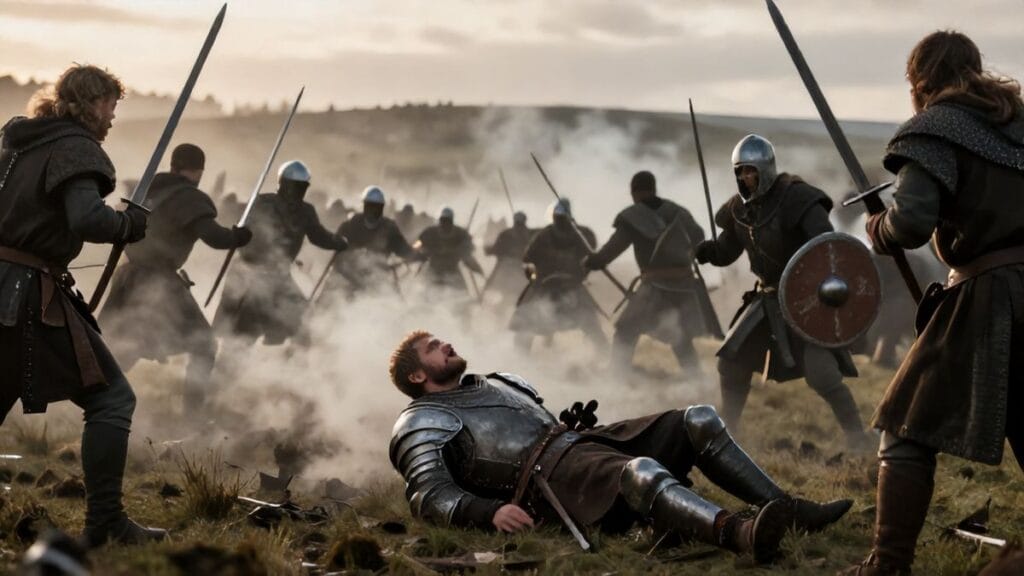
- The Death of King Magnus III: Blades, Mud, and Sudden Silence
- Shock Among the Norwegians: Retreat, Confusion, and Return Over the Sea
- A Kingdom Without Its Warrior: Succession and Political Upheaval in Norway
- Ireland After Magnus: Muirchertach’s Triumph and Emerging Vulnerabilities
- Echoes in Orkney, Man, and the Hebrides: The Shifting Balance of Island Power
- Saga, Chronicle, and Memory: How Medieval Sources Remember Magnus’s End
- Warrior, Adventurer, or Imperialist? Interpreting Magnus’s Legacy
- From Battlefield to Legend: The Long Shadow of 1103 in Nordic and Irish History
- Conclusion
- FAQs
- External Resource
- Internal Link
Article Summary: On a late August day in 1103, the death of king magnus iii of Norway on an Ulster field abruptly ended one of the most daring reigns of the Viking age’s twilight. This article traces his journey from the fjords of Norway to the contested shores of Ireland, exploring why a northern monarch died among Irish bogs and hedges instead of in his own royal hall. It follows the build-up to his final expedition, the fragile alliances he forged with Irish high king Muirchertach Ua Briain, and the betrayals and miscalculations that culminated in his ambush near Down. Through saga narratives and Irish annals, we reconstruct not only the death of king magnus iii but also the stormy political world that produced it. The narrative then turns to the aftermath in Norway, Ireland, and the Kingdom of the Isles, showing how a single king’s fall reshaped maritime power across the North Atlantic. Along the way, it reflects on the human dimension of that fatal day: soldiers trapped in muddy fields, messengers racing to ships, and a young heir facing a kingdom suddenly leaderless. By the end, the death of king magnus iii emerges not as an isolated battlefield episode, but as a turning point in the history of the North Sea world, where old Viking ambitions collided with new medieval realities.
A Northern King Meets an Irish Shore: Setting the Scene in Ulster, 1103
On 24 August 1103, the wind that swept over the low, marshy fields of eastern Ulster carried with it the sounds of shouts, steel, and sudden panic. Wet grass bowed under the weight of armored men, and the air smelled of mud, brine, and blood. Somewhere amid that confused struggle, a tall, battle-hardened king from the far North—Magnus Olafsson, called Barelegs or Barefoot—found himself ringed not by his accolade-winning warriors, but by enemies materializing from hedges and broken ground. The death of King Magnus III of Norway, far from the long fjords and pine-clad hills of his homeland, would be swift and brutal, the kind of end that saga poets would later wrap in stark, heroic verse. Yet as his body fell, hacked and pierced, the shock that rippled outward was less about the manner of his dying than about what it signified: a violent interruption of a grander design that sought to weld Norway, the Hebrides, the Isle of Man, and parts of Ireland into a single North Sea empire.
To imagine that moment properly is to picture a strangely layered scene: Norwegian ships anchored off the coast, their high prows rocking in the grey swell; Gaelic-speaking locals watching from a distance, trying to guess which side fortune would favor; and in between, on a cramped killing ground, a king who had gambled everything on speed, surprise, and the trustworthiness of his Irish allies. Magnus had not come to Ulster by accident. His appearance there was the culmination of years of ceaseless movement—raids, negotiations, hostage-taking, and oaths exchanged in smoky halls and on wind-lashed beaches. This field, this day, were the outcome of an entire political geography in flux, an intricate mesh of loyalties spanning from Dublin to Nidaros, from the Hebrides to the Orkneys.
But this was only the beginning of the story. To understand why a Norwegian king died in Ulster, we must step back into a world where sea routes were as important as roads, where a fleet of longships could topple a local ruler as easily as an army of horsemen, and where men like Magnus III dared to believe that a northern monarch could stride from island to island, dictating terms to chieftains and kings alike. The death of King Magnus III, then, becomes a lens through which to see the final flowering of a seaborne Viking-style kingship on the threshold of the high Middle Ages. It is a story of ambition and miscalculation, of courage and overreach, and of a single fatal march into the damp, deceptive lowlands of Ulster.
From Norwegian Fjords to Atlantic Ambitions: The Rise of Magnus III
Magnus Olafsson’s path to that doomed field began in a Norway still emerging from its own era of internal strife. Born around 1073, he came of age in a kingdom where the power of kings had grown, but the scars of earlier civil wars and rival claimant struggles remained tender. He was the son of King Olaf III, known as Olaf Kyrre—“the Peaceful”—a ruler whose long reign had been marked not by conquest but by consolidation and quiet prosperity. Magnus, however, was of a different temperament. Where his father had governed from the hearth, Magnus yearned for the sea. He was the kind of prince who found stillness intolerable, whose character was better suited to the creak of ships’ timbers and the clang of weapons than to the steady routines of administration.
When he seized the throne in 1093, Magnus was barely twenty. His accession was not entirely smooth; Norway was shared, in theory, among several co-rulers, and the boundaries of authority were murky. Yet almost as soon as he secured his position, he set about projecting his rule outward. The sagas suggest a restless energy, a desire to prove himself not simply as a successor to a peaceful king but as a reborn warrior-ruler of the old stamp. It is in this light that we must view his epithet, “Barelegs” or “Barefoot,” often attributed to his adoption of Gaelic-style clothing acquired during his campaigns in the western isles. To later writers, the image of Magnus striding about in short tunics and bare-legged like a Hebridean chieftain symbolized both his daring and his willingness to step beyond Norwegian custom in pursuit of control over the Atlantic fringe.
Under Magnus, Norway’s traditional interest in the North Atlantic took on a sharper, more intentional character. Earlier kings had asserted nominal overlordship over the Orkneys and parts of the Hebrides, but their grip had waxed and waned. Magnus sought to transform this loose suzerainty into something closer to direct rule. He was not just raiding; he was re-drawing boundaries. His first major western campaigns, beginning in the mid-1090s, brought him into direct conflict with local Norse-Gaelic dynasts and with regional Irish rulers whose power leaned heavily on control of coastal strongpoints and island chains. The same daring that would eventually lead to the death of King Magnus III in Ulster first won him victories and tributes across the Irish Sea.
It is astonishing, isn’t it, how swiftly a young king’s ambitions can redraw a map? In the space of a few years, Magnus nearly doubled the effective reach of Norwegian maritime power. Yet hidden within those successes was a structural weakness: Norwegian power in the west still depended on the presence of the king himself, or at least of a strong royal fleet. Remove the king, and the newly subdued vassals might revert to their own quarrels and alliances. On that dependency, the events of 1103 would eventually turn.
A World of Kings and Sea Roads: Ireland, Norway, and the Isles Before 1103
Long before Magnus III landed in Ulster, the seas between Norway and Ireland carried more than warships. They were crowded waterways of trade, migration, and cultural exchange. The descendants of earlier Viking settlers had become entrenched in the Irish Sea region, intermarrying with Gaelic elites, adopting local languages and customs, and forging hybrid identities—Norse-Gaelic, or Hiberno-Norse—that blurred any simple distinction between “Norwegian” and “Irish.” Towns like Dublin, Waterford, and Limerick bore the legacy of their Scandinavian founders, even as they followed the rhythms of Irish dynastic politics.
By the late eleventh century, Ireland itself was a mosaic of rival kingdoms. There was no single Irish monarch; instead, a patchwork of powerful dynasties, such as the Uí Briain of Munster and the Uí Néill of the north, jostled for influence. The title of “High King of Ireland” was more aspiration than stable office, claimed by those strong enough to coerce or persuade lesser kings into submission. In Magnus’s time, Muirchertach Ua Briain of Munster emerged as a particularly formidable claimant, projecting his authority over much of the island and wielding influence in the Norse towns along the coast. Dublin, that pivotal maritime hub, often served as a prize or bargaining chip in this fluid game of power.
To the north and east, across the North Channel and the stormy Minch, lay the chain of islands that had long been entangled in both Irish and Norwegian affairs: the Hebrides, the Isle of Man, the Orkneys, and the smaller isles scattered across those waters. These territories, collectively sometimes described as the Kingdom of the Isles, were ruled by local dynasties whose legitimacy rested partly on their Norse ancestry and partly on their Gaelic entanglements. Scholars such as Clare Downham have emphasized how deeply intertwined these worlds were—Norway’s kings could not simply march in and govern; they had to navigate existing networks of kinship and rivalry.
In such a context, the death of King Magnus III in Ulster was not merely the death of a foreign invader. It was the violent termination of a king who had woven himself into this web—ally to some Irish princes, overlord to island rulers, and occasional scourge of others. His fleets enforced order in the Isles; his presence shaped the choices of Dublin’s leaders and the calculations of ambitious Irish kings. To understand just how unsettling his death was, we must see how crucial he had become to maintaining a precarious balance of power along the Atlantic rim.
The Road to Ulster: Magnus’s Earlier Campaigns in the Irish Sea
Magnus’s first major venture into the Irish Sea came around 1098, and it bore all the hallmarks of a ruler determined to make an indelible mark. Sailing west with a substantial fleet, he struck at the Orkneys and the Hebrides with a mix of violence and negotiation. The Orkney earls, long semi-independent vassals of Norway, were brought more firmly to heel. In the Hebrides, local chieftains were forced into submission, and a Norwegian royal presence began to crystallize along key maritime routes. According to the Heimskringla—Snorri Sturluson’s thirteenth-century saga collection—Magnus even overwintered in these western regions, integrating himself into local political life and adopting the distinctive dress and customs that earned him his byname.
From there, the Norwegian king extended his reach toward the Isle of Man, a critical nexus in the Irish Sea world. Control of Man meant command over shipping lanes, fishing grounds, and a series of harbors that could support further operations. Magnus’s campaigns on the island were decisive enough that he effectively displaced competing powers and laid claim to its rulership for Norway. This was not raiding for plunder; it was conquest for control. He was reconfiguring the very geography of authority across these waters.
His actions inevitably drew the attention of Irish rulers, especially those with maritime interests. Kings who relied on tribute from coastal towns, who sought ships from Norse settlements for their campaigns, or who wished to keep Viking-descended warlords in check, now had to account for a muscular Norwegian monarchy that could send dozens of ships at will. When Magnus’s longships appeared near Irish coasts, they brought the implicit message that Dublin, Waterford, and other settlements might become—with enough pressure—satellites of a Norwegian-centered sea empire.
Yet behind the celebrations of his successes in Norway, there was unease. Ambitions on this scale were costly. Each expedition required shipbuilding, provisioning, and the concentration of manpower that might otherwise have been used to secure Norway’s own still-fragile internal unity. What if the king died on campaign? What if his fleets suffered disaster far from home? These questions hung unspoken in the background as Magnus continued to push west and south, drawing ever closer to the Irish mainland, and eventually, to the fateful shores of Ulster.
Alliances, Hostages, and Oaths: Magnus and Muirchertach Ua Briain
At the heart of the story lies a complex relationship between Magnus III of Norway and Muirchertach Ua Briain, the dominant Irish king of his generation. Their interaction reveals how deeply the Irish Sea world had become a shared political arena. Muirchertach needed ships and leverage in the Norse towns; Magnus needed local allies to secure his gains in the Isles and to insulate his western domains from Irish and Scottish interference. Cooperation, it seemed, could serve them both.
In the years before 1103, the two men forged an alliance that, on paper, was impressive. According to the Irish annals and saga tradition, arrangements were made whereby Magnus would support Muirchertach’s high-kingship claims, and in return, the Norwegian king would receive recognition of his overlordship in the Isles and perhaps even influence over parts of the Irish coastline. Hostages were exchanged—the traditional medieval guarantee of good faith. One of Magnus’s sons is said to have spent time in Ireland, and Irish princely hostages may have traveled northward in return. These human bonds were the currency of politics, children and younger relatives offered as living pledges of future restraint.
But alliances in this era were rarely stable. Muirchertach had rivals at home who bristled at the notion of foreign fleets meddling in Irish affairs. Norwegian power was a double-edged sword: useful against enemies, dangerous if turned inward. Likewise, Magnus had enemies within his own extended sphere—insular lords who feared that any concession to Irish rulers might weaken their autonomy. Each king walked a tightrope, trying to use the other without becoming dependent upon him.
Out of this wary partnership grew plans that would send Magnus once again toward Ireland in 1103. The details, as preserved in later sources, are tantalizing but incomplete. Some accounts suggest that Muirchertach promised Magnus lands or cattle in Ulster—tribute that the Norwegian king intended to collect personally. Others hint at joint military ventures, perhaps aimed at solidifying Ua Briain influence in contested northern regions. Either way, Magnus seems to have believed that his presence in Ulster would be met not with resistance but with cooperation. The death of King Magnus III would reveal just how mistaken, or how tragically betrayed, that expectation was.
The Final Expedition: Why Magnus Returned to Ireland in 1103
By 1103, Magnus had already carved his name deeply into the shores of the Irish Sea. Why, then, risk a further expedition, rather than consolidating what he had gained? Several factors converged to drive him back toward Ireland that year. First, there was unfinished business in the Isles. Ruling by proxy through local dynasts was never fully reliable; a king like Magnus preferred to appear in person from time to time, renewing oaths and making sure tributary chieftains remembered the weight of Norwegian power. Second, and perhaps more importantly, the alliance with Muirchertach Ua Briain offered tantalizing prospects. If he could turn the High King of Ireland into a consistent partner, Magnus might secure not only his gains in the Isles but also economic and political privileges along the Irish coastline that would enrich Norway itself.
There was also an internal dimension. In 1103, Magnus had a young son, Sigurd, who would later be known as Sigurd the Crusader. Magnus likely recognized that his dynasty’s future security partly depended on giving his heir both prestige and experience. An expedition west offered an opportunity to display royal might and perhaps to establish Sigurd’s reputation as a leader in his own right. Later Norwegian tradition, colored by hindsight, often treats Sigurd’s subsequent crusade as a grand, pious adventure; but before that eastern journey, there was this western one, whose outcome would shape the very foundations of his rule.
Nor can we ignore the simple momentum of a warrior-king’s mindset. Magnus had triumphed repeatedly in the west. Success breeds a dangerous confidence. The risks, though real, could be rationalized away: he had allies in Ireland; he knew the seas and shores; his men were experienced; his enemies had been cowed. It is easy to imagine Magnus standing on a wharf in Norway, watching his ships fill with grain, weapons, and men, feeling more anticipation than dread. He had pushed the limits of Norwegian kingship and found them yielding. Why should this expedition be any different?
Yet within this mixture of ambition, alliance, and habit lay the seeds of disaster. The voyage would take him further from home at a delicate political moment, leave his realm in the care of others, and place his own person in a region where loyalty was contingent and betrayals swift. The death of King Magnus III, when it came, would therefore be more than a personal tragedy; it would expose the perilous fragility of a kingship stretched across restless seas.
Storms, Delays, and Omens: The Last Voyage Across the North Channel
The final approach to Ireland was not smooth. The North Atlantic does not yield easily to human plans, and the crossing from Norway to the British Isles could punish arrogance with sudden storms or prolonged calms. While the precise weather of that summer’s voyage is lost to us, the sagas and later chronicles emphasize hardship and uncertainty. We hear of windless days that left ships drifting, of fog banks that turned coastlines into featureless silhouettes. Men complained of wet clothes and dwindling supplies. Superstitious whispers circulated about ill omens—unusual cloud shapes, birds circling the fleet, dreams of shadowy figures on unfamiliar shores.
For a medieval king, such hardships were not merely inconveniences; they eroded the aura of invincibility that held an army together. Hungry men were less forgiving of mistakes. Officers strained to keep discipline intact. To arrive late to a rendezvous with an ally was always dangerous, for lateness could be read as weakness or misfortune. If Muirchertach or his local representatives in Ulster had expected Magnus by a particular date, delays might have deepened doubts or given enemies time to maneuver.
At last, the coast of Ulster rose before them: a line of low hills and occasional headlands, broken by stretches of marshy, boggy land that would play a fateful role in the coming events. Long before the first sword was drawn, that landscape was already shaping the outcome. Magnus’s fleet anchored offshore, and scouts went ashore to make contact with local allies or assess the situation. Messages must have passed—promises renewed, or perhaps nervously hedged. But how reliable were the words spoken on those beaches? In the absence of clear, consistent communication, fear and rumor do much of the talking.
Later tradition sometimes frames these delays and hardships as omens of doom, part of a moralizing narrative in which overreaching kings are subtly warned by the elements. Modern historians are more cautious, but even they acknowledge the psychological toll such difficulties impose. Magnus was stepping into uncertain terrain. He might have felt impatience, perhaps even glimpses of unease. Yet to turn back would have been unthinkable. Kings who build their reputations on boldness do not easily embrace caution—especially not when they believe allies await them just inland.
The Narrow Fields of Ulster: Geography of a Fatal Encounter
The Ulster into which Magnus marched was not an abstract space; it was a patchwork of farms, bogs, small settlements, and rough tracks that only locals truly understood. Most scholars place the final battle somewhere near present-day Down, likely close to coastal landing points suitable for Norwegian ships. From those shorelines, the land rises gently toward inland fields, broken by hedgerows, ditches, and pockets of marsh. In the eleventh and twelfth centuries, such terrain was perfect for ambush and guerrilla warfare, favoring light-armed local forces over heavily equipped foreign warriors.
Norwegian warriors excelled in shipboard and open-field combat. They were used to charging in tight formations, shields locked, relying on discipline and the raw shock of impact. In open country, where their lines could remain intact, they were terrifying opponents. But in constricted landscapes—narrow paths, boggy ground, fields separated by ditches and uneven terrain—their advantages waned. Armor weighed them down; formations broke apart; visibility was limited. Every hedge and knoll became a potential hiding place for enemies who knew every twist in the ground.
It is here that the alliance with Muirchertach Ua Briain becomes crucial. If Magnus expected friendly guides, safe passage, or joint operations with Irish forces, he might have assumed that the local geography would be used to his advantage, not his ruin. Yet the accounts indicate that whatever coordination there might have been broke down, or was fatally flawed from the start. Magnus, moving inland from his ships, either to collect promised tribute or to meet allied contingents, seems to have underestimated both the hostility of nearby groups and the vulnerability of his own force in this environment.
A chronicle like the Annals of Ulster offers only brief, matter-of-fact entries, but between their lines we can read the consequences of that misjudgment. One day, Magnus was a king with ships at his back and alliances on his lips; the next, he was a stranger cut off from retreat, as men emerged from hedges and ditches with spears and axes, the land itself conspiring against him. The death of King Magnus III thus becomes inseparable from the landscape of Ulster, a reminder that power projected across the sea can falter in a few muddy fields.
The Ambush at Down: How the Battle Unfolded
The precise details of the battle are debated, but the broad outlines, drawn from sagas and annals, tell a story of surprise and encirclement. Magnus, having come ashore with what he likely considered a strong but manageable detachment—sufficient to overawe locals and collect tribute—advanced inland. Accounts suggest that the weather was poor, with mist or rain adding to the confusion. His scouts, if he had them in sufficient number, either missed signs of massed opposition or misinterpreted them. Perhaps they saw only scattered groups and assumed no major threat was present.
Then the trap was sprung. From multiple directions, Irish forces, likely drawn from local Ulster dynasties and perhaps some of Muirchertach’s enemies or wavering allies, rushed upon the Norwegian column. Javelins and arrows would have flown first, disrupting formations and felling men before hand-to-hand combat began. Magnus’s warriors tried to form a shield wall, but the terrain made neat lines difficult. As the fight devolved into clusters and knots of struggling men, communication broke down. Shouts in Old Norse and Irish intermingled; orders were drowned in the general roar.
Some sources hint that Magnus fought near the front, as was expected of a warrior king. This was not a monarch observing from a distant hill but a commander whose presence in the thick of combat formed part of his authority. The sagas, inevitably inclined to drama, describe him cutting down opponents even as the ring of enemies closed tighter. Whether or not we trust every flourish, it is plausible that he refused to abandon his men and attempt an early escape back to the shore. That refusal, while heroic in one sense, sealed his fate.
In an ambush, time moves strangely—chaotic but short. The crucial minutes in which a force can either rally or be broken passed quickly. Magnus’s men, fighting in small groups, must have realized with mounting dread that they were surrounded, that the path to the ships was blocked, and that retreat meant turning their backs on spear and axe. Still they fought, hoping perhaps that a breakout could be forced, that the king might at least be carried to safety. But the noose tightened. One by one, key leaders fell, and with each death, the possibility of organized resistance diminished.
The Death of King Magnus III: Blades, Mud, and Sudden Silence
At the heart of this swirling melee, Magnus himself met his end. The exact manner of his death is described differently in various traditions, but they agree on certain essentials: he was separated from his main body of guards, overwhelmed by attackers, and killed in close combat. Some sagas claim that he was struck in the leg, causing him to stumble, and then finished with blows to the neck or torso. Others imagine him standing over the bodies of fallen companions before finally succumbing. Whether or not particular details are accurate, the death of King Magnus III was no distant, ceremonial affair. It was raw, bloody, and immediate.
Imagine the scene: the ground slick with rain and blood, the king’s cloak torn, his helmet dented or cast aside, his breath coming hard as he tried to rally what men remained near him. Around him, Irish warriors shouted triumphantly, urged on by leaders eager to claim the glory of having struck down a foreign monarch. If any of his personal retainers survived that moment, they would have carried a memory seared by the contrast between the grandeur of their king’s ambitions and the squalor of his demise. Kingship, for all its rituals and symbols, had been reduced in an instant to brute survival—and failed.
The death of King Magnus III has been framed in later narratives as both a cautionary tale and a heroic last stand. To some, it illustrates the folly of overextended imperial dreams, of trusting alliances in a world where loyalties turned with the wind. To others, influenced by saga ideals, it is the proper, even enviable death of a warrior-king, fallen in battle rather than fading away in bed. Yet whatever interpretation we choose, the human cost in that moment is undeniable. A man who had ruled Norway, commanded fleets, and dictated the fate of islands died without ceremony in a foreign field, his body initially just one among many sprawled in the mud.
According to some accounts, his followers later retrieved his corpse and brought it back to the ships, an act of devotion and a bid to ensure he received burial appropriate to his station. The sagas remember a king borne home over the same waters that had so often carried him to victory. But those waters now signified retreat, not conquest. The living had to face the voyage home with a dead king in their midst, and with the shattering realization that the great western project he had envisioned might have died with him that day near Down.
Shock Among the Norwegians: Retreat, Confusion, and Return Over the Sea
The immediate aftermath of the battle was dominated by shock. On the shore, sailors and reserve troops waited for news, staring nervously inland. Messages must have arrived piecemeal—a wounded warrior stumbling down a path, a small knot of survivors reaching the beach, each breathless account darker than the last. At some point, perhaps late in the day, confirmation solidified: the king was dead. There would be no triumphant return march, no cattle driven to the shore as tribute, no Irish allies riding beside them in victory.
Command had to be reestablished quickly. Without a living king, the Norwegian force was dangerously exposed. Local enemies might mass along the coast; Irish fleets could gather; even previously neutral groups might be tempted to harass or trap them. The highest-ranking surviving nobles or royal kin present on the expedition would have convened a hurried council. The options were stark: attempt to avenge the king by renewed assaults—unlikely to succeed in hostile territory—or withdraw as swiftly as possible to safer waters. The decision, as the record implies, was to retreat.
In those desperate days, the Norwegian fleet transformed from an instrument of power into a lifeboat. Men counted comrades and found many missing. Wounded soldiers, some gravely injured, were carried aboard. Supplies were rationed with sudden severity. As oars dipped into the water and sails rose, the emotional atmosphere must have been suffocating—a mix of grief, anger, shame, and fear. What would await them in Norway? How would a kingdom receive the news that its king had fallen in a distant land, leaving behind a legacy of partially realized ambitions and unfulfilled promises?
In that crossing back over the North Channel and the wider sea, the narrative of Magnus’s reign began to shift. Already, survivors’ memories and stories took shape, emphasizing certain details and masking others, seeking reasons where there had been only chaos. Some might blame treachery by Irish allies; others, tactical errors or simple bad luck. The death of King Magnus III thus began, even before his body reached Norwegian soil, to transition from an event into a story—one that would be told, retold, and reshaped in the years and centuries to come.
A Kingdom Without Its Warrior: Succession and Political Upheaval in Norway
When the news reached Norway, it would have felt like a rupture. Magnus had ruled for a decade, and whatever disagreements existed about his policies, there was no denying his vitality. Now, suddenly, the throne stood empty. Yet medieval Norwegian kingship had long grappled with questions of succession. Multiple potential heirs, overlapping lines of legitimacy, and regional power bases made such moments perilous. The death of King Magnus III did not simply remove a ruler; it opened space for contention that could unravel the centralizing work of previous decades.
Magnus’s son Sigurd, who had accompanied or been closely associated with his father’s western ventures, emerged as one of the principal heirs. But he did not rule alone. Norway soon found itself under joint kingship, with Sigurd sharing power with his half-brothers Øystein and Olaf. This arrangement, while not unprecedented, highlighted the difficulty of maintaining unity without a single dominant figure. Administrative power had to be divided, revenues shared, and military decisions negotiated among three rulers whose interests were not always fully aligned.
This period did not collapse immediately into civil war—indeed, under Sigurd, Norway would later experience new forms of prestige through crusading exploits in the eastern Mediterranean—but the seeds of future strife were present. Magnus’s strong hand had kept certain factions in check, his western campaigns providing both outlets for ambitious warriors and justification for centralized royal authority. With his death, these dynamics shifted. The energy and resources once poured into Atlantic expansion could be redirected inward, for good or ill.
Furthermore, Magnus’s ambitions in the Isles and Ireland had been part of a broader vision of Norway as a preeminent maritime kingdom in the North. His successors, while still concerned with the west, faced a different strategic environment. Enemy rulers in Scotland, Ireland, and among local island dynasties now knew that Norwegian kings could die on foreign soil. The psychological aura of invincibility was gone. In a subtle but significant way, the death of King Magnus III narrowed the horizon of what Norwegian kings would dare to attempt in the generations immediately following.
Ireland After Magnus: Muirchertach’s Triumph and Emerging Vulnerabilities
In Ireland, the immediate reaction to Magnus’s death depended on perspective. For those local Ulster rulers whose men had struck the fatal blows, it was a moment of vindication and victory. A foreign king, whose fleets had loomed menacingly on the horizon for years, now lay dead by their hands. Songs and stories must have circulated quickly, celebrating the cunning and courage of the warriors who had stood firm against the Norwegians. Bards would have found rich material in the contrast between the grandeur of Magnus’s title and the ignominious, muddy circumstances of his demise.
For Muirchertach Ua Briain, however, the implications were more complex. On one level, the removal of a powerful foreign ally-turned-liability simplified matters. He no longer had to balance the benefits of Norwegian support against the dangers of entanglement with a king whose ambitions might someday run counter to his own. Magnus’s fleets would no longer appear unannounced along the coast, demanding concessions or support. On the other hand, the manner of Magnus’s death—apparently ambushed while expecting safe passage or cooperation—risked painting Muirchertach as an unreliable partner in the eyes of other rulers abroad.
Irish annals tend to record the event with reserved language, listing the death of “Maghnus, king of the Lochlanns” as one more entry in a long chronicle of conflicts. But beneath that brevity lies a major geopolitical shift. With Norwegian pressure removed, Irish dynasties could focus more fully on internal rivalries. In the short term, this allowed Muirchertach to refine his hold on power, but in the longer term, the absence of a stabilizing external presence in the Isles opened the door to new threats. The twelfth century would see increased Anglo-Norman interest in Ireland, culminating in invasions that permanently altered the island’s political landscape.
Historians sometimes see in 1103 a hinge moment—less dramatic than the Anglo-Norman invasions of the 1160s, but part of the slow realignment of forces that made those later events possible. Had Magnus lived, and had his alliance with Muirchertach endured, the web of power along the Irish Sea might have taken a different shape, perhaps complicating or delaying Norman encroachment. As it was, the death of King Magnus III removed one of the major players from the board, leaving Ireland’s littoral world more vulnerable to new actors who did not share the long, intricate history of Norse-Gaelic entanglement.
Echoes in Orkney, Man, and the Hebrides: The Shifting Balance of Island Power
In the islands that had formed the backbone of Magnus’s western enterprises, the news of his death must have resonated with a mixture of relief and uncertainty. Local rulers on Orkney, the Isle of Man, and in the Hebrides had been both subjects and partners of the Norwegian king. He had imposed his will when necessary, but his strong hand also provided a measure of stability, discouraging external predators and helping to arbitrate disputes among competing chieftains. Without him, the familiar pattern of local rivalries, intermittent Scottish pressure, and occasional Irish influence reasserted itself with renewed intensity.
On Orkney, the earls—descendants of earlier Viking settlers—had long balanced their allegiance between Norway and their own regional priorities. Magnus’s reassertion of Norwegian control had constrained their autonomy. Now, with his death, they could test the boundaries again, adjusting their level of obedience according to the perceived strength and interest of the new joint rulers in Norway. The Hebrides, more fragmented and ethnically mixed, likewise saw opportunities and dangers. Some island lords may have welcomed the chance to reclaim independence; others feared that, absent a strong Norwegian presence, Scottish or Irish kings might look hungrily toward their shores.
The Isle of Man, positioned like a hub in the center of the Irish Sea, was especially sensitive to these shifts. Its rulers had profited from Magnus’s patronage, but their legitimacy rested partly on the recognition of powerful neighbors. With Magnus gone, they had to renegotiate their status amid changing currents of influence from Dublin, Galloway, and the emerging Scottish kingdom. Over the next decades, control of Man would oscillate, reflecting the broader instability unleashed by the death of King Magnus III and the waning of firm Norwegian intervention along the western seaways.
In this sense, the battle in Ulster did not only kill a king; it shook a maritime network. The islands had been loosely but meaningfully bound together under the shadow of Magnus’s fleets. His demise cut those cords, leaving each island polity more exposed to its immediate neighbors and less anchored to a distant Norwegian center. The North Sea world, still deeply interconnected, was beginning to evolve into something more like a patchwork of regional powers, each jockeying for advantage in the absence of a commanding hegemon.
Saga, Chronicle, and Memory: How Medieval Sources Remember Magnus’s End
Much of what we know—or think we know—about Magnus III’s campaigns and death comes from two very different kinds of medieval sources: the terse Irish annals and the expansive, sometimes florid, Norse sagas. Each has its own agenda, its own silences and emphases. The Annals of Ulster, for instance, note the event in brief terms: the death of “Maghnus, king of Norway,” at the hands of the Ulaid in 1103. No speeches, no vivid battlefield scenes, just the basic facts as a monastic chronicler deemed necessary to record. To that writer, Magnus was one more powerful figure whose passing affected the balance of power in Ireland, but not a man whose interior life or motives demanded description.
The Norse sagas, compiled in Iceland and Norway in the thirteenth century, take a different approach. Works like Snorri Sturluson’s Heimskringla construct a narrative arc for Magnus’s life, highlighting his boldness, his western ventures, and his embrace of Norse-Gaelic culture. They attribute speeches to him, detail his martial exploits, and portray his death with a strong sense of pathos and inevitability. In these accounts, the death of King Magnus III can read almost like the final act of a tragedy: a brave, perhaps overconfident warrior-king cut down while pursuing a magnificent but dangerous dream of empire.
Modern historians must navigate between these sources, aware of their biases. The sagas, while rich and engaging, were written long after the events they describe and often sought to craft morally satisfying stories or political lessons. The annals, while closer in time, provide only the barest skeleton of events, requiring cautious interpretation and supplementation. Scholars like Benjamin Hudson and Seán Duffy have attempted to correlate these traditions with archaeological evidence and broader regional patterns, offering a more nuanced reconstruction of Magnus’s actions and their context.
One striking feature of the saga tradition is its insistence on Magnus’s distinctiveness: his clothing, his language skills, his comfort moving between Norse and Gaelic worlds. His very persona becomes a symbol of a particular historical moment when identities along the North Atlantic fringe were especially fluid. That such a figure should meet his end in Ulster, slain by men whose culture he had partially adopted, gives the story a bittersweet edge. The death of King Magnus III thus serves not only as a historical datapoint but as a powerful narrative element in the evolving memory of the Viking age’s last phase.
Warrior, Adventurer, or Imperialist? Interpreting Magnus’s Legacy
How should we understand Magnus III today? Was he primarily a traditional Viking-style raider, a medieval state-builder, or something in between? Historians have offered varying answers, often reflecting broader debates about the nature of Norse expansion and the transition from the Viking age to the high Middle Ages. One line of interpretation emphasizes continuity: Magnus as the last great exemplar of the seaborne warrior tradition, leading fleets into distant waters, seeking tribute, land, and fame. In this view, the death of King Magnus III in Ulster marks a symbolic end point—a final echo of the Viking ethos dying on an Irish battlefield.
Another perspective stresses innovation. Magnus was not simply raiding for loot; he was trying to impose durable political structures on the Isles and to anchor them more firmly within a Norwegian royal framework. His alliances with Irish rulers, his use of hostages, his attention to legal and administrative matters in newly conquered territories all suggest a ruler thinking beyond episodic violence. From this angle, he looks less like a Viking chieftain and more like a medieval monarch experimenting with early forms of maritime empire.
Yet both views capture only part of the truth. The reality is that Magnus inhabited a transitional world where older patterns of raiding and newer patterns of state-building overlapped. He wielded the sword with relish, but he also understood the value of treaties and dynastic marriages. His campaigns in the Irish Sea were sometimes brutal, but they also laid groundwork for sustained Norwegian influence that would outlast him. His death, therefore, did not simply close a chapter; it forced his successors, and other regional powers, to reconsider how and whether such ambitious overseas projects could be pursued.
In weighing his legacy, we might recall a line attributed to him in saga form, where he declares he would rather die in battle than grow old and powerless. Whether or not he spoke those exact words, they fit the trajectory of his life. The death of King Magnus III fulfilled his own warrior code, even as it undercut the long-term imperial designs he had set in motion. To later generations in Norway, he became both a cautionary tale about overreaching and a romantic figure whose fearless ventures westward stirred the imagination.
From Battlefield to Legend: The Long Shadow of 1103 in Nordic and Irish History
In the centuries after 1103, the image of Magnus Barelegs wandered far beyond the immediate political consequences of his demise. In Norway, he joined the pantheon of storied kings whose deeds filled the pages of saga literature and whose memory helped shape royal ideology. His western adventures, culminating in his death in Ulster, provided a backdrop for later Norwegian claims in the Isles and even for the rhetoric of kings who, though less inclined to personal campaigning, still valued the prestige associated with his name.
In Irish tradition, his figure remained more muted but nonetheless present. The memory of Norse kings who had come to Ireland—sometime as allies, sometimes as enemies—became part of the background against which later foreign intruders were judged. When Anglo-Norman forces landed in the twelfth century, Irish chroniclers and poets already had a mental template for seaborne powers disrupting the island’s internal balance. The difference, however, was stark: Norwegian kings like Magnus had been entangled in local kinship and cultural networks, sometimes even adopting aspects of Gaelic life, whereas the Normans brought a more rigid feudal and ecclesiastical structure that proved far more transformative.
Modern readers, encountering the story of the death of King Magnus III, may be drawn first to its dramatic elements—the sudden ambush, the far-flung battlefield, the clash of cultures. But beyond the cinematic qualities lies a subtler resonance. His fate illustrates how interconnected the medieval North Atlantic world had become, how a decision taken in a Norwegian council hall could lead, within a season, to an ambush in an Irish field that would, in turn, ripple back to reshape political possibilities across thousands of kilometers of coastline.
It is perhaps fitting that the field where he fell is not marked by grand monuments rivaling those of later kings. The story persists instead in texts and in the very structure of the historical record—brief entries in Irish annals, elaborate episodes in Norse sagas, analytical footnotes in modern scholarship. The death of King Magnus III is at once a specific, datable event—24 August 1103, Ulster, Ireland—and a symbol of a world in motion, a final, violent pivot point between the age of Viking adventurers and the more territorial, bureaucratic monarchies that would dominate the later Middle Ages.
Conclusion
On that August day in 1103, as the cries of battle faded and the sky darkened over Ulster, a chapter in North Atlantic history closed with the fall of a single man. Magnus III of Norway, whose longships had stitched together fjords, islands, and river mouths into a tenuous web of authority, lay still among unfamiliar grasses. His death was not merely the end of a career of conquest; it was the unraveling of a particular vision of kingship—one in which a ruler could stride from Norway to Man, from Orkney to Dublin, binding disparate societies into a maritime realm by sheer force of will and steel.
In tracing the years that led to that moment, we have seen a world alive with movement and uncertainty: Irish kings vying for high-kingship while courting and resisting foreign allies; Norse-Gaelic dynasts navigating their dual heritage in the Isles; Norwegian rulers weighing the costs and rewards of distant ventures. The death of King Magnus III crystallizes these dynamics, revealing both the possibilities and the vulnerabilities of a kingship stretched across restless seas. His alliance with Muirchertach Ua Briain promised mutual advantage but succumbed to the mistrust and volatility inherent in such cross-cultural pacts. The resulting ambush near Down was as much a verdict on those structural tensions as on Magnus’s personal choices.
The aftermath testified to the far-reaching impact of that single day. Norway grappled with a multi-king arrangement that, while workable in the short term, hinted at future discord. The Isles adjusted to life without the looming shadow of a warrior-king who had, for a time, held their rivalries in check. Ireland, momentarily relieved of Norwegian pressure, turned inward, even as it unknowingly drifted toward new storms from the east. Across all these regions, Magnus’s name became shorthand for daring and for the perils that accompany it.
Yet his story is not just one of ambition cut short. It is also a reminder of the deeply human dimension of medieval politics: of men on rainy shores trying to interpret the intentions of distant kings; of hostages traveling between courts as living pledges; of sailors watching the horizon for sails that could bring either trade or ruin. The death of King Magnus III gathers these threads into a single, poignant tableau. It invites us to look beyond stereotypes of “Viking” and “Gael” and see instead a richly interwoven world whose fate could pivot on the choices—and misfortunes—of a single individual.
FAQs
- Who was King Magnus III of Norway?
King Magnus III, also known as Magnus Barelegs or Barefoot, was the king of Norway from 1093 to 1103. He was renowned for his energetic and often aggressive campaigns in the North Atlantic, notably in the Orkney Islands, the Hebrides, the Isle of Man, and around the Irish Sea. His reign marked a revival of Norwegian seaborne power and an attempt to build a more cohesive maritime realm under Norwegian control. - Where and when did the death of King Magnus III occur?
The death of King Magnus III took place on 24 August 1103 in Ulster, in the north of Ireland. Most accounts place the battle and his fall near the area of modern Down, close to coastal landing points where his fleet had anchored. He died in combat during an ambush by Irish forces, far from his Norwegian homeland. - Why was Magnus III campaigning in Ireland at the time of his death?
Magnus III returned to the Irish Sea region in 1103 to reinforce Norwegian control over the Isles and to pursue an alliance with Muirchertach Ua Briain, a powerful Irish king seeking to solidify his high-kingship. He expected to receive tribute, secure political agreements, and perhaps participate in joint operations in Ulster. Instead, he encountered hostile local forces and was killed in the resulting ambush. - What role did Muirchertach Ua Briain play in Magnus III’s fate?
Muirchertach Ua Briain had previously allied with Magnus III, exchanging hostages and coordinating political and military objectives. However, the precise role he played in the ambush that caused the death of King Magnus III is unclear and disputed. Some interpretations suggest Muirchertach may have failed to protect or support Magnus as promised; others caution that the ambush could have been orchestrated by local Ulster rulers acting independently. The sources are too ambiguous to assign definitive blame. - How did Magnus III’s death affect Norway?
Magnus’s death threw Norway into a complex succession situation. His son Sigurd, along with half-brothers Øystein and Olaf, became joint kings, sharing authority over the kingdom. While Norway did not immediately plunge into chaos, the loss of a strong, centralizing monarch weakened the coherence of its Atlantic policies and introduced new tensions that would influence later internal conflicts. - What were the consequences of his death for Ireland and the Isles?
In Ireland, Magnus’s death removed a powerful foreign presence from the political landscape, allowing Irish dynasties more freedom to pursue internal rivalries. In the Isles—Orkney, Man, and the Hebrides—his demise led to renewed local autonomy but also to greater vulnerability to neighboring powers such as Scotland and later Anglo-Norman forces. The carefully constructed balance Magnus had maintained across the region began to fray shortly after his death. - Which medieval sources describe the death of King Magnus III?
The primary written sources include the Irish annals, especially the Annals of Ulster, and the Norse sagas, notably those compiled in the thirteenth century like Snorri Sturluson’s Heimskringla. The annals offer brief factual entries, while the sagas provide more elaborate narratives that mix history with literary embellishment. Modern historians use both, alongside archaeological and contextual evidence, to reconstruct the events of 1103. - Why is Magnus III sometimes called “Barelegs” or “Barefoot”?
His epithet “Barelegs” (or “Barefoot”) likely refers to his adoption of short, Gaelic-style clothing during his campaigns in the western isles, which left his lower legs exposed in contrast to typical Norwegian dress. The nickname became emblematic of his close interaction with Norse-Gaelic culture and his willingness to adapt local customs while extending Norwegian rule over these regions. - Did Magnus III’s death mark the end of the Viking age?
Historians do not agree on a single “end” to the Viking age, but Magnus’s death is often seen as one of several symbolic milestones. His reign represented a late, ambitious attempt to revive large-scale Norwegian maritime expansion, and the death of King Magnus III in Ulster underscored the limits of such ventures in an era when more centralized, territorially anchored monarchies were emerging across Europe. - Could Magnus III’s ambitions have changed European history if he had survived?
While counterfactuals are speculative, it is possible that a longer reign for Magnus—combined with a durable alliance with Muirchertach Ua Briain—might have created a more stable Norwegian-Irish maritime bloc in the Irish Sea. Such a configuration could have complicated later Anglo-Norman expansion into Ireland and the Isles. However, the structural pressures facing both kingdoms, including internal rivalries and wider European developments, make it uncertain how lasting any such arrangement would have been.
External Resource
Internal Link
Other Resources
- Encyclopaedia Britannica – general search for the exact subject
- Google Scholar – academic search for the exact subject
- Internet Archive – digital library search for the exact subject