Table of Contents
- The Dawn Before the Siege: Rorke’s Drift on January 21, 1879
- The Anglo-Zulu War: Origins and Tensions in Southern Africa
- Mission at Rorke’s Drift: The Strategic Outpost on the Buffalo River
- A Calm Preceding the Storm: The British Garrison’s Composition
- The Zulu Army Mobilizes: The Dawn of the Battle of Isandlwana
- Aftermath at Isandlwana: Flight and Fear Headed to Rorke’s Drift
- The Zulu Advance: Numbers, Motivation, and Strategy
- The Defenders Assemble: British and Colonial Troops Prepare for Defense
- The First Wave Hits: Chaos, Courage, and Command in the Outpost
- Hand-to-Hand Combat: The Ferocity of the Zulu Assault
- Medical Bravery: The Field Hospital Under Fire
- The Night Struggles: Darkness, Desperation, and Determination
- Dawn Breaks Over Rorke’s Drift: The End of the Siege
- The Toll of the Battle: Casualties, Survival, and Immediate Impact
- The Victoria Cross Awardees: Heroism Immortalized
- Public Reaction: News of the Siege Reaches Britain
- The Battle’s Place in the Anglo-Zulu War Context
- Myth, Memory, and Legend: How Rorke’s Drift Has Been Remembered
- The Battle's Influence on Military Doctrine and Imperial Policy
- Reflections on Imperialism: Human Cost and Historical Debate
- Cultural Representations: Films, Literature, and Art Inspired by Rorke’s Drift
- The Legacy Today: Heritage, Commemoration, and Lessons Learned
1. The Dawn Before the Siege: Rorke’s Drift on January 21, 1879
The sun rose over the quiet embankment of Rorke’s Drift, a small supply station wedged into the rugged borderlands between British Natal and Zululand. The warm African air was tinged with the scent of grassfires burning in the distance, and the Buffalo River flowed calmly past the muddy banks. On this morning of January 21, 1879, the British garrison of approximately 150 men stood dispersed in their makeshift barracks and storehouses, perhaps unaware that the very fabric of their world was about to be woven into a story of legendary courage and desperate struggle.
That day, the distant echoes of gunfire from less than twenty miles away at the Battle of Isandlwana began a chain of events that would test every ounce of resolve within the tiny British outpost. What followed was a brutal siege over a matter of hours—a contest between a handful of British soldiers and a formidable Zulu army—one that would resonate through history not merely for the clash of arms but for the extraordinary spirit that emerged from the dust and blood.
2. The Anglo-Zulu War: Origins and Tensions in Southern Africa
To understand the story of Rorke’s Drift, it is vital first to grasp the larger context of the Anglo-Zulu War. In the late 19th century, the British Empire was at the zenith of its colonial reach, determined to expand and consolidate power in Southern Africa. The Zulu Kingdom, under the warrior king Cetshwayo, stood as a proud, independent polity with a formidable military tradition rooted in centuries of clan warfare and conquest.
British ambitions clashed with Zulu sovereignty, especially after the annexation of Natal and the encroachment of colonists into Zululand’s borders. Attempts to impose British control and dismantle Zulu social and political structures fanned resentment. In December 1878, an ultimatum delivered by the British high commissioner demanded disarmament and acceptance of British authority—calls the Zulu nation could not, in good conscience, heed.
The stage was set for inevitable conflict. The British, confident in their superior weapons and training, underestimated the prowess and tactical ingenuity of the Zulu warriors, whose disciplined regiments—imbizos—were capable of devastating maneuvers. Tensions exploded into war on January 11, 1879.
3. Mission at Rorke’s Drift: The Strategic Outpost on the Buffalo River
Rorke’s Drift was more than just a humble trading post. Situated on the Buffalo River, a natural boundary line between Natal and Zululand, it served as a missionary station, a supply depot, and a communication link for British forces in the field. Holding this post was critical to securing supply lines and maintaining a foothold for further incursions into Zululand.
The remote location and sparse settlement left the garrison isolated. Yet, it was staffed by soldiers, colonial administrators, and missionaries who shared an uneasy coexistence amid cultural intersections and mounting wartime pressures. The mission station’s church, converted into a makeshift hospital, stood at the heart of the compound. It was to become a focal point during the ensuing siege.
4. A Calm Preceding the Storm: The British Garrison’s Composition
On the eve of the battle, the garrison at Rorke’s Drift numbered roughly 150 men, mostly from B Company of the 24th Regiment of Foot, supplemented by a small contingent of Natal Native Contingent (NNC) auxiliaries and a few medical and administrative personnel. Command fell to Lieutenant John Chard of the Royal Engineers and Lieutenant Gonville Bromhead of the 24th Foot.
It was an unlikely company—young soldiers, some barely in their twenties; others seasoned veterans hardened by previous colonial conflicts. Many were ill-prepared for the ordeal about to unfold: their numbers were small, provisions limited, and reinforcements distant. Yet their resolve—or what little they knew of the enemy—would be tested in unimaginable ways.
5. The Zulu Army Mobilizes: The Dawn of the Battle of Isandlwana
Unknown to the defenders of Rorke’s Drift, a massive Zulu army numbering between 15,000 and 20,000 warriors was milling nearby. These impis, organized with remarkable military discipline, had crossed the border with a single purpose: to annihilate the British invasion force.
On January 22, 1879, the battle at Isandlwana commenced. In one of the worst defeats suffered by the British army at the hand of an indigenous force, over 1,300 British and colonial troops were ambushed and slaughtered. Yet, amid the chaos of retreat and the shattering victory for the Zulu, a smaller, nearby locus of resistance prepared to face the next wave of fury—Rorke’s Drift.
6. Aftermath at Isandlwana: Flight and Fear Headed to Rorke’s Drift
As the British survivors fled the blood-soaked battlefield of Isandlwana, their terror—and their tales—raced toward Rorke’s Drift. Dozens of wounded, officers, and fleeing soldiers arrived at the outpost, bringing grim news: the Zulu warbands were pursuing in force.
The garrison at Rorke’s Drift faced an impossible challenge: to protect themselves against a vastly superior enemy force while bracing for an imminent assault. It was here that the small British force made an audacious decision to stand their ground and fortify as best they could.
7. The Zulu Advance: Numbers, Motivation, and Strategy
The Zulu impis approached not merely as warriors seeking victory but as representatives of a society defending its homeland and way of life. Led by Prince Dabulamanzi kaMpande—Cetshwayo’s half-brother—the force advancing on Rorke’s Drift numbered around 3,000 men, a screening contingent compared to the bulk of the Isandlwana attack.
Their tactical approach was swift and relentless. The battle strategy employed shock and overwhelming numbers to breach British lines in brutal melee combat. It was a test of endurance, bravery, and tactical ingenuity on both sides.
8. The Defenders Assemble: British and Colonial Troops Prepare for Defense
Lieutenants Chard and Bromhead quickly organized the defense. Using biscuit boxes, meal crates, and sacks of mealie meal stacked into improvised barricades, the defenders built redoubts around the station’s storehouses and the hospital. The soldiers formed firing lines, set discipline in the ranks, and prepared for the inevitable assault.
There was no time for hesitation. Every man knew that retreat was impossible, and each had to play a part—every volley fired, every charge repelled would count toward their survival.
9. The First Wave Hits: Chaos, Courage, and Command in the Outpost
As the first Zulu warriors arrived at the gates, the night erupted into chaos. The British volley fire tore into the attackers, ripping through ranks of charging warriors. Yet the Zulus pressed on, exploiting close-quarters combat skills and sheer determination.
Gunfire mixed with the rhythmic pounding of assegais (spears), the cries of wounded men, and the crackling of rifles combined into a cacophony of desperate battle. Commanders moved between positions, rallying men, patching defenses amid the thick, smoky haze.
10. Hand-to-Hand Combat: The Ferocity of the Zulu Assault
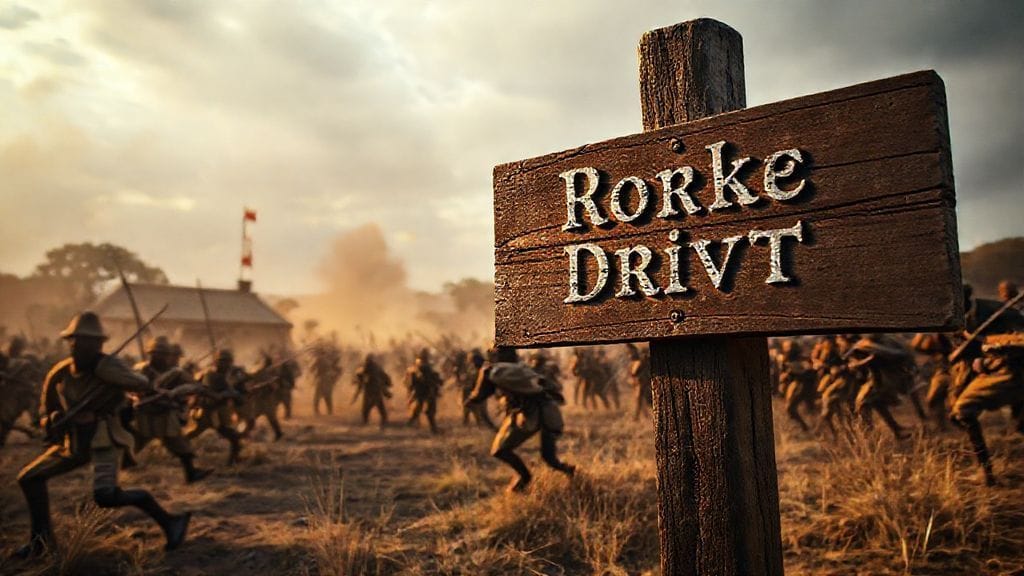
The siege of Rorke’s Drift descended rapidly into brutal hand-to-hand carnage. Zulu warriors, pressed around the makeshift walls, engaged directly with bayonets and knives. British soldiers fought tenaciously, bayonet to assegai, man to man.
In the cramped confines of the station, the intensity was savage. The walls were breached multiple times, but every incursion was met with ferocious resistance. The stamina, willpower, and discipline of the British defenders were met by the raw courage and tactical prowess of the Zulu attackers.
11. Medical Bravery: The Field Hospital Under Fire
Perhaps nowhere was the courage more poignantly displayed than within the converted mission church, where medical orderlies and nurses tended to the wounded amid the chaos. James Henry Reynolds and other members of the hospital staff worked unflinchingly despite bullets and spears striking close by.
Their dedication to saving lives amid the storm of battle earned shoutouts and, famously, Victoria Crosses. The juxtaposition of healing and horror illuminated the complex human dimensions of this conflict.
12. The Night Struggles: Darkness, Desperation, and Determination
As night fell, the assault ebbed and flowed, shadows concealing men and weapons alike. The defenders endured relentless waves of attack, their gunpowder supplies dwindling, their energy flagging.
Yet, the spirit to survive and protect the position held firm. Personal stories of bravery multiplied—soldiers covering comrades, sharpshooters targeting key Zulu leaders, volunteer groups carrying ammunition across fire-swept courtyards all stitched into the fabric of the night.
13. Dawn Breaks Over Rorke’s Drift: The End of the Siege
With the first light of dawn on January 23, 1879, the Zulus, having suffered heavy casualties and unable to breach the defenses further, began to withdraw. Exhausted, bloodied, but unbeaten, the British defenders stood wary but victorious.
The defense of Rorke’s Drift was over, but its place in history had only just begun. Against odds of nearly 20 to 1, the garrison had held, crafting a testament not only to military discipline but to sheer human will.
14. The Toll of the Battle: Casualties, Survival, and Immediate Impact
Casualty figures tell a stark story: out of approximately 150 defenders, 17 were killed and dozens wounded. British accounts claimed killing or wounding over 350 Zulu attackers—immense losses for the assaulting force.
For the British, the triumph provided a morale bastion after the devastating loss at Isandlwana. Yet the cost was human, and the trauma profound—survivors carried scars physical and psychic for the rest of their lives.
15. The Victoria Cross Awardees: Heroism Immortalized
Eleven Victoria Crosses were awarded for the defense of Rorke’s Drift—the highest ever for a single action by one regiment. Recipients like Lieutenant Chard, Lieutenant Bromhead, and Private John Williams became symbols of gallantry.
Their stories, documented in official dispatches, captured the imagination not only of Britain but of the wider Empire. The decoration institutionalized the battle’s heroic narrative, though later historians would nuance these medals against the broader historical canvas.
16. Public Reaction: News of the Siege Reaches Britain
In Britain, the defense became a cause célèbre. The narrative of a small band of heroes valiantly resisting vastly superior numbers fed into imperial pride and wartime propaganda.
Newspapers published graphic accounts and illustrations, stirring public fascination. The event was dramatized in plays and later immortalized in film, reinforcing an archetype of British fortitude and honor amid colonial challenges.
17. The Battle’s Place in the Anglo-Zulu War Context
Though overshadowed by the disaster at Isandlwana, Rorke’s Drift shaped the course of the Anglo-Zulu War. It bought time for British forces to regroup, reordered tactical assumptions, and provided a psychological counterweight to previous defeats.
The war raged on until July 1879, ending with the capture of King Cetshwayo and the eventual dismantling of the Zulu Kingdom by British authorities.
18. Myth, Memory, and Legend: How Rorke’s Drift Has Been Remembered
Rorke’s Drift became enshrined in British military lore and public memory—an exemplar of bravery against impossible odds. But over time, questions emerged about the accuracy and embellishment in official reports.
Zulu perspectives and recent historiography have sought to balance the narrative, highlighting the bravery and tragedy experienced on both sides, complicating simplified “heroes versus savages” tropes.
19. The Battle's Influence on Military Doctrine and Imperial Policy
The siege influenced British military thinking about fortification, supply lines, and engagement with indigenous forces. Commanders reconsidered assumptions about technological and numerical superiority.
Politically, Rorke’s Drift supported an intensification of British imperial ambitions, justifying increased military expenditure and administrative control over Southern Africa.
20. Reflections on Imperialism: Human Cost and Historical Debate
Looking back, Rorke’s Drift exemplifies the complex human dimensions of colonial conquest—valor intertwined with violence, heroism shadowed by subjugation.
Modern scholarship encourages reflection on the imperial project’s ethical implications, the narratives of indigenous resistance, and the echoes of 19th-century warfare in present-day South Africa.
21. Cultural Representations: Films, Literature, and Art Inspired by Rorke’s Drift
The battle’s most famous artistic representation is the 1964 film Zulu, dramatizing the siege with dramatic flair and stirring performances. It cemented Rorke’s Drift in popular culture.
Numerous books, paintings, and commemorations also narrate the event, each framing the story through different lenses—military heroism, colonial tragedy, or cross-cultural encounter.
22. The Legacy Today: Heritage, Commemoration, and Lessons Learned
Today, Rorke’s Drift is a heritage site in South Africa—a place where visitors can walk the earth where soldiers and warriors clashed fiercely. It is a site celebrating courage, mourning loss, and provoking dialogue about history’s complexities.
Annual commemorations and educational programs strive to remember the battle with nuance, connecting past and present in a shared human story.
Conclusion
The defense of Rorke’s Drift stands as a vivid testament to human endurance and bravery amid the brutal realities of war. This extraordinary episode, birthed from the crucible of imperial conflict, reveals the paradoxes of history—the courage of individuals caught in the storm of larger forces.
Rorke’s Drift is not only a tale of muskets and spears; it is a story about the challenges of cultural collision, the price of empire, and the indomitable spirit of those who fight for survival. It challenges us to remember—not just the battle, but the humanity behind it, on all sides.
FAQs
Q1: What caused the Anglo-Zulu War that led to the Defense of Rorke’s Drift?
A1: The Anglo-Zulu War was sparked by British imperial ambitions to control Zululand, a powerful African kingdom. The immediate cause was a British ultimatum demanding Zulu disarmament and acceptance of British authority, which King Cetshwayo refused, leading to war in 1879.
Q2: How many British soldiers defended Rorke’s Drift, and against how many attackers?
A2: Approximately 150 British and colonial troops defended the post against an estimated 3,000 Zulu warriors.
Q3: Who were the key British commanders during the Defense of Rorke’s Drift?
A3: Lieutenant John Chard of the Royal Engineers and Lieutenant Gonville Bromhead of the 24th Regiment of Foot led the defense.
Q4: Why is the Defense of Rorke’s Drift considered significant despite being a small engagement?
A4: Though small, it was a remarkable example of disciplined, courageous defense against overwhelming odds, providing a morale boost to the British after the catastrophic defeat at Isandlwana earlier the same day.
Q5: What recognition was given to the defenders of Rorke’s Drift?
A5: Eleven Victoria Crosses were awarded, a record number for a single battle, recognizing conspicuous bravery.
Q6: How has the battle been remembered and portrayed in popular culture?
A6: The battle has been immortalized in books, films (notably the 1964 movie Zulu), and commemorations, often emphasizing heroism but also inviting debate about colonial perspectives.
Q7: What were the consequences of the defense for the wider Anglo-Zulu War?
A7: The defense delayed Zulu advances and helped restore British morale, ultimately contributing to a continued campaign that led to the eventual defeat of the Zulu Kingdom.
Q8: How do modern historians view the Defense of Rorke’s Drift?
A8: They regard it as a complex event highlighting bravery on both sides but also view it within the broader context of imperial conquest and indigenous resistance, with an emphasis on nuanced interpretation.