Table of Contents
- The Dawn Shattered: The Morning of November 3, 2002
- Alaska’s Silent Giant: The Denali Fault and Its Secrets
- Geological Theatre: Setting the Stage for Disaster
- The Tectonic Ballet: Plates in Uneasy Motion
- Prelude to Rupture: Signs and Foreshocks
- 10:12 AM: When the Earth Roared — The Earthquake Strikes
- The Long Rupture: A 340-Kilometer Breaking Point
- Communities in Shock: Witnessing the Unthinkable
- The Trans-Alaska Pipeline: A Test of Human Engineering
- Aftershocks and Anxiety: The Ground Still Trembles
- Immediate Aftermath: Emergency Responses and Survival
- Scientific Revelations: What This Earthquake Taught Us
- Comparing Giants: Denali Fault vs. Other Major Earthquakes
- Cultural Echoes: How the Quake Moved Alaskans’ Spirits
- Environmental Consequences: The Land Reconfigured
- Economic Ripples: Reconstruction and Resilience
- The Global Perspective: Alaska’s Shaking in a World of Faults
- Memory and Commemoration: Remembering November 3
- Advances in Earthquake Preparedness Stemming from Denali
- The Denali Fault Today: Monitoring and Future Risks
- Conclusion: The Earth’s Story, Written in Stone and Time
- FAQs: Understanding the Denali Fault Earthquake
- External Resource
- Internal Link
1. The Dawn Shattered: The Morning of November 3, 2002
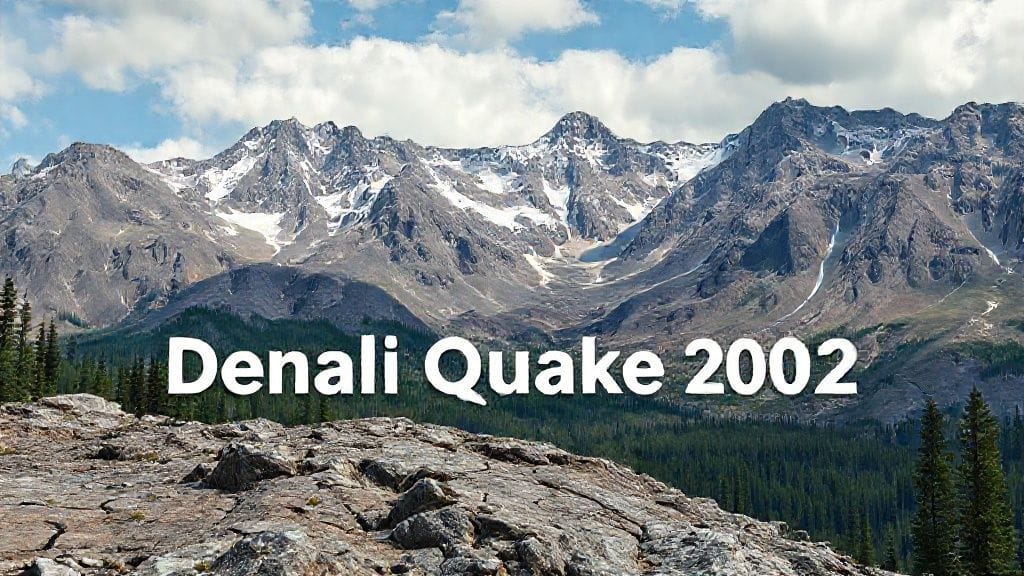
The cold Alaskan morning on November 3, 2002, dawned like any other on the vast, rugged terrain of the northernmost state. Crisp air hung over the quiet wilderness, the haunting peaks of the Alaska Range piercing the sky—a landscape seemingly eternal, serene, and unyielding. But deep beneath that tranquility, forces had been building, impatient and inevitable. Then, at precisely 10:12 AM local time, the ground ruptured in a sudden, violent symphony of motion that would echo across mountains and valley floors alike, shattering the earth’s silence.
The Denali Fault Earthquake, registering a mighty magnitude of 7.9, unleashed a torrent of power that reshaped not only the landscape but the very understanding of seismic life in North America. For geologists, Alaskans, and the wider scientific community, it was a moment of reckoning—where nature’s raw dynamism burst forth with a stark reminder of the planet’s restless heart.
2. Alaska’s Silent Giant: The Denali Fault and Its Secrets
Sprawling some 1,200 kilometers (745 miles) across Alaska, the Denali Fault is a colossal geological titan — a strike-slip fault that elegantly threads through the wilderness, invisible beneath forests, glaciers, and peaks. Named after the formidable Mount Denali, North America’s highest summit, the fault line is part of the Pacific and North American tectonic plates’ boundary zone. Yet, despite its prominence in a state defined by seismic activity, it had long maintained a stoic quietude compared to its more infamous relatives like the San Andreas Fault.
For decades, scientists eyed the Denali Fault with fascination and cautious respect, aware that its potential for big quakes could one day awaken. It was this undercurrent of tension that primed Alaska for the dramatic events of 2002.
3. Geological Theatre: Setting the Stage for Disaster
The Earth’s crust around Alaska is one of the most complex and dynamic on the planet. The interaction of the Pacific Plate grinding northwestward beneath the North American Plate sparks a series of faults, folds, and fractures, creating a precarious patchwork prone to upheaval. Among this tectonic mosaic, the Denali Fault runs east-west, accommodating a large share of this motion through horizontal ‘strike-slip’ movement — akin to giant cracks slipping past each other with tremendous energy.
Beneath the grandeur of the Alaska Range, this fault had been laying in wait, accumulating energy over centuries. The local geology — a patchwork of metamorphic rock, sedimentary layers, and glacial remnants — was primed to respond dramatically once the threshold was crossed.
4. The Tectonic Ballet: Plates in Uneasy Motion
To appreciate what unfolded in November 2002, one must visualize the relentless dance of tectonic plates beneath Alaska. The Pacific Plate, a massive slab of the Earth’s crust, moves northwestward at about 5-6 centimeters per year—a pace that seems glacial to our human clocks but is relentless on geological scales. Pressing and sliding against the North American Plate, this motion exerts immense stress along fault lines like the Denali.
Over years, this stress accumulates silently until it exceeds the frictional forces keeping faults locked. In this precarious moment, when strain surpasses resistance, the fault ruptures — unleashing stored energy in catastrophic bursts we call earthquakes.
5. Prelude to Rupture: Signs and Foreshocks
In the days and weeks leading to the main event, subtle signs whispered unease. Small tremors flickered beneath the surface, barely felt by inhabitants but closely monitored by seismologists. These foreshocks were harbingers, subtle murmurs from the fault hinting at the mechanical rebellion about to unfold.
Yet, none could predict the magnitude or exact timing. It was nature’s cryptic script, a puzzle that human science can only partially decipher.
6. 10:12 AM: When the Earth Roared — The Earthquake Strikes
And then, it happened.
At 10:12 AM, as workers drove towards the rugged outposts and children waited in schoolrooms, a sudden jolt rippled across Alaska’s interior. The ground convulsed with violent energy; rocks fractured; mountains seemed to sway. The 7.9 magnitude quake unleashed the energy equivalent to tens of millions of tons of TNT, a force with terrifying power yet mysterious artistry.
Shaking lasted approximately 2 minutes — an eternity in the language of seismic events — and the rupture propagated along the Denali Fault for an unprecedented 340 kilometers. The ground shifted laterally by up to 8 meters in some locations, as if the Earth had abruptly rewritten its geography.
7. The Long Rupture: A 340-Kilometer Breaking Point
What set this earthquake apart wasn’t just its magnitude but the extraordinary length of the rupture. Stretching over 340 kilometers (210 miles), this break represented one of the longest strike-slip ruptures ever recorded in North America.
The rupture narrative was complex—it initiated on the previously unknown Susitna Glacier Fault segment, jumped onto the main Denali Fault, and propagated eastward. Its path crossed rivers, forests, and mountain ranges, leaving a dramatic fault scar visible from aerial and satellite imagery for years.
8. Communities in Shock: Witnessing the Unthinkable
Though predominantly impacting remote wilderness, the quake’s tremors reached human habitations from villages like Cantwell to the city of Fairbanks, nearly 200 miles away. Residents felt the sudden violent shakes rattling homes, knocking items from shelves, and sparking fear in a land accustomed to natural extremes but unprepared for such an event.
For some, the ground’s roaring was terrifying. Stories emerged of children clutching parents, of elderly citizens seeking shelter as walls trembled. Yet, remarkably, casualties were minimal—a testament to both luck and preparedness.
9. The Trans-Alaska Pipeline: A Test of Human Engineering
Perhaps the most dramatic scene from the earthquake was the ordeal faced by the Trans-Alaska Pipeline System (TAPS), a lifeline spanning over 1,200 kilometers that carries crude oil from Prudhoe Bay to the southern port of Valdez.
As the quake ruptured the ground beneath it, the pipeline was subjected to lateral shifts of up to 5 meters. Designed with flexibility and seismic safety in mind, the pipeline resisted catastrophic failure. Engineers and observers held their breath as inspection teams raced to assess damage.
The pipeline’s survival was hailed as a triumph of engineering foresight — a successful example where human ingenuity met nature’s fury without disaster.
10. Aftershocks and Anxiety: The Ground Still Trembles
In the quake’s wake, Alaskans endured weeks of aftershocks—smaller tremors that kept nerves taut and reminded all that the Denali Fault was far from finished expressing its might. Seismographs recorded hundreds of these aftershocks, some reaching magnitudes above 5.0.
Communities remained vigilant, emergency systems stayed on alert, and researchers deployed extra instruments to monitor continuing seismicity.
11. Immediate Aftermath: Emergency Responses and Survival
Despite the extensive rupture and shaking, the human toll was mercifully low: only a handful of injuries and no direct fatalities. This was partly due to Alaska’s sparse population, but also the effectiveness of emergency preparedness campaigns fostered by decades of seismic experience.
First responders and volunteers mobilized quickly to survey damage, check infrastructure, and help residents. Communication lines, some disrupted by the quake, were progressively restored, and lessons learned were etched into policies for future disasters.
12. Scientific Revelations: What This Earthquake Taught Us
The Denali earthquake became a watershed moment for geoscience. For the first time in decades, scientists witnessed a strike-slip event on this scale in North America, providing invaluable data on rupture propagation, fault segmentation, and interaction between neighboring faults.
Seismologists marveled at the earthquake’s ability to “jump” between fault systems—a phenomenon still not fully understood—and at the significant ground displacement over vast distances. The event refined seismic hazard models and deepened appreciation of complex crustal behavior.
13. Comparing Giants: Denali Fault vs. Other Major Earthquakes
In seismic history, the Denali Fault Earthquake stands alongside events like the 1906 San Francisco quake and 1994 Northridge earthquake in California, or the 1999 İzmit quake in Turkey, as a large strike-slip event with broad impacts.
Compared to the 9.0 sumatra quake of 2004 or 2011 Tohoku quake in Japan, Denali’s magnitude was smaller but its rupture characteristics unique. Its contribution to global seismology has been to highlight that even bold strike-slip earthquakes can involve intricate fault interactions and cause profound landscape changes.
14. Cultural Echoes: How the Quake Moved Alaskans’ Spirits
Earthquakes are more than geological events—they touch human hearts and cultural narratives. In Alaska, a land rich with indigenous traditions and resilience, the Denali quake soon became part of collective memory, stories told around fires and in classrooms.
Artists captured the quake’s power in paintings and poetry; communities marked anniversaries with reflection and gratitude. The shared experience reinforced bonds among residents living in Earth’s seismic frontier—a reminder of nature’s power and human courage.
15. Environmental Consequences: The Land Reconfigured
Beyond shaking buildings and pipelines, the earthquake dramatically altered the natural environment. Landslides cascaded from steep slopes, altering rivers and lakes; the topography around the fault shifted, creating scarps and cracking frozen ground.
Glaciers felt jolts, and the disruption rippled through ecosystems—some habitats disturbed, others evolving under new conditions. These dramatic transformations highlighted the interconnectedness of earth systems, alive and robust in their change.
16. Economic Ripples: Reconstruction and Resilience
While Alaska avoided the massive destruction seen in urban earthquakes, the Denali event still incurred economic costs. Infrastructure repairs, pipeline inspections, and environmental mitigation drew millions of dollars in spending.
Yet, the disaster also underscored resilience, stimulation of local economies through reconstruction work, and better preparedness investments. The balance between vulnerability and fortitude was tested—and it tipped towards hope.
17. The Global Perspective: Alaska’s Shaking in a World of Faults
Alaska’s 2002 quake served as a stark reminder of our planet’s restless nature. From California to Japan, Turkey to Chile, fault zones across continents bear the burden of tectonic stress. The Denali earthquake added a vital chapter to the global seismic narrative.
Scientists worldwide analyzed the event for clues on rupture dynamics, hazard prediction, and engineering strategies — thereby weaving Alaska’s experience into a shared understanding of living on an active planet.
18. Memory and Commemoration: Remembering November 3
Year after year, the date November 3 is marked by Alaskans with reverence and reflection. Memorial events, educational programs, and community gatherings ensure the lessons endure.
Preserving quake records, photographs, and oral histories remains a priority for researchers and citizens alike, so that future generations understand not just the quake’s power, but its human dimension.
19. Advances in Earthquake Preparedness Stemming from Denali
The event’s legacy extends beyond science to practical preparedness. Building codes were updated, emergency protocols refined, and public awareness grew. The pipeline example inspired similar measures worldwide for critical infrastructure.
These advancements contribute to making societies more resilient, transforming the trauma of earth-shaking moments into stepping stones for safety.
20. The Denali Fault Today: Monitoring and Future Risks
Today, the Denali Fault remains under vigilant watch. Enhanced seismic networks and satellite monitoring continually scan for stress accumulation and tremors.
While no one can predict precisely when the next major rupture will occur, the quake of 2002 serves as a reminder of the fault's potential. Alaskans live in awareness shaped by science and respect for their landscape.
21. Conclusion: The Earth’s Story, Written in Stone and Time
The Denali Fault Earthquake of November 3, 2002, was more than an isolated tremor—it was a vivid chapter in Earth’s ever-evolving story. From the sudden rupture beneath an icy wilderness to the ripple effects felt in communities, ecosystems, and global science, it stands as a testament to the planet’s raw power and humanity’s enduring spirit.
In its shaking, the Earth spoke—revealing hidden forces, testing human ingenuity, and reminding us all that beneath our feet, the slow dance of creation and destruction never ceases.
FAQs
Q1: What caused the Denali Fault Earthquake in 2002?
A1: The earthquake was caused by the sudden rupture along the Denali Fault, a major strike-slip fault where the Pacific and North American tectonic plates slide past each other. Stress accumulated over centuries until the fault ruptured, releasing massive seismic energy.
Q2: How strong was the earthquake?
A2: It registered a magnitude of 7.9 on the Richter scale, making it one of the strongest recorded earthquakes in North America in recent history.
Q3: Were there any casualties or major damages?
A3: Remarkably, casualties were minimal, largely due to the event’s occurrence in a sparsely populated region and Alaska’s preparedness. Some infrastructure, including the Trans-Alaska Pipeline, was affected but did not suffer catastrophic failure.
Q4: How did the earthquake affect the Trans-Alaska Pipeline?
A4: The pipeline experienced significant lateral displacement but was engineered to withstand seismic events. It flexed and shifted without rupturing, demonstrating advanced engineering designed for seismic resilience.
Q5: What scientific insights were gained from this earthquake?
A5: The quake provided unprecedented data on long strike-slip ruptures, fault interactions, and rupture propagation, enhancing understanding of seismic hazards and fault behavior.
Q6: Is the Denali Fault still active and dangerous today?
A6: Yes, the Denali Fault remains an active seismic zone monitored closely. Although future earthquakes are inevitable, ongoing research helps in risk assessment and preparedness.
Q7: How is the earthquake remembered in Alaska?
A7: The event is commemorated annually, with community reflections, scientific discussions, and efforts to preserve its memory and the lessons learned.
Q8: Did the earthquake have environmental impacts?
A8: Yes, the quake triggered landslides and altered the landscape, affecting rivers, glaciers, and ecosystems, demonstrating the profound environmental consequences of large seismic events.