Table of Contents
- The Awakening of a Sleeping Giant: Dawn at Dieng Plateau
- The Geological Heart of Central Java: Dieng’s Volcanic Legacy
- Cultural and Spiritual Bonds with the Volcano
- Warning Signs: Unseen Tremors Beneath the Earth
- The Fateful Morning of March 1979
- The Eruption Unleashed: Fire, Fog, and Fury
- Human Tragedy Amidst the Ash: Lives Changed Forever
- Immediate Aftermath: Rescue, Fear, and Uncertainty
- Scientific Response: Understanding Sinila’s Wrath
- Reassessing Volcanic Monitoring in Indonesia
- The Impact on Local Communities and Traditions
- Media and National Awareness: A Nation in Shock
- Dieng in the Context of Indonesia’s Volcanic History
- Environmental Consequences: Landscape and Ecology Transformed
- Lessons Learned: Disaster Preparedness and Risk Reduction
- The Symbiosis of Nature and Humanity Post-Eruption
- Contemporary Remembrance: Memorializing Dieng 1979
- Dieng Today: Tourism, Science, and Resilience
- The Global Importance of Monitoring Volcanic Hazards
- Dieng’s 1979 Eruption Through the Lens of Modern Volcanology
- Cultural Resilience: How Traditions Endure After Disaster
- Conclusion: The Volcano’s Voice Echoing Through Time
- FAQs: Unveiling the Mysteries of Dieng’s 1979 Eruption
- External Resource
- Internal Link
The Awakening of a Sleeping Giant: Dawn at Dieng Plateau
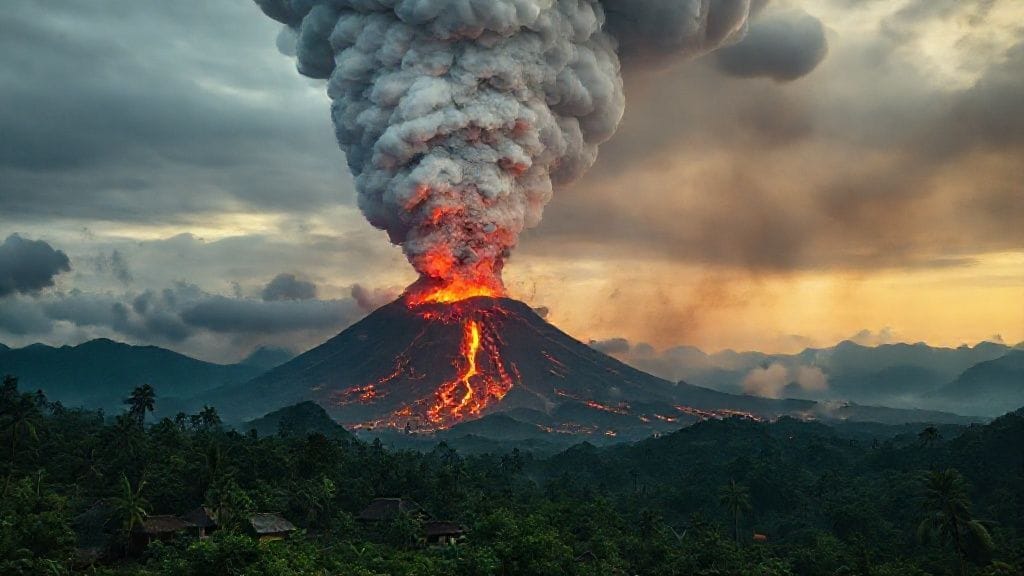
The morning of March 1979 in Central Java dawned like many before—a soft mist gently caressing the rolling hills of the Dieng Plateau, where ancient temples sat quietly amidst verdant fields and steaming vents. But beneath this serene landscape, a volatile force stirred restlessly, poised to shatter tranquility with fiery reprisal. The Dieng (Sinila) eruption, rare and sudden, was about to carve its mark into Indonesia’s volcanic narrative, inflicting destruction and awakening a society to the immense power sleeping just beneath their feet.
The sight was both exhilarating and terrifying: hot gases billowing into a steely sky, an ashen blanket sepia-tinted. For local villagers, long used to the slow rhythms and occasional grumbles of their mountain, this explosion was cataclysmic—nature’s raw power laid bare in an instant of terrifying beauty. The story of the 1979 Sinila eruption is one of tension between human vulnerability and volcanic ferocity, interwoven with cultural context and lessons still etched in the annals of disaster mitigation.
The Geological Heart of Central Java: Dieng’s Volcanic Legacy
Dieng Plateau is no ordinary highland; it is a complex volcanic field, one of the oldest and most geologically intricate in Indonesia. Named "Dieng," derived from the Javanese words di (place) and hyang (ancestor or spirits), this plateau is a spiritual landscape as much as it is geological. Sitting at an altitude of around 2,000 meters, the plateau hosts a series of craters, fumaroles, boiling mud pools, and steaming vents — silent but volatile reminders of the region’s fiery past.
The volcano's formation traces back hundreds of thousands of years, a testament to the tectonic clashes of the Indo-Australian and Eurasian plates, a hallmark of the Indonesian archipelago’s restless geology. Among its many cones, Sinila is an intriguing volcanic feature: a crater lake nestled in a depression, surrounded by steep walls and a volatile hydrothermal system underneath.
Before 1979, Sinila had been relatively dormant in the modern historical record but was not dormant in any geological sense. Upheavals and shifts beneath the surface continued to evolve, storing energy and pressurizing gas pockets beneath the Earth’s crust, waiting for the right moment to release tension explosively.
Cultural and Spiritual Bonds with the Volcano
Dieng’s volcanic presence shaped more than just its physical surroundings. The plateau has been a sacred place, home to ancient Hindu temples dating back to the 8th century. These temples, some of the oldest known in Java, underscore the powerful intertwining of nature and spirituality.
Local communities viewed the volcano with respect mixed with reverence and fear. The mountain was believed to be inhabited by spirits and gods, a place where the human and divine worlds intermingled. This spiritual dimension complicated how people approached the threat of eruptions—they were as much acts of divine will as geological phenomena.
Before 1979, stories, rituals, and oral histories passed down through generations illustrated how villagers coped psychologically with the ever-present, albeit intermittent, threat of volcanic activity. Certain ceremonies were still performed to appease these forces, an interface between human understanding and volcanic mystery.
Warning Signs: Unseen Tremors Beneath the Earth
Scientific monitoring in Indonesia during the 1970s was still developing; modern volcano surveillance technologies such as satellite imaging had not yet been implemented. Nonetheless, experienced volcanologists and local observers had noticed preliminary signs of unrest at Sinila in the late 1978 months.
Microseismic activity—a series of small earthquakes barely perceptible to humans—started to rattle the fragile equilibrium beneath the plateau. Fumarole temperatures began to climb, and subtle changes in gas compositions, especially sulfur dioxide emissions, hinted at magma movements. Yet, these signs were often ignored or insufficiently understood due to limited monitoring capabilities and local skepticism.
“The Earth was whispering, but few had learned to listen,” recalled a volcanologist involved decades later. For villagers, these tremors were familiar, part of life in the volcanic belt, not necessarily portents of imminent danger.
The Fateful Morning of March 1979
Then came early March—an ordinary day, peaceful in its early light, before Sinila roared to life with unprecedented intensity. The eruption did not come as a towering column of lava and ash like Mount Merapi’s more famous outbursts. Instead, it was a sudden explosive release of hot gases and pyroclastic materials, a phreatic eruption powered by steam explosions as groundwater met swelling magma underground.
Villagers reported hearing a thunderous crack, a sound that seemed to rend the heavens. Within minutes, billowing clouds of superheated steam and gas surged from the crater, engulfing the immediate area in a thick, white fog mingled with toxic sulfurous fumes. Ash rained down heavily, darkening the sky and covering fields, homes, and sacred temples in a grimy shroud.
It was a terrifying display—quick and merciless—leaving little time for escape. Many were caught unaware, exposed to suffocating gases and searing heat, while others faced crushing debris or fell victim to subsequent landslides triggered by the eruption's tremors.
The Eruption Unleashed: Fire, Fog, and Fury
Though not as flamboyant as some volcanic eruptions, Sinila’s phreatic explosion released enormous energy in seconds. The heat, the poison-laced fumes, and the ash deposit created an invisible but deadly hazard. These explosions, fueled by the violent vaporization of water trapped by rising magma, forced the collapse of part of the crater rim, sending rockfalls cascading down the steep slopes.
Eyewitnesses described a surreal scene—an eerie silence punctuated by roaring explosions, the sky transforming from calm blue to a murky gray, fertility-rich soil turned barren under layers of ash. Trees were scorched; crops destroyed; communities cloaked in uncertainty.
Geologists would later classify the eruption as moderate in volume but extremely dangerous because of its phreatic nature. Without magma flowing on the surface, traditional lava flows did not cause most damages; it was the heat and toxic gases emanating swiftly and invisibly that proved deadly.
Human Tragedy Amidst the Ash: Lives Changed Forever
The eruption's toll was immediate and severe. Official reports indicate that dozens perished, many more suffered injuries ranging from burns to respiratory ailments caused by inhaled ash and sulfur dioxide. Entire villages had to be evacuated under chaotic conditions, while survivors faced the daunting prospect of rebuilding lives in a landscape forever altered.
Families were torn apart, with children orphaned and elders left without homes. The deeply woven spiritual connection to Dieng made recovery even more complex—the volcano was both provider and destroyer.
One poignant story recalls the widow of a farmer who returned to the ash-covered fields only to find the ancient temple her ancestors had worshiped by was obscured by rubble. “The mountain took but also gave,” she said, embodying the paradox of human endurance and sorrow.
Immediate Aftermath: Rescue, Fear, and Uncertainty
In the days following the eruption, the Indonesian government mobilized emergency services, assisted by local community leaders. Rescue operations were hampered by rugged terrain and continued volcanic unrest. Hospitals in nearby towns overflowed with patients suffering from ash inhalation and trauma.
Fear persisted as residents wondered if the eruption was over or if another, potentially larger, explosion was imminent. Relocation plans were hastily coordinated for displaced populations, but the social fabric was stretched thin under the strain.
Media coverage began to alert the nation to the dangers of living on volatile land, prompting a broader conversation about risk and responsibility in Indonesia’s fire-prone regions.
Scientific Response: Understanding Sinila’s Wrath
Post-eruption, volcanologists deepened their studies of Sinila and the Dieng volcanic field. The 1979 event became a case study illustrating the deadly unpredictability of phreatic eruptions—often silent warnings followed by sudden explosion.
Innovations in gas sampling techniques, seismicity tracking, and thermal imaging were spurred by the need for earlier detection. Indonesian and international scientists collaborated to install more comprehensive monitoring equipment to track ground deformations and gas emissions.
A new sense of urgency permeated the scientific community: Dieng was no longer just a sacred mountain or agricultural plateau—it was a reminder of Earth’s volatile heart.
Reassessing Volcanic Monitoring in Indonesia
Indonesia’s position atop the Pacific “Ring of Fire” means it faces over 130 active volcanoes. The Dieng eruption underscored glaring gaps in the nation's volcanic monitoring infrastructure in the late 20th century.
The disaster prompted government agencies, including the Indonesian Volcanological Survey, to invest in more systematic surveillance networks. These efforts included seismographs, gas analyzers, and public alert systems designed to minimize casualties in future eruptions.
Thus, Sinila’s eruption became a turning point—bridging folklore, science, and policy toward a safer coexistence with nature’s fury.
The Impact on Local Communities and Traditions
The eruption destabilized not only the physical landscape but also cultural practices rooted in the land.
Rituals surrounding the volcano were disrupted; some shrines destroyed, others abandoned due to fear or displacement. Yet, in the complexity of destruction arose a resilience—the restoration of temples, the revival of ancient ceremonies, and a renewed respect for the fragile boundary between humans and nature.
Socioeconomic impacts were felt deeply. Many farmers lost crops and livestock, sparking economic hardship. Aid efforts focused heavily on ensuring food security and rebuilding infrastructure.
The community’s response—marked by solidarity, adaptation, and reverence—became a quiet testament to enduring human spirit.
Media and National Awareness: A Nation in Shock
The eruption made headlines across Indonesia, sharply raising public awareness of volcanic hazards. Newspapers and radio broadcasts brought vivid images and urgent reports to millions, shifting volcanic eruptions from distant natural phenomena to immediate national concerns.
This visibility spurred educational campaigns focused on preparedness, disaster response, and environmental stewardship. It also ignited political debate on land use policies near volcanic zones.
The incident became embedded in Indonesian collective memory, occasionally resurfacing in literature, film, and public discourse—reminding citizens of their country’s fiery heartbeat.
Dieng in the Context of Indonesia’s Volcanic History
While perhaps overshadowed by larger eruptions like Krakatoa or Merapi, the Dieng eruption of 1979 holds distinct significance. It represents the volatile threat posed by smaller, less conspicuous volcanoes.
Indonesia’s layered volcanic history is defined by both scale and unpredictability. Dieng’s eruption showed how even lower-profile volcanic fields could unleash deadly force, complicating risk management.
This event broadened scientific and societal understanding of volcanic hazards—beyond magma flows to include gas explosions and hydrothermal processes.
Environmental Consequences: Landscape and Ecology Transformed
The eruption reshaped the Dieng landscape profoundly. Ash layers altered soil chemistry, vegetation patterns shifted, and some local wildlife habitat was destroyed or displaced.
At the same time, volcanic soils are fertile, and the plateau eventually benefited agriculturally from nutrient enrichment. The recovery was slow but eco-resilient; new plant species colonized the altered ground, and the ecosystem evolved.
Hydrological changes occurred as well, with crater lakes affected in acidity and temperature—altering water quality for both humans and animals.
Scientists continue to study these changes, learning how ecosystems respond to volcanic disturbances in tropical highlands.
Lessons Learned: Disaster Preparedness and Risk Reduction
The 1979 Sinila eruption became a cornerstone in Indonesia’s evolving approach to disaster preparedness. Key lessons included:
- The critical importance of early detection and robust monitoring systems.
- Incorporating local knowledge and fostering community engagement in preparedness strategies.
- Improving communication channels between scientists, authorities, and residents.
- Developing evacuation plans and public education programs tailored to diverse geographies and cultures.
Indonesia’s subsequent disaster frameworks reflect these priorities—emphasizing resilience, adaptability, and respect for nature’s power.
The Symbiosis of Nature and Humanity Post-Eruption
Post-disaster, Dieng remained a complex symbol: a reminder of nature’s wrath and generosity. The eruption forged deeper ties between inhabitants and the volcanic environment, encouraging coexistence rather than conquest.
Farmers adapted their techniques, spiritual leaders reinterpreted the volcano’s significance, and scientists partnered more closely with communities. This mutual respect underscored that human survival in volcanic regions demands reverence for unpredictability.
This delicate balance informs current approaches to living safely amid the world’s most dramatic natural landscapes.
Contemporary Remembrance: Memorializing Dieng 1979
Decades later, efforts to remember and honor those impacted by the 1979 eruption continue. Memorials near affected villages and temples stand as sites of reflection.
Anniversaries are marked with ceremonies blending scientific commemoration and spiritual homage. Schools integrate local histories into curricula, ensuring lessons and memories pass to new generations.
The eruption, though tragic, fosters community cohesion—a shared narrative threading past, present, and future.
Dieng Today: Tourism, Science, and Resilience
Today, the Dieng Plateau draws visitors from around the world—tourists enchanted by its otherworldly landscapes, ancient temples, and vibrant cultural traditions.
Scientists maintain ongoing monitoring at Sinila, benefiting from advanced technology and international cooperation. These combined efforts aim to safeguard both residents and travelers.
Dieng’s story is thus one of resilience and rebirth, where tragedy has been transformed into opportunity and knowledge.
The Global Importance of Monitoring Volcanic Hazards
Dieng’s eruption sits among countless global volcanic narratives underscoring the necessity for comprehensive hazard monitoring. Regions with hydrothermal systems and small volcanoes are often underestimated in risk assessments.
Lessons from Indonesia influence international protocols on early warning systems, public communication, and disaster response, helping communities worldwide mitigate the peril of living beneath eruptive giants.
Dieng’s 1979 Eruption Through the Lens of Modern Volcanology
Modern volcanology now frames Dieng’s 1979 event as a classic example of phreatic eruptions—silent yet deadly. Progress in gas monitoring, thermal imaging, and remote sensing enhances prediction capabilities.
Ongoing research at Dieng continues to unlock mysteries of magma-water interaction, crucial for understanding future risks.
This eruption remains a benchmark event, illuminating the complex behaviors of volcanoes beyond mere lava and ash.
Cultural Resilience: How Traditions Endure After Disaster
In the face of devastation, Dieng’s local societies exemplify cultural resilience. Rituals evolved, myths were renewed, and spirituality intertwined with scientific understanding.
This cultural continuity fosters psychological healing and communal strength, vital for recovery from natural disasters.
The intertwining of science and tradition at Dieng offers a model of holistic resilience in volcanic landscapes worldwide.
Conclusion
The 1979 eruption of Sinila on the Dieng Plateau was more than a geological event. It was a profound human drama—a moment when centuries-old human communities stood face to face with the raw, unpredictable forces of the Earth. This volcanic awakening tore through the fabric of daily life, demanding courage, reflection, and change.
Yet from the ashes rose knowledge, resilience, and a deeper respect for the fragile relationship between people and their environment. Dieng’s story resonates beyond Central Java, reminding us that beneath serene landscapes can lie unpredictable danger—and also immense opportunity for learning and renewal.
The legacy of the 1979 eruption is ultimately one of respect: respect for nature’s power, respect for cultural heritage, and respect for the enduring spirit of those who live in harmony with the earth’s most dynamic landscapes.
FAQs
1. What caused the 1979 Dieng (Sinila) eruption?
The eruption was phreatic, meaning it was caused by steam explosions when groundwater contacted rising magma beneath the volcano, leading to sudden, explosive gas release.
2. How severe was the eruption in terms of casualties and damage?
While moderate in geological magnitude, the eruption caused dozens of deaths, many injuries, and significant disruptions to local communities and agriculture.
3. What made the 1979 eruption unique compared to other Indonesian volcanic eruptions?
Unlike the towering lava flows of more famous eruptions, Dieng’s was a rapid, steam-driven explosion with deadly toxic gases, underscoring the danger of phreatic activity often overlooked.
4. How did local people interpret the eruption culturally?
For local communities with deep spiritual ties to Dieng, the eruption was seen as both a natural disaster and a divine event, impacting religious practices and leading to shifts in ritual behavior.
5. What advances in volcanic monitoring resulted from the eruption?
The disaster spurred enhanced seismic and gas emission monitoring and improved public alert systems, helping Indonesia better predict and respond to future volcanic hazards.
6. How has the Dieng Plateau recovered environmentally since the eruption?
Though the eruption devastated vegetation initially, ecological succession and fertile ash enriched soils have combined to restore and even boost local agriculture and biodiversity over time.
7. Is the Dieng volcano still active today?
Yes, Sinila remains an active volcanic system with ongoing geothermal activity monitored closely to alert residents to future unrest.
8. How is the 1979 eruption remembered and commemorated today?
Local memorials, annual ceremonies, and educational programs keep the memory alive, blending scientific reflection with cultural remembrance.

