Table of Contents
- Introduction
- The Scientific World Before X-rays
- Who Was Wilhelm Röntgen?
- The Discovery in Würzburg
- What Are X-rays?
- The First Human X-ray Image
- A Scientific Earthquake
- Reactions Across Disciplines
- The Naming Mystery: Why “X”?
- Rapid Adoption in Medicine
- From Battlefield to Operating Room
- Early Risks and Radiation Safety
- Nobel Prize and International Fame
- Beyond Medicine: New Frontiers
- Röntgen’s Legacy and Influence
- Conclusion
- External Resource
- Internal Link
1. Introduction
Imagine being able to see bones inside the body—without surgery, without blood, without pain. It may sound ordinary today, but in 1895, it was pure magic.
That magic began on November 8, in Würzburg, Germany, when physicist Wilhelm Conrad Röntgen stumbled upon a mysterious ray that could pass through flesh and reveal the skeleton beneath. His discovery of X-rays would forever alter the worlds of medicine, physics, and technology.
2. The Scientific World Before X-rays
Before Röntgen’s breakthrough, medical diagnostics relied solely on external observations, touch, and guesswork. Doctors had no way of “seeing” inside the human body without cutting it open. Physics, meanwhile, was entering a golden age of experimentation with electricity and radiation.
Cathode ray tubes were the center of much curiosity—glass tubes with electrodes that glowed under voltage. Röntgen wasn’t the first to work with them, but what he found was unlike anything anyone had ever seen.
3. Who Was Wilhelm Röntgen?
Born in 1845 in Lennep, Prussia (now Germany), Röntgen was a reserved man with a deep love for physics and experimentation. By the 1890s, he was a respected professor at the University of Würzburg.
He had no grand plan to discover X-rays. In fact, like many great moments in science, it happened by accident.
4. The Discovery in Würzburg
While experimenting with a Crookes tube—an early form of vacuum tube—Röntgen noticed that a screen coated with barium platinocyanide glowed even though it was several feet away and shielded from visible light. Something invisible was escaping the tube and striking the screen.
He called it an “X-ray”, the “X” standing for “unknown.” Röntgen quickly realized this new radiation could penetrate soft materials like paper, cloth, and human tissue—yet was blocked by denser substances like bone and metal.
5. What Are X-rays?
X-rays are a form of electromagnetic radiation with wavelengths shorter than ultraviolet light. Their high energy allows them to pass through many materials.
In technical terms, they lie between ultraviolet light and gamma rays on the electromagnetic spectrum. But at the time, they were utterly mysterious.
6. The First Human X-ray Image
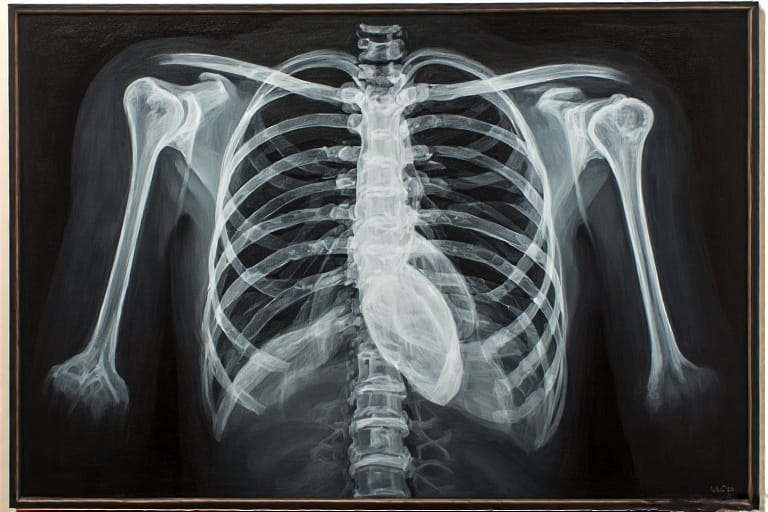
On December 22, 1895, Röntgen took the first-ever X-ray photograph of the human body. The subject? His wife, Bertha Röntgen’s hand.
The image showed her bones in ghostly clarity, along with her wedding ring. When Bertha saw the photo, she reportedly said, “I have seen my death.”
The world had seen its first radiograph.
7. A Scientific Earthquake
In January 1896, Röntgen published his findings in a short paper: “On a New Kind of Rays.” He didn’t patent the discovery. He wanted the world to benefit.
Within weeks, scientists across Europe and the U.S. were replicating the phenomenon. X-rays were real—and their potential seemed limitless.
8. Reactions Across Disciplines
Physicists were stunned. They had no idea how these rays fit into known theories. Doctors were thrilled—they finally had a non-invasive diagnostic tool.
The military imagined X-rays on the battlefield. Newspapers splashed headlines like “New Light Reveals Human Skeletons!” and “See Through Walls!”
There was a mix of wonder and unease.
9. The Naming Mystery: Why “X”?
Röntgen called them “X-rays” because he didn’t know what they were. He assumed the name would change as more was learned.
Ironically, the name stuck. In Germany, they’re sometimes called “Röntgen rays”, but most of the world still uses “X-rays” more than a century later.
10. Rapid Adoption in Medicine
X-rays were quickly adopted in hospitals. Within a year, doctors were using them to:
- Detect bone fractures
- Locate bullets and foreign objects
- Examine lung diseases like tuberculosis
It revolutionized surgical planning and diagnostics.
By 1900, many hospitals had radiology departments, often improvised and unshielded.
11. From Battlefield to Operating Room
The utility of X-rays was proven dramatically during World War I. Mobile X-ray units, some designed by Marie Curie, saved thousands of lives.
They helped surgeons locate shrapnel, determine amputation points, and reduce unnecessary exploratory surgery.
It was a lifesaver, quite literally.
12. Early Risks and Radiation Safety
In those early days, no one understood the dangers. Prolonged exposure to X-rays caused:
- Skin burns
- Hair loss
- Radiation poisoning
Many early radiologists suffered chronic illness. Some even lost limbs or died from cancer.
It wasn’t until the 1920s that protective measures—lead shields, exposure limits, and dosimeters—became standard.
13. Nobel Prize and International Fame
In 1901, Wilhelm Röntgen was awarded the first Nobel Prize in Physics. The committee praised him for “the most important discovery within the domain of physics made in our times.”
Despite fame, he declined to patent or profit from X-rays. He donated the prize money to research.
Röntgen remained humble, dedicated to science. He died in 1923, but his name lives on.
14. Beyond Medicine: New Frontiers
X-rays didn’t just transform medicine. They impacted:
- Astronomy: X-ray telescopes revealed black holes and supernovae
- Security: Airport scanners and industrial inspection
- Art and archaeology: Revealing hidden layers in paintings and ancient scrolls
- Material science: Understanding crystal structures via X-ray crystallography
It’s hard to imagine a field not touched by Röntgen’s rays.
15. Röntgen’s Legacy and Influence
Today, radiology is a core component of medicine, with branches like:
- CT (computed tomography)
- Mammography
- Fluoroscopy
- Interventional radiology
All trace their roots to that flickering screen in 1895. Röntgen not only opened a window into the body—he opened a new dimension in science.
His name graces hospitals, awards, and even units of radiation exposure (roentgen).
16. Conclusion
The discovery of X-rays on November 8, 1895, was one of those rare scientific events that instantly changed the world. In a flash, the invisible became visible. Bones, bullets, and tumors could now be seen without a single incision.
Röntgen’s work remains a shining example of how curiosity, observation, and humility can reshape our understanding of life—and improve it immeasurably.