Table of Contents
- The Dawn of a Forensic Revolution: DNA Fingerprinting Invented in the UK, 1984
- A World on the Brink of Scientific Breakthrough
- The Man Behind the Discovery: Sir Alec Jeffreys’ Early Life and Career
- The Crucial Moment in Leicester: The First DNA Fingerprint
- The Science Unveiled: How DNA Fingerprinting Works
- Turning Forensics Upside Down: The First Practical Applications
- The End of Doubt: DNA Fingerprinting Solves a Tragic Double Murder
- Ripples Through the Legal System: DNA’s Impact on Justice
- The Global Spread: From Britain to the World
- DNA Fingerprinting and the Exoneration of the Wrongfully Convicted
- Ethical Storms and Legal Debates in the Shadow of DNA Evidence
- Popular Culture Embraces the Genetic Detective: DNA’s Role Beyond Courts
- From Identification to Ancestry: Expanding Horizons of DNA Analysis
- The Challenges of Privacy in a Genetic Age
- Celebrating a Legacy: The Honors and Continual Innovations in DNA Technology
- Reflections on a Discovery That Transformed Science and Society
- DNA Fingerprinting in the 21st Century: Challenges and Promises
- Conclusion
- FAQs
- External Resource
- Internal Link
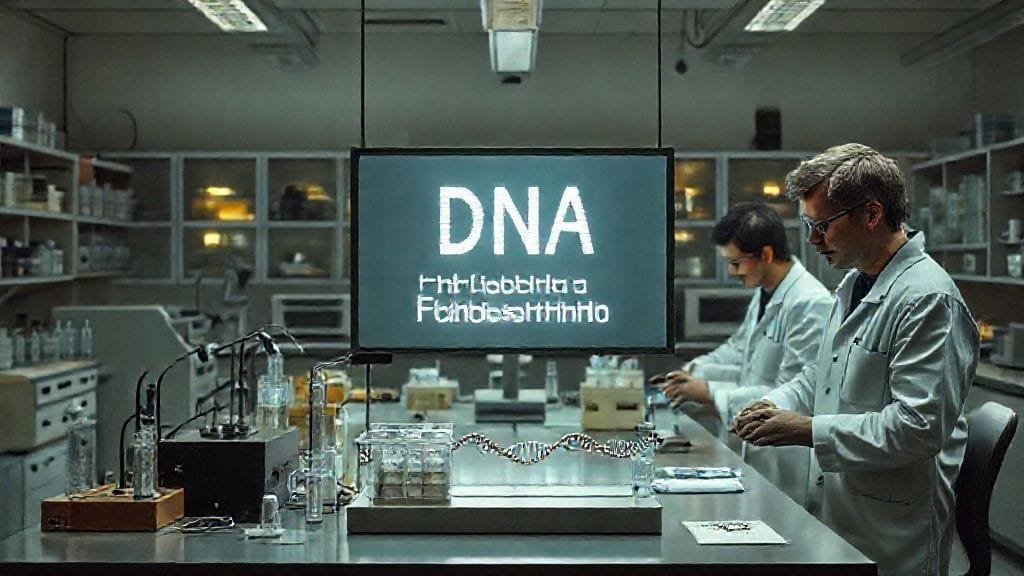
In the summer of 1984, a quiet laboratory in Leicester, England, bore witness to an event destined to revolutionize crime investigation, human identification, and even our understanding of ourselves. The invention of DNA fingerprinting, a method that could discern the unique genetic code of an individual, marked the birth of a new forensic frontier—a turning point where science’s microscopic nuances stepped into the spotlight of justice and human rights. This was not merely a scientific breakthrough; it was a profound reshaping of truth and identity in the modern world.
The Dawn of a Forensic Revolution: DNA Fingerprinting Invented in the UK, 1984
The scene was the University of Leicester, where Sir Alec Jeffreys, a geneticist with an eagle eye for pattern and polymorphisms, made a discovery that would send shockwaves through criminology and biology alike. Against the backdrop of growing uncertainty in criminal investigations, where eyewitness errors and circumstantial evidence too often failed justice, Jeffreys’ ‘genetic fingerprint’ promised an infallible key to identity.
This article embarks on a journey through the genesis of DNA fingerprinting—from conception to societal upheaval—tracking the threads of science, law, and morality woven into this unprecedented breakthrough.
A World on the Brink of Scientific Breakthrough
By the early 1980s, forensic science was advancing yet constrained by its reliance on sometimes-unreliable physical evidence. Fingerprints, blood types, and hair samples had their merits but lacked absolute certainty. Meanwhile, genetics had begun unveiling the rich complexity of DNA as the blueprint of life. The discovery of the double helix structure by Watson and Crick three decades earlier had propelled biology into a new epoch, yet applying genetic insights to forensic contexts remained elusive.
Amid Cold War tensions and a world struggling with rising crime rates, the appetite for accurate, reliable identification mechanisms was paramount. Into this scientific and cultural milieu stepped Alec Jeffreys, motivated by an intellectual curiosity that would serendipitously intersect with a greater human need for justice.
The Man Behind the Discovery: Sir Alec Jeffreys’ Early Life and Career
Born in 1950 in Oxfordshire, England, Alec Jeffreys was a modest man driven by a fascination with biology's microscopic intricacies. Educated at Oxford University, he cultivated expertise in human genetics, focusing on variations in DNA. His meticulously patient nature and knack for pushing methodological boundaries would prove decisive.
In 1984, Jeffreys observed clusters of repetitive DNA sequences—later known as minisatellites—along chromosomes which varied greatly between individuals. These minisatellite regions formed patterns that were essentially unique to each person, akin to a genetic barcode. This observation became the foundation for DNA fingerprinting.
Jeffreys recalled in later interviews the electrifying moment when, observing an autoradiograph film in his lab, he first perceived the unique pattern of genetic bands—a moment he equated to “seeing a flicker of a flame suddenly burning.”
The Crucial Moment in Leicester: The First DNA Fingerprint
The atmosphere in the small genetics laboratory was quietly electric on that autumn day. Jeffreys and his team ran samples on gel electrophoresis, immersing themselves in the X-ray films that slowly revealed bands of genetic sequences. The blood sample of a young male showed a pattern distinct from his family members, articulating the profound individuality coded into the smallest fragments of DNA.
Yet the wider significance of this revelation only dawned gradually. Initially, the discovery was a scientific curiosity until the media spotlighted its transformative potential for forensic investigations, paternity testing, and immigration disputes.
The Science Unveiled: How DNA Fingerprinting Works
At its core, DNA fingerprinting exploits the variations in non-coding regions of DNA, specifically the minisatellites or variable number tandem repeats (VNTRs). Unlike the coding genes shared broadly across populations, these regions are extraordinarily polymorphic.
The process involves extracting DNA, cutting it with restriction enzymes, separating the fragments via gel electrophoresis, and then probing them with radioactive or chemical markers. The resulting pattern of bands forms a DNA profile—a series of genetic landmarks that, when compared across individuals, serves as a near infallible proof of identity.
This technique transformed the ancient art of fingerprinting from skin patterns to the very core of life’s blueprint.
Turning Forensics Upside Down: The First Practical Applications
Though the science was revolutionary, its judicial utility needed testing. The initial forensic application came in 1986 in the UK, when DNA fingerprinting was used to solve a heartbreaking case: the rape and murder of two schoolgirls in Leicestershire.
This was not only the first use of DNA in a criminal case but also a decisive moment in promoting the technique’s acceptance. The DNA of a suspect was compared to that of crime scene evidence, conclusively excluding him and eventually leading to the apprehension of Colin Pitchfork—the first criminal convicted on the basis of DNA profiling.
The End of Doubt: DNA Fingerprinting Solves a Tragic Double Murder
The Leicestershire double murder case was a watershed. The suspect initially arrested was innocent but had confessed under intense interrogation pressure. Doubt permeated the justice system.
When Jeffreys’ DNA technique was used, it unequivocally cleared the accused and identified the true perpetrator. This moment crystallized the potential of DNA fingerprinting to distinguish truth from deception, to right judicial wrongs, and to protect the innocent.
It was a triumphant fusion of science and law, igniting debate about DNA’s role in ensuring justice.
Ripples Through the Legal System: DNA’s Impact on Justice
Once DNA fingerprinting entered the courtroom, it began reshaping notions of evidence. Courts wrestled with setting standards for admissibility, understanding the probabilities indicated by DNA matches, and grappling with the implications of genetic determinism.
The forensic certainty DNA offered did not translate to infallibility, but it markedly raised the bar for proof. Legal systems worldwide began integrating DNA evidence, often transforming cold cases into solvable mysteries.
The Global Spread: From Britain to the World
The profound success in the UK ignited an international rush. Laboratories in the United States, Australia, Canada, and beyond rapidly adopted and adapted DNA typing protocols. By the mid-1990s, national DNA databases emerged, storing profiles of criminals and found evidence, offering law enforcement agencies an unprecedented tool.
This globalization laid the foundations for transnational crime investigations and ushered in a new era of forensic science.
DNA Fingerprinting and the Exoneration of the Wrongfully Convicted
Beyond capturing perpetrators, DNA fingerprinting began freeing innocents wrongly convicted—a revolution in justice’s pendulum. Cases like that of Kirk Bloodsworth in the USA marked the first use of DNA evidence to overturn a death sentence and heralded the birth of innocence projects worldwide.
These exonerations spotlighted prior systemic failings, pushing reforms in interrogation procedures, eyewitness testimony scrutiny, and prosecutorial conduct.
Ethical Storms and Legal Debates in the Shadow of DNA Evidence
With great power came profound questions: Who owns such intimate genetic information? How to prevent misuse or discrimination? Privacy advocates raised alarms as DNA databases proliferated.
Legal systems confronted thorny dilemmas about voluntary versus compulsory sampling, informed consent, and the rights of individuals versus collective security concerns. The ethical discourse evolving alongside DNA technology remains vibrant and contested.
Popular Culture Embraces the Genetic Detective: DNA’s Role Beyond Courts
DNA fingerprinting captured imaginations beyond laboratories and courtrooms. Crime dramas, documentaries, and novels dramatized the “genetic detective.” The public embraced DNA as a symbol of truth and progress.
Television shows like Forensic Files and CSI popularized forensic science, inspiring generations of future scientists. DNA testing kits for ancestry and health transformed DNA from an abstract code into a deeply personal identity narrative.
From Identification to Ancestry: Expanding Horizons of DNA Analysis
The initial forensic applications were only a prologue. Advances in biotechnology propelled DNA analysis into genealogical mapping, evolutionary biology, and personalized medicine.
Direct-to-consumer DNA testing companies emerged, offering glimpses into ethnic origins and family trees. Yet this expansion carried its own controversies regarding data security and interpretation accuracy.
The Challenges of Privacy in a Genetic Age
As genetic data became commodified, privacy emerged as an existential concern. Cases of law enforcement accessing ancestry databases without clear consent sparked debates about the boundaries of genetic surveillance.
The dilemma transcends legal frameworks—entering social and philosophical domains about identity, autonomy, and the information age.
Celebrating a Legacy: The Honors and Continual Innovations in DNA Technology
Sir Alec Jeffreys received numerous honors, from knighthood to scientific awards, cementing his place among the scientific pantheon. But the story of DNA fingerprinting is ongoing.
Technological refinements, from PCR amplification to next-generation sequencing, have elevated sensitivity and speed. The development of familial searching and phenotype prediction hints at futures only dimly imagined in 1984.
Reflections on a Discovery That Transformed Science and Society
In retrospect, the invention of DNA fingerprinting is a testament to human curiosity married with societal necessity. It reflects science’s power to heal, to protect, but also challenges humanity to wield such power wisely.
Jeffreys himself has expressed pride in the technique's service to justice, tempered with a cautious awareness of ethical responsibilities.
DNA Fingerprinting in the 21st Century: Challenges and Promises
Today, as genome editing and AI-driven analysis advance, DNA fingerprinting’s foundations remain vital yet challenged. The method’s successors promise to refine identity verification, disease prediction, and even illuminate our primordial past.
However, the ever-deepening intertwining of genetics and society demands constant vigilance to harness benefits while safeguarding dignity and rights.
Conclusion
The invention of DNA fingerprinting in 1984 by Sir Alec Jeffreys stands as one of the most profound breakthroughs in modern history—a discovery that transcended science to deeply reshape legal systems, human rights, and cultural understanding. From that humble lab in Leicester emerged a technique that speaks to the very essence of individuality, justice, and truth.
This legacy is not static but a living dialogue between knowledge and ethics, a continuous unfolding story reminding us that science is at once a tool of immense power and a profound human endeavor.
DNA fingerprinting did not just identify criminals or settle DNA disputes—it altered our collective perception of identity itself, embedding the language of life at the heart of society.
FAQs
1. Who invented DNA fingerprinting and when?
DNA fingerprinting was invented by Sir Alec Jeffreys in 1984 at the University of Leicester, UK.
2. What makes DNA fingerprinting unique compared to earlier forensic techniques?
Unlike fingerprints on skin or blood typing, DNA fingerprinting identifies individuals based on unique patterns in their genetic code, offering near-certain identification.
3. What was the first criminal case solved using DNA fingerprinting?
The first case was a double murder in Leicestershire, England, in 1986, which led to the conviction of Colin Pitchfork.
4. How has DNA fingerprinting impacted wrongful conviction cases?
This technique has helped exonerate many wrongfully convicted individuals by providing conclusive evidence that was unavailable or misunderstood during their trials.
5. What ethical issues does DNA fingerprinting raise?
Privacy concerns, consent to DNA sampling, potential misuse of genetic data, and discrimination are major ethical debates surrounding DNA fingerprinting.
6. How widespread is the use of DNA fingerprinting today?
DNA fingerprinting is globally utilized in forensic science, paternity testing, immigration, and increasingly in ancestry and health testing.
7. Does DNA fingerprinting reveal health predispositions?
Classic forensic DNA fingerprinting focuses on non-coding regions and does not indicate health information. However, other genetic tests analyze health-related genes.
8. What is the future outlook for DNA fingerprinting technology?
Technological advancements such as rapid sequencing and AI analysis promise faster, more detailed, and more comprehensive genetic identification methods.