Table of Contents
- The Morning the Earth Shook: A Glimpse into the Rhodes Earthquake of 1926
- Geology of the Dodecanese: A Land Born of Fire and Tremors
- Rhodes in the Early 20th Century: Between Empires and Modernity
- The Calm Before the Quake: Social and Political Atmosphere in 1926
- June 26, 1926: The First Violent Tremors
- The Seconds that Changed Lives: Eyewitness Accounts of the Earthquake
- Structural Devastation: How Buildings and Infrastructure Collapsed
- Human Toll: Casualties, Injuries, and Psychological Impact
- The Aftershocks and Their Relentless Terror
- Immediate Responses: Rescue Efforts in a Shattered Island
- The Role of Italian Authorities: Governance over a Crisis
- Aid and Solidarity: Local, Regional, and International Support
- Rebuilding Rhodes: Architectural Innovations and Urban Planning
- The Earthquake’s Impact on the Dodecanese’s Economy and Society
- Scientific Understanding: Advancing Seismology in the Mediterranean
- Stories of Survival and Resilience: Personal Narratives from Rhodes
- Memory and Commemoration: How the Earthquake Lives in Collective Consciousness
- Lessons Learned: Disaster Preparedness in the Aegean Region
- The Legacy of the 1926 Rhodes Earthquake in Modern Greece
- Conclusion: Shattered Earth, Unbroken Spirit
- Frequently Asked Questions
- External Resource
- Internal Link
The Morning the Earth Shook: A Glimpse into the Rhodes Earthquake of 1926
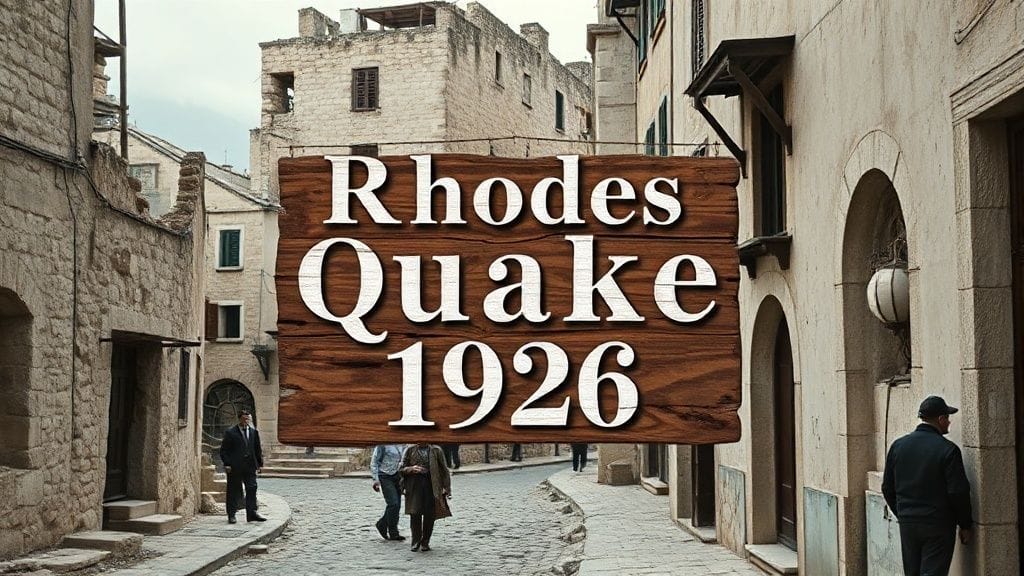
It was a serene summer morning on June 26, 1926, when one of the most violent natural events in Greek history struck the island of Rhodes, tossing its ancient stones and modern houses alike into chaos. The sky held its cerulean calm, birds sang unknowingly amidst the distant hum of towns waking to a new day, but beneath their feet, the earth was plotting a violent upheaval. Suddenly, the ground rocked, rumbled, and ruptured with a fury that shattered windows, cracked ancient fortresses, and sent waves of panic through the island’s inhabitants. The Dodecanese Earthquake of 1926 was not just a geological event; it was a human tragedy and a test of communal endurance.
The tremors lasted mere seconds but left a legacy echoed in generations. To understand this catastrophe's magnitude and its ripple through history, one must dive into the heartbeat of Rhodes—the island’s geology, society, politics, and the collective trauma that reshaped its destiny.
Geology of the Dodecanese: A Land Born of Fire and Tremors
The Dodecanese archipelago, a gem scattered across the southeastern Aegean Sea, stands on a volatile seam where the Eurasian and African tectonic plates collide. This tectonic tension creates a landscape scarred by earthquakes and volcanic phenomena over millennia. Rhodes, the largest island in this chain, is situated precariously along this formidable fault line.
The 1926 earthquake emanated from a complex subterranean fault system, whose violent rupture released pent-up energy with little warning. It was part of a broader pattern of seismic unrest recorded in the eastern Mediterranean, a region historically prone to disruption from the unpredictable will of the earth beneath.
Geologists studying the earthquake later noted that the intensity was unusually high for an event recorded at that time in the region, registering an estimated magnitude of 6.8 to 7.0 on the Richter scale (though seismographs of the era were primitive by modern standards). The shaking intensity was sufficient to level large swathes of towns and create new fissures across the countryside.
Rhodes in the Early 20th Century: Between Empires and Modernity
To grasp the earthquake’s full impact, it’s crucial to picture Rhodes as it was in the mid-1920s. The island was under Italian rule, annexed officially only a few years earlier, after nearly two centuries of Ottoman governance. Italians sought to modernize Rhodes, blending their colonial ambitions with the island’s storied past, steeped in Greek heritage, medieval castles, and Byzantine churches.
The island’s population was diverse but predominantly Greek-speaking, with a smaller Italian community administered by the colonial government. Rhodes’ strategic importance as a gateway to the Eastern Mediterranean made it a melting pot of cultures, languages, and ambitions.
The infrastructure was developing, but still fragile, with many buildings constructed from centuries-old stone and mortar—structures that would prove vulnerable to the earthquake’s wrath.
The Calm Before the Quake: Social and Political Atmosphere in 1926
June 1926 was a time of both hope and uncertainty for Rhodes. Italian authorities were pushing urban reforms, while the local Greek population fluctuated between resistance and cautious adaptation. The island’s economy was largely agrarian and dependent on maritime trade, making the stability of its port cities vital.
Yet beneath this surface calm, tensions simmered—between tradition and modernization, domination and autonomy. When the earth began to tremble that morning, these social fissures were soon overshadowed by the immediate battle to survive.
June 26, 1926: The First Violent Tremors
Shortly before 10 a.m., the earth’s quiet mutter became a deafening roar. The first tremor struck suddenly, a violent up-and-down motion followed by rolling waves beneath the surface. Shops swayed, stone walls shuddered, and the ground shifted as if angry gods struggled beneath the island.
Residents later described the moment as the sky trembling alongside the earth, windows shattered like fragile glass wings, and streets filling instantly with shouting, tears, and confusion. The quake was followed by a series of aftershocks—less intense but relentless enough to fuel panic and keep townspeople outdoors in fear.
The Seconds that Changed Lives: Eyewitness Accounts of the Earthquake
Evangelos Markos, a 34-year-old fisherman, recalled decades later, “I felt the whole ground move beneath my feet…the walls cracked, and a great dust cloud filled the air. I grabbed my children and ran into the street; I thought we were to be swallowed by the earth.”
Maria Costa, a schoolteacher, described the destruction of her village home, “The roof collapsed while we were still inside. Miraculously, my family escaped with bruises, but everything we owned was lost.”
These personal testimonies punctuate the seismic event with raw human emotion, blending terror, survival, and the unspoken trauma of pierced normality.
Structural Devastation: How Buildings and Infrastructure Collapsed
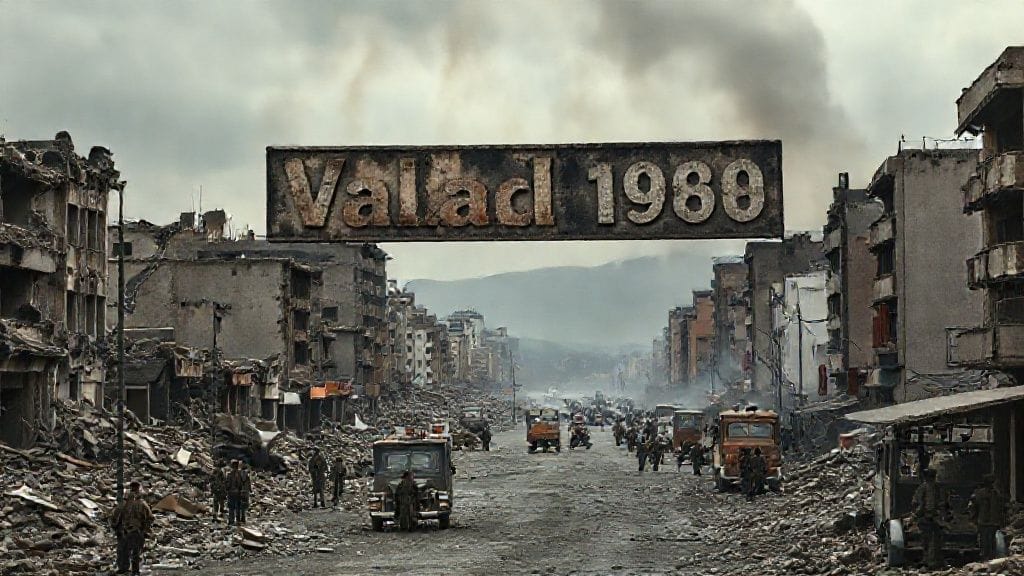
Unlike modern cities with earthquake-resistant construction, Rhodes’ conventional stone houses and historic fortifications crumbled under the quake’s force. The famed Grand Master’s Palace, a symbol of Rhodes’ medieval past, sustained significant damage, its ancient walls scarred by wide cracks.
Small villages such as Archangelos and Lindos saw entire districts levelled. Roads cracked open, making transport nearly impossible; wells and natural springs were disrupted, threatening water supplies. The port facilities, critical to the island’s economy, were damaged, crippling trade and aid efforts.
This widespread wreckage compounded the human tragedy with long-term infrastructural paralysis.
Human Toll: Casualties, Injuries, and Psychological Impact
Official records from the time estimate at least 200 deaths, though some reports suggest higher figures due to the remote locations affected. Hundreds more were injured, many critically, overwhelming local medical capacities.
More subtle was the psychological impact. Survivors faced post-traumatic stress long before it was understood by science; fear of aftershocks kept families from returning to their homes, fostering a communal anxiety that lingered long after the earth’s roar had quieted.
Children orphaned, families uprooted—the island’s social fabric was deeply torn.
The Aftershocks and Their Relentless Terror
In the following weeks, aftershocks continued—some strong enough to cause additional collapses and injuries. These tremors exacerbated the prevailing fear and thwarted initial reconstruction efforts.
The nervous islanders took to sleeping outdoors, huddled in makeshift camps, as the ground remained unpredictable. This prolonged instability compounded the human suffering and complicated humanitarian aid delivery.
Immediate Responses: Rescue Efforts in a Shattered Island
With communication lines down and roads impassable, initial rescue efforts relied heavily on local communities banding together. Citizens dug through rubble with bare hands and crude tools, pulling trapped neighbors free.
The Italian administration, initially overwhelmed, mobilized military and medical units from nearby islands and Italy itself. Field hospitals were established, but shortages of supplies and personnel hampered effective response.
Stories emerged of courageous rescue workers, local leaders, and ordinary citizens collaborating in extraordinary ways amid chaos.
The Role of Italian Authorities: Governance over a Crisis
The earthquake tested Italian colonial administration in surprising ways. While some criticized the slow official response, others noted that the disaster fostered a rare moment of unity between Italian authorities and the Greek inhabitants.
The colonial government used the opportunity to push reconstruction plans aligned with their vision of modernization, introducing new building codes and urban projects designed to avert future disasters.
Yet underlying tensions remained, as many Greeks viewed these efforts through the lens of occupation rather than aid.
Aid and Solidarity: Local, Regional, and International Support
Aid poured in reluctantly but steadily. Greek mainland communities sent volunteers and medical supplies. Neighboring islands dispatched relief teams. International organizations took notice, marking the incident as a significant humanitarian crisis of its time.
Local churches, families, and charitable groups provided food and shelter, embodying a spirit of solidarity that transcended political and ethnic divides.
Rebuilding Rhodes: Architectural Innovations and Urban Planning
Perhaps the most enduring legacy of the earthquake lay in the rebuilding efforts that followed. Italian engineers introduced seismic-resistant designs, blending functionality with the island’s rich architectural heritage.
New towns such as Archangelos rose from ruins with concrete reinforcements. Urban layouts were redesigned to facilitate evacuation and emergency response.
The Grand Master’s Palace underwent careful restoration, symbolizing the island’s resilience and respect for its past.
The Earthquake’s Impact on the Dodecanese’s Economy and Society
The disaster caused sharp economic disruption. Agriculture suffered as fields were damaged, trade slowed by port destruction, and tourism waned due to fears of instability.
Migration patterns shifted, with some islanders relocating permanently to mainland Greece or abroad, seeking safety and opportunity.
Socially, the disaster reinforced notions of community interdependence and the precariousness of island life facing natural forces.
Scientific Understanding: Advancing Seismology in the Mediterranean
The 1926 earthquake became a pivotal event for seismologists studying the Mediterranean region. Data collected—however sparse—offered new insights into the tectonic behavior around Rhodes.
Italian scientists and Greek geologists collaborated to map faults and improved early warning systems, sowing seeds for modern seismic monitoring.
Their work advanced understanding not only of Rhodes but of earthquake mechanics globally.
Stories of Survival and Resilience: Personal Narratives from Rhodes
Beyond statistics and official reports, the human stories endured: families rebuilt homes from rubble, artisans crafted new livelihoods, and children who had faced death grew to tell tales of courage.
One such story is of Sofia, a young woman who lost her home but turned a ruin into a bakery, serving neighbors and symbolizing hope. Another is Kostas, a shepherd who led refugees through dark nights to safer villages, embodying quiet heroism.
These narratives anchor history in lived experience.
Memory and Commemoration: How the Earthquake Lives in Collective Consciousness
Even decades later, the earthquake holds a place in Rhodes’ collective memory. Annual commemorations honor victims, while plaques mark former sites of destruction.
Oral histories pass the event between generations, ensuring the trauma and lessons are not forgotten.
The earthquake stands as a testament—an enduring reminder of nature’s power over humanity.
Lessons Learned: Disaster Preparedness in the Aegean Region
The catastrophe spurred early efforts to develop regional emergency protocols. Authorities emphasized building codes, public education on earthquakes, and coordinated response plans.
While vulnerable, Rhodes became a model for Mediterranean disaster preparedness, influencing policies in similar seismic zones.
The Legacy of the 1926 Rhodes Earthquake in Modern Greece
Today, the 1926 earthquake marks a watershed moment in Greek history—an intersection of nature, colonial rule, and cultural endurance. It informs contemporary urban planning on Rhodes and nearby islands, reminding citizens and officials alike that the earth’s wrath commands respect.
The story also permeates literature, art, and scholarship, a rich subject for those seeking to understand how communities withstand and transcend calamity.
Conclusion: Shattered Earth, Unbroken Spirit
The Dodecanese Earthquake of June 1926 was a cruel rupture in the peaceful narrative of Rhodes, uprooting lives and laying stone and tradition to ruin. Yet from this devastation emerged profound resilience. The islanders’ rebuilding efforts—physical, social, and psychological—transformed tragedy into the cornerstone of their modern identity.
As the ground healed and new buildings rose, Rhodes reclaimed its place not merely as a land of ancient knights and legends, but as a dynamic community shaped by the trials of nature and history. The earth may shake beneath our feet, but the spirit of those who endure remains unbroken—steadfast as the sun-soaked stones of the Aegean.
Frequently Asked Questions
Q1: What caused the Rhodes earthquake in 1926?
The earthquake was caused by tectonic movement along the complex fault lines in the eastern Aegean Sea region, where the African and Eurasian plates converge.
Q2: How strong was the 1926 earthquake in Rhodes?
It is estimated to have had a magnitude between 6.8 and 7.0, making it one of the most powerful tremors recorded in the region during the early 20th century.
Q3: What were the immediate effects on the population of Rhodes?
The earthquake caused at least 200 deaths, many injuries, large-scale destruction of buildings, psychological trauma, and displacement of thousands.
Q4: How did Italian authorities respond to the disaster?
Italian colonial officials organized rescue operations, medical aid, and reconstruction plans, though their response was initially hampered by the scale of destruction and logistical challenges.
Q5: In what ways did the earthquake shape future urban development on Rhodes?
Reconstruction included new seismic-resistant architectural techniques and urban planning that improved safety and infrastructure resilience.
Q6: Has Rhodes experienced similar earthquakes since 1926?
The region remains seismically active, with smaller tremors occurring periodically, but none matching the scale of the 1926 event.
Q7: How is the 1926 earthquake remembered on Rhodes today?
Through annual commemorations, public memorials, and oral histories, the community preserves the memory of the tragedy and honors those affected.
Q8: What lessons did the Mediterranean region learn from the Rhodes earthquake?
It highlighted the need for better seismic monitoring, emergency preparedness, and construction regulations in earthquake-prone areas.