Table of Contents
- The Awakening of Dukono: A Volcano's Restless Pulse
- Halmahera’s Volcanic Giant: Geography and Geological Setting
- Historical Eruptions and the Shadow of Danger
- The Political and Social Fabric of Indonesia in 2015
- Early Signs: The Prelude to the 2015 Eruption
- March 2015: Dukono Forces the World’s Gaze
- The Power of Explosions: Ash Clouds and Lava Flows
- Life Under the Volcano: Communities on the Edge
- Government Responses and Disaster Preparedness
- Volcanologists on the Frontline: Monitoring Dukono’s Fury
- Aviation Risks and the Global Impact of Volcanic Ash
- Environmental Consequences of the 2015 Eruption
- Myths, Legends, and Local Narratives about Dukono
- Resilience and Recovery: Communities Rebuild
- Scientific Discoveries and Advances from Dukono’s Activity
- Dukono in the Media: Reporting Amidst the Smoke
- The 2015 Eruption in the Wider Context of Indonesian Volcanism
- Comparing Dukono: Lessons from Other Indonesian Volcanoes
- The Stark Reminder of Nature’s Power
- Conclusion: The Enduring Legacy of Dukono’s 2015 Fury
- FAQs: Understanding Dukono’s 2015 Eruption
- External Resource
- Internal Link
1. The Awakening of Dukono: A Volcano's Restless Pulse
In the dense tropical jungle of Halmahera Island, Indonesia, an ancient giant stirred—its rumblings a warning, its fury a vivid reminder of Earth’s volatile heart. By early March 2015, Dukono, one of Indonesia’s most persistently active volcanoes, erupted with renewed vigor, sending thick plumes of ash into the sky, disrupting lives, and commanding global attention. The air filled not only with ash but with an elemental tension: that of life being shaped and reshaped by the unpredictable forces beneath the ground.
The eruption was not merely a natural phenomenon; it was an event rippling through communities and across countries, forcing humanity to confront both its fragility and resilience. Through the choking haze, thousands watched as the volcano’s fiery breath painted the sky, clinging to the raw edge between destruction and survival.
2. Halmahera’s Volcanic Giant: Geography and Geological Setting
Dukono sits on the northern tip of Halmahera Island, part of the North Maluku archipelago in eastern Indonesia. Indonesia itself is a fiery necklace of volcanic islands, straddling the Pacific “Ring of Fire” where the Indo-Australian plate and the Eurasian plate collide with dramatic consequence.
The island’s rugged topography, carved by volcanic activity, is both breathtaking and foreboding. Dukono rises approximately 1,311 meters above sea level, with multiple summits and crater vents. Unlike many of the dramatic cone-shaped volcanoes that capture imaginations, Dukono’s form is broad and dome-like, its persistent activity building layer upon layer.
The geological setting ensures frequent eruptions, driven by a volatile magma chamber close to the surface, feeding a cycle of explosive activity interspersed with periods of relative calm.
3. Historical Eruptions and the Shadow of Danger
Dukono is no stranger to eruptions. Historical accounts date back to the early 1500s, with more systematic monitoring beginning in the 20th century revealing nearly continuous activity for decades. Its eruptions have typically been Strombolian — characterized by moderate explosive bursts — and Vulcanian, producing ash plumes often reaching several thousand meters.
These eruptions have created a permanent volcanic cloud hovering over northern Halmahera for much of the recent century. While often not as catastrophic as some Indonesian volcanoes like Tambora or Krakatoa, Dukono’s persistent outbursts have posed ongoing challenges for local populations.
The shadow of danger is not just volcanic ash; lahars, acid rain, and disrupted agricultural cycles have repeatedly threatened the livelihoods dependent on the fertile volcanic soils.
4. The Political and Social Fabric of Indonesia in 2015
In 2015, Indonesia was evolving under President Joko Widodo, navigating seismic shifts in governance, infrastructure development, and disaster management. The country’s vast archipelago, home to over 250 million people, is a hotbed not only of natural disasters but also of vibrant cultural diversity.
In regions like North Maluku, limited infrastructure and accessibility amplify the strain caused by volcanic eruptions. Islanders rely heavily on agriculture, fishing, and small trade networks, rendering them particularly vulnerable to natural disruptions.
Nationally, the eruption occurred during a period of increased focus on Indonesia’s disaster resilience, sparked by multiple recent tragedies, including tsunamis and earthquakes, which had galvanized reform in emergency response and early warning systems.
5. Early Signs: The Prelude to the 2015 Eruption
The months leading to March 2015 showed intensifying signs of unrest. Seismographs near Dukono recorded increasing tremors, while satellite images captured growing steam and ash emissions.
Locals noted changes in volcanic behavior; loud rumblings shook villages previously accustomed to intermittent noise. Geologists at Indonesia’s Center for Volcanology and Geological Hazard Mitigation (PVMBG) began to raise alerts, warning of possible escalations.
Yet, Dukono’s highly active nature complicated forecasts—the volcano’s mood swings were frequent, and distinguishing between routine activity and a major event required delicate interpretation of data.
6. March 2015: Dukono Forces the World’s Gaze
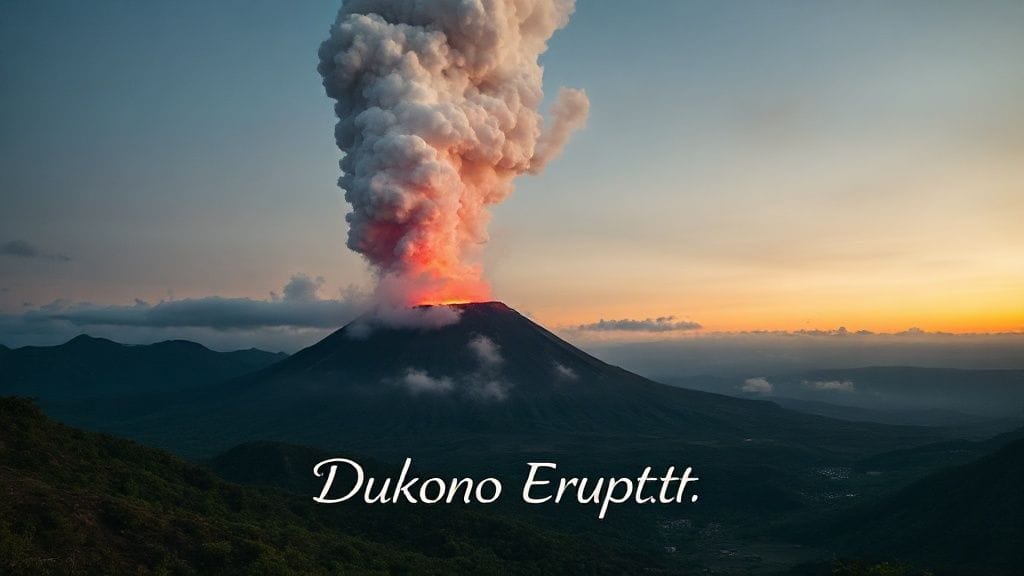
On March 11, 2015, Dukono unleashed a spectacular eruption, expelling ash plumes soaring upwards of 4,500 meters (nearly 15,000 feet). The eruption was among the most vigorous recorded by PVMBG in decades.
Villagers watched in awe and fear as roofs became coated in grey ash; the sky darkened as daylight dimmed under ash clouds. Flights in and out of nearby airports faced cancellations and diversions, a stark reminder of the volcano’s reach beyond local borders.
For scientists, the eruption offered a live case study of eruptive dynamics, while for residents, it meant disruption and uncertainty—but also a testament to human endurance amid natural forces.
7. The Power of Explosions: Ash Clouds and Lava Flows
Dukono’s 2015 eruption was marked by forceful, rhythmic explosions. Ash clouds billowed relentlessly, driven by intense updrafts. Volcanic lightning sparked intermittently, illuminating the night sky with eerie flashes.
Lava flows, though not as massive as those from stratovolcanoes like Merapi, accompanied the explosions, reshaping the immediate landscape around Dukono’s summit. The ash fallout blanketed a radius of tens of kilometers, affecting fields, water sources, and infrastructure.
This continuous activity created a volcanic haze, permeating the atmosphere with fine particles, impacting air quality and visibility—a palpable reminder that the volcano’s breath was not merely geological but deeply human in its consequences.
8. Life Under the Volcano: Communities on the Edge
For thousands of villagers living in the shadow of Dukono, the eruption was both a catastrophe and a way of life. Generations had learned to coexist with the volcano, drawing sustenance from fertile soils even as they braced against periodic devastation.
Whereas some residents chose evacuation, others remained, their homes layered with ash but alive with daily rhythms. The smell of sulfur mingled with burning wood; children played in dusty streets; elders recounted tales of earlier eruptions.
Their resilience was a testament to humanity’s adaptability, but also highlighted the vulnerabilities of isolated communities with limited resources and support.
9. Government Responses and Disaster Preparedness
Indonesia’s government sprang into action with varying degrees of effectiveness. PVMBG escalated alert levels, while local authorities coordinated evacuations and distributed aid.
The eruption underscored the critical importance of early warning systems and community education. Evacuation centers were set up in safer zones, yet logistical challenges persisted due to the remoteness and limited infrastructure.
The event served as a crucible for disaster preparedness policies, highlighting successes and gaps in Indonesia’s approach to volcanic crises, pushing for stronger mechanisms to safeguard vulnerable populations.
10. Volcanologists on the Frontline: Monitoring Dukono’s Fury
Scientists played a crucial role, facing the hazards head-on as they installed monitoring equipment, collected samples, and analyzed eruptive patterns.
Their work was instrumental in producing timely warnings and understanding Dukono’s behavior. Techniques employing seismology, satellite imagery, gas analysis, and drone reconnaissance all converged to paint a comprehensive picture.
One volcanologist described it as “listening to the heartbeat of the mountain,” where even slight changes could hint at eruptions yet to come.
11. Aviation Risks and the Global Impact of Volcanic Ash
The ash clouds spewed by Dukono posed significant aviation hazards, disrupting flights in the busy air corridors of Southeast Asia.
Volcanic ash is notorious for damaging jet engines and reducing visibility, forcing airlines and air traffic controllers to reroute or cancel flights. The eruption prompted temporary airspace closures, affecting not only Indonesia but connecting hubs such as Singapore and Northern Australia.
This aspect of the eruption exemplifies the interconnectedness of natural phenomena and modern global systems, where a geological event in a remote island can ripple across continents.
12. Environmental Consequences of the 2015 Eruption
Beyond immediate human impacts, the eruption altered the environment. Ash deposits changed soil chemistry, potentially enhancing fertility but initially suffocating crops and native vegetation.
Gas emissions released sulfur dioxide and other pollutants, contributing to acid rain and transient climatic effects. Local biodiversity faced stress; freshwater sources risked contamination, affecting aquatic life.
Yet, nature’s cycles often incorporate volcanic disturbances, and scientists observed ecological resilience unfolding in subsequent months.
13. Myths, Legends, and Local Narratives about Dukono
For the people of Halmahera, Dukono is more than a mountain—it is an entity woven into the fabric of oral traditions and spiritual beliefs.
Legends speak of spirits dwelling within the volcano, guardians both fierce and protective. Some tales attribute eruptions to divine anger or warnings, while others celebrate the land’s fertility.
These narratives provide cultural context to natural phenomena, reflecting humanity’s age-old attempt to understand and coexist with unpredictable forces.
14. Resilience and Recovery: Communities Rebuild
As ash settled and life edged toward normalcy, communities embarked on recovery efforts. Farmers cleared fields, families repaired homes, and children resumed schooling.
Government aid and NGO support helped rebuild infrastructure and health services. Yet recovery was uneven — some felt forgotten, others inspired by solidarity.
These narratives of resilience resonate universally, reflecting the enduring human spirit amid adversity.
15. Scientific Discoveries and Advances from Dukono’s Activity
The 2015 eruption contributed valuable data enriching volcanic science. Researchers deepened their understanding of Dukono’s magma plumbing system and eruption triggers.
Technological innovations trialed during the event—such as drone monitoring—paved the way for improved hazard assessment.
This knowledge not only aids local risk management but enhances global preparedness for volcanic crises.
16. Dukono in the Media: Reporting Amidst the Smoke
Media coverage ranged from scientific bulletins to dramatic images capturing soaring ash plumes—galvanizing international awareness.
Yet coverage also highlighted challenges in conveying risks to affected communities and eliciting timely responses.
The eruption’s narrative underscored the power and responsibility of media in shaping public understanding and policy.
17. The 2015 Eruption in the Wider Context of Indonesian Volcanism
Indonesia’s volcanic landscape is among the most active on Earth, and Dukono’s eruption fit into a pattern of persistent unrest in the region.
Its activity paralleled eruptions from Mount Sinabung and Mount Raung in 2015, illustrating a national — and global — tableau of geophysical volatility.
Recognizing this context enriches appreciation of Indonesia’s need for robust volcanic monitoring and disaster preparedness.
18. Comparing Dukono: Lessons from Other Indonesian Volcanoes
Contrasting Dukono with Indonesia’s deadlier volcanoes reveals unique challenges and strategies.
Unlike large explosive eruptions, Dukono’s steady output demands continuous vigilance rather than emergency responses focused on sudden catastrophe.
Each volcano informs tailored solutions blending scientific insight and community engagement.
19. The Stark Reminder of Nature’s Power
Dukono’s eruption was a vivid demonstration of Earth’s unpredictable forces, reshaping landscapes and human destinies alike.
Its persistent activity reminds us of the thin line between natural hazard and disaster, shaped by human choices in vulnerability and preparedness.
In its ash and fire, we find timeless lessons on humility, respect, and coexistence.
Conclusion
The 2015 eruption of Dukono was more than a geological event—it was a narrative of life, loss, and resilience framed by the restless pulse of an ancient volcano. In the face of destructive power, the communities of Halmahera demonstrated courage and adaptability, guided by knowledge, faith, and solidarity.
For the world, Dukono offered insights into volcanic behavior and the interwoven fates of nature and humanity. It reminded us that the Earth’s fiery breath is both a threat and a source of renewal, a force to understand, respect, and ultimately coexist with.
As the ash settled over Halmahera and skies cleared, the story of Dukono remained etched in memory—a stark yet inspiring chapter in the enduring saga of human survival on a dynamic planet.
FAQs
Q1: What triggered the 2015 eruption of Dukono?
A1: The eruption was caused by magma rising close to the surface due to tectonic activity along the Pacific Ring of Fire, increasing pressure until explosive release occurred.
Q2: How did the eruption affect local communities?
A2: The eruption disrupted daily life through ash fallout, damaged crops, forced evacuations, and economic hardship, but also showcased strong community resilience.
Q3: What role did scientists play during the eruption?
A3: Volcanologists actively monitored seismic activity, gas emissions, and ash plumes to provide early warnings and understand Dukono’s behavior for public safety.
Q4: Why is volcanic ash dangerous for aviation?
A4: Ash can damage aircraft engines, reduce visibility, and cause mechanical failures, often resulting in flight cancellations or rerouting during eruptions.
Q5: How common are eruptions at Dukono?
A5: Dukono is among Indonesia’s most persistently active volcanoes, with near-continuous activity recorded for decades, making eruptions relatively frequent.
Q6: What environmental impacts followed the eruption?
A6: Ash and gases affected soil, water, air quality, and local biodiversity, causing short-term damage but also contributing to ecological renewal over time.
Q7: How does Dukono compare to other Indonesian volcanoes?
A7: Unlike violent, one-off events, Dukono’s steady Strombolian eruptions require ongoing monitoring, placing emphasis on community preparedness rather than immediate disaster response.
Q8: How is the 2015 eruption remembered today?
A8: It remains a pivotal event illustrating the balance of nature’s might and human endurance, influencing scientific research and disaster management strategies.

