Table of Contents
- The Dawn of a New Era: The Birth of the DVD in 1995
- From VHS to Digital: The Quest for a Better Format
- Japan’s Technological Landscape in the Early 1990s
- The Silent Revolution: Collaborative Innovation
- Toshiba and Sony: Giants United in Vision
- The Anatomy of the DVD: A Technological Marvel
- Overcoming the Limitations of CD and LaserDisc
- The Crucial Role of Patents and Corporate Rivalries
- Consumer Demand and the Promise of High-Quality Video
- Early Demonstrations and Public Reactions
- Market Introduction and the Global Race for Dominance
- Hollywood’s Embrace: The Influence of Film Studios
- The Internet and DVD: An Unexpected Partnership
- Shaping Home Entertainment: The Impact on Families
- The Shift in Media Consumption: From Ownership to Experience
- The DVD’s Cultural Footprint: Music, Gaming, and Beyond
- Economic Ripples: Manufacturing, Retail, and Innovation
- Competition and Evolution: Blu-ray and the Legacy of the DVD
- The Digital Versatile Disc and Japan’s Technological Identity
- Reflections on the DVD’s Role in the Digital Revolution
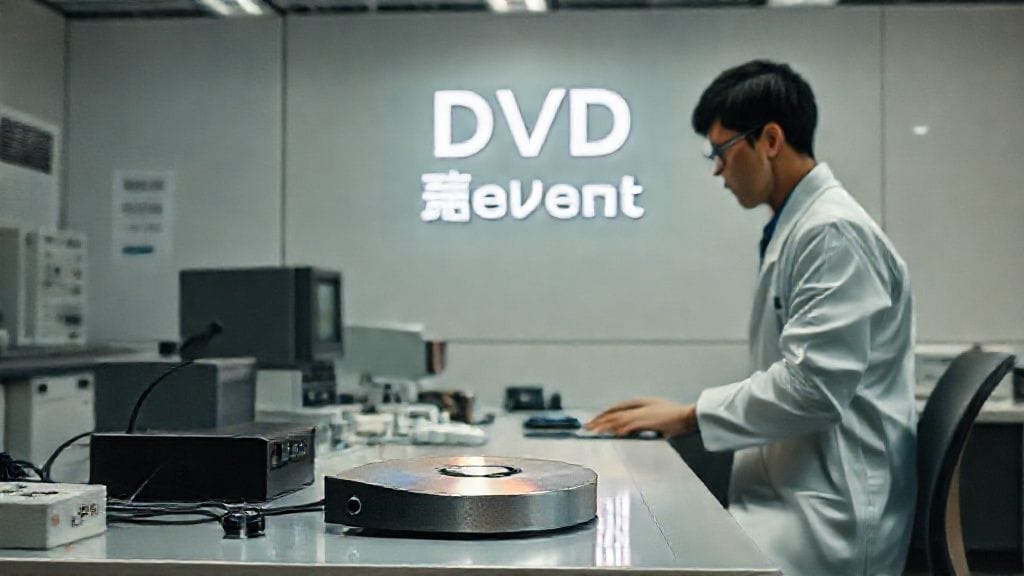
In the quiet hum of a Japanese research lab in 1995, a silent revolution was underway — one that would reshape the way the world consumed media. Imagine the moment when the clunky VHS tapes began their retreat, the pixelated images of the past slowly making way for a crisp, dazzling new reality. In that moment, the DVD was invented. It wasn’t just a disc; it was a promise — a promise of clarity, convenience, and a leap into a future that few fully anticipated.
The Dawn of a New Era: The Birth of the DVD in 1995
As the 20th century neared its close, a subtle yet powerful transformation was unraveling in the media industry. The DVD, or Digital Versatile Disc, was born in Japan, the cradle of some of the most innovative technological progress of the era. At first glance, the DVD appeared to be a mere evolution of the compact disc. But beneath its polished surface lay a technological leap that would eclipse everything that had come before it.
This was no trivial invention. The DVD compressed gigabytes of data onto a disc barely 12 centimeters wide, delivering blistering video quality and audio fidelity with an elegance and affordability that seemed almost magical. It answered a growing call from consumers frustrated with VHS tapes’ bulk and blurry images. Yet the DVD’s story is richer than circuits and lasers; it’s a story of vision, competition, collaboration, and persistence.
From VHS to Digital: The Quest for a Better Format
Since the late 1970s, the VHS (Video Home System) had reigned supreme in the home entertainment kingdom, giving families worldwide the ability to watch movies on demand — a marvel compared with earlier decades. But VHS was far from perfect. The tapes were bulky, prone to wear and tear, and often delivered grainy, low-resolution images. Additionally, the analog nature of VHS limited the quality improvements that could be made.
For years, engineers and corporations toiled to find a replacement that could marry storage capacity with digital clarity. The CD, introduced in the early 1980s, offered a new medium for music but was limited in storage, unable to hold full-length movies. LaserDisc offered improvements in quality but was expensive and clunky, never capturing mass market appeal.
By the early 1990s, it was clear that a new technology was needed — a versatile, high-capacity disc that could store not just music, but films, software, and more. In Japan, this challenge sparked a furious wave of innovation.
Japan’s Technological Landscape in the Early 1990s
Japan in the 1990s was a global powerhouse of technology. Its companies were at the forefront of electronics, from audio equipment to video game consoles. Giants like Sony and Toshiba weren’t just manufacturers; they were pioneers pushing the boundaries of what was possible.
The government heavily supported research and development, fostering an environment where innovation thrived. But this era was also marked by fierce corporate rivalry. Sony, a leader in compact disc technology, was in a tense competition with Toshiba, which had spearheaded DVD-readiness since the late 1980s.
This backdrop of ambition and competition set the stage for the invention of the DVD — a product born in the crosshairs of collaboration and rivalry, driven by the shared goal of transforming digital media.
The Silent Revolution: Collaborative Innovation
What makes the invention of the DVD so fascinating is how it emerged from a rare blending of corporate collaboration and competition. Rather than fragmented efforts leading to incompatible formats, a joint task force involving seven major companies — Sony, Toshiba, Panasonic, Time Warner, Philips, Hitachi, and others — agreed to unify their technology standards.
This strategic move was crucial; it averted a costly “format war” that could have delayed widespread adoption. Behind closed doors, engineers hashed out technical specifications, compromises, and creative breakthroughs. The task was gargantuan: how to deliver high-definition video soundly, reduce disc size, maximize robustness, and ensure compatibility worldwide.
This was not a mere invention — it was a carefully orchestrated technological symphony, where precision and cooperation forged a new path forward.
Toshiba and Sony: Giants United in Vision
At the heart of the DVD’s creation stood two titans: Toshiba and Sony. Each had long pursued their own version of the next-generation disc. Toshiba championed their Super Density Disc (SD), while Sony pushed the MultiMedia Compact Disc (MMCD). The competition was intense, but both companies recognized that unity was the key to success.
After months of negotiations, they merged their approaches, blending the best technologies from each to create a single DVD format. This truce was not just a business maneuver; it represented a milestone where rivalry gave way to foresight.
Their engineers introduced innovations like dual-layer discs, advanced error correction, and improved laser technology, turning the DVD into a technological marvel.
The Anatomy of the DVD: A Technological Marvel
So what made the DVD so special?
At its core, the DVD used a red laser with a wavelength of 650 nanometers, shorter than the infrared lasers in CDs. This allowed data pits to be smaller and packed more densely, increasing storage capacity from 700 MB on a CD to 4.7 GB on a single-layer DVD.
But it wasn’t just about storage. Error correction improved playback reliability, and the use of compression algorithms like MPEG-2 allowed full-length movies in near-broadcast quality. For the first time, consumers could experience bright, sharp images and immersive surround sound at home.
This technological leap made the DVD a true multimedia platform — capable of storing video, audio, subtitles, bonus content, and even interactive menus.
Overcoming the Limitations of CD and LaserDisc
Before the DVD, films on disc were an unsatisfactory affair. CDs simply lacked the capacity to hold videos longer than a few minutes. LaserDisc, introduced in the late 1970s, offered higher-quality images and sound but suffered from large disc size (30 cm), high cost, and lack of recordability.
VHS was good enough for mass usage, but its analog quality left much to be desired, especially as home entertainment systems improved.
The DVD solved these problems elegantly. Its compact 12 cm size fit existing CD drives with slight modifications; its digital format resisted degradation; and its cost, initially high, dropped quickly as manufacturing scaled.
This effectively bridged the gap between quality and accessibility, setting the stage for mass adoption.
The Crucial Role of Patents and Corporate Rivalries
The DVD’s journey was punctuated by fierce patent wars and corporate tug-of-wars. Each manufacturer sought to protect their innovations, and the resulting complicated patent landscape meant licensing fees were inevitable.
Sony and Toshiba’s joint task force was as much about pool licensing as about technology standardization. But these tensions led to protracted negotiations and occasional legal battles.
Nevertheless, the willingness to cooperate ensured a single, unified DVD standard, which stood in stark contrast to the earlier videotape format battles like VHS vs. Betamax.
Consumer Demand and the Promise of High-Quality Video
By the mid-1990s, consumers were increasingly hungry for better home entertainment experiences. TVs were getting bigger and sharper, making VHS’s limitations more glaring. Movie lovers wanted pristine images, clear sound, and the ability to navigate movies with ease.
The DVD’s promise answered this demand. Suddenly, endless rewinding and tracking problems became obsolete. Viewers could jump scenes with a click; menus offered special features and commentary. The DVD transformed passive watching into an interactive, immersive experience.
Suddenly, owning a movie became owning a high-fidelity piece of art — a dramatic leap from fuzzy videotapes.
Early Demonstrations and Public Reactions
The first public demonstrations of the DVD in Japan and the United States captivated audiences. Showcasing crystal-clear video and digital surround sound, the DVD seemed almost magical.
Industry insiders were impressed, but the real test lay with consumers. The early adopters, mostly technology enthusiasts, eagerly embraced the new format despite high prices.
Blurred lines now emerged between what was cinema and what was home viewing. Technology critics praised the DVD as the “first true digital home entertainment medium,” predicting its rapid ascendancy.
Market Introduction and the Global Race for Dominance
The DVD entered the market in late 1996–1997, first in Japan, quickly followed by the US and Europe. Retailers raced to stock players and discs, and movie studios began launching titles focused on the new format.
The result? A swift and remarkable penetration. By 2000, millions of DVD players were sold worldwide. The industry buzzed with excitement, as the DVD promised rejuvenation in an era where media formats typically declined slowly.
Japan’s leadership was undisputed, and the world watched keenly to see who would dominate this new frontier.
Hollywood’s Embrace: The Influence of Film Studios
Hollywood’s role was pivotal. Studios quickly realized the DVD could revive revenue streams slumping under VHS piracy and rentals.
Disney’s release of “The Lion King” on DVD in 1997 was a massive success, demonstrating that the format could deliver blockbuster hits to family living rooms with unprecedented quality.
Studios seized the opportunity to include extras — behind-the-scenes documentaries, director’s commentaries — turning DVDs into collector’s items. The DVD market became a tool for film preservation and marketing.
The Internet and DVD: An Unexpected Partnership
Early on, DVDs seemed purely physical media — disks spinning quietly in living rooms. But soon, the rise of the internet mingled with DVD technology, creating new pathways.
Online communities discovered the ability to share information about DVDs, drives, and ripping software, sparking spirited discussions about digital rights and access.
Retailers began selling DVDs online, making rare titles accessible globally. This fusion heralded a future where digital and physical media coexisted in complex synergy.
Shaping Home Entertainment: The Impact on Families
Beyond technology and industry, the DVD changed daily life. Families gathered around bigger, clearer TV screens. Parents introduced children to visual arts in ways impossible before.
Movie nights became immersive events. The ease of pausing, rewinding, and skipping fostered new habits and a return to cinema appreciation.
Suddenly, control of media was in the hands of viewers — a democratic revolution in how culture was consumed and shared.
The Shift in Media Consumption: From Ownership to Experience
The DVD era marked a subtle shift from mere ownership to experience. Bonuses and extras built deeper connections to films. Series box sets allowed binge-watching before the term existed.
DVD rental stores flourished, growing new businesses and social spaces. Consumers began expecting quality and interactivity, raising standards for all media forms.
In hindsight, this focus on engagement foreshadowed later digital streaming trends.
The DVD’s Cultural Footprint: Music, Gaming, and Beyond
While movies were the star, DVDs influenced other cultural sectors. Music artists released concert DVDs, adding visual spectacle to sound.
Gamers welcomed DVD-ROM formats for consoles like Sony’s PlayStation 2, enhancing game complexity and graphics. Education used DVDs to revolutionize teaching tools with multimedia content.
The DVD became a versatile canvas across cultural landscapes.
Economic Ripples: Manufacturing, Retail, and Innovation
The DVD’s invention spurred growth across multiple industries. Manufacturing plants buzzed with new machines crafting discs at staggering scales.
Retail chains adapted shelves, and entire markets for DVD accessories emerged. Innovation in computer drives accelerated, accelerating broader technological advances.
This economic ripple spread worldwide, contributing to the nascent digital economy’s foundations.
Competition and Evolution: Blu-ray and the Legacy of the DVD
No invention remains unchallenged. The 2000s saw Blu-ray arise as the high-definition successor to DVD, boasting even greater storage and quality.
Yet, the DVD’s legacy endured, maintaining vast user bases and industries for years. Its invention shaped consumer expectations and set the standard for physical digital media.
Perhaps most importantly, the DVD bridged a crucial gap to the digital era, making it a seminal milestone.
The Digital Versatile Disc and Japan’s Technological Identity
For Japan, the DVD became a symbol of national ingenuity. It showcased how Japanese corporations could lead global technological transformations through collaboration and innovation.
The success catalyzed confidence and pride, underscoring Japan’s place atop the technological summit in the late 20th century.
Reflections on the DVD’s Role in the Digital Revolution
Looking back, the DVD’s invention in 1995 was more than a technological breakthrough. It was a cultural and economic pivot — the moment digital media truly took hold in homes worldwide.
The DVD’s blend of technological finesse and user accessibility forged a template still echoed in contemporary media.
In the quiet hum of the first DVD player whirring to life, one could hear the future taking shape — a future of infinite digital possibilities.
Conclusion
The 1995 invention of the DVD in Japan was a watershed moment, marking a profound shift in how humanity interacts with media. Emerging from a cauldron of competitive spirit and cross-industry collaboration, the DVD transformed home entertainment forever. It blended technological prowess with human desire for better stories, more control, and richer experiences.
This leap was not merely about storage or video quality. It was about democratizing access to culture and art in a clear, joyful format that connected families and societies worldwide. The DVD stands as a monument to ingenuity and foresight — a technology born in precision yet blossoming into a living cultural phenomenon.
Though today streaming and digital downloads dominate, the DVD’s legacy endures, reminding us that every revolution begins with a silent, spinning disc in an unassuming laboratory, poised to change the world.
FAQs
1. What were the main technological innovations that made the DVD possible?
The DVD’s breakthroughs included the use of a red laser with a shorter wavelength allowing for denser data pits, advanced error correction systems, and the MPEG-2 compression algorithm which enabled high-quality video on a compact disc.
2. Why was Japan pivotal in the invention of the DVD?
Japan hosted the major electronics companies that led the DVD’s development, such as Sony and Toshiba. The country’s strong culture of innovation and government support in technology research also fostered this breakthrough.
3. How did competing companies manage to create a unified DVD standard?
Despite initial rivalries, key corporations formed a joint task force to harmonize their technologies and negotiate a common format. This collaboration prevented a costly format war and ensured global compatibility.
4. In what ways did the DVD change home entertainment culture?
It improved video and audio quality dramatically, introduced interactive features like menus and bonus content, and allowed for easier navigation and repeat viewing, fundamentally changing how audiences engaged with films.
5. What impact did the DVD have on the movie industry?
DVDs opened new revenue streams by decreasing piracy and physical wear compared to VHS, encouraged studios to release extras boosting fan engagement, and revitalized home video sales.
6. How has the invention of the DVD influenced later technologies such as Blu-ray and streaming?
The DVD set standards for digital media formats, storage, and interactivity. It also built consumer expectations for quality and usability that Blu-ray and streaming services have continued to evolve.
7. Why did Blu-ray eventually replace the DVD as the preferred physical media format?
Blu-ray discs offered significantly larger storage capacity and support for high-definition video, catering to the increasing demand for higher quality media experiences.
8. Is the DVD still relevant today?
While largely supplanted by streaming, DVDs remain valuable for collectors, areas with limited internet access, and formats requiring physical ownership and archival quality.