Table of Contents
- A Dawn Shattered: The Morning of January 31, 1906
- The Geophysical Stage: Tectonics of the Pacific Coast
- Ecuador and Colombia at the Start of the 20th Century: Societies on the Brink
- The Earth Trembles: The Great Earthquake Unfolds
- From Quake to Wave: The Genesis of the Tsunami
- The Pacific Coast’s Silent Threat: Early Awareness of Tsunami Risks
- The Tsunami Strikes: Stories of Devastation and Survival
- Eyewitness Voices: Human Testimonies from the Waves
- The Immediate Aftermath: Rescue and Despair Along the Shore
- Governments and Responses: Coordination Amid Chaos
- Scientific Understanding in 1906: Emerging Tsunami Science
- Lessons Learned and Lost: Impact on Local Communities
- Socioeconomic Consequences: From Ruins to Recovery
- The Cultural Memory: How the Tsunami Shaped Collective Identity
- The Pacific Rim’s Growing Awareness: Toward Modern Disaster Preparedness
- Comparing the 1906 Tsunami to Later Pacific Disasters
- The Role of Media: Newspapers and the Spread of News
- International Reactions and Aid Efforts
- Climatic and Environmental Effects of the Tsunami
- Memorials and Commemorations: Remembering the 1906 Disaster
- Scientific Advances Inspired by the Ecuador–Colombia Event
- The Tsunami’s Place in the Larger Ring of Fire Narrative
- Controversies and Myths: Separating Fact from Fiction
- The Pacific Coast Today: Echoes of 1906 in Modern Seismology
- Enduring Legacies: Risk, Resilience, and Remembrance
1. A Dawn Shattered: The Morning of January 31, 1906
On the first rays of January 31, 1906, the tranquil Pacific coast stretching between Ecuador and Colombia faced an unimaginable upheaval. It began with a profound rumble beneath the earth — a monstrous earthquake shaking the ground with such ferocity that the skies seemed to darken momentarily as dust and debris blurred the horizon. For many, this early morning would mark the boundary between life as they had known it and a brutal reckoning with nature’s raw power.
Villages nestled along the shoreline woke to trembling earth and cracking walls; the sea withdrew ominously from the beach, a ghastly prelude to a tsunami that surged in minutes, sweeping away homes, ships, and hope alike. The ocean, once a giver of life, turned predator in the span of a heartbeat.
This was no ordinary quake or sea disturbance — it was a devastating natural event whose ripples would affect thousands and continue to captivate geologists, historians, and survivors for generations. This is the story of the Ecuador-Colombia tsunami of 1906: a cataclysm woven into the fabric of the Pacific coast’s turbulent history.
2. The Geophysical Stage: Tectonics of the Pacific Coast
To understand the catastrophe, one must first grasp the restless geological theatre in which it took place. The Pacific coast of South America is a living edge where tectonic plates converge in a violent dance. The Nazca Plate, sliding beneath the South American Plate through a process called subduction, is the main culprit behind the frequent seismic agitation in this region.
At the convergent boundary off Ecuador and Colombia lies the infamous Peru-Chile Trench, where immense pressure and friction accumulate over decades until released in violent ruptures. The 1906 earthquake was born here, an abrupt rupture along a massive fault that extended hundreds of kilometers.
These movements don’t only shake the ground; they deform the seafloor, displacing tremendous volumes of ocean water, which in turn spawn frightened waves hurled toward the continent. The Pacific coastline, with its narrow continental shelf and close proximity to these geologic boundaries, was especially vulnerable.
3. Ecuador and Colombia at the Start of the 20th Century: Societies on the Brink
At the dawn of the 1900s, both Ecuador and Colombia were nations finding their footing amidst political tensions, economic modernization, and internal struggles. Coastal towns thrived on fishing, small-scale agriculture, and trading hubs that linked isolated communities with broader Pacific commerce.
Yet the fragile infrastructure — simple wooden and adobe dwellings, scattered ports barely fortified against natural calamities — left these communities exposed. Modern emergency protocols were non-existent; lives were woven tightly with the land and sea, their rhythms dictated by seasonal fishing, storms, and centuries-old oral warnings. But scientific understanding of seismic risks was in its infancy, and local populations had little warning when disaster struck.
4. The Earth Trembles: The Great Earthquake Unfolds
On that fateful morning, the earthquake struck with a magnitude estimated around 8.8 to 9.0, one of the most powerful in South American history. The quake lasted several minutes — an eternity under trembling earth where buildings cracked, rivers shifted, and the ground itself seemed to heave.
Accounts speak of terrifying sounds: roaring like thunder but deeper, the earth’s groans and the shrieks of terrified people intermingled in a horrifying symphony. Seismic waves radiated widely, shaking inland areas and coastal communities alike. Some towns were reduced to rubble, while in others the earth developed fissures that swallowed homes and roads.
This was not simply a local disaster; it stunned the scientific world and triggered a chain of events that culminated in an oceanic catastrophe.
5. From Quake to Wave: The Genesis of the Tsunami
One dramatic hallmark of subduction zone earthquakes is their ability to spawn tsunamis — sometimes hundreds of kilometers away from the epicenter. Here, the 1906 quake’s abrupt vertical displacement along the fault line caused the seabed to jolt sharply, displacing enormous amounts of seawater instantly.
The ocean’s surface buckled, sending ripples that quickly became towering waves. These grew as they approached shallow coastal shelves, accelerating and compressing into walls of water that advanced relentlessly toward shorelines. The phenomenon was catastrophic, surprising many who had no experience or knowledge of tsunami behavior.
In the tense hours following the quake, the sea withdrew far beyond normal tides, leaving vast stretches of seabed exposed. The warning was cruel and brief: with no time for evacuation, the resulting surge engulfed everything in its path.
6. The Pacific Coast’s Silent Threat: Early Awareness of Tsunami Risks
Despite indigenous knowledge of the sea’s volatility, including mythologies warning of giant waves, scientific understanding at the time was sparse and patchy. Coastal communities had no formal warning systems, and governments did not yet recognize tsunamis as predictable threats.
The 1906 event arrived as a wake-up call for scientists and policymakers, illuminating the urgent need to study seismic activity systematically and install early warning mechanisms. Although some anecdotal reference existed to giant “tidal waves,” their link to earthquakes was not widely established in popular or academic circles.
This gap between nature’s fury and society’s preparedness tragically amplified the disaster’s toll.
7. The Tsunami Strikes: Stories of Devastation and Survival
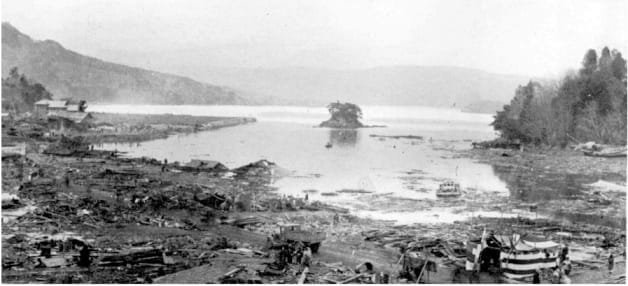
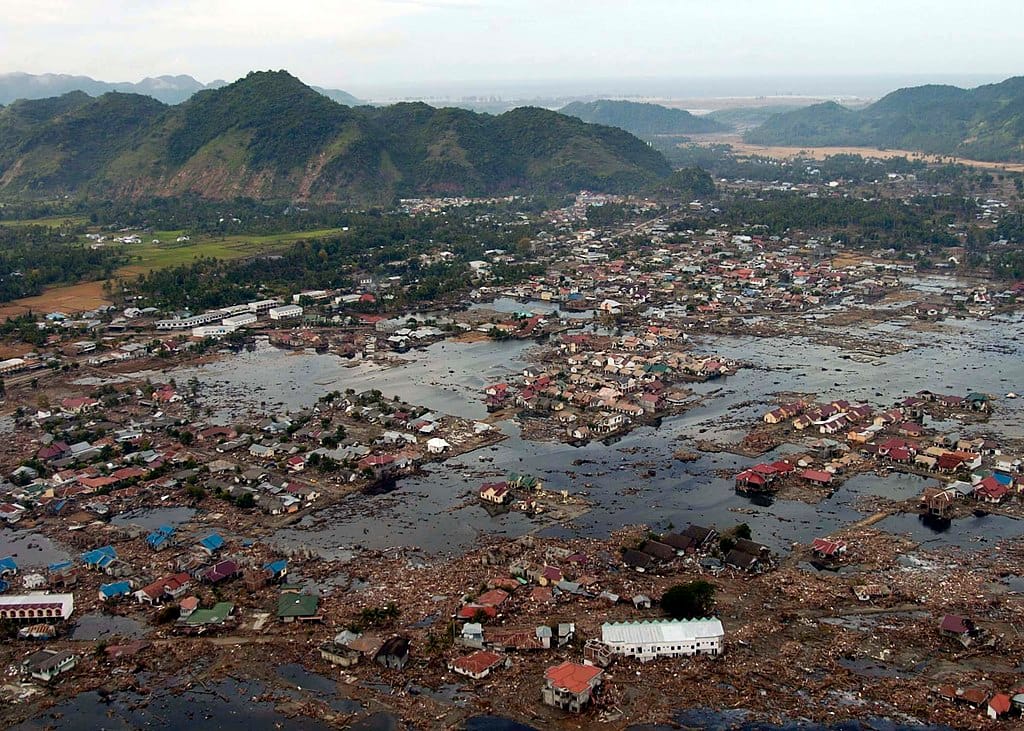
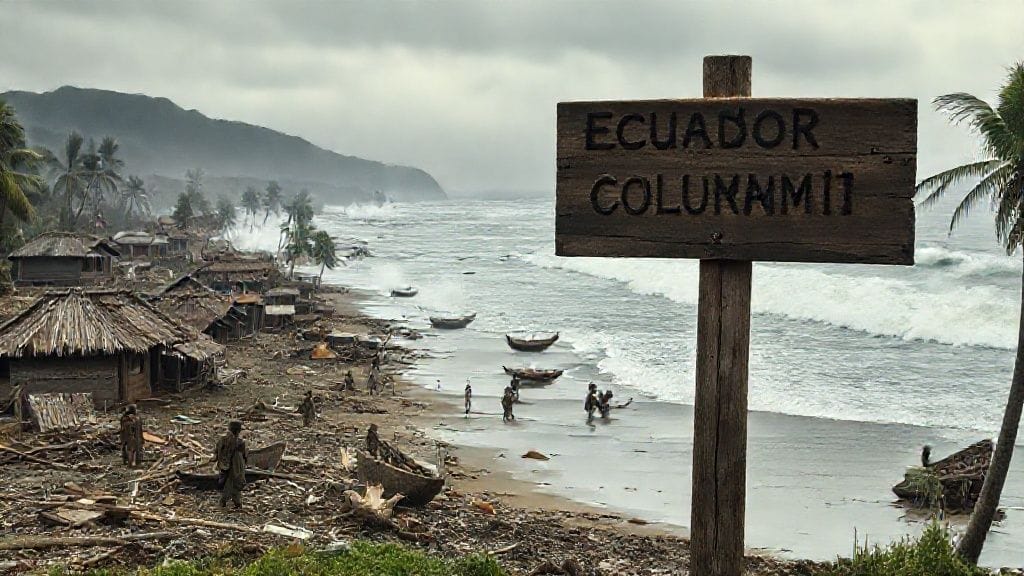
Minutes after the quake’s final tremor, the tsunami slammed into the coast. Eyewitnesses described how the towering walls of water thundered ashore, drowning villages, sweeping away wooden homes, uprooting large trees, and engulfing ports.
In Ecuador’s coastal town of Esmeraldas, entire neighborhoods vanished under the swelling tide. Fishing boats moored calmly were tossed like toys and broken against rocks. Along Colombia’s Pacific fringe, similar destruction unfolded, crippling towns such as Tumaco and Buenaventura.
Amid the horror, stories emerged of miraculous escapes: villagers climbing high trees, some fleeing to hills or unsteady cliffs just in time. Yet countless others were lost under the waves, their fate sealed in a sudden, unstoppable torrent.
8. Eyewitness Voices: Human Testimonies from the Waves
Several firsthand accounts were later recorded, their voices etching the human dimension onto this natural disaster. Maria Gonzalez of Esmeraldas recalled the earth’s shaking and the sea’s withdrawal: “The beach stretched for miles like a desert. Then the water came rushing back so fast and high, it was as if the ocean itself wanted to swallow us.”
Fisherman José Ramirez described his narrow escape: “Our boat was thrown onto the shore like a leaf caught in a storm. The water rose, and I climbed a coconut tree. I lost everything, but the tree saved my life.”
These voices personify the balance of loss and resilience, grief and survival, etched forever in regional memory.
9. The Immediate Aftermath: Rescue and Despair Along the Shore
In the chaotic hours and days that followed, communities along the Ecuador–Colombia coast grappled with the enormity of destruction. Disrupted communication lines, collapsed infrastructure, and widespread flooding hampered rescue efforts.
Local residents and surviving fishermen banded together, pulling the injured from debris and searching for missing loved ones. Makeshift shelters formed amid ruins. However, the scale of devastation overwhelmed existing resources, and disease and hunger quickly became further threats.
The pervasive silence left by lives lost mingled with cries for help and a desperate but determined human spirit.
10. Governments and Responses: Coordination Amid Chaos
Governments in Quito and Bogotá faced the daunting challenge of mobilizing aid across remote, devastated regions. Communications were limited; roads impassable. Early 20th-century state apparatuses were ill-prepared for a disaster of this magnitude.
Despite these obstacles, military units, medical teams, and volunteers eventually arrived to assist with relief, rebuilding infrastructure, and restoring order. The calamity spurred discussions on disaster preparedness, urban planning, and public safety that echoed through ensuing decades.
Yet these states also contended with political instability, diverting critical focus from comprehensive responses.
11. Scientific Understanding in 1906: Emerging Tsunami Science
From a scientific perspective, the 1906 earthquake-tsunami event provided invaluable, though tragic, insights into the mechanics of seismic sea waves. Seismologists like Charles Richter and others, in the following decades, drew upon events like these to calibrate scales of earthquake intensity and link tsunami genesis with subduction zones.
Local scientific communities began documenting geological evidence, collecting oral histories, and mapping impact zones, laying groundwork for a more systematic approach to earthquake and tsunami science in South America.
However, the era’s limited technology constrained real-time monitoring and early warning capabilities.
12. Lessons Learned and Lost: Impact on Local Communities
The 1906 destruction revealed stark vulnerabilities — from construction materials susceptible to collapse to the catastrophic ignorance of tsunami signals. Communities began to realize that rebuilding was not just a matter of restoring buildings but reconceiving how to live alongside a volatile environment.
While some lessons penetrated official discourse, progress was slow. Economic and political constraints often overshadowed disaster preparedness policies, leaving many coastal populations exposed in subsequent decades.
13. Socioeconomic Consequences: From Ruins to Recovery
Economically, the tsunami dealt a heavy blow to fishing fleets, port facilities, and agricultural hinterlands. Many families lost livelihoods that took years to regain. Trade along the Pacific coast suffered interruptions, with some towns shrinking as displaced populations migrated inland.
Nevertheless, resilience emerged in local economies adapting to changed landscapes. Artisans and farmers rebuilt homes with better materials, while new port infrastructures slowly replaced destroyed ones — tentative steps toward recovery amid ongoing challenges.
14. The Cultural Memory: How the Tsunami Shaped Collective Identity
In the aftermath, stories of the 1906 tsunami entered local legends, folklore, and communal memory. Oral histories preserved warnings of “the giant wave” that became cautionary tales for future generations.
Public commemorations and songs echoed the sorrow and heroism born of that day. This event became a shared marker of identity for coastal Ecuadorians and Colombians — a tragic, unifying chapter that fused with cultural narratives of endurance and respect for the sea.
15. The Pacific Rim’s Growing Awareness: Toward Modern Disaster Preparedness
The Ecuador-Colombia tsunami was a stark example used to advocate for modern, systematic disaster mitigation in the Pacific region. Lessons echoed across other Pacific Rim nations, highlighting the necessity of scientific research centers, tsunami warning systems, and public education campaigns.
In subsequent decades, international collaboration blossomed, eventually leading to established systems like the Pacific Tsunami Warning Center in later years. The 1906 event stands among the pivotal moments that galvanized this evolution.
16. Comparing the 1906 Tsunami to Later Pacific Disasters
When compared to future catastrophes — such as the 1960 Valdivia earthquake and tsunami in Chile or the 2011 Tōhoku disaster in Japan — the 1906 Ecuador-Colombia event stands as one of the earlier large-magnitude tsunami disasters of modern history.
Its lessons resurface repeatedly in disaster studies, with striking parallels in quake magnitude, tsunami mechanics, and challenges faced in emergency response. Yet technological advancements have since transformed how societies anticipate and survive such tragedies.
17. The Role of Media: Newspapers and the Spread of News
In early 1906, newspapers played a crucial role in shaping public perception of the disaster. Limited by the slower pace of communication and geographical isolation, local press conveyed sensational yet crucial reports, often mixed with hearsay.
International papers reported on the quake, but news traveled slowly. Gradually, repeated coverage sparked international sympathy and calls for aid, demonstrating how media can bridge physical distances amid crisis.
18. International Reactions and Aid Efforts
Though limited by the era’s logistical challenges, international humanitarian responses trickled in, including financial aid and supply shipments from neighboring countries and abroad, motivated by humanitarian concerns and regional solidarity.
This aid underscored growing global recognition of natural disasters as transnational crises and seeded early international cooperation frameworks for disaster relief.
19. Climatic and Environmental Effects of the Tsunami
Beyond the immediate destruction, the tsunami altered local environments — reshaping coastlines, saltwater intrusion into farmland, and altering marine ecosystems. Mangrove forests and coral reefs faced damage, affecting biodiversity and fish stocks that communities depended on.
These environmental aftershocks compounded human hardships and underscored the intricate ties between natural disasters and ecological balance.
20. Memorials and Commemorations: Remembering the 1906 Disaster
In the decades following, memorials arose along the Pacific coast to honor the victims and remind residents of the dangers of the sea. Plaques, monuments, and annual commemorations fostered a sense of collective mourning and resilience.
Such remembrance practices contributed to building community solidarity, ensuring that the lessons of 1906 remained alive in the public consciousness.
21. Scientific Advances Inspired by the Ecuador–Colombia Event
The 1906 disaster inspired geophysical and oceanographic research throughout South America. It accelerated efforts to map seismic zones, study tsunami wave propagation, and understand subduction mechanics.
Pioneering research contributed to better seismic hazard assessments, influencing urban planning, building codes, and early warning efforts in subsequent decades.
22. The Tsunami’s Place in the Larger Ring of Fire Narrative
The Ecuador–Colombia tsunami is a dramatic chapter in the “Ring of Fire,” a horseshoe-shaped zone of intense volcanic and seismic activity encircling the Pacific Ocean.
This disaster exemplifies the risks faced by millions living along this volatile margin, reminding us of the planet’s restless nature and humanity’s ongoing struggle to coexist with the forces shaping our world.
23. Controversies and Myths: Separating Fact from Fiction
Over time, myths have surrounded the 1906 event—some exaggerated wave heights or attributed supernatural causes. Likewise, discrepancies in historical records have fueled debates over exact death tolls and tsunami timings.
Careful historical and scientific scrutiny has helped clarify many misconceptions, while preserving the human stories behind statistical ambiguity.
24. The Pacific Coast Today: Echoes of 1906 in Modern Seismology
Today, the Ecuador-Colombia coast is part of a robust seismic monitoring network. Modern sensors, satellite data, and international collaborations aim to prevent the scale of previous tragedies.
But memories of 1906 remain embedded in local culture and scientific vigilance, serving as a somber reminder of nature’s unpredictability.
25. Enduring Legacies: Risk, Resilience, and Remembrance
The 1906 Ecuador–Colombia tsunami remains an enduring legacy—a testament to the fury of earth and sea and to human survival against staggering odds. It catalyzed scientific inquiry, inspired cultural remembrance, and underscored the vital importance of preparedness.
In a world increasingly aware of natural hazards, this event offers lessons in humility, resilience, and respect for forces beyond human control.
Conclusion
The midnight tremors beneath the Pacific and the ensuing monstrous waves that swallowed coastal Ecuador and Colombia in 1906 marked more than a fleeting calamity—they illuminated the profound vulnerability of human communities to the restless earth. Yet amid the devastation, stories of courage, survival, and solidarity emerged, weaving a rich tapestry of human experience that transformed scientific understanding, governance, and local culture.
Today, as modern seismologists watch fault lines with instruments beyond the dreams of those early-century witnesses, the harrowing lessons of the 1906 disaster remain vivid. They teach us that nature’s power commands respect, that preparedness is our most potent defense, and that remembering past tragedies is essential in nurturing resilience for the future. The Ecuador-Colombia tsunami of 1906 is not just a tale of destruction — it is a story of humanity’s enduring spirit amid the unpredictable rhythms of our restless planet.
FAQs
Q1: What caused the Ecuador-Colombia tsunami of 1906?
A1: The tsunami was triggered by a massive subduction zone earthquake with an estimated magnitude around 8.8 to 9.0. This quake caused a sudden displacement of the seabed off the Pacific coast, generating powerful tsunami waves.
Q2: How many people were affected by the tsunami?
A2: While precise death tolls vary due to limited historical records, estimates suggest thousands of lives were lost, and many more were displaced along the Ecuadorian and Colombian coastlines.
Q3: Were there any warning signs before the tsunami arrived?
A3: The sea’s unusual withdrawal before the waves struck was a natural warning sign. However, local populations did not understand this phenomenon as a precursor to a tsunami, and there were no formal warning systems in place.
Q4: How did governments respond to the disaster in 1906?
A4: Both Ecuadorian and Colombian governments mobilized rescue and relief efforts despite limited infrastructure. However, political and logistical challenges slowed comprehensive responses.
Q5: What scientific advances resulted from studying this event?
A5: The disaster accelerated research into subduction earthquakes, tsunami genesis, and seismic hazard mapping in South America, influencing future monitoring and risk mitigation strategies.
Q6: How is the 1906 tsunami remembered today?
A6: Through memorials, oral histories, and annual commemorations, the event remains a poignant part of coastal cultural memory, emphasizing the importance of respecting natural hazards.
Q7: Did this tsunami influence tsunami preparedness in the region?
A7: Yes, it highlighted the urgent need for scientific study and warning systems, contributing to the gradual development of disaster preparedness policies in the Pacific region.
Q8: How does the 1906 event compare with other tsunamis in the Pacific?
A8: It is among the early recorded large-magnitude Pacific tsunamis with significant loss of life, sharing common features with later events but occurring before modern monitoring frameworks were established.