Table of Contents
- Dawn of a New Era: May 3, 1868, Edo at the Crossroads
- The Last Days of the Shogunate: Tokugawa Power in Decline
- Forces Collide: Imperial Ambitions and Shogunal Resistance
- The Fall of Edo Castle: A City Holds Its Breath
- The Moment of Surrender: Silent Streets and Shifting Loyalties
- The Role of Key Figures: Saigō Takamori, Katsu Kaishū, and More
- The Nature of the Surrender: Negotiation Amidst Tension
- The Bloodless Transition: Avoiding Massacre in the Heart of Edo
- Reactions Across Japan: Unease and Hope Intertwined
- Tokyo is Born: The Transformation of Edo into a Capital
- The Imperial Restoration: Political and Symbolic Significance
- Social Upheaval: Samurai, Merchants, and Commoners in Flux
- Economic Shifts: From Feudal Stronghold to Modern Metropolis
- Cultural Reverberations: Changing Arts and Traditions
- The Legacy of Edo’s Surrender in Modern Japan
- International Perspectives: Global Implications of the Meiji Restoration
- Reflections from the Diaries and Letters of the Epoch
- Comparing Edo’s Surrender to Other Historic Capitulations
- The Surrender’s Impact on Japan’s Military Reforms
- The Evolution of Edo-Tokyo: Urban, Political, and Social Changes
- Memory and Myth: How Edo’s Surrender Lives On Today
- Museums, Monuments, and the Preservation of History
- Conclusion: The End that Marked a Beginning
- FAQs: Exploring the Intricacies of Edo’s Surrender
- External Resource
- Internal Link
1. Dawn of a New Era: May 3, 1868, Edo at the Crossroads
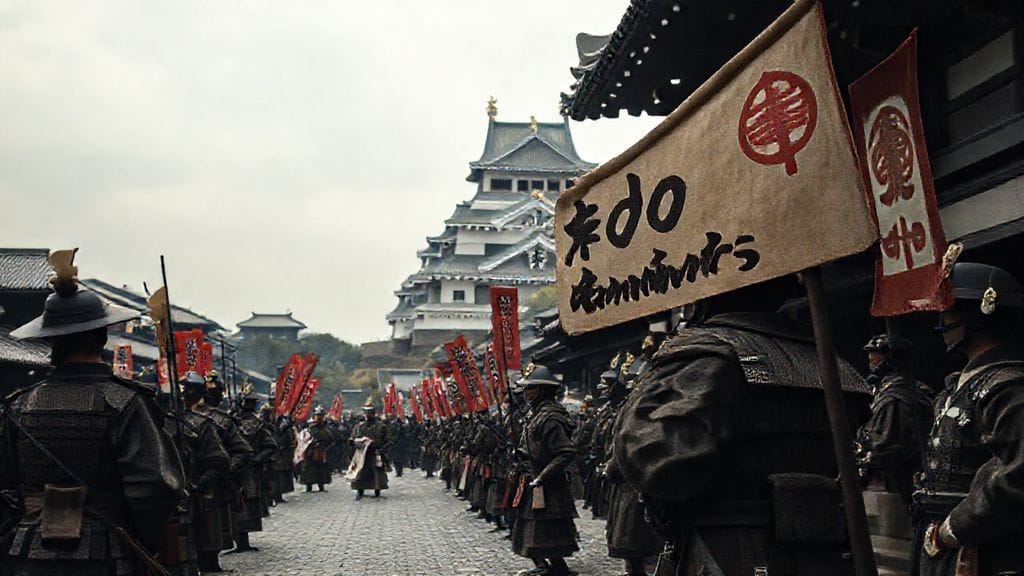
On a quiet spring morning of May 3, 1868, the ancient city of Edo—its narrow streets etched with centuries of samurai footsteps, merchant bustle, and political intrigue—stood poised on the precipice of profound transformation. The cherry blossoms, poised between bloom and fall, seemed to whisper of impermanence, of an epoch descending into history. Smoke no longer billowed with the fierce battles of the past weeks; silence settled over the city as the inevitable moment approached. A city beholden to centuries of shogunal rule was about to surrender, not to flames or swords, but to an idea stronger than any lamellar armor: the restoration of imperial authority.
This was no ordinary capitulation. It was a symbolic fulcrum on which Japan’s future balanced precariously. When Edo surrendered to the forces loyal to the Emperor, what seemed like the twilight of a fallen regime paradoxically heralded the dawn of a modern nation.
2. The Last Days of the Shogunate: Tokugawa Power in Decline
For over two and a half centuries, the Tokugawa shogunate had embossed its authority across Japan, insulating the island nation from external chaos through rigid social order and isolationist policies. Edo, as the seat of power, had flourished under the bakufu’s rigid hierarchy—samurai classes commanded respect, daimyō governed domains, and the emperor remained a distant spiritual figure.
But by the mid-19th century, fault lines deepened. The arrival of Commodore Perry’s black ships shattered Japan’s self-imposed seclusion, forcing open doors to Western influence and war technologies. Internally, dissatisfaction grew among lower samurai and commoners alike. Economic stagnation beset many domains, and corruption eroded the once-pristine image of the bakufu. The idea of “sonnō jōi” — “Revere the Emperor, Expel the Barbarians” — gained traction among discontented samurai ideologues and reformists from the provinces of Chōshū and Satsuma, whose armies dreamed of toppling the shogunate and restoring imperial rule.
By 1868, the shogunate teetered, beset by rivals and revolutionary zeal, as the power struggle turned violent across Japan’s provinces. Edo, the heart of Tokugawa rule, became the ultimate prize.
3. Forces Collide: Imperial Ambitions and Shogunal Resistance
The march toward confrontation was unstoppable. Imperial forces — an unlikely coalition of rebel samurai and young visionaries — advanced on Edo with a mixture of determination and strategic cunning. The reality of this confrontation was not simply military might but an ideological battle: old order versus emerging modernity, tradition locked in struggle with reform.
On the side of the shogunate, Katsu Kaishū, a shrewd naval officer and statesman, understood the inevitable collapse but sought to negotiate peace to avoid needless bloodshed. Opposing him were hot-blooded loyalists eager for total victory and swift punishment. On the imperial side, Saigō Takamori, the southern samurai who embodied both fiery passion and noble restraint, sought to bring about change with minimum gory expense.
This collision of forces would define not only the battle for Edo but the spirit in which Japan would move forward.
4. The Fall of Edo Castle: A City Holds Its Breath
Edo Castle had long symbolized Tokugawa invincibility. Its imposing walls and moats seemed impregnable, enveloping a city that had grown into the world’s largest metropolis of its time. Yet, despite its daunting defenses, the castle faced a siege unlike any before: one not characterized by overwhelming violence but by strategic pressure and psychological intensity.
In late March and April 1868, imperial troops encircled Edo. Exhaustion, dwindling supplies, and the absence of effective reinforcements starved the defenders’ resolve. The streets buzzed with rumors: would there be wholesale slaughter, or could the city be spared?
On every corner, commoners whispered anxious prayers; samurai patrolled with tension knotted in their fingers. With each passing day, the city seemed poised to shatter—and yet, the possibility of a peaceful surrender hung in the air like a fragile lantern in the dark.
5. The Moment of Surrender: Silent Streets and Shifting Loyalties
The decisive moments arrived in early May. On May 3, elite envoys from the shogunate and imperial forces met within Edo Castle to broker the terms of surrender. The atmosphere was charged with palpable emotion: decades of loyalty, honor, and fear converged in hushed conversations around tables as ink met paper and swords rested sheathed.
The capitulation was rendered with unexpected dignity. Katsu Kaishū’s negotiation skills spared Edo the horror of urban warfare and potential massacre. The city, relieved and yet stunned, slowly began to shift from a fortress resistant to change to a crucible of transformation.
Citizens who a week before had braced for ruin found themselves on the cusp of redefinition. Samurai faced diminished roles; merchants glimpsed new opportunities; peasants dared to dream beyond centuries of feudal constraints. The surrender was not only political — it was profoundly human.
6. The Role of Key Figures: Saigō Takamori, Katsu Kaishū, and More
No recounting of Edo’s surrender is complete without the personalities who shaped it. Saigō Takamori, dubbed the “last true samurai,” was a paradox—both fierce warrior and pragmatist. His insistence on minimizing bloodshed contrasted with the more radical elements of the imperial coalition, and his respect for Katsu Kaishū’s conciliatory approach guided the negotiations.
Katsu Kaishū, once a loyal shogunal officer, was a visionary realist. Recognizing the winds of change, he sought to protect his people and city from devastation. Their mutual respect transcended political allegiances, a poignant reminder that honor and humanity persisted even amid revolution.
Other figures, from rebel commanders to Edo’s ordinary folk, contributed threads to this intricate tapestry of surrender—each a living witness to history.
7. The Nature of the Surrender: Negotiation Amidst Tension
The terms of Edo’s surrender speak volumes about the nature of Japan’s transition from shogunate to imperial rule. Unlike many historical capitulations marked by brutality, Edo’s was negotiated, measured, and remarkably bloodless.
Katsu Kaishū’s insistence on order and Saigō’s willingness to listen established an unprecedented precedent in Japanese conflict resolution—one where pragmatism outweighed sheer military dominance. This process mitigated the risk of urban destruction, saving lives and preserving Edo’s infrastructure.
The surrender, thus, was both an end and a beginning—an act that acknowledged the past while clearing the path toward the Meiji era’s sweeping reforms.
8. The Bloodless Transition: Avoiding Massacre in the Heart of Edo
It is striking to consider that one of the world’s great cities, so often defined by turbulent warfare, escaped wholesale slaughter at this pivotal moment. Public safety was maintained despite the uneasy mix of triumph and defeat.
The imperial forces respected Katsu Kaishū’s calls for restraint and order, fostering a peaceful transfer of power. As imperial banners replaced the Tokugawa mon, and samurai laid down their arms, relief seeped into Edo’s populace.
Yet beneath this calm simmered deeper uncertainties—would this peace hold? Would the old order accept its demise quietly?
9. Reactions Across Japan: Unease and Hope Intertwined
News of Edo’s surrender sent ripples throughout the archipelago. In some domains, relief mingled with joy; in others, fear and confusion. The emperor’s power was revitalized, but the social fabric of Japan underwent seismic shifts.
For young reformists, this moment was confirmation that Japan could emerge from feudal stagnation. For conservative factions, it was a heartbreaking loss of the familiar order. Among commoners, hopes for land reform, tax relief, and freedom glimmered, although certainty remained elusive.
The complex mosaic of emotions reflected Japan’s extraordinary historical juncture.
10. Tokyo is Born: The Transformation of Edo into a Capital
Soon after the surrender, Edo shed its old name and identity, becoming Tokyo—“Eastern Capital.” This renaming symbolized the new era and the city’s centrality to the Meiji Restoration.
The city became the canvas for Japan’s rapid modernization: railways, telegraph lines, western-style schools, and government institutions sprang up. Yet the echoes of samurai castles and teahouses lingered, blending with the clamor of trolleys and industrial enterprises.
Tokyo’s rebirth reflected Japan itself: a fusion of tradition and innovation, honor and ambition.
11. The Imperial Restoration: Political and Symbolic Significance
The surrender of Edo represented the last great vestige of Tokugawa power collapsing before the restored emperor. Symbolically, this act healed centuries of political division between court and military leaders.
The Meiji Restoration that followed aimed to unify Japan under a centralized government, abolishing the feudal system and setting the stage for rapid modernization and industrialization. Once isolated, Japan now looked outward, ready to claim a place among world powers.
Edo’s surrender was not merely a military defeat; it was an ideological breakthrough.
12. Social Upheaval: Samurai, Merchants, and Commoners in Flux
The social aftershocks were enormous. The privileged samurai class faced dissolution, losing their traditional stipends and status. Many struggled to adapt, some turning to bureaucratic roles, others to rebellion.
Merchants gained influence as commerce expanded in the new economy. Commoners, long bound by rigid social structures, found new avenues for mobility but also faced challenges amid rapid industrialization.
The surrender thus precipitated profound restructuring of Japanese society with reverberations lasting generations.
13. Economic Shifts: From Feudal Stronghold to Modern Metropolis
Economically, Edo’s transition mirrored Japan’s transformation from agrarian to industrial. The centralized government invested in infrastructure, education, and military modernization.
Markets expanded beyond local domains, currency systems stabilized, and foreign trade flourished after decades of seclusion. Though hardship accompanied these changes, prosperity eventually followed.
Edo/Tokyo’s economic transformation was critical to Japan’s rise as a modern nation-state.
14. Cultural Reverberations: Changing Arts and Traditions
Culturally, Edo’s surrender and the subsequent Meiji period ushered in a tension between preserving heritage and embracing western influence.
Traditional arts like kabuki and ukiyo-e continued but adapted; architecture blended classical styles with imported European forms. Language reform and education drives altered daily life.
This cultural hybridity remains a defining characteristic of Japan.
15. The Legacy of Edo’s Surrender in Modern Japan
Today, Edo’s surrender is remembered as the peaceful handover that enabled Japan’s modernization without catastrophic civil war.
It remains a symbol of negotiation over destruction, pragmatism over pride, and unity emerging from division. The event underscores how history is often shaped not only by battles but also by moments of mercy and compromise.
Edo’s surrender still inspires reflections on leadership, change, and reconciliation.
16. International Perspectives: Global Implications of the Meiji Restoration
Globally, Edo’s capitulation and Japan’s subsequent restoration caught the attention of Western powers. Japan’s rapid modernization defied colonial expectations and altered balance in East Asia.
Foreign diplomats, traders, and military attachés observed closely as Japan rose from isolation to become a formidable player. Edo’s peaceful surrender foreshadowed a Japan that was no longer vulnerable but assertive on the world stage.
This shift resonated far beyond Japan’s shores.
17. Reflections from the Diaries and Letters of the Epoch
Personal writings from samurai, merchants, and diplomats provide vivid insights. Many describe the surrender with a mix of relief and sorrow, respect for opponents, and cautious optimism.
Letters home from imperial soldiers speak of awe at Edo’s size and beauty; samurai records lament the passing of an era. These accounts humanize the grand political narrative.
18. Comparing Edo’s Surrender to Other Historic Capitulations
Unlike the violent sackings of cities such as Paris (1871) or Constantinople (1453), Edo’s surrender is remarkable for its bloodless character and mutual respect between victor and vanquished.
This difference speaks to Japan’s unique blending of honor codes and pragmatic statesmanship at a pivotal moment.
19. The Surrender’s Impact on Japan’s Military Reforms
With Tokugawa forces disarmed, the Meiji government restructured the military into a modern conscript force, incorporating Western tactics and technology.
This professionalization proved vital to Japan’s defense and future conflicts, marking a clear departure from clan-based armies.
20. The Evolution of Edo-Tokyo: Urban, Political, and Social Changes
Post-surrender, Tokyo grew into an emblem of modern urbanization: new neighborhoods, infrastructure projects, and political institutions.
Social stratification evolved as education and industrial employment reshaped class dynamics, catalyzing social mobility.
21. Memory and Myth: How Edo’s Surrender Lives On Today
The surrender is commemorated in literature, museums, and festivals. It has become a foundational myth of Japan’s transformation—often romanticized yet grounded in historical reality.
The event continues to inspire debate about the costs and benefits of Japan’s rapid modernization.
22. Museums, Monuments, and the Preservation of History
Institutions such as the Edo-Tokyo Museum preserve artifacts, documents, and narratives related to the surrender, offering visitors immersive experiences of the era.
Monuments mark sites of negotiation and peace, reminding citizens of the city’s resilient heritage.
Conclusion
The surrender of Edo on May 3, 1868, was a moment fraught with tension, hope, and the poignant twilight of a long era. But beyond the inked documents and empty battlegrounds, it was a human story: of leaders making agonizing choices, of citizens caught between past and future, and of a nation preparing to reinvent itself.
In sparing Edo from bloodshed, the actors chose a path of pragmatism and dignity, a choice that reverberated through Japan’s transformation from feudal state to modern empire. The city’s fall was not the fall of Japan—it was its rebirth.
History remembers the surrender not as a loss but as a testament to resilience and foresight, voices still audible in Tokyo’s bustling streets today.
FAQs
Q1: What were the main causes leading to Edo’s surrender?
A1: The surrender stemmed from the decline of Tokugawa power amid internal dissatisfaction and external pressure, rising imperial ambitions, and decisive military advances by pro-imperial forces.
Q2: Who were the principal figures behind the negotiation?
A2: Katsu Kaishū, leading shogunal negotiator, and Saigō Takamori, representative of the imperial forces, were central to brokering a peaceful surrender.
Q3: Why was Edo’s surrender notably bloodless?
A3: Due to skilled negotiation, mutual respect, and a shared desire to avoid urban destruction, both sides prioritized peace over total victory.
Q4: How did the surrender influence the Meiji Restoration?
A4: It marked the collapse of the shogunate’s political power, effectively enabling the imperial government to centralize authority and pursue modernization reforms.
Q5: What happened to the samurai class after the surrender?
A5: The samurai lost their political and economic privileges; many adapted by entering government service, business, or faced social displacement.
Q6: How did the surrender affect everyday citizens?
A6: Citizens experienced uncertainty but also new opportunities as Edo transitioned into Tokyo, with expanding education, commerce, and urban development.
Q7: What international significance did the surrender hold?
A7: It signaled Japan’s political transformation and emergence onto the world stage as a modern nation, altering regional power dynamics.
Q8: How is the event commemorated today?
A8: Through museums like the Edo-Tokyo Museum, historical sites, literature, and public ceremonies celebrating the peaceful transfer of power and modernization.