Table of Contents
- The Last Battle of a Legend: Rodrigo Díaz de Vivar’s Final Days
- The Iberian Peninsula at the Dawn of the Twelfth Century
- The Making of El Cid: From Nobleman to Mercenary Leader
- The Conquest of Valencia: A Triumph Carved in Blood
- Life in Valencia: A City Between Cultures and Faiths
- The Siege of 1099: Valencia’s Final Ordeal
- Death of El Cid: A Hero’s End Amidst Turmoil
- The Aftermath: Valencia in Flux After the Cid’s Death
- The Fragmented Iberian Peninsula: Christians and Moors in Balance
- Legends and Myths: The Evolution of El Cid’s Story
- El Cid’s Family and Succession: The Fate of His Lineage
- Political Ripples: The Impact on Christian-Muslim Relations
- Valencia’s Fall to the Almoravids: A Changing Tide
- Memory and Legacy: El Cid in Literature and Culture
- The Symbolism of El Cid in Modern Spain
- Political Power, Religion, and Identity in Twelfth-Century Iberia
- The Warrior-Saints: Comparing El Cid to Other Medieval Champions
- The Archaeology of Valencia: Unearthing the Past
- The Role of Chroniclers: How the Cid’s Story Was Told
- The Cid’s Place in the Reconquista Narrative
- The Human Side of a Legend: Personalities and Relationships
- Conclusion: El Cid’s Death and the Enduring Echo of a Hero
- FAQs: Understanding El Cid and His Times
- External Resource
- Internal Link
The Last Battle of a Legend: Rodrigo Díaz de Vivar’s Final Days
The sun blazed mercilessly over the ancient walls of Valencia in the summer of 1099. The air shimmered with heat and the dust of war; banners fluttered atop stone battlements, proclaiming defiance and desperation. Within these walls, Rodrigo Díaz de Vivar—better known to history as El Cid—lay gravely ill, his once invincible frame now frail and shadowed by the certainty of death. The city he had fought tirelessly to conquer was suffocating under siege, its fate hanging by a fragile thread that mirrored the fragile thread of El Cid’s dwindling life.
Valencia, the jewel of al-Andalus recently wrested from Muslim control by the resolute Castilian warrior, embodied the volatile collision of cultures, ambitions, and faiths that defined Iberia at the turn of the twelfth century. El Cid, who had carved a path through kingdoms and empires, now faced a battle no sword could win—the final journey from life to legend.
But this ending was far from a simple curtain call. It was the fulcrum upon which the destinies of Christian and Muslim Iberia balanced precariously, setting in motion a new chapter in the enduring saga of the Reconquista.
The Iberian Peninsula at the Dawn of the Twelfth Century
At the cusp of the twelfth century, the Iberian Peninsula was a mosaic of warring states and cultures. The Christian kingdoms of Castile, León, Aragon, and Navarre jostled among themselves even as they pushed relentlessly southward against Muslim polities—primarily the taifas, or fragmented Muslim principalities, born from the dissolution of the Caliphate of Córdoba.
This was a land of shifting alliances, betrayals, and fluid identities. Christian knights often fought alongside Muslim forces; Muslim emirs sought truces with Christian kings; and the frontier was a tumultuous zone where power constantly shifted. Into this world stepped Rodrigo Díaz, a man shaped equally by knightly valor and political acumen, embodying the complex spirit of his time.
The Making of El Cid: From Nobleman to Mercenary Leader
Born around 1043 into minor nobility in the Kingdom of Castile, Rodrigo Díaz’s early years remain partially veiled in legend. However, by the 1060s, he had become a prominent knight under King Sancho II, renowned for his military skill and tactical brilliance. His sobriquet "El Cid," derived from the Arabic "al-sid" meaning "lord" or "master," was a testament not only to his prowess but to the mingling intimate of Christian and Muslim worlds.
El Cid’s career was marked by a curious duality. He served Christian kings but also Muslim rulers, often acting as a mercenary leader, crossing religious lines for pragmatic alliances. This fluid loyalty made him both admired and mistrusted, a man whose military genius was inseparable from keen political strategy.
The Conquest of Valencia: A Triumph Carved in Blood
The jewel of Rodrigo’s career was the conquest of Valencia in 1094, a city ruled by the Moorish king Al-Qadir. After years of campaigning across the fragmented territories, El Cid seized Valencia, imposing Christian authority but ruling a populace mostly Muslim. He maintained a precarious balance between conquest and coexistence, governing with a blend of military strength and diplomatic flexibility.
This conquest was a watershed. Not only did it provide a strategic foothold for Christian forces deep into Muslim-held territory, but it also showcased El Cid’s complex role—not a mere crusader, but a ruler navigating the realities of a culturally diverse city.
Life in Valencia: A City Between Cultures and Faiths
Valencia under El Cid was a microcosm of Iberian hybridity. Christians, Muslims, and Jews lived intertwined yet separate lives, each community with its customs and traditions. El Cid’s administration showed a degree of tolerance unusual for the era: Muslim officials remained in place, trade continued, and religious practices persisted despite the political shift.
However, beneath the surface, tensions simmered. The city was a powder keg, with factions wary of El Cid’s rule and the looming threat of Muslim counterattacks. This delicate balance was both a testament to Rodrigo’s political savvy and a fragile foundation that would soon be tested.
The Siege of 1099: Valencia’s Final Ordeal
By 1099, the ascent of the Almoravid dynasty—a Berber Muslim movement from North Africa—had shifted the power dynamics. Determined to reclaim al-Andalus for Islam, the Almoravids laid siege to Valencia. The city, beleaguered and barely holding together after years of conflict, depended heavily on El Cid’s leadership.
Despite his failing health, Rodrigo remained at the forefront, inspiring his defenders with the same fervor that once won cities and hearts. Yet, the siege was relentless. Starvation, despair, and ceaseless assaults battered Valencia as El Cid’s body betrayed him.
Death of El Cid: A Hero’s End Amidst Turmoil
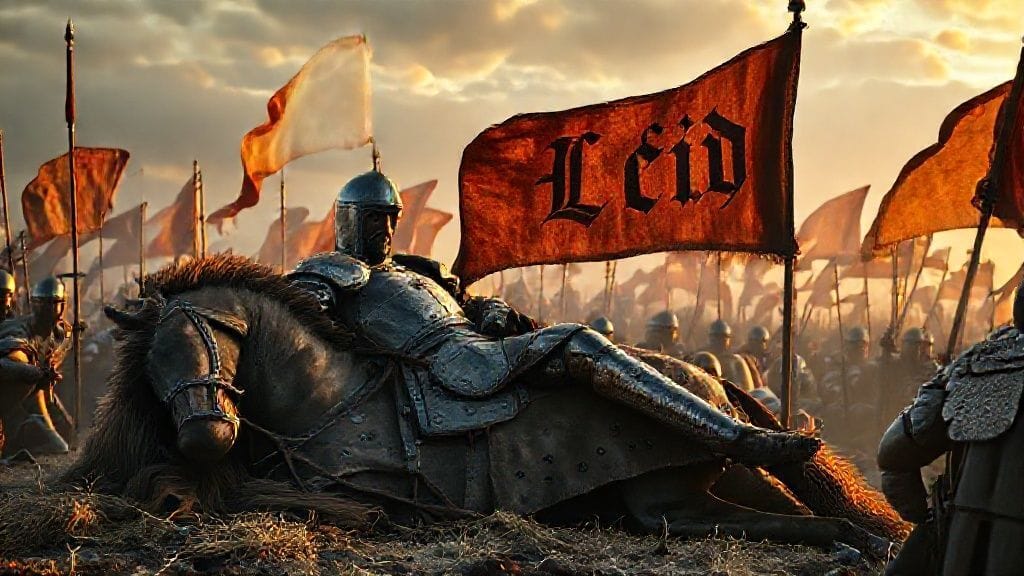
On July 10 or 11, 1099—historians debate precise dates—Rodrigo Díaz de Vivar died within the besieged walls. His death was a seismic moment. Stories paint him as a warrior who, even in death, refused submission; legendary accounts tell of his remains being propped upright to encourage the troops, a symbol of unyielding spirit.
El Cid’s passing marked not just the loss of a leader but the collapse of a rare equilibrium in Valencia. Without his unifying presence, the city’s fate was sealed.
The Aftermath: Valencia in Flux After the Cid’s Death
Following Rodrigo’s death, Valencia held out only briefly. In May 1102, the Almoravids finally captured the city, bringing it back under Muslim control. The brief Christian experiment ended, the population suffered, and the region entered a new phase of conflict.
El Cid’s family fled, the fragile state he built dissolved, and the Reconquista continued its uneven march. Yet, the impact of his conquest lingered, shaping future generations’ understanding of power, faith, and identity.
The Fragmented Iberian Peninsula: Christians and Moors in Balance
The death of El Cid and the loss of Valencia underscored the fragile nature of Christian advances. The Iberian Peninsula remained a battleground of competing kingdoms and faiths, its future uncertain and often rewritten by warlords and kings dancing on a knife’s edge.
El Cid’s life and death highlighted the era’s contradictions: religious fervor interwoven with political pragmatism, cultural exchange shadowed by persistent enmities.
Legends and Myths: The Evolution of El Cid’s Story
From the twelfth century onward, El Cid’s story became legend. The Cantar de mio Cid, an epic poem composed within decades of his death, immortalized him as an idealized Christian knight: pious, loyal, invincible.
Yet this myth often obscured the historical complexity of the man—a pragmatic leader who transcended faith and ethnicity. His legacy became a cultural touchstone, shaping Spain’s self-image and historical memory.
El Cid’s Family and Succession: The Fate of His Lineage
El Cid left behind his wife, Jimena Díaz, and two daughters. After Valencia’s fall, Jimena valiantly defended the region though ultimately unable to retain it. His daughters were married into prominent noble houses, ensuring that his bloodline remained entwined within Iberian aristocracy.
Yet, no son inherited the sword and city, symbolizing the fragility of individual legacy amid political chaos.
Political Ripples: The Impact on Christian-Muslim Relations
Rodrigo’s campaigns and his rule of Valencia influenced Christian-Muslim relations for decades. His example of tolerance mixed with conquest challenged simplistic narratives of religious wars.
His life epitomized the complex interplay of conflict and coexistence that defined medieval Iberia, a duality that would persist until the forced expulsions of the fifteenth century.
Valencia’s Fall to the Almoravids: A Changing Tide
The Almoravid recapture of Valencia marked a turning point—ushering in a period of greater Muslim political consolidation. Their strict interpretation of Islam contrasted with the more syncretic societies of the Taifa kingdoms and Christian-lorded cities.
This shift hardened boundaries and escalated conflicts, yet also laid foundations for subsequent cultural and military struggles.
Memory and Legacy: El Cid in Literature and Culture
El Cid’s figure transcended history, becoming a potent symbol in Spanish literature, theater, and film. From Václav Havel’s plays to Hollywood’s sweeping epics, his tale resonates universally.
His story embodies themes of honor, exile, identity, and the quest for belonging—narratives still explored in modern cultural contexts.
The Symbolism of El Cid in Modern Spain
In modern Spain, El Cid has been appropriated to various ideological ends—from nationalist icon to cultural bridge. His image evokes pride, resilience, and the complex heritage of a land forged at the crossroads of civilizations.
Understanding El Cid today demands unpacking myths to reveal history’s multifaceted truths.
Political Power, Religion, and Identity in Twelfth-Century Iberia
El Cid’s life reveals much about the volatile interdependency of power and faith. Religion was a mantle for legitimacy but often secondary to political survival. Identities were frequently layered and negotiated, rather than fixed.
His story invites reconsideration of medieval Iberia not as a site of monolithic conflict, but a tapestry of dynamic interactions.
The Warrior-Saints: Comparing El Cid to Other Medieval Champions
El Cid fits among Europe’s warrior-saints—figures who combined martial prowess with spiritual authority. Like Richard the Lionheart or William Wallace, his legacy straddles history and myth, illuminating how martial codes shaped medieval societies.
Yet El Cid’s unique cross-cultural engagements distinguish him within this pantheon.
The Archaeology of Valencia: Unearthing the Past
Excavations in Valencia have uncovered remnants of walls, swords, and fortifications dating to El Cid’s era. These physical traces anchor the legendary figure in real, gritty history—reminding us that beneath myths lie tangible human struggles.
Archaeology continues to enrich the narrative, offering new insights into daily life and warfare in medieval Iberia.
The Role of Chroniclers: How the Cid’s Story Was Told
Contemporary and near-contemporary chroniclers, both Muslim and Christian, portrayed El Cid with varying degrees of admiration and caution. The Muslim chroniclers often recognized his military skill, if reluctantly, while Christian records celebrated his piety and heroism.
These differing perspectives shaped the multi-layered legacy that historians grapple with today.
The Cid’s Place in the Reconquista Narrative
El Cid remains a central figure in the narrative of the Reconquista—the centuries-long Christian effort to reclaim Iberian lands. He embodies the archetypal warrior-hero advancing the Christian cause, yet also complicates the story by bridging cultures.
His life is a prism through which the complexity of the Reconquista can be better understood.
The Human Side of a Legend: Personalities and Relationships
Beyond battles and politics, Rodrigo Díaz was a husband, father, friend, and sometimes a foe. His relationships with princes, nobles, and commoners reveal a man as vulnerable and driven as any.
Exploring these intimate facets humanizes the legend, inviting empathy into the folds of history.
Conclusion
Rodrigo Díaz de Vivar, the legendary El Cid, died amid battle and siege, his final breath marking the end of an epoch yet the inception of a legend that would shape centuries. His death in Valencia in 1099 was far more than the passing of a warrior; it was the closing of a remarkable chapter in the complex saga of medieval Iberia—a land torn between faiths, bound by blood, and animated by the restless ambitions of men and kingdoms.
El Cid’s life and death encapsulate the paradoxes of his time: a man who was both mercenary and saint, conqueror and protector, Christian lord and ruler of Muslims. His legacy resonates today not only through epic poems and films but through the enduring questions he posed about identity, power, and coexistence in a fractured world.
His story reminds us that history is never simple; it is lived in the grey spaces between black and white, warrior and diplomat, legend and man.
FAQs
Q1: Who was Rodrigo Díaz de Vivar, known as El Cid?
A1: El Cid was a Castilian nobleman and military leader born around 1043. Serving Christian and Muslim rulers, he became famous for his conquest of Valencia and legendary warrior prowess.
Q2: What significance did Valencia hold in El Cid’s life?
A2: Valencia was the city El Cid conquered in 1094, ruling it until his death in 1099. It was a strategic and cultural crossroads in Iberia and symbolized his complex role as conqueror and governor.
Q3: What were the circumstances of El Cid’s death?
A3: El Cid died in 1099 during the Almoravid siege of Valencia, suffering from illness while defending the city he ruled.
Q4: How did El Cid’s death affect the political landscape of Iberia?
A4: His death weakened Christian control over Valencia, which fell soon after to the Almoravids, affecting the balance of power and Christian-Muslim relations.
Q5: How has El Cid been remembered in literature and culture?
A5: El Cid's life inspired epic poems, plays, and films, especially the Cantar de mio Cid, shaping Spanish national identity and cultural memory.
Q6: Was El Cid solely a Christian warrior?
A6: No. Although a Christian nobleman, El Cid often allied with Muslim rulers and governed a largely Muslim city, reflecting the complex intercultural dynamics of his era.
Q7: What role did El Cid’s family play after his death?
A7: His wife Jimena attempted to hold Valencia after his death but ultimately failed. His daughters married into noble families, but no male heir carried on his direct legacy.
Q8: Why is El Cid considered a symbol beyond his military exploits?
A8: El Cid embodies themes of honor, loyalty, cultural hybridity, and the human struggle amidst conflict, making him a timeless figure in history and myth alike.