Table of Contents
- A Fiery Awakening Beneath the Atlantic: The Eruption of El Hierro
- The Canary Islands: A Volcanic Archipelago in Suspense
- The Quiet Before the Storm: Geological and Human Context
- Tensions Build: Early Signs of Seismic Unrest in 2011
- The Beginning of the Long Shake: Initial Earthquakes and Tremors
- Alert Levels Rising: Authorities Prepare for the Unknown
- October 10, 2011: The First Bubble Bursts Under the Sea
- The Birth of a Submarine Volcano: La Restinga’s Fiery Revelation
- Communities on Edge: The Human Response to Nature’s Wrath
- Scientists Descend: Monitoring and Understanding the Phenomenon
- Warning Signs in the Water: Toxicity and Marine Life Distress
- Evacuations and Emergency Measures: Balancing Safety and Livelihood
- The Eruption’s Peak: Spectacle and Anxiety Intertwined
- Unexpected Twists: The Volcano’s Behavior Challenges Experts
- When the Fire Goes Out: The Slow Decline of Submarine Activity
- Aftermath on Land and Sea: Environmental and Economic Effects
- The Human Story: Resilience, Loss, and Community Bonds
- Lessons Learned: Scientific Advances from the El Hierro Eruption
- Volcano Tourism and Awareness: Changing Perceptions Post-Crisis
- The Legacy of 2011: From Geological Wonder to Living Memory
- A Global Reminder: El Hierro in the Spectrum of Volcanic Eruptions
- Conclusion
- FAQs
- External Resource
- Internal Link
1. A Fiery Awakening Beneath the Atlantic: The Eruption of El Hierro
The sea churned restless, a silent but potent prelude to nature’s grand spectacle. Off the tranquil shores of La Restinga, the southern tip of El Hierro, the smallest of Spain’s Canary Islands in 2011, something extraordinary was germinating in the dark underwaters. It was as if the ocean itself held its breath, waiting for the moment when molten rock would pierce its abyssal mantle.
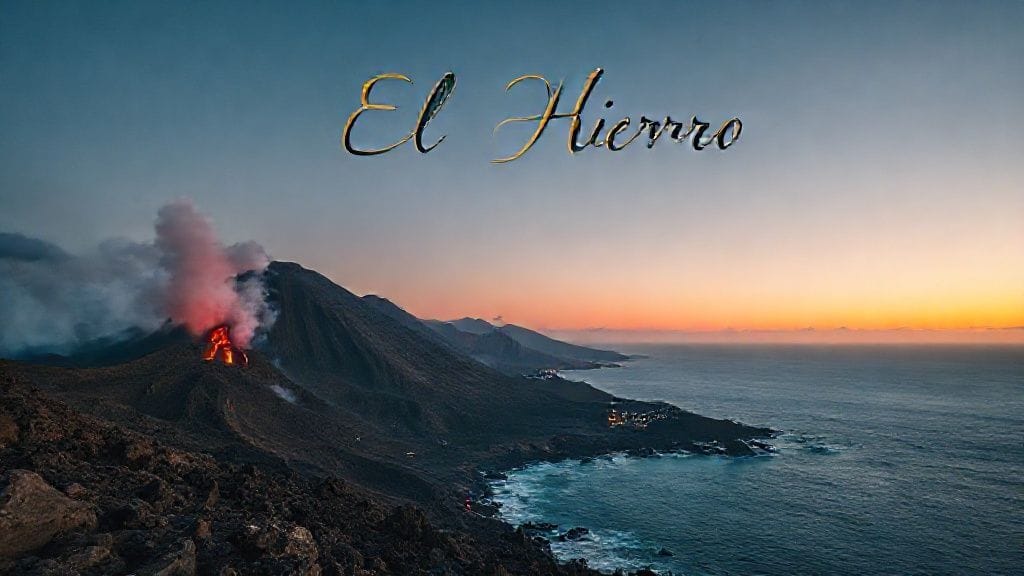
On the evening of October 10th, 2011, this breath was finally released. A submarine volcano erupted, sending plumes of sulfurous steam to the surface, caressing the waves with an eerie glow. The event marked the first volcanic eruption in the Canary Islands in over four decades, but its significance was far greater than just geology; it was a profound reminder of the restless Earth, the fragility of human life in the face of natural powers, and the unyielding pulse beneath the seemingly dormant island.
This is the story of El Hierro’s volcanic awakening — told with the colors of fire and water, human fears and courage, science’s urgency, and the island’s enduring spirit.
2. The Canary Islands: A Volcanic Archipelago in Suspense
The Canary Islands, set like emerald jewels in the warm waters off northwest Africa, are more than a vacation paradise; they are a testament to the Earth’s volcanic fury. Born from volcanic activity millions of years ago, this archipelago is a union of land and lava, shaped by fire breathing from beneath the crust.
El Hierro, the youngest and smallest island, is the geologic embryo in this chain. It carries the tectonic stories of the African and Eurasian plates’ slow collision and the mysterious mantle plumes fueling volcanic activity. Though the last eruption before 2011 had been in 1971 on the island of Teneguía (to the east), El Hierro’s sleeping volcano kept scientists vigilant, listening for the subtle rumbles beneath its peaceful hills.
The archipelago’s volcanic heart beats quietly but persistently, and 2011 was about to reveal just how alive it truly was.
3. The Quiet Before the Storm: Geological and Human Context
For the islanders of El Hierro — roughly 11,000 souls living amid lush forests, rugged cliffs, and open beaches — 2011 began like any other year. Their lives intertwined with the rhythms of farming, fishing, and tourism, balanced delicately upon volcanic soils fertile but unpredictable.
Beneath their feet, however, the Earth whispered secrets. The island sits atop a complex volcanic system characterized by basaltic activity creating dramatic volcanic cones, fissures, and lava fields. The chaotic movement of magma chambers remains hidden from the eye, only betrayed by subtle tremors and surface temperature shifts.
Though modern seismological networks monitored the island, no one could predict the precise moment when the deep fiery grip of the Earth would break through.
4. Tensions Build: Early Signs of Seismic Unrest in 2011
The first signs were almost imperceptible—isolated earthquakes of low magnitude reported early in July 2011. These initial tremors barely registered against the background noise of natural activity. But by mid-September, the scale tipped.
Clusters of seismic events intensified, with hundreds of tremors shaking the island each day. Ground deformation studies revealed measurable swelling in the island’s crust, hinting that magma was ascending. The islanders, while accustomed to some volcanic activity, suddenly found themselves amidst a crescendo of nature’s deep rumblings.
Authorities began tracking, scientists convened, and the public’s attention turned inward — watching the skies, listening to the Earth.
5. The Beginning of the Long Shake: Initial Earthquakes and Tremors
September and October of 2011 became a chorus of shakes. Seismic activity increased dramatically; by early October, El Hierro experienced hundreds of earthquakes daily, some strong enough to rattle homes and unsettle residents.
These shocks clustered beneath the southern coast, near La Restinga. The location was crucial, pointing towards the ocean floor as the potential site for a volcanic event, but nothing had yet broken the surface.
Despite the rising fears, experts maintained a balance of caution and calm, knowing that volcanic eruptions can be unpredictable creatures.
6. Alert Levels Rising: Authorities Prepare for the Unknown
By late September, the Canary Islands Volcanic Emergency Plan (PEVOLCA) went into partial effect. Authorities raised alert levels, disseminating information through the media, holding community meetings, and readying evacuation protocols.
The island's small fishing community — the lifeblood of La Restinga — faced an uncertain future. While the volcano remained underwater, the invisible yet powerful threat was tangible.
Schools and businesses braced for disruption. Tourists were cautiously informed. A fragile calm settled over the community, hiding the anxiety underneath.
7. October 10, 2011: The First Bubble Bursts Under the Sea
Then came the first unmistakable sign: water discoloration near La Restinga’s shore. Dark, sulfurous stains spread across the ocean surface, accompanied by a faint but distinct smell of rotten eggs — the signature aroma of volcanic gases.
Observers watched with increasing awe and dread as the sea began to boil and smoke plumes danced on the horizon.
Scientific instruments recorded rapid changes: temperature spikes, gas emissions, and seismic signals confirming that magma had indeed breached the ocean floor. El Hierro’s new volcano was born.
8. The Birth of a Submarine Volcano: La Restinga’s Fiery Revelation
Unlike the more visible terrestrial eruptions of the past, this volcanic birth was hidden beneath tens of meters of seawater. The submarine eruption created violent interactions between lava and cold ocean water — a volatile mixture resulting in explosive steam-driven blasts known as phreatomagmatic activity.
Floating pumice, gas bubbles, and underwater explosions marked the surface. Divers and vessels approached cautiously, documenting the formation and evolution of the new volcanic vent.
The ocean became a crucible where fire and water waged war, drawing international scientific attention and media fascination.
9. Communities on Edge: The Human Response to Nature’s Wrath
Local fishermen faced the dilemma of livelihoods versus safety. Marine ecosystems, central to their trade, were threatened by the emission of toxic gases like carbon dioxide and hydrogen sulfide.
Families debated evacuation, torn between love for their ancestral home and the instinct to survive.
As the eruption’s intensity waxed and waned, so did the collective anxiety. Psychological impacts ran deep in this small, tightly knit community, illustrating the human cost of geological upheaval.
10. Scientists Descend: Monitoring and Understanding the Phenomenon
A multidisciplinary team of volcanologists, marine biologists, chemists, and geologists converged on El Hierro. Using underwater vehicles, seismic arrays, gas sensors, and satellite imagery, they mapped the event in real time.
Their work revealed the eruption’s unique nature—its underwater character, episodic explosions, and chemical emissions affecting air and sea. The data gathered became pivotal in advancing understanding of submarine volcanic processes worldwide.
Their presence brought hope, reassurance, and a window into Earth’s fiery dynamism.
11. Warning Signs in the Water: Toxicity and Marine Life Distress
The eruption released massive quantities of gases and altered water chemistry drastically. Fish kills occurred; coral reefs faced unprecedented stress.
Toxic plumes expanded beyond the eruption site, raising concerns about the food chain and ecosystem health.
Fishermen observed peculiar behavior in marine life, with some species fleeing while others succumbed. The ocean’s bounty was caught in an invisible net of volcanic poison.
12. Evacuations and Emergency Measures: Balancing Safety and Livelihood
By late October, precautionary evacuations were underway for the immediate coastal areas most at risk. Hundreds of residents temporarily relocated, their homes watched over by neighbors.
Emergency response teams distributed supplies, set up medical points, and communicated constantly through local networks.
Despite disruptions, community resilience shone—neighbors helped neighbors, balancing fear with collective strength.
13. The Eruption’s Peak: Spectacle and Anxiety Intertwined
November and December saw the eruption reach its height. Massive gas emissions, landslides triggered by earthquakes, and persistent lava outflows beneath the ocean combined to produce a dramatic, if often unseen, display of natural power.
At night, the faint glow of submarine lava reflected in the waters near La Restinga, a haunting reminder that beneath the surface, earth’s molten heart pulsed vigorously.
For islanders and scientists alike, it was a time of awe, respect, and cautious optimism.
14. Unexpected Twists: The Volcano’s Behavior Challenges Experts
Contrary to some initial predictions, the eruption did not create a new island but remained submarine, fluctuating in intensity over weeks.
Seismic patterns were irregular; gas emissions varied; new vents opened and closed unpredictably. Each shift challenged assumptions and required recalibrated responses.
Such complexity underscored the limits of human control amidst natural forces.
15. When the Fire Goes Out: The Slow Decline of Submarine Activity
By February 2012, seismic activity and gas emissions decreased significantly. Signs of dormancy emerged, and the alert level was gradually lowered.
The volcano had created a new underwater topography, but its inferno was cooling. The sea’s surface calmed, returning the island’s shores to their usual serenity.
Yet, beneath the calm, a renewed pulse awaited – a humbling reminder that volcanic vigilance never truly ends.
16. Aftermath on Land and Sea: Environmental and Economic Effects
The eruption left scars on the landscape and sea. Marine ecosystems took years to recover; fisheries struggled with reduced yields and contamination fears.
Tourism experienced a temporary decline but also attracted curious visitors eager to witness volcanic wonders.
Repair efforts supported infrastructure, but economic hardship tested many families. Nature’s gift was double-edged—a promise of renewal shadowed by upheaval.
17. The Human Story: Resilience, Loss, and Community Bonds
The people of El Hierro displayed a remarkable blend of stoicism and solidarity. Stories emerged of neighbors sharing food, recounting fears around fireside conversations, and embracing uncertainty together.
Local leaders became intermediaries between scientists and citizens, helping weave trust and disseminate knowledge.
The eruption was not just a geological event, but a profound human chapter of survival and adaptation.
18. Lessons Learned: Scientific Advances from the El Hierro Eruption
The eruption offered a living laboratory. Scientists refined techniques in submarine volcanic monitoring, volcanic gas analysis, and emergency management protocols.
It also highlighted the importance of community engagement in natural disasters—scientific data alone was insufficient without clear communication and social cohesion.
The global volcanology community drew inspiration and cautionary tales from El Hierro’s fiery ballet.
19. Volcano Tourism and Awareness: Changing Perceptions Post-Crisis
Post-eruption, El Hierro gained new visibility as a destination for ‘volcano tourism’. Guided dives, viewpoints, and educational programs offered visitors glimpses into Earth’s raw forces.
Local initiatives stressed sustainable tourism, linking respect for natural heritage with economic revitalization.
The eruption transformed El Hierro from an obscure island into a symbol of planetary power and beauty.
20. The Legacy of 2011: From Geological Wonder to Living Memory
More than a decade later, the 2011 eruption remains vividly remembered by residents and scientists alike.
Museums, documentaries, and oral histories preserve its tale. The event became a point of identity, a touchstone for both caution and pride.
El Hierro’s fiery episode is a chapter in humanity’s ongoing dialogue with the Earth’s restless interior.
21. A Global Reminder: El Hierro in the Spectrum of Volcanic Eruptions
Though modest compared to catastrophic eruptions elsewhere, El Hierro’s underwater volcano exemplifies the diversity of volcanic phenomena on our planet.
It reminds us that eruptions do not always ignite sky-high clouds of ash; sometimes, they stir the abyss quietly but with equal impact.
In a warming world, understanding such natural processes is crucial for preparedness and survival.
Conclusion
The 2011 submarine eruption off La Restinga, El Hierro, unfolded like a story etched in fire and water — a testament to the Earth’s enduring energy and to human courage in the face of uncertainty. It was a spectacle that transcended geological labels, touching the hearts and lives of islanders who stood witness to nature’s power cradled beneath the sea.
This event underscored the fragile dance between human communities and their environment, the urgent need for vigilance and science, and the resilience woven into the fabric of daily life.
As the calm returned, El Hierro kept its secret beneath tranquil waves, a sleeping giant waiting, reminding us all that beneath the quiet surface, the Earth’s pulse never ceases.
FAQs
Q1: What caused the 2011 eruption at El Hierro?
The eruption was caused by volcanic activity associated with magma rising through the Earth’s crust beneath the island, triggered by tectonic movements and mantle plumes characteristic of the Canary Islands.
Q2: How long did the eruption last?
The submarine eruption began in October 2011 and showed significant activity until February 2012 before subsiding into dormancy.
Q3: Were there any casualties during the eruption?
Fortunately, no direct casualties were reported. Thanks to timely evacuations and monitoring, human life was protected.
Q4: How did the eruption impact local marine life?
The release of volcanic gases and altered water chemistry caused marine distress, including fish deaths and damage to coral reefs, disrupting ecosystems temporarily.
Q5: Did the eruption create a new island?
Unlike some eruptions, this one remained entirely underwater, creating new underwater volcanic structures but no new landmass.
Q6: What scientific tools were used to monitor the eruption?
Scientists employed seismic networks, underwater sensors, satellite imagery, gas analyzers, and remotely operated underwater vehicles.
Q7: How did the local community respond to the eruption?
The community exhibited resilience, cooperation, and adaptability, balancing concerns for safety with maintaining livelihoods and culture.
Q8: What is the long-term significance of the El Hierro eruption?
It advanced scientific understanding of submarine eruptions, improved emergency protocols, and reaffirmed the importance of integrating community engagement in disaster management.

