Table of Contents
- A New Year’s Sunrise on a Divided Nation
- The Weight of War: America on the Brink
- Lincoln’s Dilemma: Freedom or Union?
- The Road to Emancipation: Preceding Attempts and Pressures
- The Political Chessboard: Allies, Opponents, and the Senate
- January 1, 1863: The Emancipation Proclamation Takes Effect
- Voices from the Field: Reactions Among Freed and Enslaved
- The International Stage: Foreign Powers Watching America
- Military Impacts: Transforming the War Effort
- African American Soldiers: Fighting for Their Freedom
- The Legal Paradox: Limited Scope but Boundless Symbolism
- Lincoln’s Leadership: Courage Amidst Controversy
- The Press and Public Opinion: Support, Outrage, and Doubt
- Resistance and Backlash: The Deep South’s Response
- Reconstruction’s Shadow: From Emancipation to Civil Rights
- The Emancipation Proclamation’s Place in Memory and Myth
- Comparing Emancipation: Global Movements Toward Freedom
- From Proclamation to the 13th Amendment: The Legal Victory
- Enduring Legacy: Lessons in Justice and Equality
- The Human Cost: Stories Behind the Historical Decree
- Emancipation as a Turning Point in American Identity
- The Proclamation Today: Commemoration and Critique
- Final Reflections: Freedom’s Fragile Dawn
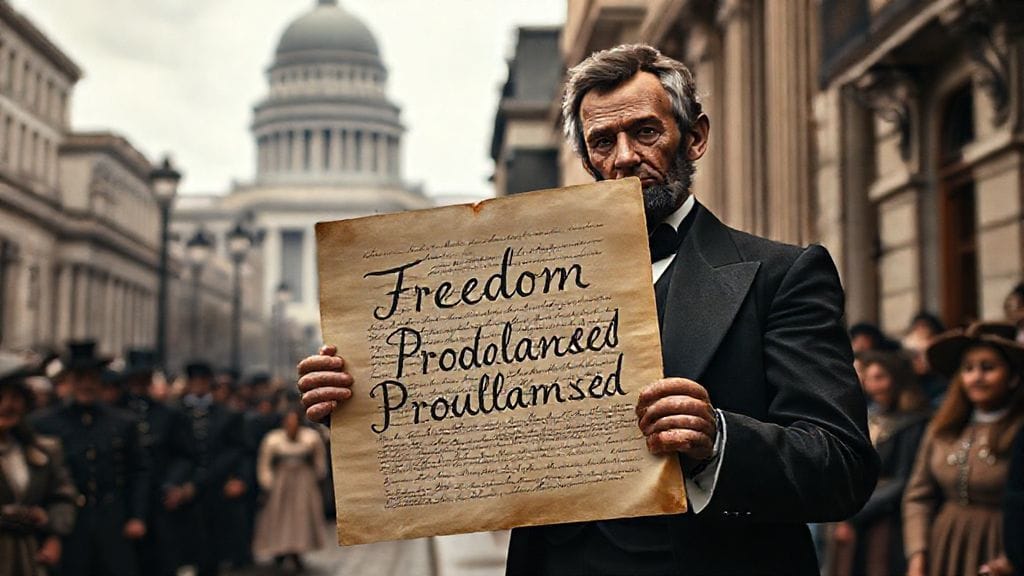
On January 1, 1863, as the nation held its breath amidst the thunder of cannon fire and the wails of divided families, a new dawn broke over Washington — one not of peace yet, but of a renouncing of bondage. The Emancipation Proclamation, issued by President Abraham Lincoln, was more than a political document; it became a beacon of hope carved into the war-torn soul of America. Imagine the tension lingering in the cold winter air, the ink drying on parchment that irrevocably changed millions of lives. This moment did not come easily, nor did it signal an immediate end to slavery, but it marked a radical pivot upon which the very idea of American freedom would turn.
The Weight of War: America on the Brink
By 1862, the United States was engulfed in its bloodiest conflict. More than two years into the Civil War, the Union's resolve had been tested repeatedly. The battle lines ran not only through geography but through hearts and minds. The Confederacy insisted on preserving a social order built on human bondage, while the North sought, initially, to preserve the Union rather than to abolish slavery outright.
Slavery was the combustible tinder underlying the conflict. It was both the cause and the obstacle — economic, cultural, and moral — that shaped every decision. For Lincoln, the challenge was immense: could he wield the presidency to transform the war into a crusade against slavery without fracturing the fragile Union?
Lincoln’s Dilemma: Freedom or Union?
Abraham Lincoln did not come to the presidency as an abolitionist revolutionary. His primary goal was the preservation of the Union, often subordinating moral questions to political necessity. Yet as the war progressed, and the Union army absorbed the strength of enslaved people fleeing Confederate lands, the clear link between emancipation and military advantage became evident.
The President grappled openly with the constitutional bounds of his power. Could a wartime executive order redefine the social order? Would freeing slaves in Confederate states be legal, or just a provocation? Lincoln’s correspondence reflected this careful balancing act: a man deeply principled, yet wary of pushing the nation to further rupture.
The Road to Emancipation: Preceding Attempts and Pressures
Even before the famous proclamation, efforts to chip away at slavery had gained momentum. The Confiscation Acts of 1861 and 1862 had authorized the Union to seize property, including enslaved people, from rebels. Plans for gradual emancipation in border states and compensated emancipation were discussed, highlighting the complex patchwork of loyalties and laws defining the nation.
Abolitionists, black leaders, and radical Republicans pressured Lincoln relentlessly. Frederick Douglass famously met with him, exalting the moral imperative. Soldiers, many of whom witnessed slavery’s horrors firsthand, urged for decisive action. This collective clamor created an atmosphere where mere preservation of the Union seemed insufficient.
The Political Chessboard: Allies, Opponents, and the Senate
The Emancipation Proclamation was as much a political gambit as a moral declaration. Lincoln’s advisors, Congress, and military leaders debated its timing and scope with tense urgency. Influential figures such as Secretary of State William Seward initially counseled delaying announcement to coincide with a Union victory – a wisdom Lincoln heeded after the Battle of Antietam.
Resistance came not only from the Confederacy but also from border states loyal to the Union where slavery remained legal, as well as from Northern Democrats who feared the social upheaval emancipation would bring. Yet Lincoln’s strategic patience led to a proclamation carefully designed to free slaves only in rebelling states, sidestepping border slave states to keep their allegiance.
January 1, 1863: The Emancipation Proclamation Takes Effect
At the stroke of midnight, the proclamation became operative. It declared "that all persons held as slaves" within rebellious territories "are, and henceforward shall be free." Though in practice it did not immediately free a single slave—those areas were still under Confederate control—it sent an unequivocal message: the institution of slavery was doomed.
The words resonated across plantations, military encampments, and beyond. Enslaved people, hearing of their legal liberation, began to escape en masse to Union lines. Soldiers gained vehement motivation, and the moral cause of the war soared to new heights.
Voices from the Field: Reactions Among Freed and Enslaved
The proclamation’s immediate impact was felt most profoundly on the ground. “It is like a burst of sunshine tearing through the dark clouds,” reported an escaped slave near Charleston. African Americans celebrated it as a promise and a vindication of their humanity, even as they knew the struggle was far from over.
Union soldiers who had been ambivalent about the war’s meaning found renewed purpose. For many enslaved people turned soldiers, it was the first time they were officially recognized as citizens with rights. Their personal stories, from Harriet Tubman’s support of Union raids to countless nameless fugitives, became the human heartbeat of emancipation.
The International Stage: Foreign Powers Watching America
Across the Atlantic, eyes fixed on America. Britain and France had been poised to recognize the Confederacy, but the proclamation transformed the war’s moral dimension, making support for the slaveholding states politically toxic. It helped prevent European intervention that could have changed the course of the war.
The proclamation aligned the Union with an emerging global movement against slavery, placing Lincoln in the company of reformers and revolutionaries worldwide. This diplomatic shift was crucial for the survival of the United States as it existed.
Military Impacts: Transforming the War Effort
Emancipation was not only symbolic; it had immediate military consequences. Freed slaves swelled Union ranks as soldiers, laborers, and scouts. More than 180,000 African American men eventually served in the United States Colored Troops, fighting bravely for liberty and nationhood.
The Confederate economy, reliant on slave labor, suffered from mass escapes and the destruction of plantations. The proclamation, therefore, was a strategic blow to Southern capacity, undermining the foundations of its war effort.
African American Soldiers: Fighting for Their Freedom
The decision to allow blacks to enlist was revolutionary in itself. For generations, African Americans had been denied the right to bear arms. Now, they marched shoulder-to-shoulder with white troops, their courage dispelling racist notions and forging a new collective identity.
Their sacrifices on the battlefield — at battles like Fort Wagner and the assault on Petersburg — provided undeniable proof that freedom was not charity but a right to be claimed through struggle.
The Legal Paradox: Limited Scope but Boundless Symbolism
Ironically, the proclamation did not free all enslaved people in the United States—only those in rebelling states outside Union control. Slavery persisted in border states and rebel-held territories conquered by Union forces.
Despite these limits, the proclamation’s symbolic power was unbounded. It recast the war as a fight against slavery, changing public discourse and setting the stage for abolition to become enshrined in constitutional law with the 13th Amendment.
Lincoln’s Leadership: Courage Amidst Controversy
Lincoln’s decision was a hallmark of presidential resolve amid tumult. Criticized from multiple sides and risking political capital, he moved forward driven by principle and pragmatism.
Historians admire how Lincoln harnessed the moment: neither premature nor too late, the proclamation was a delicate balance of law, politics, and morality. It was the kind of leadership that changes destinies.
The Press and Public Opinion: Support, Outrage, and Doubt
Newspapers echoed the nation’s divided soul. Abolitionist presses heralded emancipation as the dawn of justice, while others decried it as federal overreach and radicalism.
White Northern Democrats mostly viewed it with suspicion, worrying about reintegrating freed slaves and social upheaval. Southern presses called for vengeance. This cacophony reflected the fractured national psyche struggling beneath the banner of war.
Resistance and Backlash: The Deep South’s Response
In Confederate states, the proclamation was an affront. Slaveholders tightened control, fearing rebellion inspired by the decree. The proclamation spurred harsher laws and brutal reprisals against escaping slaves.
Yet, it sowed seeds of doubt and fear within Southern society, slowly undermining the institution they fought to preserve.
Reconstruction’s Shadow: From Emancipation to Civil Rights
Though the proclamation marked a turning point, full liberation and equality remained elusive. The tumult of Reconstruction brought both promise and backlash, as freed people fought to claim citizenship, land, and political power amid violent resistance.
The Emancipation Proclamation was the opening chapter in this ongoing, painful struggle for justice in America.
The Emancipation Proclamation’s Place in Memory and Myth
Over time, the proclamation became a mythic symbol—frequently overshadowed by Lincoln’s Gettysburg Address but no less profound. It is often misperceived as immediate abolition but rightly celebrated as a courageous leap of political and moral vision.
Commemorations around Martin Luther King Jr. Day and Juneteenth recall the legacy that the proclamation initiated.
Comparing Emancipation: Global Movements Toward Freedom
America’s emancipation in the midst of war paralleled global trends away from slavery, from Britain’s abolition in 1833 to Brazil’s in 1888. Yet, the American experience was unique in fusing abolition with civil conflict and citizenship struggles.
This comparison enriches our understanding of freedom as a contested, uneven journey worldwide.
From Proclamation to the 13th Amendment: The Legal Victory
The Emancipation Proclamation was a war measure—not permanent law. Its power was cemented with the ratification of the 13th Amendment in December 1865, outlawing slavery nationwide.
This final legal step fulfilled the promise Lincoln’s proclamation hinted at, transforming a wartime act into constitutional justice.
Enduring Legacy: Lessons in Justice and Equality
Emancipation’s ripple effects continue to shape American identity. It signaled that freedom must be actively defended, rights expanded, and injustice named.
For civil rights movements of the 20th century and beyond, the proclamation remains a touchstone—a symbol that law, war, and courage can bend history towards liberty.
The Human Cost: Stories Behind the Historical Decree
Countless individuals—enslaved mothers, soldiers, abolitionists, politicians—stood at the heart of this transformative moment. Their hopes, fears, and sacrifices breathe life into cold dates and documents.
Narratives of escape, resistance, and resilience paint a poignant human tapestry behind the proclamation’s text.
Emancipation as a Turning Point in American Identity
The proclamation signaled a redefinition of what it meant to be American. Citizenship and inclusion increasingly depended on rejecting slavery and embracing equality ideals—still contested, still incomplete, but irrevocable.
This reimagining echoes into modern debates about nationhood and rights.
The Proclamation Today: Commemoration and Critique
Today, the Emancipation Proclamation is honored widely, yet also critically examined. Scholars note its limitations and the enduring struggle for racial justice, questioning simplistic narratives.
Acknowledging complexity strengthens the proclamation’s status as both historical milestone and living challenge.
Final Reflections: Freedom’s Fragile Dawn
On that frosty January morning in 1863, America’s promise seemed fragile but undeniable. The Emancipation Proclamation did not end slavery instantly, but it ignited the irreversible fire of emancipation.
It reminds us that liberty is a process, forged in courage, and maintained through vigilance and struggle. For that, it remains one of the great turning points in history.
Conclusion
The Emancipation Proclamation stands as a monument to the power of leadership, moral clarity, and historical context converging at a critical juncture. It was born from a nation in crisis, from a president wrestling with immense responsibilities, from the unyielding desires of millions yearning to be free. More than a legal decree, it was a clarion call that expanded the nation’s ideals beyond union alone toward the promise of equality.
Its immediate effects were limited, its legacy complex. Yet, the proclamation shattered the illusion that slavery could endure indefinitely. It transformed a civil war into a war for human dignity, indirectly reshaping the world’s landscape.
In reflecting on this event, we are reminded that freedom must be claimed continually, that history is neither inevitable nor closed. The Emancipation Proclamation is a testament to the incremental, often painful march toward justice—a light that continues to inspire.
FAQs
Q1: What exactly did the Emancipation Proclamation declare?
A1: It declared that all slaves in Confederate states still in rebellion as of January 1, 1863, were considered free. It did not apply to border states loyal to the Union or Confederate areas under Union control.
Q2: Why did Lincoln wait until 1863 to issue the proclamation?
A2: Lincoln delayed issuing it to align with Union military success, notably after the Battle of Antietam, to give the proclamation greater impact and legitimacy. He also wrestled with constitutional and political considerations.
Q3: How did the proclamation affect the Civil War’s trajectory?
A3: It transformed the war’s goals by adding abolition to preserving the Union, discouraged European powers from supporting the Confederacy, and allowed the recruitment of African American soldiers, strengthening the Union army.
Q4: Did the proclamation free all enslaved people in the U.S.?
A4: No. It freed slaves only in rebelling states outside Union control. Slavery persisted in border states until abolished nationwide by the 13th Amendment.
Q5: Who were some key figures advocating for emancipation alongside Lincoln?
A5: Abolitionists like Frederick Douglass, radical Republicans in Congress, and military leaders who saw emancipation as key to weakening the Confederacy were pivotal.
Q6: How did enslaved people respond to the proclamation?
A6: Many sought freedom by escaping to Union lines, some joined the Union army, and the proclamation inspired hope and resistance against their enslavement.
Q7: What is the Emancipation Proclamation’s historical significance today?
A7: It is seen as a crucial step toward ending slavery and expanding civil rights, symbolizing moral leadership even as discussions continue about its limits and contested impact.
Q8: How did the world react to the proclamation?
A8: It discouraged European intervention on behalf of the Confederacy and aligned the U.S. with international abolitionist movements, reinforcing diplomatic standing.