Table of Contents
- A Fractured Dawn: The Early Hours of the Erzincan Earthquake
- The Perilous Geography of Eastern Anatolia
- The Long Shadow of Seismic History in Erzincan
- Tectonic Titans: Understanding the East Anatolian Fault
- The Chain Reaction: From Fault to Fury
- The City on the Brink: Erzincan’s Urban Fabric before the Quake
- Alarm Bells Ignored: The State of Earthquake Preparedness in 1992
- At 3:27 AM: The Land Shook and Lives Changed Forever
- Immediate Aftershocks: Panic, Destruction, and Human Stories
- Emergency Response: Local Efforts and National Mobilization
- International Aid and the Politics of Disaster Assistance
- Counting the Cost: Casualties, Damage, and Economic Impact
- The Resilience of Survivors Amid Ruins
- Scientific Breakthroughs Prompted by the Erzincan Earthquake
- Rebuilding Hope: Urban Reconstruction and Policy Reform
- The Cultural Memory: Erzincan in Literature, Art, and Collective Memory
- Lessons Learned: The Quake’s Enduring Influence on Turkey’s Disaster Management
- Comparing Erzincan 1992: Echoes in Later Earthquakes
- Personal Narratives: Voices from the Rubble
- The 1992 Erzincan Earthquake in the Global Context of Seismic Disasters
- Technology and Preparedness: Advances Since 1992
- The Human Cost Beyond Numbers: Psychological and Social Effects
- Erzincan Today: A City Reborn, But Never Forgotten
- Conclusion: The Lasting Tremors of March 13, 1992
- FAQs About the Erzincan Earthquake
- External Resource
- Internal Link
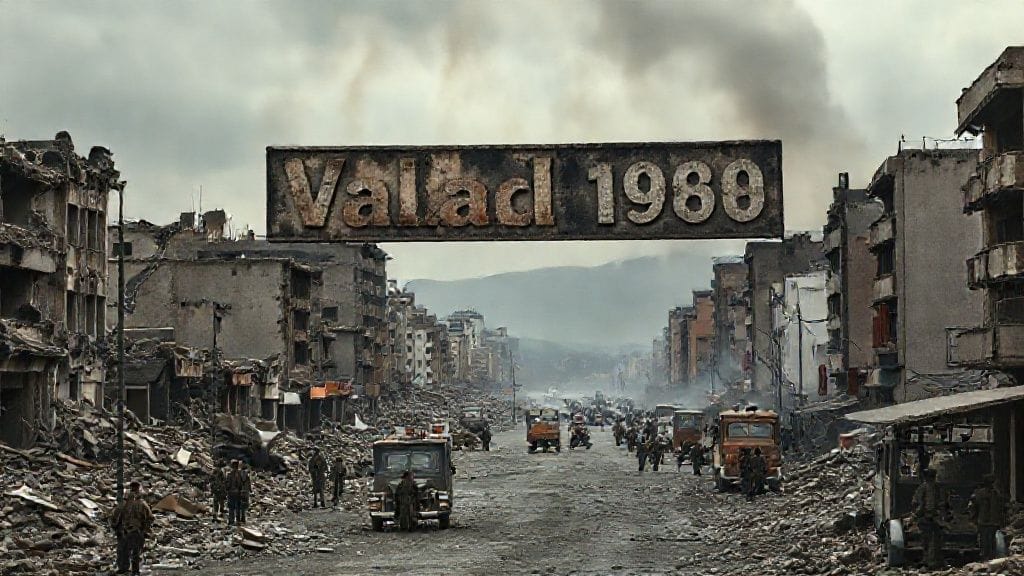
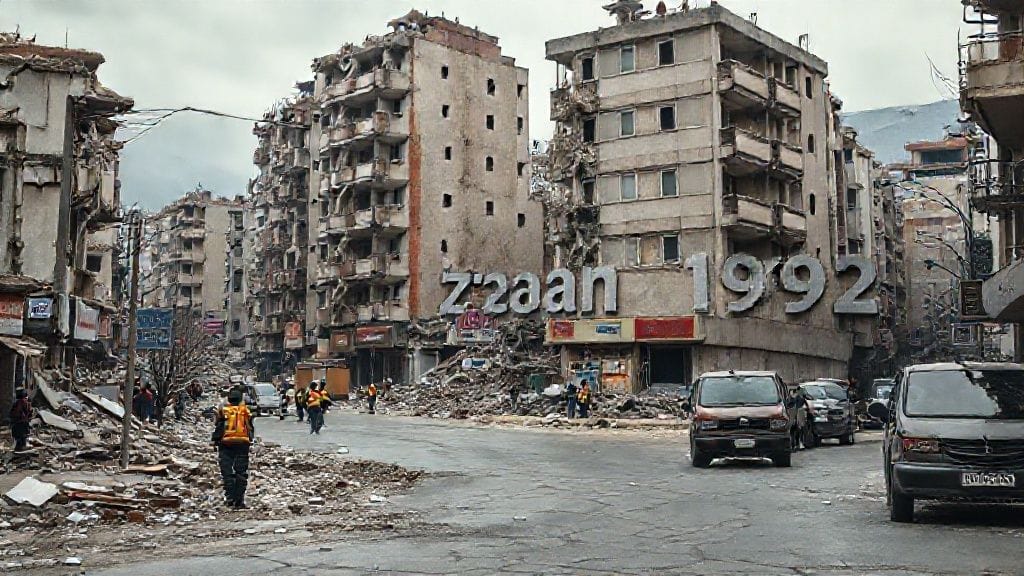
On the cold pre-dawn morning of March 13, 1992, a deafening roar ripped through the stillness enveloping eastern Turkey. The ground beneath Erzincan, a city long acquainted with the tremors of an unforgiving earth, convulsed with devastating intensity. Walls crumbled with a terrible inevitability, families were ripped from their beds, and a century-old nightmare returned with renewed ferocity. In just seconds, the landscape and lives were irrevocably changed. This was the Erzincan earthquake of 1992.
1. A Fractured Dawn: The Early Hours of the Erzincan Earthquake
Imagine a city slowly stirring to life against the backdrop of early spring, its streets quiet and drizzle coating tiled roofs. Then, without warning, the earth’s brutal shift shattered that fragile calm. At precisely 3:27 a.m., the ground gave way in a violent convulsion that would last nearly 20 seconds but reverberate through time. Residents recall the sensation not just as shaking, but as a powerful grasp of death itself — windows shattered, buildings swayed and snapped, and an overwhelming cloud of dust engulfed homes. Children, elderly, and workers had no chance to prepare. The city’s rhythm abruptly ceased.
2. The Perilous Geography of Eastern Anatolia
Erzincan sits perched at the convergence of some of the Earth’s most volatile tectonic forces. Eastern Anatolia is crisscrossed by fault lines where the Eurasian, Arabian, and African plates collide and grind. This collision has forged a landscape that is as geologically fascinating as it is dangerous. The East Anatolian Fault, a strike-slip fault that snakes through the region, has nurtured a legacy of destruction that can be traced through centuries.
3. The Long Shadow of Seismic History in Erzincan
Erzincan’s fraught relationship with earthquakes is storied and harrowing. The city was the site of one of the deadliest earthquakes in Turkish history in 1939, an event that claimed tens of thousands of lives and razed the urban landscape. That historical trauma lingered—like a specter over every stone and street. The 1992 quake reignited memories of that catastrophe, plunging the population back into a collective nightmare and forcing reflection on how lessons had or had not been learned.
4. Tectonic Titans: Understanding the East Anatolian Fault
The Earth’s tectonic ballet in eastern Turkey is dominated by the East Anatolian Fault, a major strike-slip fault stretching over 700 kilometers. It functions much like the San Andreas Fault in California, with plates sliding past each other horizontally, storing immense stress over time. When this stress releases suddenly, the results can be catastrophic. The 1992 Erzincan earthquake was a direct consequence of the accumulated geological pressures along this fault.
5. The Chain Reaction: From Fault to Fury
At approximately 3:27 a.m. local time, tension along the fault line snapped dramatically at a depth of roughly 10 kilometers, unleashing energy equivalent to 6.8 on the moment magnitude scale. The rupture propagated rapidly along the fault, with aftershocks ripple-effecting the region for days. This sudden release of subterranean pressures triggered a cascade of collapses, fires, and infrastructure failures that compounded the initial destruction.
6. The City on the Brink: Erzincan’s Urban Fabric before the Quake
Before the quake, Erzincan was a modestly sized city, a commercial hub with a historic core layered with Ottoman and early Republican architecture. Many buildings, however, were constructed without rigorous adherence to modern seismic building codes, a reality common in many Turkish cities at the time. The older masonry buildings, some still bearing scars from earlier quakes, were particularly vulnerable.
7. Alarm Bells Ignored: The State of Earthquake Preparedness in 1992
Despite Turkey’s seismic volatility, the 1992 earthquake exposed glaring shortcomings in disaster preparedness and urban planning. While scientific communities had long warned of the inevitability of a major quake along the East Anatolian fault, enforcement of building standards was inconsistent. Emergency response mechanisms existed but were fragmented and underfunded, revealing a paradox where knowledge and political will were misaligned.
8. At 3:27 AM: The Land Shook and Lives Changed Forever
The exact moment the earthquake struck was chaos unleashed. Homes buckled, entire neighborhoods were swallowed by fissures, and people woke up to a world abruptly transformed. Stories emerged of families trapped beneath rubble, frantic whispers shared in dark basements, and heroic rescues that saved lives even as despair loomed. For some, the quake was a swift and merciless eraser of the familiar.
9. Immediate Aftershocks: Panic, Destruction, and Human Stories
In the minutes and hours following the mainshock, aftershocks continued to rattle Erzincan, preventing rest or recovery. Panic gripped the populace as people scrambled out into the streets, fearing further collapses. Emergency services, overwhelmed by the scale of destruction, could only focus on triage, while community members banded together, often improvising solutions amidst the ruins.
10. Emergency Response: Local Efforts and National Mobilization
Local emergency units were the first on scene, displaying heroic determination despite limited resources. Soon after, Turkish authorities mobilized military contingents, search-and-rescue teams, and medical units to assist. Yet logistical challenges, damaged infrastructure, and the scale of devastation slowed initial response, underscoring the immense difficulties faced in crisis management in such disasters.
11. International Aid and the Politics of Disaster Assistance
Global response to the Erzincan earthquake was swift but complex. Neighboring countries, international NGOs, and seismic experts offered assistance, from medical supplies to specialized equipment. However, geopolitical realities influenced the extent and nature of aid acceptance. Turkey’s relations with neighboring states and international donors shaped the flow of resources, reminding all that disaster response is often as political as it is humanitarian.
12. Counting the Cost: Casualties, Damage, and Economic Impact
The 1992 Erzincan earthquake resulted in over 500 deaths, thousands injured, and tens of thousands displaced. Economic losses were staggering—the city’s infrastructure, homes, schools, and roads suffered extensive damage, with estimates running into hundreds of millions of dollars. The impact rippled outwards, disrupting commerce and livelihoods across the region, and accelerating urban migration as people sought stability elsewhere.
13. The Resilience of Survivors Amid Ruins
Amid the wreckage, stories of resilience emerged that testified to human endurance. Survivors rebuilt their lives with tenacity, communities organized to share resources, and cultural traditions offered solace. These narratives remind us that beyond statistics and damage reports are countless individual sagas of loss, survival, and hope.
14. Scientific Breakthroughs Prompted by the Erzincan Earthquake
The 1992 earthquake provided valuable data that advanced seismological understanding. Scientists studied the rupture mechanics, aftershock sequences, and soil liquefaction effects, gaining insights critical to seismic hazard assessment. This tragedy thus contributed to a body of knowledge aimed at reducing future quake risks, both in Turkey and globally.
15. Rebuilding Hope: Urban Reconstruction and Policy Reform
In the years following the quake, Erzincan underwent extensive reconstruction. This process was not merely physical but institutional—Turkey introduced stricter building codes, enhanced urban planning, and established more robust emergency response frameworks. Erzincan became a case study in how disaster can catalyze reform and modernization.
16. The Cultural Memory: Erzincan in Literature, Art, and Collective Memory
The earthquake left an indelible imprint on Turkish cultural consciousness. Poems, novels, songs, and visual art have commemorated the disaster, not simply recounting destruction but exploring themes of loss, resilience, and the fragility of human existence. Annual memorial ceremonies continue to honor those lost and remind new generations of the city’s enduring spirit.
17. Lessons Learned: The Quake’s Enduring Influence on Turkey’s Disaster Management
Erzincan’s tragedy underscored the necessity of preparedness. It influenced national policy: the establishment of Turkey’s Disaster and Emergency Management Authority (AFAD) decades later owes much to lessons from quakes like Erzincan’s. The earthquake served as a catalyst for integrating scientific research, policy-making, and public education.
18. Comparing Erzincan 1992: Echoes in Later Earthquakes
Subsequent Turkish earthquakes, including those in 1999 (Izmit and Düzce) and later in 2011 and 2020, have echoed patterns first seen in Erzincan — both in destruction and in the social and political reactions they provoked. Each event is layered upon the last, creating a complex narrative about a nation's ongoing confrontation with seismic vulnerability.
19. Personal Narratives: Voices from the Rubble
Survivor testimonials provide a human face to the disaster: a father recounting the rescue of his children from collapsing rubble; a nurse operating in overwhelmed hospitals; a prosthetist crafting limbs for earthquake victims. These voices offer intimate perspectives that statistics alone cannot convey.
20. The 1992 Erzincan Earthquake in the Global Context of Seismic Disasters
Worldwide, the Erzincan earthquake represents one of many tragic reminders of the stakes of living along fault lines. Comparing it to other quakes—from Mexico City 1985 to Kobe 1995—highlights both universal challenges and unique regional vulnerabilities. It serves as a cautionary tale and a source of shared knowledge for global earthquake preparedness.
21. Technology and Preparedness: Advances Since 1992
Since Erzincan, Turkey has embraced advances in seismic monitoring, early warning systems, and building technologies. New materials, construction techniques, and urban planning approaches aim to mitigate disaster impact, but challenges remain, particularly in balancing rapid urban growth with safety standards.
22. The Human Cost Beyond Numbers: Psychological and Social Effects
Beyond physical destruction, earthquakes deeply scar communities emotionally and psychologically. Survivors suffer trauma, grief, and a sense of displacement. Mental health services have gradually become integrated into disaster response, acknowledging these invisible wounds.
23. Erzincan Today: A City Reborn, But Never Forgotten
Today, Erzincan stands rebuilt but not untouched by history. Modern architecture coexists with reminders of loss; museums and memorials ensure collective memory endures. The city’s resilience is palpable—a testament to the enduring spirit of its people.
24. Conclusion: The Lasting Tremors of March 13, 1992
The Erzincan earthquake of 1992 was more than a geological event: it was a crucible that tested human endurance, institutional capacity, and collective memory. It exposed vulnerabilities and spurred transformation. Its legacy continues to resonate, urging a vigilant respect for nature’s power and a relentless pursuit of preparedness and resilience.
Conclusion
The night Erzincan trembled was a night when the earth’s raw power met human vulnerability. Thousands were lost, landscapes altered—yet from the ruins arose stories of hope, resilience, and profound lessons. It is through the prism of Erzincan that we appreciate the delicate balance between human settlement and the restless earth we inhabit. The earthquake did not just reshape a city; it shaped a nation’s approach to risk, memory, and survival. As we reflect on that fateful day of March 13, 1992, we witness the enduring human spirit’s capacity to rebuild, remember, and prepare—for in the tremors of the past lie the whispers of the future.
FAQs About the Erzincan Earthquake
Q1: What caused the Erzincan earthquake of 1992?
The earthquake was caused by a sudden rupture along the East Anatolian Fault, a strike-slip fault that marks the tectonic boundary between the Anatolian Plate and the Arabian Plate. The built-up stress released at 3:27 a.m. led to the 6.8 magnitude quake.
Q2: How devastating was the earthquake in terms of human impact?
Over 500 people lost their lives, thousands were injured, and tens of thousands were rendered homeless. The physical destruction was extensive, impacting infrastructure, homes, schools, and hospitals.
Q3: Was Erzincan prepared for such a disaster?
While Turkey was aware of seismic risks, the level of preparedness and enforcement of building codes in Erzincan was insufficient, contributing to the scale of destruction.
Q4: How did the government and community respond in the aftermath?
Local emergency services responded immediately, followed by national military and rescue teams. Communities mobilized to aid survivors, and international organizations also provided assistance.
Q5: What were the long-term effects of the earthquake on Erzincan?
The city underwent extensive reconstruction, adopting stricter building codes and disaster management policies. Socially and culturally, the event became a key part of Erzincan’s identity and collective memory.
Q6: Did the earthquake lead to scientific or policy changes in Turkey?
Yes, it spurred advancements in seismic research, early warning systems, and the eventual formation of coordinated disaster management authorities.
Q7: How is the Erzincan earthquake remembered today?
Through annual memorials, cultural productions, museums, and urban landmarks, Erzincan preserves the memory of the quake and honors victims and survivors.
Q8: Are similar earthquakes still a threat to the region?
Yes, eastern Turkey remains seismically active due to tectonic dynamics; ongoing monitoring and preparedness are essential.