Table of Contents
- The Fiery Awakening: Etna’s Eruption of 2002–2003
- Ancient Flames Beneath a Modern World
- Sicily’s Volcanic Giant: A Sleeping Titan
- The Precursors: Signs Before the Fury
- October 2002: When Earth Trembled and Lava Flowed
- The First Spew: Spectacle and Scare
- Mount Etna’s Fiery Dance: A Chronology of Flames
- Communities on Edge: Lives Touched by Fire
- Scientists in the Eye of the Storm: Monitoring the Unpredictable
- The Cultural Bond: Etna in Sicilian Identity
- Economic Ripples: Agriculture, Tourism, and Reconstruction
- Environmental Impact: The Scars and Renewal of the Land
- Volcanic Glow by Night: The Artistic Impressions
- Government Response and Civil Protection Efforts
- Lessons from the Rift: Advances in Volcanology
- The Human Stories: Courage and Resilience
- The Final Outbursts: How the Eruption Faded Away
- Legacy of Flames: Etna’s Role in Global Volcanic Awareness
- Remembering 2002–2003: Memorials and Memories
- The Future Under Etna’s Shadow: Preparedness and Hope
The Fiery Awakening: Etna’s Eruption of 2002–2003
————————————————–
On a cool autumn evening of late 2002, the skies above Sicily were rent by brilliant sheets of red and orange flames, bewitching yet terrifying to those who witnessed. Mount Etna, Europe’s most active volcano, was stirring once more. Streams of molten lava began snaking down its slopes, illuminating the night with a glowing menace that seemed almost primordial. For months, a hypnotic spectacle unfolded against the rugged Sicilian landscape—a violent reminder of Earth’s restless heart beneath its serene surface.
The eruption that spanned from October 2002 into mid-2003 was not Etna’s largest in history, yet it was among the most visible and studied in recent times, a convergence of natural power and modern science. It shook local communities, captivated volcanologists worldwide, and left a vivid chapter in the story of one of the world's most iconic mountains. From the roar of earth and sky to the quiet resilience of Sicilian villagers, this fiery episode was more than a geological event—it was a profound human drama set in motion by forces as old as the planet itself.
Ancient Flames Beneath a Modern World
————————————-
Mount Etna stands as a monumental reminder of the interface between human life and raw nature’s power. This stratovolcano has been erupting for more than 500,000 years, shaping Sicilian landscapes and history alike. Situated on the east coast of Sicily, near the city of Catania, Etna’s eruptions have long influenced settlement patterns, agriculture, art, and mythology.
Sicily, a crossroads of civilizations – Greek, Roman, Arab, Norman – has heard Etna’s wrath through centuries. Documented eruptions date back to antiquity, making Etna both a source of fear and fertility. The volcanic soils nurtured vineyards, olive groves, and wheat fields, creating wealth amid potential devastation. The people here have learned to live with Etna’s temper, honoring it in folklore and daily life while preparing for its destructive eruptions.
Sicily’s Volcanic Giant: A Sleeping Titan
—————————————–
Etna’s geological identity is forged by its unique position at the convergence of African and Eurasian tectonic plates. Beneath its summit lies a complex plumbing system where magma ascends from deep within the Earth. This system feeds the frequent eruptions that characterize Etna and sustain its broad, growing form.
By 2002, Etna had recently experienced a series of eruptions, the latest significant event occurring in 1999–2000. Volcanologists closely monitored signs of unrest in the form of seismic activity and gas emissions. Mount Etna’s reputation as a restless but somewhat predictable volcano made the scientific community attuned to what might be coming. Yet, even with these precautions, the eruption to come was to cast a wide net of awe and uncertainty.
The Precursors: Signs Before the Fury
————————————-
Summer 2002 was marked by subtle geophysical signals—earthquakes deep beneath Etna intensified, and fumaroles on the summit emitted sulfurous clouds with increased vigor. Seismic networks recorded swarms of tremors, a linguistic code hinting at the magma’s slow migration upward.
Local townsfolk and scientists alike noticed a change in the landscape’s mood, as if the mountain itself was hoarding a breath to release. Satellite thermal images detected temperature anomalies, and gas monitoring stations registered spikes in carbon dioxide and sulfur dioxide levels, reliable indicators of volcanic agitation.
Despite this, the first official eruption was still days away, a reminder of nature’s inscrutable timetable.
October 2002: When Earth Trembled and Lava Flowed
————————————————-
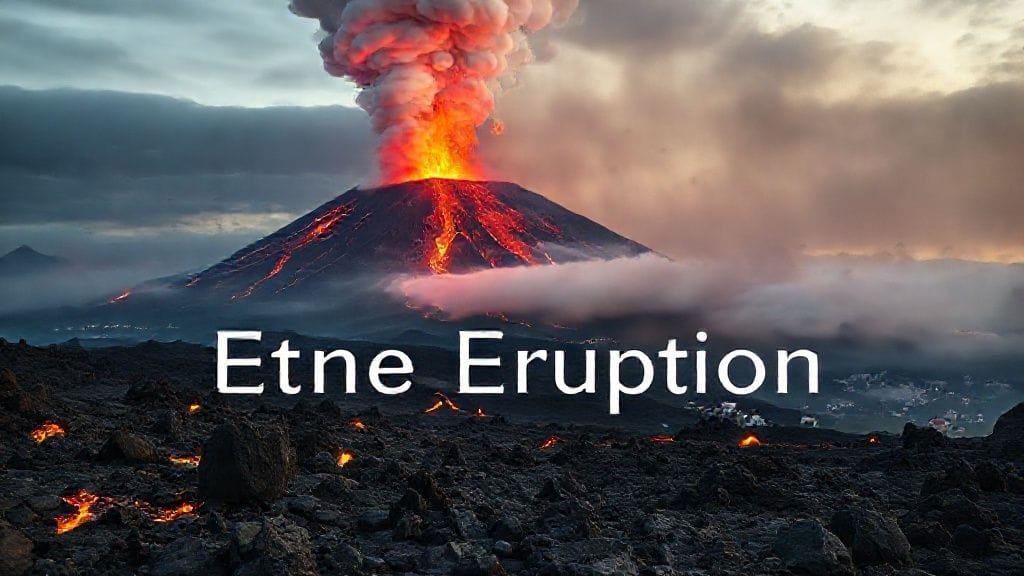
On the night of October 27, 2002, Etna erupted dramatically along its east flank. A fissure opened near the old South-East Crater at around 2000 meters altitude, shooting columns of ash and pyroclasts high into the sky. Lava fountains soared up to 600 meters, with incandescent fragments raining down upon rocky slopes.
The initial surge took the region by surprise, though residents had been bracing for some time. The lava flowed swiftly but predictably, branching into multiple streams that carved new paths amid the old scars of previous eruptions. The town of Zafferana Etnea, perched on the volcano’s slope, was placed on high alert.
The First Spew: Spectacle and Scare
———————————–
Night after night, Etna’s glow painted the Sicilian sky with strokes of fiery orange and red – a surreal and mesmerizing sight that drew photographers, scientists, and tourists in equal measure. The eruption, while spectacular, posed imminent threats.
Winds carried ash clouds over inhabited areas, darkening skies and choking airways. Lava threatened roads vital for evacuation and emergency services. The authorities coordinated closely with the Italian Civil Protection Department, setting up exclusion zones and preparing sandbag barriers to divert lava flows where possible.
Mount Etna’s Fiery Dance: A Chronology of Flames
————————————————
Over the following months, the eruption followed an intricate choreography. Periods of intense lava effusion alternated with quieter intervals, punctuated by secondary explosions and ash emissions.
In November and December 2002, lava flows advanced primarily to the east and southeast, melting snowfields that contributed to floods and mudslides. Scattered seismic tremors kept communities on edge, and scientists documented new vents and cracks that altered Etna’s summit landscape.
The volcano’s summit underwent noticeable transformation, with the growth and collapse of new cones. Meanwhile, continuous ash plumes interfered with local air traffic, grounding flights and disrupting commerce.
Communities on Edge: Lives Touched by Fire
—————————————–
For Sicilians living in the volcano’s shadow, these months were a test of endurance and unity. The towns of Zafferana Etnea, Milo, and others near the lava flow’s path prepared for evacuations repeatedly, packing belongings, safeguarding livestock, and watching as their ancestral lands were reshaped.
Families reported the constant tension between awe at the spectacle and fear for their homes. One resident recounted, “We felt the ground moving under our feet, and the sky was a river of fire. It was beautiful and terrifying — like living at the edge of the world.”
Local governments coordinated aid, and volunteer groups provided assistance. Schools held classes on volcanic safety, turning education into an act of community resilience.
Scientists in the Eye of the Storm: Monitoring the Unpredictable
—————————————————————
The 2002–2003 eruption became a prime opportunity for volcanologists equipped with the latest technology. Seismic arrays, GPS measurements, gas analyzers, and thermal cameras collectively formed a detailed narrative of Etna’s behavior.
Italian National Institute of Geophysics and Volcanology researchers confronted the challenge of predicting lava flow paths and eruption intensity. Their work advanced understanding of magma movement and eruption precursors.
As one volcanologist noted, “Etna teaches us humility. Every eruption is a puzzle, demanding observation, patience, and respect.”
The Cultural Bond: Etna in Sicilian Identity
——————————————–
Etna is not just a geological landmark; it is a cultural symbol woven into Sicilian identity. The eruption of 2002–2003 rekindled folk memories, songs, and art that treated the volcano as a divine force, both protector and punisher.
Local festivals and oral histories recall past eruptions, and this contemporary event inspired new expressions in literature and painting. The duality of creation and destruction inherent in volcanic activity resonates deeply with Sicilians, who greet Etna’s fires with no small measure of reverence.
Economic Ripples: Agriculture, Tourism, and Reconstruction
———————————————————–
While the volcanic soils enrich harvests in the long term, the eruption exacted an immediate economic toll. Vineyards and citrus orchards suffered from ash falls; roads were blocked, limiting trade and tourism.
Catania’s economy trembled alongside the mountain. Yet, paradoxically, the eruption drew scientific visitors and adventurous tourists eager for spectacle, balancing loss with gain.
Emergency funds were allocated for infrastructure repair, and agronomists worked with farmers to mitigate crop damage. This blend of hardship and opportunity underscored the complex interplay between nature’s fury and human enterprise.
Environmental Impact: The Scars and Renewal of the Land
——————————————————-
The eruption’s environmental footprint was multifaceted. Lava flows reshaped the terrain, sealing old forest patches and creating new geological formations. Ash deposits enriched soils but temporarily smothered vegetation.
Flooding of melted snow accelerated erosion, altering waterways and sediment patterns. Wildlife displaced by the eruption gradually returned as new ecosystems found footing amid volcanic rock.
Nature’s resilience was on full display, offering hope that even destruction births renewal—a timeless cycle echoed in Sicily’s rugged landscape.
Volcanic Glow by Night: The Artistic Impressions
————————————————
Photographers and painters captured the eerie beauty of Etna’s nighttime glow, where the incandescent lava contrasted sharply with star-filled skies. These images circulated worldwide, binding distant viewers emotionally to the eruption.
Local artists drew inspiration from the eruption’s drama, channeling the volcanic force into their creative works, which ranged from evocative paintings to poignant poetry. This outpouring showed how humanity seeks to process—and even celebrate—catastrophe through art.
Government Response and Civil Protection Efforts
————————————————
Italian authorities’s response was swift and coordinated. The Civil Protection Department activated emergency protocols, disseminating timely warnings and organizing evacuations.
Civil engineers reinforced safety barriers and monitored critical infrastructure. Communication with residents was maintained through daily briefings and community meetings.
Though the eruption challenged logistical capabilities, the lessons learned shaped future disaster preparedness in volcanic regions worldwide, proving the value of coordinated human response to natural threats.
Lessons from the Rift: Advances in Volcanology
———————————————-
The eruption provided invaluable data that refined volcanic risk assessment. Scientists improved predictive models relating seismic swarms, gas emission rates, and magma movement to eruption likelihood.
Innovations in remote sensing and real-time monitoring emerged, equipping volcanologists with better tools to foresee eruptions and advise authorities. The 2002–2003 episode is now a reference point in academic literature and operational volcanology.
The Human Stories: Courage and Resilience
—————————————–
Beyond the scientific and economic scope, the eruption revealed touching human narratives. Stories of families who rebuilt homes, rescue workers who risked their lives, and communities who gathered to support each other punctuated the grim reality of destruction.
One anecdote tells of a shepherd who led his flock away from advancing lava, using years of knowledge of mountain paths to avoid danger. Such personal testimonies add warmth to the cold statistics of eruptions, reminding us of the enduring spirit of those living in the shadow of fire.
The Final Outbursts: How the Eruption Faded Away
———————————————–
By mid-2003, eruptive activity diminished gradually. Lava flows slowed and ceased; ash plumes thinned and disappeared. Etna returned to a quieter state, emitting occasional fumaroles but no longer threatening the surrounding communities.
Scientists continued to monitor the volcano vigilantly, aware that Etna’s rest was only temporary. The cessation was met with relief but tempered by respect for the mountain’s inexhaustible energy.
Legacy of Flames: Etna’s Role in Global Volcanic Awareness
———————————————————-
This eruption reaffirmed Mount Etna’s status as a natural laboratory and symbol. It prompted international collaboration in volcanic research and enhanced public awareness of volcanic hazards.
The event underscored the importance of communication between scientists, governments, and citizens in mitigating disaster impacts. In a world increasingly vulnerable to natural disasters, Etna’s eruption became a teaching moment.
Remembering 2002–2003: Memorials and Memories
———————————————-
Commemorations in Sicily remember the lives disrupted and lessons learned. Museums in Catania display artifacts and multimedia accounts; schools incorporate the eruption’s history into curricula.
Annual events honor the resilience shown by people and the awe inspired by the natural spectacle. These acts of remembrance keep the story alive, ensuring future generations understand the bond between Sicilians and Etna’s fiery heart.
The Future Under Etna’s Shadow: Preparedness and Hope
——————————————————
Living with Etna means embracing uncertainty but also mastering preparedness. Advances inspired by the 2002–2003 eruption have equipped Sicily better than ever to face future volcanic threats.
Communities remain vigilant; science continues probing beneath the mountain; government plans evolve. The legacy of that fiery season is one of respect, learning, and hope—a reminder that from destruction can emerge renewed strength.
Conclusion
The 2002–2003 eruption of Mount Etna was more than the discharge of molten rock and ash into the Sicilian sky—it was a profound encounter between humanity and Earth’s elemental forces. This volcanic episode unfolded as a vivid saga of nature’s grandeur and fragility, of fears confronted and bonds forged.
Through the lens of that eruption, we glimpse resilience writ large—of communities bravely enduring, scientists pushing the limits of understanding, and cultures embracing a powerful symbol that is as terrifying as it is life-giving. Etna’s fire blazed a story that continues to inspire respect for our planet’s volatile heart and the indomitable spirit of those who dwell in its heat.
FAQs
Q1: What caused the 2002–2003 eruption of Mount Etna?
The eruption resulted from magma rising through fractures due to tectonic pressure at the boundary of the African and Eurasian plates. Increased seismic activity and gas emissions indicated magma movement before the eruption.
Q2: How did the eruption affect local communities?
Communities near the eruption faced evacuations, ash fall, damage to agriculture, and disrupted infrastructure. Despite these challenges, there was significant solidarity and effective civil protection responses.
Q3: Were there any casualties during the eruption?
Fortunately, no fatalities were reported during the 2002–2003 eruption, thanks to timely warnings, evacuations, and coordinated emergency responses.
Q4: What scientific advances came from studying this eruption?
Scientists gained improved understanding of eruption precursors, refined monitoring techniques, and developed better risk prediction models that have enhanced volcanic hazard management globally.
Q5: How is Mount Etna culturally significant to Sicilians?
Mount Etna is central to Sicilian identity, featuring in local folklore, art, and religion, symbolizing both destruction and fertility. The eruption reignited traditions that honor and respect the volcano’s power.
Q6: What environmental impacts did the eruption have?
Besides immediate destruction, the eruption enriched soils with volcanic material, altered local ecosystems, and triggered natural cycles of destruction and regrowth in the landscape.
Q7: How did authorities manage the crisis?
The Italian Civil Protection Department implemented evacuations, hazard monitoring, and infrastructure safeguards. Coordination with scientists and local governments was critical to minimizing harm.
Q8: Is Mount Etna still active today?
Yes, Etna remains one of the world’s most active volcanoes, continually monitored for signs of eruptions to protect surrounding populations.

