Table of Contents
- The Dawn Breaks Over Petrograd: A City on the Brink
- The Tsarist Regime’s Fragile Grip
- War and Woes: The Deadly Cost of World War I
- The Smokestacks Stumble: Economic Collapse and Starvation
- Voices of Dissent: Workers, Soldiers, and Women Unite
- The Spark on International Women’s Day: March 8, 1917
- The Streets Erupt: From Strikes to Mass Protests
- The Breakdown of Authority: Police and Soldiers Hesitate
- The Power Vacuum: Dual Power and the Rise of Soviets
- Nicholas II’s Fateful Decisions: From Indecision to Abdication
- The Role of the Duma and Provisional Government’s Emergence
- The Unexpected Heroes: Women and Soldiers on the Front Line of Revolution
- Petrograd’s Winter of Discontent and Hope
- The Role of Lenin and Bolshevik Factions: Seeds of Future Struggles
- The End of an Era: The Fall of the Romanov Dynasty
- Consequences for Russia: Political Turmoil and Civil War Loom
- The Global Shockwaves: How the February Revolution Altered World History
- Cultural and Social Reverberations: Art, Literature, and Memory
- Human Stories from the Streets: Personal Accounts and Diaries
- February 1917 in Retrospect: Lessons and Legacy
- Conclusion: The Collapse that Shaped the Century
- FAQs about the February Revolution
- External Resource
- Internal Link
The Dawn Breaks Over Petrograd: A City on the Brink
It was a bitter March morning in 1917, but Petrograd, the heart of the Russian Empire, was shivering with more than just cold. The air was saturated with a tense fury, the bitter frost seeping through ragged coats and cracked hands. In factories, on the streets, and in the barracks, whispers had turned to shouts. The winter had starved the city; the war had drained its lifeblood. Something was about to explode.
The February Revolution—though remembered by the old Julian calendar date, it took place in March—had begun not with a bang but with a fragile, collective breath. Women demanding bread marched, their voices swelling from city squares to the imperial palaces. Soldiers, once loyal pillars of the Tsar’s might, hesitated and fractured in loyalty. The shadows of the Romanov dynasty grew faint as Petrograd stood on the edge of oblivion and rebirth.
The Tsarist Regime’s Fragile Grip
For over three centuries, the Romanov family had ruled Russia with an iron hand. Nicholas II, the last Tsar, was a man trapped between autocracy and the modernizing tides sweeping Europe. His belief in divine right and unwavering commitment to preserving the monarchy left him blind to the growing unrest among his subjects.
Bureaucratic corruption, crushing poverty, and political repression bred deep resentment. Revolutionaries had long been simmering below the surface — the Social Democrats, the Mensheviks, the Bolsheviks, and various anarchist groups. Yet, until 1917, the Tsar maintained a careful balance, supported by the secret police and loyal military.
But war was straining that fragile grip. Russia’s defeat after defeat at the front, combined with internal chaos, was eroding the foundations of imperial Russia.
War and Woes: The Deadly Cost of World War I
World War I was meant to unite and invigorate the Russian people behind their Tsar. Instead, it accelerated their destruction. The war exposed the weaknesses of Russia’s military and economy. Russian soldiers faced horrific conditions, poor leadership, and insufficient supplies. More than 1.8 million were killed by 1917, and morale was at rock bottom.
Back home, shortages of food and fuel became unbearable. Transportation networks faltered; factories failed to deliver munitions or clothes. Inflation skyrocketed, leaving the masses hungry and desperate. Every day became a battle for survival, not on the frontlines, but in the streets of Petrograd.
The Smokestacks Stumble: Economic Collapse and Starvation
Petrograd was Russia’s industrial center, but by early 1917, many factories had ground to a halt. Workers’ wages were worthless against soaring prices. Unemployment soared. Starvation permeated slums and tenements, while the aristocracy still enjoyed opulent banquets behind palace walls.
Bread lines stretched for blocks; rumors spread of sinister plots and betrayals. The city’s pulse quickened under the weight of despair and anger. This was no longer simple discontent—it was an open wound ready to fester.
Voices of Dissent: Workers, Soldiers, and Women Unite
The revolution was not the act of a singular group, but a tidal wave of overlapping frustrations. Workers, long organized in trade unions and political circles, began spontaneous strikes demanding better conditions and food.
Significantly, women—many of whom worked in textiles and factories—rose to the forefront. They bore the brunt of starvation and loss, having to feed children and care for families while the men were drafted to the front. Their courage would ignite a movement greater than anyone anticipated.
Meanwhile, soldiers stationed in the city, exhausted and war-weary, increasingly sympathized with civilian unrest. Their ranks became divided between loyalty to the Tsar and allegiance to their suffering compatriots.
The Spark on International Women’s Day: March 8, 1917
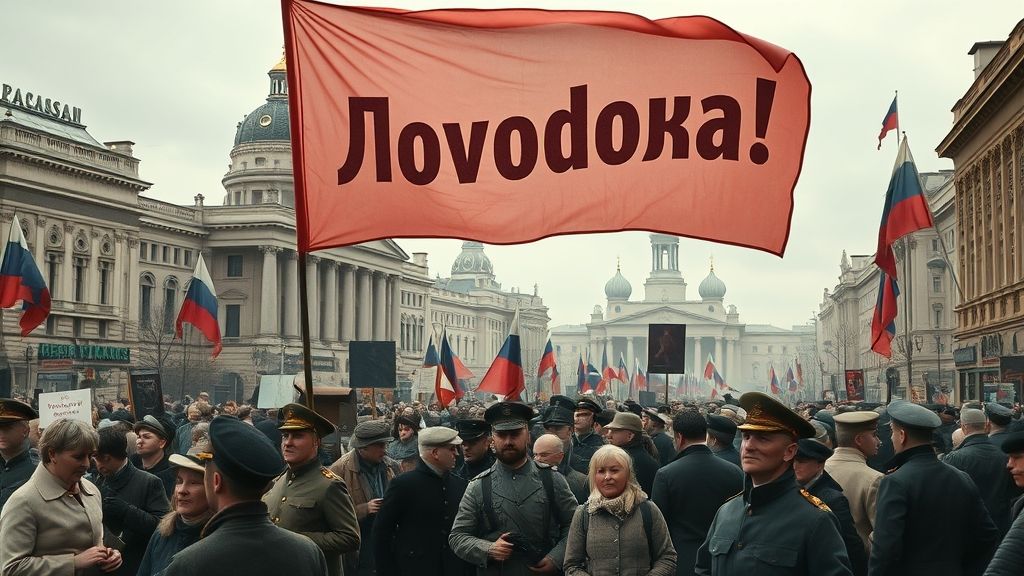
On the icy morning marking International Women’s Day, tens of thousands of women took to the streets of Petrograd. Holding banners and chanting slogans, their initial demand was simple yet profound: bread.
This march was no ordinary protest. It quickly swelled as striking textile workers and disillusioned men joined. The city’s heartbeat quickened into a roar as factories shut down, streets filled with banners, and police struggled to maintain order.
The slogans went beyond bread: calls for peace, freedom, and the end of autocracy rippled through the crowd. The government’s failure to address even basic needs had fractured the very foundation of imperial authority.
The Streets Erupt: From Strikes to Mass Protests
Between March 8th and 12th, Petrograd was transformed. What had been isolated protests mushroomed into mass demonstrations numbering over 200,000 people. Workers took control of factories; soldiers mutinied instead of firing on crowds.
Police forces found themselves overwhelmed and increasingly deserting their posts. Barricades rose as courage replaced fear—ordinary citizens stood side by side to demand radical change.
The city's sense of normalcy shattered with each passing day, replaced by a charged atmosphere vibrating with revolutionary zeal.
The Breakdown of Authority: Police and Soldiers Hesitate
Faced with a surging population united against them, many security forces questioned their allegiances. Police units surrendered arms rather than shoot their countrymen. Military units in Petrograd were torn: some remained loyal, but many defected or refused orders.
When the Petrograd garrison declared mutiny, the tide decisively shifted. Without armed enforcers to crush dissent, the Tsarist regime crumbled from within.
The famed phrase of the revolution emerged: “We won’t shoot at our own people.” The loyalty that had kept the empire intact was evaporating beneath Nicholas II’s bewildered gaze.
The Power Vacuum: Dual Power and the Rise of Soviets
With the Tsar’s authority effectively null, two centers of power emerged: the Provisional Government, formed from members of the dissolving Duma, and the Petrograd Soviet, representing workers and soldiers.
This “dual power” structure created confusion and competition. The Provisional Government sought order and continuation of the war; the Soviets pressed for socialist reforms and peace.
This uneasy coexistence would mark Russia’s turbulent months ahead—holding the revolution in balance, not quite secure, not yet transformed.
Nicholas II’s Fateful Decisions: From Indecision to Abdication
Despite furious telegrams and desperate pleas, Nicholas II remained isolated in his palace. Calls for reform were dismissed; the Tsar retreated from his advisors and refused to act decisively.
On March 15, 1917 (Julian calendar), faced with mounting pressure and betrayal from his generals and ministers, Nicholas II abdicated the throne. The Romanov dynasty, which had ruled for 304 years, collapsed in a single, shattering moment.
This abdication was both a personal tragedy and the death knell of imperial Russia, sending shockwaves throughout the nation.
The Role of the Duma and Provisional Government’s Emergence
In the wake of abdication, the State Duma stepped in to fill the void. Moderates and liberals came together to form the Provisional Government, promising democratic reforms and civil liberties.
Yet, their hold on power was precarious. Tasked with continuing the war and maintaining order, they often alienated the masses who demanded peace and social justice.
The Provisional Government’s inability to address urgent problems paved the way for radical factions to gain influence.
The Unexpected Heroes: Women and Soldiers on the Front Line of Revolution
The February Revolution is remembered not only for politicians but for the courage of ordinary women and soldiers. Women, many of them factory workers, stepped out of the shadows, organizing and leading protests.
Soldiers, once instruments of oppression, became icons of change by refusing orders and siding with revolutionaries. Their mutiny was a decisive blow to the Tsarist regime’s coercive power.
This unity between workers, women, and soldiers was unprecedented, signaling a new social order in the making.
Petrograd’s Winter of Discontent and Hope
As the old year ended and the new began, Petrograd found itself caught between despair and hope. The suffocating cold seemed to symbolize the stasis gripping the city; yet beneath the snow, the flames of revolution grew.
Bread queues and gunfire, telegrams and rallies, tears and cheers—they formed the texture of everyday life. Citizens’ diaries convey the confusion, fear, and yet unshakable desire for change.
The winter was cruel, but it was also a crucible forging revolutionary destiny.
The Role of Lenin and Bolshevik Factions: Seeds of Future Struggles
Although Lenin was absent in exile during the February Revolution, his ideas and those of the Bolsheviks had already permeated Petrograd’s political atmosphere. Lenin’s calls for “All power to the Soviets” and immediate peace would later resonate with a war-weary, impatient populace.
Bolshevik agitation laid the groundwork for both the October Revolution and the eventual rise of Communist power.
The February upheaval was both an end and a beginning—a prelude to even deeper upheaval.
The End of an Era: The Fall of the Romanov Dynasty
The abdication of Nicholas II was more than a political shift; it was the irrevocable end of an era steeped in monarchy, opulence, and repression.
For centuries, the Romanovs had personified Russian identity, but the war and revolution shattered that vision. Trapped between tradition and modernity, their reign ended with bewildered grandeur and tragic loss.
The tsar and his family would soon face imprisonment and tragic death, symbolizing the final breakdown of autocracy.
Consequences for Russia: Political Turmoil and Civil War Loom
The February Revolution unleashed a torrent of change. The Provisional Government’s struggles to restore order, ongoing war, and rising social tensions fueled new conflicts.
Within months, Russia would plunge into civil war between Reds, Whites, and other factions. The social fabric strained, torn between loyalties, ideologies, and dreams.
The revolution’s consequences would ripple through years of violence, famine, and state-building efforts.
The Global Shockwaves: How the February Revolution Altered World History
Far beyond Russia’s borders, the February Revolution sent shockwaves. Allies and enemies alike recalibrated their strategies. Germany, for example, anticipated peace negotiations, hoping to knock Russia out of the war.
Leftist movements worldwide were energized by Russia’s upheaval, and the fall of a centuries-old monarchy inspired debate and fear from London to Paris to Washington.
The geopolitical landscape shifted irreversibly, heralding the rise of new ideologies and the decline of empires.
Cultural and Social Reverberations: Art, Literature, and Memory
The February Revolution left an indelible mark on Russian culture. Artists, writers, and intellectuals grappled with the cataclysmic changes.
From the gritty realism of Mayakovsky’s poetry to the somber reflections of later historians, culture chronicled the hopes and tragedies of this moment.
Memorials and collective memories continue to shape how modern Russia interprets and commemorates its revolutionary past.
Human Stories from the Streets: Personal Accounts and Diaries
Behind the grand historical narratives lie countless individual experiences. Letters from factory workers, diary entries from soldiers, and testimonies of women protesters give life to the revolution’s human core.
One soldier wrote, “I no longer recognize the city I swore to defend. But maybe today, it will become the city we all deserve.”
Another woman recalled, “We marched with nothing but hunger and hope.”
These voices remind us that history is not only about events but the people who lived them.
February 1917 in Retrospect: Lessons and Legacy
Looking back over a century later, the February Revolution remains a study in the fragility of regimes and the power of collective action.
It teaches us about the dangers of unaddressed social grievances, the complexity of political transitions, and the unpredictable nature of revolutionary moments.
The revolution was both a tragic collapse and the dawn of a new, turbulent chapter in humanity’s quest for justice and equality.
Conclusion
The February Revolution of 1917 was a cataclysmic rupture that ended centuries of imperial rule and reshaped Russia—and the world—in ways still felt today. It began with the quiet but resolute footsteps of women demanding bread, gaining momentum through the shared desperation of workers, soldiers, and citizens alike. What followed was not only a fall of a dynasty but the shattering of old structures and the tumultuous birth of a new era.
This was history made raw: fear mixed with hope, brutality tempered by courage, and a people's yearning for dignity pushing an empire toward the precipice. Though many struggles lay ahead, the February Revolution stands as a testament to the transformative power of collective will and the enduring human spirit in the face of injustice.
FAQs about the February Revolution
Q1: What were the main causes of the February Revolution?
The revolution was fueled by a combination of political repression, economic hardship, food shortages, military failures in World War I, and rising dissatisfaction among workers, soldiers, and peasants.
Q2: Who were the key figures involved in the February Revolution?
While Nicholas II was central as the dethroned Tsar, major actors included the members of the Duma who formed the Provisional Government, leaders of the Petrograd Soviet, revolutionary activists, and women protesters who initiated key demonstrations.
Q3: How did World War I contribute to the revolution?
The war exacerbated Russia’s economic weaknesses, caused massive casualties, and created widespread unrest. It exposed the inefficiency and incompetency of the Tsarist regime, leading to loss of support within the military and population.
Q4: What was the Provisional Government and why did it fail to stabilize Russia?
Formed after Nicholas II’s abdication, the Provisional Government was an interim civilian authority. Its decision to continue the war and inability to address land reform and economic crisis eroded its legitimacy and opened the door for further upheaval.
Q5: What was the significance of the Petrograd Soviet during the revolution?
The Soviet represented workers and soldiers, acting as a counterbalance to the Provisional Government. It became a powerful political force advocating for socialist reforms and ultimately setting the stage for the Bolsheviks’ rise.
Q6: How did the February Revolution lead to the October Revolution?
The February Revolution ended the monarchy but failed to resolve key social and political issues. The continuing war and internal conflicts paved the way for the Bolsheviks to seize power in October 1917.
Q7: How is the February Revolution remembered in Russia today?
The revolution is recognized as a pivotal moment in Russian history, though perspectives vary. Soviet-era narratives emphasized it as the start of socialism, while modern views are more nuanced, acknowledging both its upheaval and complexities.
Q8: What lessons can contemporary societies learn from the February Revolution?
It warns of the dangers of ignoring social inequality and political dissent, highlights the unpredictability of popular uprisings, and underscores the importance of responsive and accountable governance.