Table of Contents
- The Winter Chill of 1848: Paris on the Brink
- The July Monarchy in Decline: King Louis-Philippe's Waning Power
- Seeds of Discontent: Social, Economic, and Political Tensions
- The Spark Ignites: Early February Protests Erupt
- Barricades and Bloodshed: The Streets of Paris Become a Battlefield
- The Role of the Working Class and the Bourgeoisie in the Uprising
- The Media and the Power of Revolutionary Print Culture
- February 23, 1848: The Explosion of Street Violence
- The Abdication of Louis-Philippe: The Last Flight from the Throne
- The Formation of the Provisional Government: Faces of Revolution
- The February Revolution’s Immediate Impact on France
- The Birth of the Second Republic: Promise and Peril
- The Role of Key Figures: Lamartine, Louis Blanc, and Ledru-Rollin
- Women in Revolt: The Forgotten Voices of February 1848
- Echoes Beyond France: The 1848 Revolutionary Wave Across Europe
- The Failure and Triumph: Internal Divisions Within the Revolution
- The Long Shadow: How the February Revolution Shaped Modern France
- How the February Revolution Challenged Monarchical Legitimacy
- Cultural Reflections: Art, Literature, and Memory of 1848
- The Revolutions’ Legacy in the Long Nineteenth Century
- Conclusion: Revolution as a Mirror of Society’s Deepest Yearnings
- FAQs: The February Revolution Demystified
- External Resource
- Internal Link
The Winter Chill of 1848: Paris on the Brink
The cold gusts of February 1848 swept mercilessly through the cobbled streets of Paris. Snow mingled with smoke from factory chimneys, smudging the air with a gray pallor that matched the city's malaise. But it was not just the weather that chilled the souls of Parisians; beneath this wintry veil stirred a profound unrest—an unease born of hunger, failed hopes, and political stagnation.
It was in this bleak crucible that the February Revolution would ignite, toppling the July Monarchy and shaking not only the capital of France but reverberating through the continent. The day the lamps dimmed and barricades rose, an age-old drama about liberty, equality, and fraternity was ushered into a tumultuous new act.
The July Monarchy in Decline: King Louis-Philippe's Waning Power
The July Monarchy, born from the whirlwind of the July Revolution of 1830, had promised a liberal constitutional monarchy under the Citizen King, Louis-Philippe. Yet, by 1848, this promise appeared hollow to many.
Louis-Philippe, once the "bourgeois monarch," had become increasingly identified with the interests of the wealthy elite, alienating the working classes and radicals alike. His regime, though stable in outward form, had grown brittle with corruption, censorship, and repression of dissenting voices. The middle class, growing in size and ambitions, demanded greater political representation, while workers faced dire poverty and unemployment.
Seeds of Discontent: Social, Economic, and Political Tensions
The early 1840s in France were marred by a series of crop failures, rising bread prices, and economic crisis that plunged thousands into destitution. Factories laid off workers; artisans saw their livelihoods erode. Paris's working class was squeezed by industrial capitalism’s harsh realities, yet barred from political participation by restricted voting rights that favored property owners.
Politically, the regime had failed to address these social grievances. Banquets, originally apolitical social gatherings, became hotbeds of political debate and revolutionary plotting as figures from across the political spectrum found common cause opposing the monarchy.
The Spark Ignites: Early February Protests Erupt
On February 22, 1848, in defiance of an upcoming ban by the government, opposition groups organized a large banquet at the Maison du Peuple to demonstrate against the king’s regime. The authorities’ attempt to suppress this gathering backfired spectacularly.
What began as peaceful protests quickly escalated as crowds swelled and marched through the streets. By February 23, barricades were erected across Paris in certain working-class neighborhoods. The air was heavy with anticipation; the city lay poised at the edge of revolutionary rupture.
Barricades and Bloodshed: The Streets of Paris Become a Battlefield
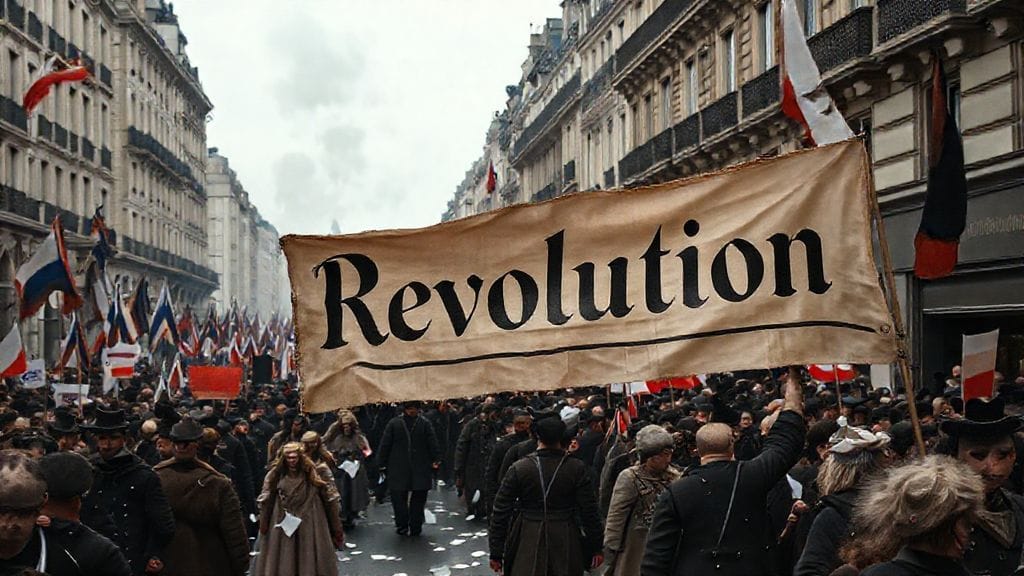
Paris has long been a city of barricades; in 1848, this tradition reached fever pitch. Improvised walls of cobblestones and timber blocked narrow streets, serving as rallying points for insurgents.
On February 23 and 24, clashes between citizen protesters and government troops turned violent. The sound of musket fire echoed amidst the cries of the wounded and the roar of the incensed masses. Several hundred lost their lives, but their sacrifice would not be in vain.
The Role of the Working Class and the Bourgeoisie in the Uprising
The revolution was a rare moment of uneasy alliance. The working class, artisans, intellectuals, and portions of the bourgeoisie united against a common enemy. While their motivations varied—workers sought economic justice, the bourgeois demanded political reforms—they converged in the streets demanding the monarchy’s end.
Yet beneath this unity lay competing visions for France's future, foreshadowing the struggles to come.
The Media and the Power of Revolutionary Print Culture
Newspapers, pamphlets, and broadsheets sparked the flame of revolution, spreading news and stirring public opinion. Parisian presses braved censorship to publish radical manifestos advocating republicanism and workers' rights.
Journalists like Louis Blanc used the pen as a weapon, positing not only critiques but blueprints for social change.
February 23, 1848: The Explosion of Street Violence
The day witnessed the crescendo of unrest. Protesters occupied public squares; the National Guard—sympathetic to the cause—hesitated to engage fully on the monarchy’s behalf.
Under pressure, King Louis-Philippe’s government faltered. The army was reluctant to fire on civilians; officials debated frantically.
The old order was crumbling.
The Abdication of Louis-Philippe: The Last Flight from the Throne
On the evening of February 24, faced with irreversible uprising, Louis-Philippe abdicated in favor of his grandson, the Count of Paris. Yet this gesture was too little, too late. The people demanded no compromise.
Louis-Philippe fled into exile in England, his era over.
The Formation of the Provisional Government: Faces of Revolution
Within hours, a provisional government was announced, formed of moderate republicans and social reformers alike. Alphonse de Lamartine, a poet-statesman, emerged as a leading figure, alongside Louis Blanc and other luminaries.
They proclaimed the Second Republic and promised universal male suffrage, abolition of slavery in colonies, and worker rights.
The February Revolution’s Immediate Impact on France
Streets once stained by blood were filled with hope and carnival-like celebrations. The tricolor was raised. Workers’ clubs proliferated. But the challenges were immense—how to reconcile social justice with order? How to govern a fractured society?
The revolution was no neat victory but a complex dialogue between dreams and reality.
The Birth of the Second Republic: Promise and Peril
The new government instituted reforms: workshops for the unemployed, abolition of the death penalty for political offenses. Yet difficulties multiplied.
Class tensions persisted, the economy remained fragile, and the fear of counter-revolution loomed large.
The Role of Key Figures: Lamartine, Louis Blanc, and Ledru-Rollin
Lamartine embodied the idealistic liberal republican; Blanc pushed for social workshops and workers’ rights; Ledru-Rollin championed universal suffrage.
Their debates illuminated a revolution straining to define itself.
Women in Revolt: The Forgotten Voices of February 1848
Though largely sidelined politically, women played crucial roles as protestors, caregivers, and agitators in the streets of Paris.
Figures like Louise Michel would later become iconic revolutionaries, their seeds sown in these turbulent days.
Echoes Beyond France: The 1848 Revolutionary Wave Across Europe
Paris’s uprising inspired a cascade of revolutions: Berlin, Vienna, Milan. The February Revolution became a symbol—a beacon for democratic movements longing to overthrow autocracies.
Europe was ablaze with hope and fear.
The Failure and Triumph: Internal Divisions Within the Revolution
Despite early euphoria, internal conflicts arose. Socialists and conservatives clashed; workers’ interests opposed property-holders. The eventual suppression of the June Days uprising in 1848 marked a harsh turning point.
Yet the revolution’s ideals endured beyond immediate setbacks.
The Long Shadow: How the February Revolution Shaped Modern France
The fall of the July Monarchy and the birth of the Second Republic redefined French politics. Ideas of universal male suffrage, workers’ rights, and republican governance penetrated the national consciousness.
Though the republic would struggle and evolve, 1848 laid foundations for future democratic advances.
How the February Revolution Challenged Monarchical Legitimacy
The abdication of Louis-Philippe symbolized a shifting paradigm—a king beholden no longer merely to aristocracy but answerable to broader societal forces.
Monarchs everywhere would feel this challenge in their retinues.
Cultural Reflections: Art, Literature, and Memory of 1848
Artists like Delacroix captured the spirit of revolution; writers chronicled its hopes and despairs.
The February Revolution became an enduring motif in French cultural identity.
The Revolutions’ Legacy in the Long Nineteenth Century
The 1848 upheavals were a crucial turning point, paving the way for modern democracy while exposing the tensions between liberalism and socialism.
They remain a powerful testament to the struggle for justice.
Conclusion
The February Revolution of 1848 was far more than a political upheaval—it was the eruption of a society struggling to redefine itself amidst the storms of modernity. It carried the hopes of millions—the poor who dreamed of dignity, the middle classes yearning for representation, the radicals longing for bold change.
Its streets soaked with sacrifice birthed the Second Republic, a fragile promise suspended between idealism and pragmatism. Though the years that followed would test its resilience, the profound message endured: the legitimacy of power rests in the will of the people.
As history’s pages turn, February 1848 reminds us that revolutions are not just moments of chaos but mirrors reflecting our deepest aspirations for freedom and justice.
FAQs
Q1: What were the main causes of the February Revolution in 1848?
A1: The revolution stemmed from a confluence of factors: economic hardship due to industrial decline and poor harvests, political repression under Louis-Philippe’s monarchy, lack of suffrage for the working class, and rising demands for social justice.
Q2: Who were the key figures leading the revolution?
A2: Prominent leaders included Alphonse de Lamartine, Louis Blanc, and Alexandre Ledru-Rollin, each representing different republican and social ideals during and after the uprising.
Q3: How did the February Revolution affect the rest of Europe?
A3: The February Revolution inspired a wave of uprisings across Europe in 1848, fueling democratic and national movements in places like the German states, Austria, Hungary, and Italy.
Q4: What role did women play in the February Revolution?
A4: Women participated actively as agitators, protestors, and caretakers during the unrest though they were largely excluded from direct political power, laying early groundwork for future feminist movements.
Q5: What was the immediate outcome of the revolution for the monarchy?
A5: King Louis-Philippe abdicated and fled to England, ending the July Monarchy and paving the way for the Second Republic.
Q6: Did the February Revolution succeed in achieving its goals?
A6: While it succeeded in overthrowing the monarchy and establishing a republic with reforms like universal male suffrage, social and economic challenges remained unresolved, leading to further conflicts.
Q7: How is the February Revolution remembered in French history?
A7: It is remembered as a pivotal moment of democratic awakening and social struggle that reshaped France’s political landscape and inspired later movements.
Q8: What was the significance of the provisional government?
A8: The provisional government represented a compromise between moderate republicans and socialists, attempting to balance order with reform during a period of intense social change.