Table of Contents
- The Roar of a Sleeping Giant: The Preludes to the 1968 Fernandina Eruption
- Geology of Majesty: Understanding Fernandina Volcano
- Galápagos in the 1960s: A Remote Eden on the Brink of Fire
- The First Tremors: Signs Beneath the Surface
- Breaking the Silence: Initial Eruptive Activity Unfolds
- Night of Fire and Ash: The Dramatic Height of the Eruption
- The Science Meets Adventure: Expeditions Amid the Chaos
- A Dance of Lava and Sea: Fernandina’s Coastal Transformations
- Indigenous Myths and Modern Science: The Volcano’s Dual Legacy
- Impacts on the Unique Ecosystem: Fire and Renewal
- Human Response: Ecuador’s Government and the International Scientific Community
- The Eruption's Aftermath: Rebuilding, Studying, and Preserving
- Lessons from the Flames: Advances in Volcanology Inspired by Fernandina
- The Volcano’s Voice Reawakened: Later Eruptions in Historical Context
- A Monument of Nature’s Power: Fernandina’s Place in Global Geological History
- Conclusion: The Persistent Pulse of Fire and Life
- FAQs: Peering Deeper into the 1968 Fernandina Eruption
- External Resource
- Internal Link
The dawn over Fernandina Island in May 1968 was like many others—mellow light falling softly on jagged cliffs, an endless choir of sea birds, and the quiet whisper of the Pacific waves brushing lava-rock shores. Yet beneath this serene veil, the fiery heart of the island stirred—an ancient giant preparing to unleash a spectacle of molten fury and reshaping life itself. The eruption of Fernandina volcano in 1968 was not just a geological event; it was a vivid chapter in nature’s perpetual story of destruction and renewal. It sent shockwaves not only through the Galápagos but reverberated in scientific halls worldwide, forever etching its fiery signature on the tapestry of Earth’s volatile forces.
1. The Roar of a Sleeping Giant: The Preludes to the 1968 Fernandina Eruption
Volcanoes command awe and fear, yet for centuries Fernandina stood quietly as the western sentinel of the Galápagos archipelago. Known to be one of the most active volcanoes in the chain, it had long held a volatile promise. The months leading up to the eruption were marked by subtle signs—earthquakes deep in the planet’s crust, a shifting landscape barely perceptible to the untrained eye. To the island’s few researchers and Ecuadorian authorities, these tremors were warnings whispered by the earth. But in such a remote locale, the urgency was difficult to grasp fully until the eruption could no longer be ignored.
2. Geology of Majesty: Understanding Fernandina Volcano
Fernandina is unique—not only for its position as the youngest and westernmost island of the Galápagos but for its formation atop a hotspot amid the Nazca tectonic plate. The volcano’s shield-like dome rises steep and imposing, with a summit caldera that acts as a pressure chamber for subterranean magma chambers. Its eruptions are typically characterized by fast-moving lava flows known as pahoehoe and ʻaʻā, painting the island with new layers of black rock. The 1968 event added a new chapter to the volcano’s geological biography, offering scientists invaluable insights into submarine and subaerial volcanic processes, including the interactions between fresh lava flows and the surrounding ocean.
3. Galápagos in the 1960s: A Remote Eden on the Brink of Fire
The Galápagos Islands in the 1960s were already famous as a living laboratory of evolution, thanks to Charles Darwin’s pioneering discoveries nearly a century earlier. In this isolated paradise, where finches, giant tortoises, and marine iguanas had thrived untouched by human hands for millennia, the natural world’s rhythms appeared immutable. Yet even in this fragile landscape, Fernandina’s stirrings reminded inhabitants and scientists alike that nature’s creative hand was as capable of upheaval as of nurture.
4. The First Tremors: Signs Beneath the Surface
In early 1968, seismographs, installed during recent scientific expeditions, began detecting increasing tremors. Small earthquakes rattled the rock beneath Fernandina, signaling magma’s rise. Local observations recorded subtle fumaroles releasing steam near the summit. These harbingers hinted that beneath the calm surface, immense geological forces were at work, crafting a prelude to transformation.
5. Breaking the Silence: Initial Eruptive Activity Unfolds
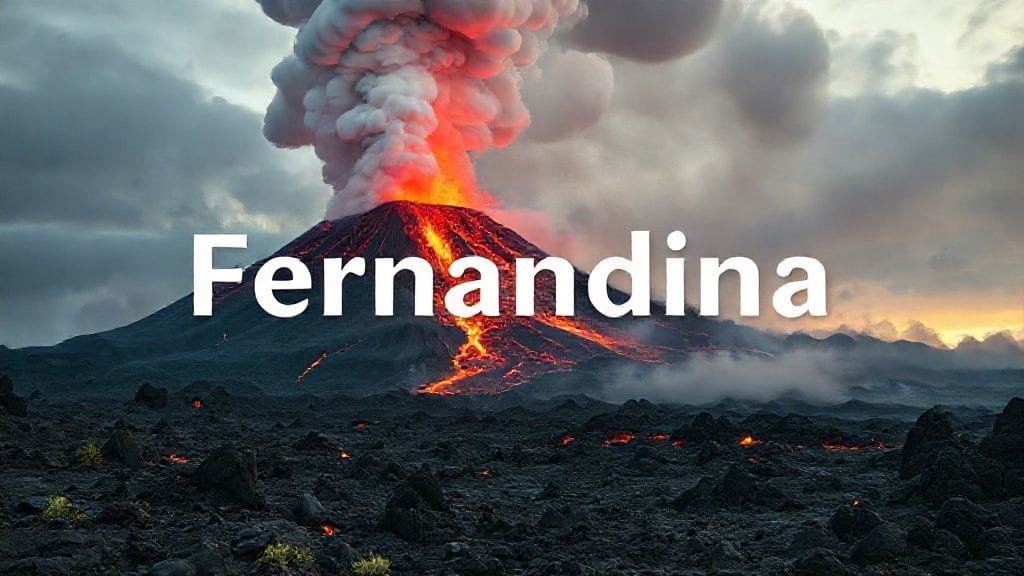
On May 16, 1968, the island woke to a dramatic change. A fissure cracked open along the volcano’s southwest flank, spewing glowing lava and ash into the sky. Kolossal lava flows roared down steep slopes, racing towards the ocean, igniting plumes of steam as molten rock met sea. The island’s silence shattered, replaced by the haunting sounds of eruptive fury, while glowing embers silhouetted the night.
6. Night of Fire and Ash: The Dramatic Height of the Eruption
For over weeks, Fernandina erupted with relentless energy. Pillars of ash streaked the sky, occasionally obscuring the sun. The volcanic glow illuminated the Galápagos night like a fiery beacon. Ash blanketed parts of nearby islands, and the smell of sulfur permeated the air. Fishermen and researchers reported an eerie orange horizon, nature’s vivid reminder of power beyond human control. The eruption vividly illustrated the raw energy locked within volcanic systems.
7. The Science Meets Adventure: Expeditions Amid the Chaos
Despite dangers, scientific teams hurried to Fernandina and nearby islands, eager to document the eruption. These expeditions were perilous — narrow channels, unpredictable lava flows, and toxic gases tested their resolve. But their efforts yielded invaluable data: new rock samples, seismic readings, photographic records. This scientific adventuring combined passion with peril, capturing history in motion.
8. A Dance of Lava and Sea: Fernandina’s Coastal Transformations
As rivers of lava met the Pacific Ocean, spectacular phreatomagmatic interactions occurred. The violent mixing of hot lava and cold sea water created massive steam explosions, reshaping shorelines and crafting new land. The coastline of Fernandina was both erased and reborn in this turmoil, with new geological features emerging. This merging of fire and water would become a textbook example of island-building processes.
9. Indigenous Myths and Modern Science: The Volcano’s Dual Legacy
Though sparse in human habitation, the nearby inhabited islands of the Galápagos were home to rich oral traditions and reverence for nature’s power. While no direct indigenous narratives existed for Fernandina due to its uninhabited status, scientists often reflected on the human tendency to blend myth and reality when confronting volcanic phenomena. The 1968 eruption thus symbolized a dialogue between ancient reverence and modern analysis—a fusion of emotion and intellect.
10. Impacts on the Unique Ecosystem: Fire and Renewal
Fernandina’s eruption did not leave life untouched. The intense lava flows destroyed segments of fragile habitats, displacing seabirds and marine iguanas. However, the eradication of old flora cleared the way for ecological succession—a process by which life returns, adapted and often flourishing. Studying these cycles provided ecologists with a deeper understanding of resilience in extreme environments.
11. Human Response: Ecuador’s Government and the International Scientific Community
Though Fernandina had no permanent population, Ecuadorian authorities monitored the eruption closely due to its potential risks to the wider Galápagos archipelago and shipping routes. Coordination with international volcanologists fostered a growing collaboration in the Pacific Rim region. This event helped catalyze regional monitoring networks and disaster preparedness strategies that persist today.
12. The Eruption's Aftermath: Rebuilding, Studying, and Preserving
After the eruptions waned, the island lay transformed—blackened lava fields, altered topographies, and ecological shifts marked the landscape. Researchers returned again and again, chronicling Fernandina’s rebirth and expanding human understanding of volcanic island ecosystems. The eruption boosted conservation awareness, intertwining geological and biological preservation concerns.
13. Lessons from the Flames: Advances in Volcanology Inspired by Fernandina
Fernandina’s 1968 eruption advanced many facets of volcanology—particularly the dynamics of fissure eruptions on oceanic islands, magma chemistry, and eruption forecasting. The event highlighted the importance of remote sensing, seismic monitoring, and interdisciplinary approaches. These lessons rippled far beyond Ecuador’s shores, influencing global volcanic science.
14. The Volcano’s Voice Reawakened: Later Eruptions in Historical Context
Since 1968, Fernandina has erupted several times, each event echoing the fiery drama of 1968 but with unique features. These subsequent eruptions are viewed through the lens shaped by 1968’s revelations. They remind us that volcanoes are living systems, their stories ongoing, always rewriting the narrative of earth’s restless crust.
15. A Monument of Nature’s Power: Fernandina’s Place in Global Geological History
The 1968 eruption is now enshrined as a landmark event in Earth’s volcanic chronicles. It embodies the interplay of isolation and connectivity, where a remote island’s eruption captured global attention, joining other great eruptions in reminding humanity of the planet’s primal forces. Fernandina stands as a testament to nature’s grandeur, its fury, and its creative potency.
Conclusion
The 1968 eruption of Fernandina volcano was more than a spectacular fireworks display of molten rock and ash—it was a profound reminder of the ceaseless heartbeat of our planet. From silent premonitions beneath the earth’s crust through the incandescent lava flooding into cold sea waters, nature displayed raw power and delicate balance. The event illuminated the fragile yet fierce dance of destruction and renewal, nature’s eternal rhythm that shapes landscapes, ecosystems, and human understanding alike.
What makes the Fernandina eruption so compelling is its encapsulation of paradox: an uninhabited island’s fiery tantrum that nevertheless matters deeply—to science, to conservation, and to the human spirit hungry to interpret the planet’s cryptic messages. As we reflect on this eruption over half a century later, its lessons resonate powerfully: in the importance of vigilance, respect for natural forces, and the wonder embedded in geological transformation.
Fernandina remains a living monument—a natural forge where Earth’s forces meld the past and future, reminding us always that beneath tranquil surfaces lies a world of fire, motion, and endless possibility.
FAQs
Q1: What geological conditions make Fernandina highly active?
Fernandina’s location above a tectonic hotspot beneath the Nazca Plate provides a constant magma supply. Its shield volcano structure allows frequent surface eruptions and lava flows, making it one of the most active sites in the Galápagos.
Q2: How did the 1968 eruption affect the Galápagos ecosystem?
While the eruption devastated local flora and fauna on Fernandina, the event initiated ecological succession processes. Scientists observed new plant colonization and eventual habitat recovery, highlighting nature’s resilience.
Q3: Were there any human casualties or evacuations during the eruption?
Fernandina Island lacked permanent inhabitants, so there were no direct casualties or evacuations. However, nearby islands and maritime traffic were monitored to mitigate potential hazards.
Q4: How did the international scientific community respond to the eruption?
The eruption galvanized increased scientific interest, leading to collaborative expeditions and improved volcanic monitoring in the region, setting standards for future studies of remote island volcanoes.
Q5: What makes Fernandina’s lava flows unique compared to other volcanoes?
Fernandina produces predominantly basaltic lava flows characterized by smooth pahoehoe and rugged ʻaʻā textures. The interaction of these flows with ocean water creates dramatic steam explosions and rapid coastal changes.
Q6: Has Fernandina’s eruption pattern changed since 1968?
Subsequent eruptions have shown both consistencies and variations in style and intensity, reflecting evolving subterranean magma dynamics. Continuous monitoring tracks these changes.
Q7: How is Fernandina volcano monitored today?
Modern monitoring employs seismic equipment, satellite imagery, and gas emission sensors coordinated by Ecuador’s geological services alongside international partners.
Q8: Why is Fernandina important beyond geology?
It serves as a symbol of natural evolution, ecological resilience, and scientific discovery, bridging disciplines and inspiring conservation efforts worldwide.

