Table of Contents
- The Dawn of a New Era: Boston, October 16, 1846
- A City on the Brink of Change: Boston in the Mid-19th Century
- The Quest for Pain Relief: Historical Perspectives on Surgery
- The Innovators: William Morton and the Pursuit of Anesthesia
- The Morning of October 16: Setting the Stage at Massachusetts General Hospital
- The Patient and the Procedure: Edward Gilbert Abbott’s Ordeal
- The Silent Miracle: Ether’s First Public Demonstration
- Public Reaction: Awe, Skepticism, and Hope
- The Immediate Impact on Medical Practice in Boston and Beyond
- Challenges and Controversies: Competing Claims and Ethical Debates
- The Spread of Ether Anesthesia Across the United States and Europe
- Surgical Revolution: How Anesthesia Changed Medical Science Forever
- Human Stories: The Lives Transformed by This Medical Breakthrough
- The Cultural and Social Ramifications: Pain, Fear, and Progress
- The Legacy of the First Anesthesia Operation: From Boston to Modernity
- Remembering October 16: Commemorations and Memorials
- The Evolution of Anesthesia: From Ether to Modern Techniques
- Ethics and Innovation: Lessons from the First Anesthesia Operation
- Insights from Historical Documents and Personal Letters
- Anesthesia in Art and Literature: Reflecting the Human Condition
- The Scientific Foundations: Chemistry and Physiology Behind Ether
- The Role of Massachusetts General Hospital in Medical History
- Conclusion: A Breath of Relief for Humanity
- FAQs: Unveiling the First Anesthesia Operation
- External Resource
- Internal Link
1. The Dawn of a New Era: Boston, October 16, 1846
The chilly October air was thick with anticipation and an undercurrent of hope. On that crisp autumn day in 1846, within the austere stone walls of Massachusetts General Hospital in Boston, a quiet revolution was about to take place—one that would almost instantaneously change the face of surgery and human medicine forever. The hall was crowded with the city’s foremost physicians and medical students, all gathered to witness what many hoped would alleviate one of medicine’s most harrowing agonies: surgical pain.
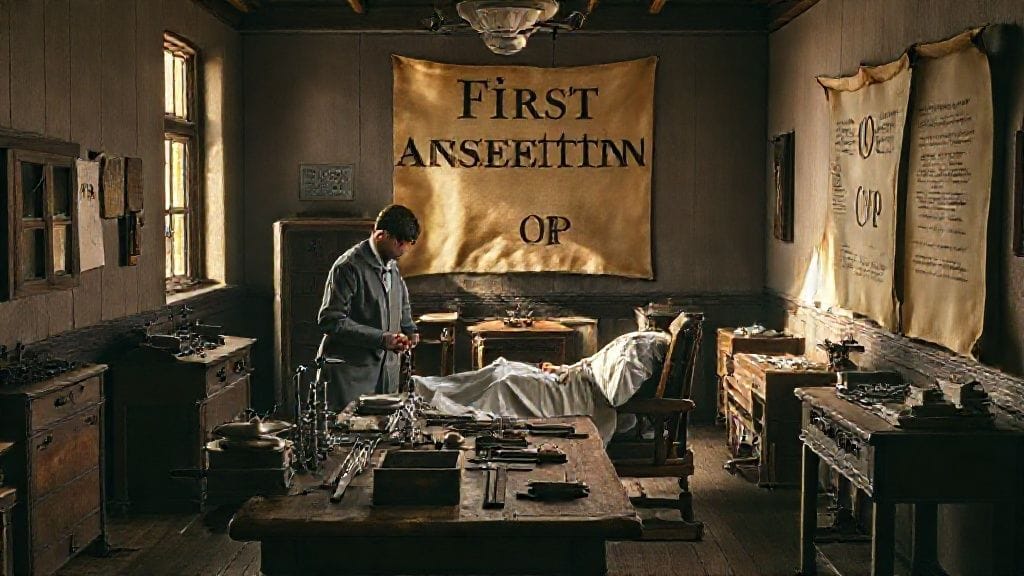
Edward Gilbert Abbott, a young laborer with a tumor on his jaw, sat calmly on the operating table. Nearby, William Morton, a dentist and amateur chemist, prepared a small glass inhaler filled with ether. As the patient inhaled, an eerie stillness descended. The room hushed. Then, a scalpel met skin, and for the first time in recorded history, a patient felt no pain during surgery. The room erupted into a mixture of stunned silence and awe.
This was the first anesthesia operation, and it marked the birth of a new medical epoch.
2. A City on the Brink of Change: Boston in the Mid-19th Century
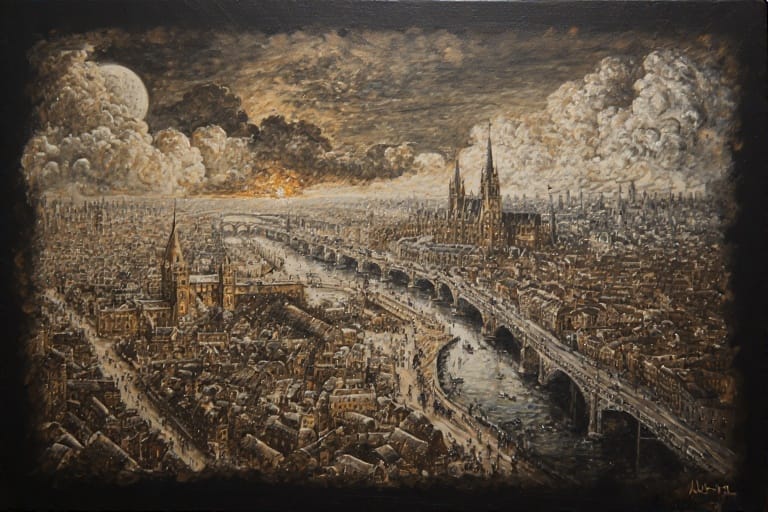
In 1846, Boston was a bustling hub of commerce, culture, and intellectual ferment. The city was grappling with the pains of rapid industrialization and social change, yet it was also a crucible for innovation. Massachusetts General Hospital, established less than two decades prior, epitomized the era’s spirit of progress.
However, the practice of surgery was still a brutal, traumatic ordeal. Without effective pain relief, surgeons raced against time and human endurance. Operations were swift, crude, and often fatal due to secondary infections or shock from trauma. The urgent need to find a way to numb pain was palpable to all.
3. The Quest for Pain Relief: Historical Perspectives on Surgery
Pain has been humanity’s relentless companion. Ancient civilizations knew the agony accompanying surgery but struggled to alleviate it. Various herbal concoctions, hypnosis, pressure techniques, and alcohol were employed with limited success.
By the 19th century, the concept of chemically induced unconsciousness during surgery was nothing short of revolutionary. The medical community was ripe for a breakthrough. Yet, decades of failed experiments left many skeptical. Early attempts with nitrous oxide and other substances had shown promise but were not taken seriously as practical tools for surgery.
4. The Innovators: William Morton and the Pursuit of Anesthesia
William Morton’s story was one of perseverance, curiosity, and ambition. A dentist by training, Morton became fascinated by emerging chemical research. Ether, a known anesthetic agent experimented with in laboratories, piqued his interest.
Despite a lack of formal scientific acclaim, Morton was determined to prove ether’s worth. Drawing from prior demonstrations by dentists Horace Wells and Crawford Long, Morton sought to bring anesthesia from mere anecdote into clinical reality.
5. The Morning of October 16: Setting the Stage at Massachusetts General Hospital
October 16, 1846, was a day suffused with both tension and excitement. Boston’s physicians, usually skeptical, had finally agreed to watch Morton’s demonstration after several unsuccessful public trials.
The operating theater, with its semicircular rows filled to capacity, bore witness to a strange mixture of hope and anxious doubt. Instruments were prepared, and Morton’s ether inhaler was placed ready.
The patient, Edward Gilbert Abbott, was quiet, his jaw swelling grotesquely from the painful tumor. The moment had come.
6. The Patient and the Procedure: Edward Gilbert Abbott’s Ordeal
Edward was not a notable figure; he was a common man suffering from an affliction that threatened his life. Yet, his role in this experiment would become immortalized. After inhaling the ether vapors, Abbott fell into a trance-like state, completely unaware of the operation.
Dr. John Collins Warren, a pioneering surgeon, made the initial incision without the usual cries of pain. Edward lay calm as Warren removed the tumor – a moment of surgical history that epitomized human triumph over agony.
7. The Silent Miracle: Ether’s First Public Demonstration
The transformation was instantaneous and breathtaking. What had once been an anguished patient now floated in a pain-free void. The room, filled with educated men who had long witnessed the brutality of surgery, found themselves witnesses not just to an operation, but to a medical miracle.
Morton’s quiet confidence was rewarded as Warren declared the demonstration a success. The only sound breaking the hush was the muffled astonishment of the audience.
8. Public Reaction: Awe, Skepticism, and Hope
News of the event spread rapidly. Medical journals published detailed accounts and editorials. Some hailed Morton as a hero ushering in an era of painless surgery. Others questioned whether the results were reproducible, wary of the unknown dangers of ether.
The public, often fearful of hospitals and surgery, found new hope. The prospect of enduring surgery without the searing pain seemed almost too good to be true.
9. The Immediate Impact on Medical Practice in Boston and Beyond
The success encouraged other physicians to try ether anesthesia. Hospitals in Boston quickly adopted the practice, and soon surgeons nationwide began to experiment with the newfound respite from pain.
The first anesthesia operation did not just impact one patient or one doctor; it reshaped the entire approach to surgery almost overnight.
10. Challenges and Controversies: Competing Claims and Ethical Debates
While Morton is often credited, the story of anesthesia’s discovery is tangled with rival claims. Horace Wells, who had experimented earlier with nitrous oxide, and Crawford Long, who administered ether privately, contested Morton’s priority.
Ethical questions also emerged. Was it right to experiment on unconscious patients? What were the potential long-term effects? The medical community grappled with these dilemmas as anesthesia’s use expanded.
11. The Spread of Ether Anesthesia Across the United States and Europe
Not long after the Boston demonstration, ether crossed oceans. European surgeons witnessed similar results in London and Paris, embracing anesthesia as a vital tool.
The technology, although rudimentary, proved so valuable that it became a standard procedure. This rapid acceptance underscored humanity’s urgent need to tame surgical pain.
12. Surgical Revolution: How Anesthesia Changed Medical Science Forever
With the shackles of pain removed, surgical techniques blossomed. Procedures once deemed impossible became routine. Surgeons could plan more complex operations, revolutionizing trauma care, cancer removal, and internal surgery.
Mortality rates began to fall, and medicine further evolved into a scientific discipline rather than an empirical craft.
13. Human Stories: The Lives Transformed by This Medical Breakthrough
Behind the clinical details lie countless human tales. For every Edward Abbott, there were thousands who later benefited. Women gave birth with relief, soldiers underwent surgeries without terror, and suffering was mitigated globally.
Anesthesia brought dignity and compassion to treatment, reaffirming medicine’s humanistic goals.
14. The Cultural and Social Ramifications: Pain, Fear, and Progress
This breakthrough transcended medicine. It altered how societies viewed pain and the body. The newfound control over suffering influenced philosophical debates on human suffering and progress.
Pain was no longer an inevitable fate but a conquerable adversary, reshaping cultural narratives about illness and healing.
15. The Legacy of the First Anesthesia Operation: From Boston to Modernity
Today, October 16, 1846 is celebrated as a milestone. The operation laid foundations for modern anesthesiology, a specialty that now safely guides millions through surgery.
Memorials, like the Ether Dome at Massachusetts General Hospital, stand as enduring tributes to this historic moment.
16. Remembering October 16: Commemorations and Memorials
Every year, historians, medical professionals, and institutions commemorate this day. Plaques, museum exhibits, and reenactments keep alive the story of courage, discovery, and hope.
The first anesthesia operation remains not just a fact in textbooks but a story told with reverence.
17. The Evolution of Anesthesia: From Ether to Modern Techniques
Ether was only the beginning. Over the decades, safer and more effective anesthetics replaced it, along with techniques like regional anesthesia and sedation.
Today’s anesthesiologists owe their craft to that pioneering moment in Boston.
18. Ethics and Innovation: Lessons from the First Anesthesia Operation
The story also teaches caution. Innovation in medicine requires balancing experimentation with patient safety and ethics—a lesson that echoes through modern medical debates.
19. Insights from Historical Documents and Personal Letters
Original letters from Morton, Warren, and contemporaries reveal the human emotions behind the scientific facts: hope, fear, rivalry, and triumph.
These documents add depth and nuance to the narrative of anesthesia’s birth.
20. Anesthesia in Art and Literature: Reflecting the Human Condition
The transformative impact of anesthesia found echoes in literature and art. Pain, death, and the hope for relief are themes that resonate through 19th-century poetry and painting, capturing the era’s emotional landscape.
21. The Scientific Foundations: Chemistry and Physiology Behind Ether
Behind the spectacle lay a complex interaction of chemistry and human biology. Ether’s mechanism, acting as a central nervous system depressant, was groundbreaking.
This understanding paved the way for pharmacology and neuroscience advancements.
22. The Role of Massachusetts General Hospital in Medical History
MGH remains a beacon of innovation, its Ether Dome a symbol of hope. The hospital’s support was crucial to the success of the first anesthesia operation and continues to fuel medical progress.
23. Conclusion: A Breath of Relief for Humanity
The first anesthesia operation was more than a medical procedure; it was a profound victory over human suffering. That day in Boston, humanity took a giant leap toward a future where pain would no longer dictate the fate of the sick and injured. William Morton’s ether inhaler, Edward Abbott’s silent courage, and the collective hope of those gathered forged a legacy that still breathes through every hospital corridor today.
Conclusion
The story of the first anesthesia operation in Boston is a narrative of courage, innovation, and hope triumphing over centuries of human suffering. It teaches us that progress is often the product of many converging forces—a determined individual like William Morton, a willing patient like Edward Abbott, and a community ready to embrace change. It reminds us that medical advances are not cold experiments but deeply human stories that ease pain and save lives. As modern medicine builds on that foundation, we honor the spirit of October 16, 1846, a day when pain was conquered and the door to a new world was flung open, forever changing the relationship between humanity and healing.
FAQs
1. Why is the first anesthesia operation considered a historical milestone?
Because it was the first successful public demonstration of surgical pain relief using ether, marking the beginning of modern anesthesiology and changing surgery forever.
2. Who was William Morton, and what was his role?
Morton was a Boston dentist who championed the use of ether as an anesthetic. He administered the ether during the first public operation on October 16, 1846.
3. What made the patient, Edward Gilbert Abbott, significant?
He was the first documented patient to undergo painless surgery using anesthesia, making him a key figure in the medical breakthrough.
4. How did the first anesthesia operation affect surgery?
It allowed for longer, more complex, and less traumatic surgeries by eliminating pain, reducing shock and risk.
5. Were there controversies surrounding the discovery of anesthesia?
Yes, rival claims from Horace Wells and Crawford Long, ethical debates on patient safety, and skepticism about anesthesia’s effectiveness complicated the historical narrative.
6. How quickly did the practice of anesthesia spread after 1846?
Rapidly. Within months, hospitals across the U.S. and Europe began adopting ether anesthesia for surgical procedures.
7. What replaced ether as an anesthetic?
Safer agents like chloroform, nitrous oxide, and later modern drugs were developed, improving safety and effectiveness.
8. How is the first anesthesia operation commemorated today?
Through memorials like the Ether Dome at Massachusetts General Hospital, annual ceremonies, exhibits, and historical reenactments celebrating medical progress.