Table of Contents
- The Dawn of Conflict: March 1839 in Kabul
- Geo-Strategic Chessboard: The British and Russian Rivalry
- Afghanistan’s Rugged Heart: A Nation on the Brink
- The British East India Company’s Ambitions
- Dost Mohammad Khan: The Emir in the Eye of the Storm
- The Shah Shuja Restoration Plan: An Imperial Gambit
- The Invasion Force Mobilizes: Strategies and Expectations
- Crossing the Hindu Kush: A Perilous March
- Kabul Under Siege: The Early Days of Occupation
- The Complex Web of Alliances and Enmities
- Afghan Resistance Emerges: From Discontent to Rebellion
- The Siege of the British Residency: Rising Tensions
- The Retreat from Kabul: Catastrophe on the Road to Jalalabad
- Survival and Suffering: The Hostage Crisis and Massacre
- The British Response: Reprisal and Retribution
- The War’s End: Withdrawal and Aftermath
- The Human Cost: Soldiers, Civilians, and Memory
- Political Repercussions in India and Britain
- Afghanistan’s Enduring Legacy of Defiance
- Lessons for Empires: Hubris, Geography, and Culture
- Remembering 1839: How the First Anglo-Afghan War Lives On
1. The Dawn of Conflict: March 1839 in Kabul
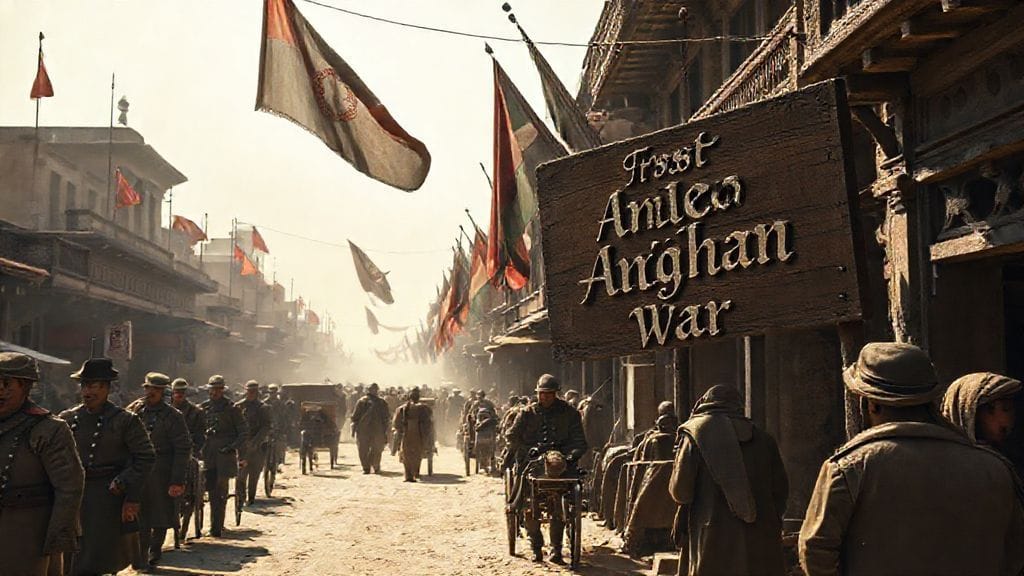
The brittle high-altitude air of Kabul carried a charged stillness on that March day in 1839. The dazzling blue sky stretched unmistakably vast over the steep roofs and narrow alleyways, but beneath the tranquil veneer simmered an almost tangible tension. British soldiers, clad in red coats that stood in sharp contrast to the dust and mud, assembled forward with somber determination. The city was entering a chapter that would come to epitomize the cruel complexities of colonial ambition in a land that refused to bend.
The First Anglo-Afghan War was no mere military campaign; it was a collision between imperial design and rugged Afghan sovereignty, between the West’s emerging “Great Game” and the mountain warrior tradition that had shaped centuries. What would begin as a political gambit soon unravel into one of the most brutal and humbling episodes of 19th-century imperial history.
2. Geo-Strategic Chessboard: The British and Russian Rivalry
To grasp the eruption of conflict, one must zoom out to the chessboard of Great Power rivalry that framed the 19th century. The British Empire had consolidated vast territories in the Indian subcontinent, ruling through the East India Company with expanding ambitions. Far to the north, the Russian Empire crept steadily southward through Central Asia — a creeping threat the British eyed with growing suspicion.
Afghanistan became the critical buffer, the hinge on which the fate of two empires seemed to turn. The British feared that Russian influence over Kabul would expose India to invasion or subversive threats. Conversely, Russia sought to extend its sphere without direct confrontation, seeing Afghanistan as a conduit for influence rather than conquest.
This geopolitical tension, baptized later as “The Great Game,” incubated suspicion and action, each empire seeking to outflank the other without firing the first shot—though that fragile peace was never quite destined to last.
3. Afghanistan’s Rugged Heart: A Nation on the Brink
At the center of this storm stood Afghanistan itself — a mountainous land wrought with tribal rivalries and a fiercely independent spirit. Still recovering from internal fracturing after the fall of the Durrani Empire, the country was fragmented politically yet united in its resistance to external domination.
Tribes such as the Ghilzai and the Barakzai, with centuries-old grudges and shifting alliances, navigated a landscape both geographic and political, where loyalty often bent to immediate survival rather than imposed authority. The Emir Dost Mohammad Khan, recognized as a shrewd if often ruthless leader, struggled to consolidate power amidst these fractures.
For Afghans, foreign invasion was not a calculated policy but a visceral affront—a test that would compel them to fight not only for leadership but for identity itself.
4. The British East India Company’s Ambitions
By the late 1830s, the British East India Company had evolved far beyond trade—it was a ruling power with armies, diplomacy, and colonial administration. With India secure, their gaze turned toward safeguarding its northern frontiers.
The doctrines of “forward policy” dominated British strategy, advocating for expansion and control of bordering territories to prevent rival powers—particularly Russia—from gaining footholds. The Company’s officials believed that installing a sympathetic ruler in Kabul would create a friendly buffer state and secure India from invasion.
Yet this ambition, grand on the maps filed away in London and Calcutta, concealed fatal misjudgments about Afghanistan’s nature and the depth of local loyalties.
5. Dost Mohammad Khan: The Emir in the Eye of the Storm
Dost Mohammad Khan was no mere pawn on this imperial chessboard. A former Durrani noble turned Emir of Afghanistan, he navigated his realm with a mix of diplomacy and force. His authority extended unevenly across tribes, and his approach to foreign powers was pragmatic.
Initially, Dost Mohammad sought to balance British and Russian interests to secure his hold on the throne. However, his refusal in 1838 to fully cooperate with British demands—to expel Russian envoys and allies—became a casus belli. The British decided to remove him forcibly, believing his allegiance too uncertain and dangerous for their imperial designs.
His exile and the British-backed restoration of Shah Shuja would ignite the conflagration that engulfed the region.
6. The Shah Shuja Restoration Plan: An Imperial Gambit
Shah Shuja Durrani, the ousted former king, had lived decades in exile under British protection in India. The Company envisaged his restoration as a means to install a compliant ruler beholden to British interests.
On paper, the plan seemed elegant: overthrow Dost Mohammad, reinstall Shah Shuja, stabilize Afghanistan, and insulate India from Russian encroachment. It was a classic imperial maneuver cloaked in the language of bringing “civilization” and “order” to a “chaotic” land.
Yet Shah Shuja’s decades away from Afghanistan, his perceived weakness, and his unpopularity with tribal leaders foreshadowed the brittle foundation upon which this plan rested.
7. The Invasion Force Mobilizes: Strategies and Expectations
In late 1838, a vast British-Indian force of around 21,000 troops, supported by artillery and local levies, marched north under the command of Sir John Keane and later Sir Willoughby Cotton. Their orders: to invade Afghanistan, to overthrow Dost Mohammad, and to install Shah Shuja.
Confidence reigned in British military circles. Reports highlighted the army’s discipline, firepower, and experience, while Afghan resistance was underestimated, portrayed dismissively as tribal backwardness.
The logistical challenges of traversing the rugged Hindu Kush mountains were acknowledged but deemed surmountable with proper supply chains and engineering works, failing to foreshadow the brutal reality of the campaign.
8. Crossing the Hindu Kush: A Perilous March
The army’s path carved through some of the world’s most forbidding terrains. The Hindu Kush, with dizzying passes, treacherous weather, and scarce resources, became an adversary itself.
Soldiers suffered frostbite, hunger, and exhaustion as the caravan pressed forward through snowdrifts and narrow gorges where ambushes could erupt at any moment. Local guides warned of the dangers, but imperial impatience often dismissed such counsel.
Despite hardships, the British force reached Kabul by August 1839, accomplishing the physical conquest. Yet the price paid was a slender thread holding an increasingly fragile occupation.
9. Kabul Under Siege: The Early Days of Occupation
The city of Kabul, then a vibrant hub of bazaars, mosques, and narrow alleyways, fell under British control with relative speed. Shah Shuja was ceremoniously installed as Emir, his authority forcibly proclaimed.
But beneath the surface, tension swelled. British troops occupied central Kabul, fortifying positions amid suspicion. The population, loyal in many quarters to Dost Mohammad and deeply suspicious of British motives, nursed quiet resentment.
The British struggled to exert effective governance, relying on a mixture of harsh measures and attempts at diplomacy that alienated rather than reconciled.
10. The Complex Web of Alliances and Enmities
Afghanistan’s tribal dynamics defied simple control. Various factions reacted differently: some welcomed change for personal gain, others steeled themselves to resist.
The Ghilzai tribes in particular coalesced around leaders who opposed foreign presence. Notably Akbar Khan, son of Dost Mohammad, emerged as a charismatic figure who had been exiled but retained powerful influence.
These shifting loyalties made the British task Sisyphean—winning one ally risked inciting another’s wrath. Cultural misunderstandings further deepened divides; British officials struggled to appreciate Afghan social codes and honor systems.
11. Afghan Resistance Emerges: From Discontent to Rebellion
By the winter of 1841, discontent rippled into open resistance. Sporadic attacks on supply routes and outposts became more frequent. British reprisals only drove insurgents closer to open warfare.
Akbar Khan returned from exile, galvanizing opposition with a vision of expelling foreign occupiers and restoring Afghan autonomy. His leadership knit together fractious groups into a more cohesive force.
The initial British optimism yielded to nervousness as Kabul's streets became battlefields and loyalties blurred.
12. The Siege of the British Residency: Rising Tensions
One of the most dramatic symptoms of growing hostility was the siege of the British Residency in Kabul during the winter of 1841–42. This compound, symbol of British authority, became isolated and vulnerable amid mounting Afghan hostility.
Tensions skyrocketed after the murder of two officers and increasing violence against British soldiers and civilians. The Residency was a powder keg, and the fragile peace shattered completely.
British commanders debated whether to hold their ground or withdraw, decisions that would culminate in tragic consequences.
13. The Retreat from Kabul: Catastrophe on the Road to Jalalabad
January 1842 is etched in history for what became one of the most calamitous retreats in military annals. Under orders from the British command, nearly 16,000 soldiers and civilians—mostly Indian sepoys and camp followers—began evacuating Kabul to Jalalabad through mountainous, snow-packed passes.
The retreat became a nightmare. Ambushes, starvation, freezing cold, and desertion claimed lives by the thousands. Afghan forces relentlessly attacked the column, seizing every tactical advantage in this unforgiving terrain.
Lady Florentia Sale, who survived and later documented the ordeal, described it as “a journey from the valley of the shadow of death.”
14. Survival and Suffering: The Hostage Crisis and Massacre
Among those captured during the retreat were women and children taken hostage by Afghan forces. Their fate became a political and humanitarian crisis, spotlighting the war’s darker human dimension.
The infamous massacre at Gandamak, where the last remnants of the retreating British force were slaughtered once surrounded, became a symbol of British humiliation.
Only a handful survived the ordeal, with stories of endurance, desperation, and courage emerging from the carnage.
15. The British Response: Reprisal and Retribution
The shockwave in Britain and India was immense. Public outcry and political condemnation fueled a swift retaliatory campaign under General Pollock and Sir George Nott.
British troops marched back into Kabul in mid-1842, exacting brutal retribution: destroying parts of the city, seizing wealth, and carrying out executions. Shah Shuja was assassinated within months, further fracturing the political landscape.
Though a military “victory” was declared, the war’s devastating toll lingered like a shadow over imperial prestige.
16. The War’s End: Withdrawal and Aftermath
By late 1842, the British decided to fully withdraw from Afghanistan, recognizing that occupying such a hostile land was untenable. Afghanistan reverted to autonomy under Dost Mohammad, who returned from exile amid celebrations.
Though the British lost face, the war underscored the limits of imperial power in a land that geography and culture guarded fiercely. The strategic buffer state was preserved, but at a colossal cost.
17. The Human Cost: Soldiers, Civilians, and Memory
The First Anglo-Afghan War was not merely a failed military campaign but a human tragedy. Approximately 16,000 British and Indian soldiers and camp followers perished, alongside thousands of Afghan civilians caught in the crossfire.
Personal accounts reveal heartbreak, endurance, and horror—letters from camps, memoirs of survivors like William Brydon, the supposed sole escapee to Jalalabad, and the poignant diaries of women caught in the siege.
The war left scars both physical and psychological on all sides, imprinting collective memory.
18. Political Repercussions in India and Britain
In Britain, the war shook confidence in the East India Company’s governance and imperial policies. Parliamentary debates scrutinized the leadership’s failures, fueling later reforms in colonial administration.
In India, the war exacerbated anxieties among military and civilian populations about the stability of British dominance. Afghan recruits and sepoys’ loyalty came under question.
Internationally, the “Great Game” continued, but with new caution and respect for Afghanistan’s resilience.
19. Afghanistan’s Enduring Legacy of Defiance
Afghanistan emerged from the war as a symbol of resistance against foreign domination. The tribal warriors, once dismissed as unruly tribesmen, had humbled an empire.
The story of the First Anglo-Afghan War became a foundational narrative of national pride, remembered in Afghan folklore and history as a testament to the land’s unyielding spirit.
This legacy influenced subsequent encounters with global powers, echoing into modern conflicts.
20. Lessons for Empires: Hubris, Geography, and Culture
The conflict exposed fatal flaws in imperial hubris—underestimating terrain, culture, and the will of local peoples. It underscored geography’s brutal role in warfare, where mountain passes could become crucibles of disaster.
Moreover, it stressed the limits of military power divorced from nuanced political engagement.
Historians often cite this war as a cautionary tale, a complex dance between ambition and reality in colonial contexts.
21. Remembering 1839: How the First Anglo-Afghan War Lives On
Nearly two centuries later, the First Anglo-Afghan War lingers in historical memory as a profound lesson in the challenges of intervention, the cruelty of war, and the complexity of Afghan identity.
Books, films, and academic studies continue to revisit its depths, inspiring reflection on empire, resistance, and humanity amid adversity.
Its echoes reverberate in modern geopolitics—reminders that some battles are as much about hearts and minds as rifles and cannons.
Conclusion
The First Anglo-Afghan War was more than an imperial misadventure; it was a human saga of ambition, resistance, tragedy, and resilience. The harsh mountain winds of Afghanistan carried away not only the lives of thousands but also illusions of invincibility held by one of history’s greatest empires.
From the bloodied passes of the Hindu Kush to the haunted ruins of Kabul’s Residency, the war’s story is one of the eternal tension between foreign ambition and indigenous determination. It challenges us to understand the profound complexities woven into history—not merely as dates and battles but as intertwined lives shaped by geography, culture, and the ceaseless quest for power and survival.
Remembering this war invites humility and insight: that history’s greatest lessons often emerge from its harshest trials, and that the story of Afghanistan’s fierce independence remains a beacon in the annals of resistance against empire.
FAQs
Q1: What triggered the First Anglo-Afghan War in 1839?
The war was triggered primarily by British fears of expanding Russian influence in Afghanistan. After Emir Dost Mohammad Khan rejected British demands to remove Russian advisers, Britain decided to invade to install a more pliable ruler, Shah Shuja.
Q2: Who was Dost Mohammad Khan and why was he significant?
Dost Mohammad was the Emir of Afghanistan and a central figure striving to unify a fragmented country. His refusal to align fully with British interests made him the target for removal during the war.
Q3: What was the Great Game and how did it influence the war?
The Great Game was a strategic rivalry between the British and Russian empires over Central Asia. Afghanistan was the buffer state, and the Anglo-Afghan War was a direct consequence of British efforts to secure this buffer against Russian advances.
Q4: What caused the disastrous retreat from Kabul in 1842?
The retreat was caused by escalating Afghan resistance, supply shortages, and poor strategic decisions by British commanders. Afghan forces ambushed the retreating troops harshly in the mountainous terrain, leading to devastating losses.
Q5: How did the war affect British imperial policy?
The war exposed the limits of British imperial power, prompting reevaluations of colonial governance and military strategy. It contributed to reforms in the East India Company and raised caution in future Afghan interventions.
Q6: What was the human cost of the First Anglo-Afghan War?
Approximately 16,000 British and Indian soldiers and support personnel died, many during the retreat. Thousands of Afghans also perished. The war left deep psychological scars and cultural memories on both sides.
Q7: How is the First Anglo-Afghan War remembered in Afghanistan today?
It is remembered as a heroic chapter of Afghan resistance to foreign dominance, symbolizing national pride and the country’s fierce independence.
Q8: Did the war end the British presence in Afghanistan?
While the British withdrew after 1842, the war was an early phase of continued British interest and occasional intervention. Afghanistan remained geopolitically significant throughout the 19th and 20th centuries.