Table of Contents
- The Opium War’s Final Chapter: The Eve of the Treaty
- A Clash of Empires: Britain and Qing China at Odds
- The Roots of Conflict: Opium, Trade, and Sovereignty
- The Fateful Siege of Nanjing: An Unequal Showdown
- The Treaty of Nanjing Signed: August 29, 1842
- Terms of Capitulation: Unequal Treaties and their Meaning
- The Opening of Five Treaty Ports: Transforming China’s Coastline
- Hong Kong’s Cession: The Birth of a British Colony
- Indemnities and Compensation: The Financial Toll on Qing China
- Extraterritoriality and Legal Impositions: Losing Sovereignty
- The Psychological Blow: The End of the Celestial Empire’s Isolation
- China's Internal Turmoil After the Treaty: Seeds of Rebellion
- British Imperial Ambitions Realized: The East India Company’s Gains
- International Ripples: How the Treaty Reshaped Global Trade
- Resistance to the Treaty: Chinese Voices and Perspectives
- Legacy of the Treaty of Nanjing: The Opium War's Shadow in History
- Lessons and Controversies: Ethics, Empire, and Addiction
- Remembering the Treaty Today: Memory and Historical Discourse
- Conclusion: The Treaty as a Turning Point in Sino-Western Relations
- FAQs about the Treaty of Nanjing and the First Opium War
- External Resources
- Internal Link to History Sphere
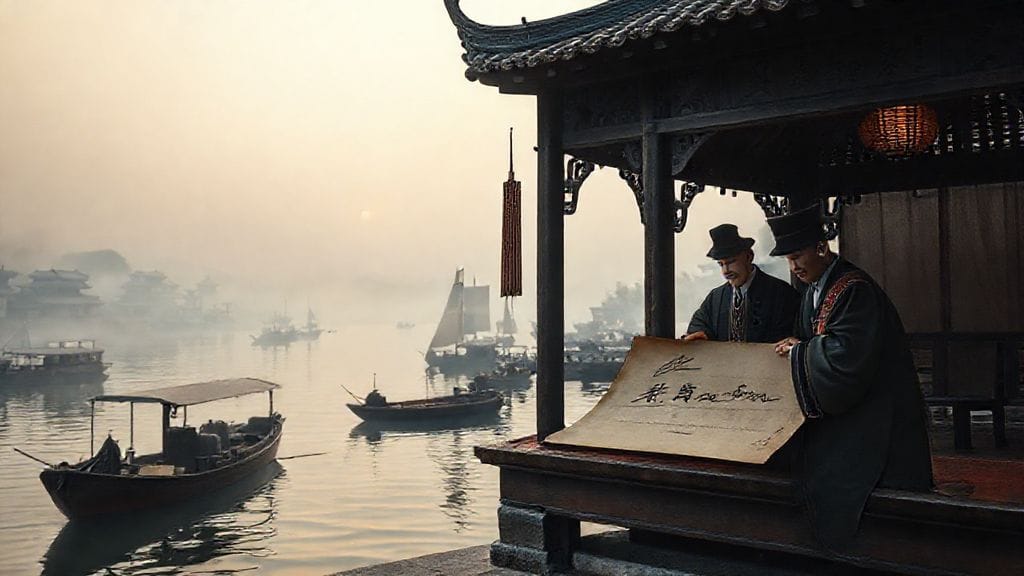
The stillness of the early morning was shattered in late August 1842 as British and Qing representatives met on the banks of the Yangtze River in the city of Nanjing. The air was heavy—charged not with hope but with the weight of exhaustion, humiliation, and profound change. What began years earlier as a confrontation over trade spiraled into a conflict that forever altered the fabric of China, precipitating the first of many “unequal treaties” that chipped away at imperial sovereignty. This was the moment the First Opium War officially ended, sealed by the Treaty of Nanjing on August 29, 1842 — a pact as raw with imperial imposition as it was laden with the portents of a China grappling with an era it was ill-prepared to face.
The Opium War’s Final Chapter: The Eve of the Treaty
It was late summer; the miasma of war hung like a fog over Nanjing. The British naval forces, after months of assault and control over key Chinese riverways, had brought the Qing dynasty — that venerable realm known as the “Celestial Empire” — to its knees. HMS Cornwallis and her sister ships anchored ominously, no longer just instruments of war, but harbingers of a treaty that would force China’s gates open to foreign traders, drugs, and ideas.
Yet the treaty was not merely a written agreement; it was the crystallization of decades of tension, of clashing worldviews between a rising British Empire thirsting for Chinese goods and a Qing dynasty entrenched in centuries-old beliefs of superiority and isolation.
A Clash of Empires: Britain and Qing China at Odds
Understanding the Treaty of Nanjing requires stepping back into the volatile relationship between Britain and Qing China. The British Empire, industrializing rapidly during the early 19th century, hungered for tea, porcelain, silk—luxuries that China had long provided but for which Britain had little tangible product to balance the trade. Gold and silver flowed east; the British economy was bleeding, and the trade deficit was severe.
China, under the Qing regime, operated an insular tributary system, considering foreigners as barbarians, and rigorously limiting trade to the port of Canton (Guangzhou). The British East India Company and merchants bristled under these restrictions — but underpinning the conflict was an unexpected and destructive commodity: opium.
The Roots of Conflict: Opium, Trade, and Sovereignty
Opium was the poison that flipped the script. British traders, primarily based in India where opium was cultivated, began exporting the drug into southern China. Addiction spread at alarming rates, ravaging the social and economic fabric of Qing society. Despite imperial bans on the opium trade and aggressive crackdowns led by officials such as Lin Zexu, the narcotic influx continued, undermining official authority and draining silver from Chinese coffers.
Lin Zexu’s seizure and destruction of opium stockpiles in Canton in 1839 was the spark that ignited the war. The British, framing their intervention as a matter of free trade and protection of merchants, launched a military campaign to force China to acquiesce.
The Fateful Siege of Nanjing: An Unequal Showdown
After bitter fighting along the southern coast and battles on the Pearl River, British forces advanced northward along the Yangtze River, capturing strategic cities and crippling Qing defenses. Nanjing, the ancient capital famed for its grandeur, became the focal point.
The siege was relentless. British naval superiority and modern weaponry contrasted starkly with Qing forces using outdated tactics. The city finally fell in August 1842 after weeks of blockade and bombardment, sealing the Qing dynasty’s defeat.
The Treaty of Nanjing Signed: August 29, 1842
On August 29, 1842, representatives of the British Crown and the Qing emperor met under guarded conditions to ink a treaty whose implications would resonate for decades.
Terms of Capitulation: Unequal Treaties and their Meaning
The Treaty of Nanjing was the first of the so-called “Unequal Treaties”—agreements in which China was obliged to make concessions under duress, with few reciprocal obligations placed on foreign powers.
The Opening of Five Treaty Ports: Transforming China’s Coastline
The treaty forced the Qing government to open five ports—Guangzhou, Xiamen, Fuzhou, Ningbo, and Shanghai—to foreign merchants. This dismantled centuries of restricted trade policies, exposing the East Asian giant to Western commercial influence at an unprecedented scale.
Hong Kong’s Cession: The Birth of a British Colony
Perhaps the most poignant and lasting concession was the ceding of Hong Kong Island to Britain "in perpetuity." A sparsely populated fishing island then, it would become a linchpin of British strategic and commercial interests and a symbol of China’s lost sovereignty.
Indemnities and Compensation: The Financial Toll on Qing China
China also agreed to pay a colossal indemnity of 21 million silver dollars to Britain, reimbursing the cost of war and the destroyed opium stockpiles. This financial burden contributed to the dynasty's weakening, deepening internal unrest.
Extraterritoriality and Legal Impositions: Losing Sovereignty
British citizens in the treaty ports were granted extraterritorial rights, meaning they were subject to British law, not Chinese law — a blow to the Qing’s sovereignty that would stoke resentment and legal anomalies for decades.
The Psychological Blow: The End of the Celestial Empire’s Isolation
The treaty shattered China’s self-image as the “Middle Kingdom,” inflicting a psychological wound as deep as its territorial and monetary losses. For centuries, China had viewed itself as the isolated and superior civilization, the center of global order. The humiliation of capitulation and forced trade would haunt its rulers and people.
China's Internal Turmoil After the Treaty: Seeds of Rebellion
The treaty’s consequences reverberated inside China — not just politically but socially. The Qing dynasty's inability to repel foreign powers exposed vulnerabilities that fueled internal strife, including the Taiping Rebellion (1850–1864), which would cause unimaginable death and further weaken imperial authority.
British Imperial Ambitions Realized: The East India Company’s Gains
Britain emerged victorious, not only militarily but economically. The treaty paved the way for expanded imperial ambitions across Asia, solidifying British dominance and influencing subsequent diplomatic arrangements among Western powers.
International Ripples: How the Treaty Reshaped Global Trade
The Treaty of Nanjing shifted global trade patterns, triggering other Western powers to demand similar concessions from China, and accelerating the entrance of foreign commercial and missionary enterprises into the region.
Resistance to the Treaty: Chinese Voices and Perspectives
Amidst the limelight on international actors, Chinese voices of dissent and resistance played critical roles. Officials, scholars, and commoners voiced outrage, lamented lost sovereignty, and debated modernization and reform amidst a rapidly changing world.
Legacy of the Treaty of Nanjing: The Opium War's Shadow in History
More than a century and a half later, the Treaty of Nanjing’s legacy endures — symbolizing both imperial arrogance and the complexities of China’s path to modernity. It is a prism through which historians analyze not just East-West relations, but issues of democracy, sovereignty, and cultural encounter.
Lessons and Controversies: Ethics, Empire, and Addiction
The moral quandaries surrounding the First Opium War and the treaty—trade in addictive narcotics under imperial gunpoint—continue to invite debate. How do we reconcile profit, principle, and power? History offers no simple answers.
Remembering the Treaty Today: Memory and Historical Discourse
In modern China, the Treaty of Nanjing remains a potent symbol of national humiliation but also of resilience and renewal. It serves as a reminder of the painful cost of imperialism and the enduring quest for dignity.
Conclusion
The signing of the Treaty of Nanjing was far more than a diplomatic formality. It was the conclusive stroke in a brutal confrontation between an expanding industrial empire and a centuries-old civilization struggling to adapt. The treaty’s terms imposed a new world order on China's doors – opening them forcibly to foreign trade, influence, and exploitation. Yet, paradoxically, this humiliation also sowed the seeds for China’s modern transformation, forcing reflection, resistance, and ultimately, reform. As we consider this pivotal moment today, we are reminded that history’s great turning points often emerge from the confluence of human frailty, ambition, and the relentless march of change.
FAQs about the Treaty of Nanjing and the First Opium War
1. What caused the First Opium War?
The primary cause was the dispute over Britain’s illegal opium trade in China and China’s efforts to suppress it, culminating in the destruction of opium stocks by Qing official Lin Zexu.
2. Why was the Treaty of Nanjing called an “unequal treaty”?
Because it heavily favored Britain, imposing harsh terms on China, such as territorial concessions, large indemnities, and extraterritorial rights for British citizens.
3. Which ports were opened to British trade under the treaty?
Guangzhou (Canton), Xiamen (Amoy), Fuzhou, Ningbo, and Shanghai.
4. What significance did the cession of Hong Kong have?
Hong Kong became a permanent British colony, serving as a strategic naval base and commercial hub, symbolizing China’s territorial loss.
5. How did the treaty affect China domestically?
It weakened Qing authority, exacerbated internal strife, and contributed to rebellions such as the Taiping Rebellion.
6. Did other foreign powers seek similar treaties with China following Nanjing?
Yes, countries like France, the United States, and Russia negotiated their own treaties, often modeled after the Treaty of Nanjing.
7. How is the Treaty of Nanjing viewed in China today?
It is seen as a symbol of national humiliation but also a catalyst for eventual modernization and reform efforts.
8. What lessons does the Treaty of Nanjing offer about imperialism?
It highlights the destructive impact of imperial ambitions, the ethical dilemmas of trade, and the resilience of nations under pressure.