Table of Contents
- A Fire Awakens: The First Day of the Fogo Eruption
- Cape Verde’s Volcanic Heart: The Island of Fogo Underneath It All
- Historical Shadows: Previous Eruptions and the Island’s Volcanic Legacy
- The Calm Before the Storm: Social and Economic Life on Fogo Before November 2014
- November 23, 2014: The Ground Trembles and the Sky Ignites
- Eyewitness Voices: Stories of Fear, Awe, and Resilience
- The Lava Flows Through the Night: The Advance of Destruction
- Emergency Response: Local and International Efforts to Save Lives
- The Evacuation: Leaving Home Behind
- The Landscape Transformed: The Physical and Ecological Impact of the Eruption
- The Human Toll: Loss, Displacement, and Trauma
- Scientific Eyes on Fogo: Monitoring the Volcano’s Fury
- Media and the World’s Gaze: How the Eruption Captivated Global Attention
- Politics Amidst the Ash: The Cape Verde Government’s Role and Challenges
- Rebuilding and Recovery: After the Flames of 2014
- Memory and Identity: How the Fogo Eruption Shapes Cape Verde’s Future
- Lessons Learned: Volcanic Disaster Preparedness in Island Nations
- The Eruption in Context: Comparing Fogo to Other Volcanic Disasters Worldwide
- Cultural Resonance: The Volcano’s Place in Cape Verdean Heritage
- Conclusion: From Ashes to Hope, a Testament of Nature and Humanity
- FAQs: Understanding the 2014 Fogo Eruption
- External Resource
- Internal Link
A Fire Awakens: The First Day of the Fogo Eruption
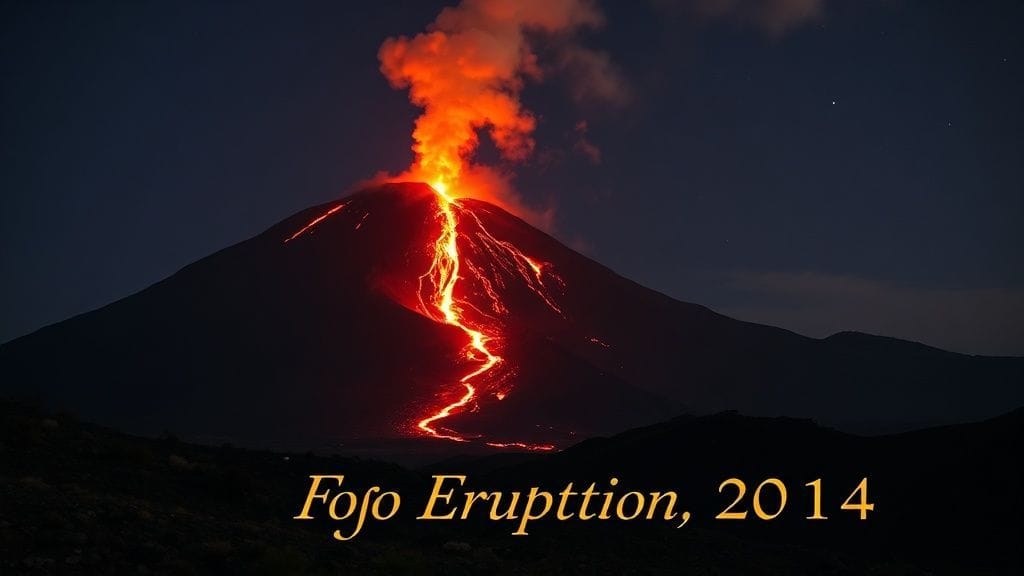
On the chilly evening of November 23, 2014, a low rumble disturbed the island of Fogo, a small volcanic jewel in the archipelago of Cape Verde, far out in the North Atlantic. The earth's crust cracked open, swallowing the quiet night and spewing molten lava that dazzled against the dark sky like a fiery serpent unleashed from the depths. The eruption was sudden yet inevitable—a furious awakening of one of Africa’s most imposing volcanoes, threatening to reshape the lives of thousands in mere hours.
The eruption did not merely announce itself with smoke and ash; it sang a terrifying aria of destruction and renewal. From the villages perched on the island’s slopes, families watched with a mixture of awe and dread as torrents of orange and red lava carved slow but relentless paths downhill, consuming everything in their path. Amidst the glow, the human drama unfolded—a community caught between nature’s fury and hope for survival.
Cape Verde’s Volcanic Heart: The Island of Fogo Underneath It All
Fogo, meaning “fire” in Portuguese, is no accidental name. This volcanic island, dominated by the imposing Pico do Fogo, is the highest peak in Cape Verde, rising nearly 2,830 meters above sea level. It is a dramatic island of contrasts; fertile lands nurtured by volcanic soil sit alongside barren lava fields, a testimony to countless catastrophic eruptions dating back centuries.
Its volcanic core pulses beneath the surface, a stark reminder of the island’s precarious position on the inert boundary between the African Plate and the Atlantic Ocean. The physical geography shaped local life and culture, carving settlements in the shadow of the volcano and embedding the mountain into Cape Verdean identity. Yet the presence of such geological dynamism came with ever-present risk—a risk that the people of Fogo knew all too well.
Historical Shadows: Previous Eruptions and the Island’s Volcanic Legacy
Long before the 2014 eruption, Fogo’s volcanic past was steeped in a cycle of creation and destruction. The island's most recent major eruption before 2014 occurred in 1995-1996, which forcibly evacuated more than a thousand people, leveled vineyards, and reshaped the landscape. Prior to that, eruptions in 1951 and 1953 likewise compelled evacuations and partial destruction. But records show that Fogo’s ventriloquism—its ability to spew fire and ash—has haunted the island for centuries.
These repeated episodes left families ready to face nature’s dangers, but also psychologically marked by trauma and cautious reverence. Stories passed down through generations spoke of ancient times when lava flows swallowed entire villages, reminding every inhabitant that the mountain was alive, unpredictable, and sovereign.
The Calm Before the Storm: Social and Economic Life on Fogo Before November 2014
In the months and years before the eruption, life on Fogo was a delicate balance. Agriculture, particularly wine production from vineyards nurtured by volcanic soils, was the mainstay of the island’s economy. The fertile caldera—known locally as “Chã das Caldeiras”—boasted rich lands watered by natural springs, supporting a close-knit community that lived in harmony and dependence on the mountain.
Tourism was slowly growing, attracted by the island’s unspoiled nature and haunting landscapes. Yet many remained wary, relying on subsistence farming and small-scale trade. The risk posed by Pico do Fogo hovered in the back of everyone’s minds, a latent threat to this seemingly peaceful existence.
November 23, 2014: The Ground Trembles and the Sky Ignites
The first tremors began early on November 23. At first, subtle and brushed off as minor tectonic adjustments, they rapidly escalated into violent shakes felt island-wide. By nightfall, the unmistakable glow of erupting lava was visible from villages several kilometers away.
The volcano's vent at Chã das Caldeiras ruptured, releasing ash plumes that darkened the sky and lava that coursed down the mountainside like molten rivers. The air filled with the acrid scent of sulfur and smoke. For the people of Fogo, it was both a spectacle and a storm of anxiety—their mountain, alive again in all its danger.
Eyewitness Voices: Stories of Fear, Awe, and Resilience
Maria Fernandes, a local schoolteacher, recalled: “I was at home when the ground started shaking. My children screamed as the sky lit up with fire. But even terrified, we knew what we had to do—stay calm, gather what we could, and leave.”
Many recounted the eerie contrast between natural beauty and imminent peril—the glowing lava lighting the night in terrifying splendor. Some watched the ethereal, flowing streams of fire, unable to tear their eyes away, caught in a moment of history and heartbreak.
The Lava Flows Through the Night: The Advance of Destruction
As November 23 bled into November 24, lava flows intensified and expanded. Entire vineyards and small settlements such as Portela and Bangaeira became engulfed beneath thick layers of molten rock. Homes, infrastructure, and centuries-old agricultural terraces were reduced to blackened ruin.
The stubborn lava flow seemed to mimic a relentless predator, swallowing everything with methodical slowness. But behind its devastations was a cruel mercy—slow enough to allow evacuation, yet swift enough to reshape the island forever.
Emergency Response: Local and International Efforts to Save Lives
Cape Verde’s authorities mobilized immediately. Evacuation orders were issued swiftly, with the military and civil protection units working tirelessly to remove residents from harm’s way. International agencies, including the United Nations Office for the Coordination of Humanitarian Affairs, provided support and resources.
Emergency shelters were set up, and the government coordinated aid distribution. The challenge was immense: evacuate thousands from isolated areas, preserve lives, and manage growing uncertainty in the face of nature’s wrath.
The Evacuation: Leaving Home Behind
For many inhabitants of the island, the evacuation was heartbreaking. Forced to leave behind homes, lands, and livelihoods, families grappled with loss and uncertainty. Old men sat watching the fiery skies, knowing the land beneath them was being transformed forever.
But a remarkable resilience emerged. Communities banded together, sharing stories, resources, and hope. The evacuation was not just a flight from danger—it was the beginning of a collective trauma punctuated by solidarity.
The Landscape Transformed: The Physical and Ecological Impact of the Eruption
By the time the eruption ceased in February 2015, it had fundamentally altered Fogo’s topography. Around 70% of the caldera basin was covered in fresh lava fields. Entire villages had vanished beneath hardened crust; vineyards and farms were buried.
Yet, volcanic soil is fertile. This paradox of destruction and creation shaped the ecological aftermath. Though barren at first, the new landscape would, over time, nurture fresh vegetation, resettlement, and a transformed identity tied to the mountain’s persistent pulse.
The Human Toll: Loss, Displacement, and Trauma
Though no lives were lost—a rare and fortunate outcome—the eruption took a toll that transcended physical destruction. Over 1,000 residents were displaced. Many lost their sources of livelihood, facing poverty and insecurity.
Psychological scars ran deep. Families mourned their lost homes and the rupture of community ties. The eruption was a collective trauma, a reminder of human vulnerability in the face of nature’s primordial power.
Scientific Eyes on Fogo: Monitoring the Volcano’s Fury
Scientists across the globe focused their attention on Pico do Fogo during and after the eruption. Seismologists, volcanologists, and remote sensing experts collaborated to understand the eruption’s dynamics, assess its risks, and develop early warning systems.
Satellite imagery, ground sensors, and aerial surveys painted an evolving portrait of volcanic behavior, offering hope that future eruptions might one day be predicted more accurately, saving lives and property.
Media and the World’s Gaze: How the Eruption Captivated Global Attention
Despite Cape Verde’s remote location, the 2014 eruption attracted significant media coverage. International news outlets chronicled the spectacle and tragedy of the eruption, broadcasting images of glowing lava flows and frightened communities.
The world witnessed the intimate dance of destruction and survival, sparking conversations about climate vulnerability, disaster preparedness, and the fragile relationship between humans and nature.
Politics Amidst the Ash: The Cape Verde Government’s Role and Challenges
The eruption tested Cape Verde’s political mettle. The government faced logistical hurdles in evacuation, resource allocation, and reconstruction funding. Balancing immediate humanitarian needs with long-term recovery posed significant challenges.
Political discourse emerged around disaster management, urban planning, and economic diversification to reduce vulnerability, highlighting the complexities of governance in disaster-prone regions.
Rebuilding and Recovery: After the Flames of 2014
In the months following the eruption, the island embarked on a difficult path of recovery. International aid and government programs sought to rebuild infrastructure, restore agriculture, and provide housing.
The sense of community and resilience shone through, with residents eager to return and reclaim their lives. Investments in disaster risk reduction became priorities for sustainable future coexistence with the mountain.
Memory and Identity: How the Fogo Eruption Shapes Cape Verde’s Future
The eruption not only reshaped the island physically but also transformed cultural identity. Fogo’s people reconciled their mythic relationship with the volcano—a source of both nourishment and destruction.
Memorials and oral histories emerged to honor the event, embedding it in collective memory. For Cape Verde, the eruption became a symbol of endurance, adaptation, and the intertwining of human and natural history.
Lessons Learned: Volcanic Disaster Preparedness in Island Nations
Fogo’s 2014 eruption offered vital lessons for volcanic islands worldwide. Early warning systems, community education, and coordinated emergency response were underscored as essential.
It also illuminated the challenges faced by small island nations vulnerable to natural disasters, emphasizing the need for international support and sustainable development.
The Eruption in Context: Comparing Fogo to Other Volcanic Disasters Worldwide
In comparison to eruptions like Mount St. Helens (1980) or Eyjafjallajökull (2010), Fogo’s 2014 event was smaller in scale but no less impactful to its community. Its slow-moving lava flows, relative lack of explosive power, and successful evacuations made it a case study in disaster management, resilience, and human adaptation.
Cultural Resonance: The Volcano’s Place in Cape Verdean Heritage
Pico do Fogo is more than a mountain—it is a cultural icon. Its presence figures in Cape Verdean music, folklore, and spirituality. The 2014 eruption renewed the island’s engagement with its volcanic identity, inspiring art, literature, and public discourse.
The volcano’s power—both destructive and generative—shaped the collective imagination, anchoring people to their land and history.
Conclusion
From fiery apocalypse to fertile renewal, the 2014 eruption of Fogo is a profound tale of nature’s enduring power and humanity’s resolute spirit. It reminds us that beneath the veneer of everyday life lies a world shaped by volatile forces, yet also by the courage of communities who face upheaval with dignity and hope.
As the island continues to heal and evolve, Fogo’s eruption remains etched in time—as a story of survival, transformation, and the intimate bond between people and their land.
FAQs
Q1: What caused the 2014 eruption of Fogo volcano?
A1: The eruption was caused by tectonic movements and magma pressure beneath the Pico do Fogo volcano, which accumulated until the earth’s crust fractured, releasing lava, ash, and gases.
Q2: How many people were affected by the eruption?
A2: More than 1,000 residents were displaced by the lava flows and ash fall, with many losing homes and livelihoods, though thankfully no fatalities were reported.
Q3: How does the Fogo eruption compare to previous eruptions on the island?
A3: The 2014 eruption was similar in scale to the major eruptions of 1951 and 1995-96, producing extensive lava flows and displacing communities, but early warnings and evacuations mitigated human losses.
Q4: What measures were taken to protect residents during the eruption?
A4: Authorities conducted evacuations, set up emergency shelters, coordinated with international organizations for aid, and provided real-time monitoring to anticipate volcanic activity.
Q5: What are the long-term effects of the eruption on Fogo’s landscape?
A5: The eruption buried much of the caldera under lava, destroying agriculture and homes but creating new fertile soils that will eventually support regrowth and resettlement.
Q6: How did the eruption impact Cape Verde’s economy?
A6: The destruction of vineyards and displacement hurt local agriculture and tourism temporarily, but reconstruction efforts and renewed interest in geotourism have helped recovery.
Q7: Is Pico do Fogo still active, and can another eruption happen soon?
A7: Yes, Pico do Fogo remains an active volcano. While no immediate eruption was forecasted after 2014, ongoing monitoring is critical as future eruptions are possible.
Q8: How has the eruption influenced Cape Verdean culture?
A8: The eruption entered local folklore, inspired artistic expression, and reinforced the cultural importance of the volcano as a symbol of life's resilience amid adversity.

