Table of Contents
- Dawn of a New Era: The Birth of the Croatian Duchy
- The Adriatic Crossroads: Dalmatia in the Early Middle Ages
- Tribal Roots and Early Settlements: Who Were the Croats?
- Power Struggles in the Balkans: Between Byzantium and the Franks
- The Role of Nin and Split: Cities at the Heart of Change
- The Legend and the Reality: Origin Myths of the Croatian Duchy
- The Recognition by External Powers: A Strategic Validation
- The Structure of a Duchy: Governance and Society
- Religion and Identity: The Spread of Christianity
- The Role of the Croatian Dukes: Between Warrior and Diplomat
- The Influence of the Byzantine Empire on Dalmatia
- The Frankish Campaigns and Their Impact
- The Social Fabric: From Tribal Clans to Organized Polities
- Economy and Settlement Patterns in 9th Century Dalmatia
- Cultural Synthesis: Slavic, Roman, and Byzantine Traditions
- Military Conflicts and Alliances during the Duchy Formation
- The Language and Script: Early Croatian Literacy and Church Use
- Relations with Neighboring Peoples: A Delicate Balance
- The Coastal Cities as Gateways: Maritime Trade and Diplomacy
- Legacy of the Croatian Duchy: Foundations of a Nation
- Later Visions and Historical Memory of the 9th Century Formation
- Conclusion: From Duchy to Kingdom – The Seed of Modern Croatia
- FAQs on the Croatian Duchy
- External Resource
- Internal Link
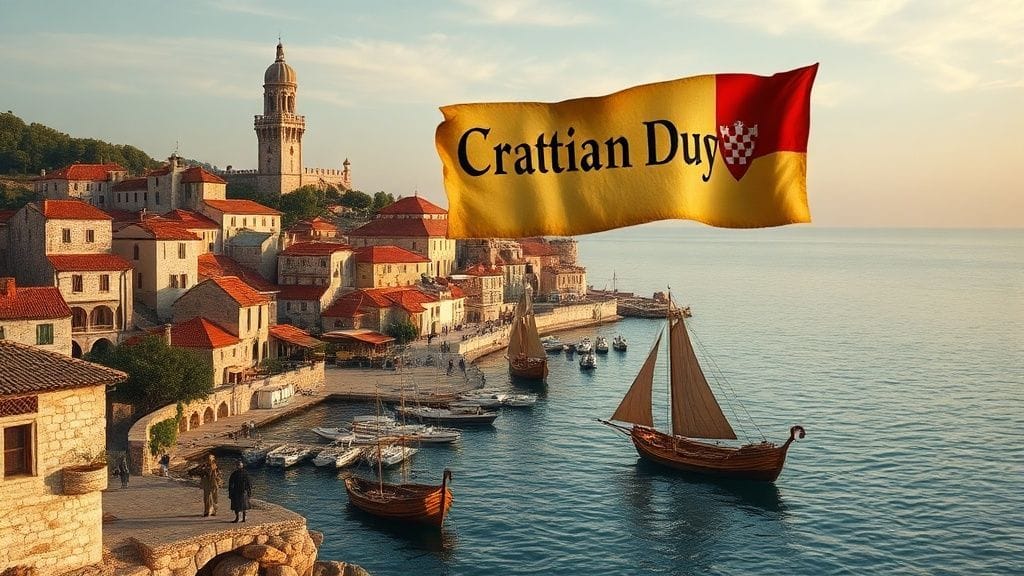
In the fading lavender light of a Dalmatian sunset, the waves whispered secrets to the ancient stones of Nin and Split—secrets of a nascent power, a people coalescing from tribal shrouds into a duchy whose echoes would resonate through the centuries. The 9th century was not merely a passage of time but a crucible—a defining moment where geography, politics, and identity entwined with the restless tides of empires to give birth to the Croatian Duchy, recognized and rooted on the Adriatic shores of Dalmatia.
Dawn of a New Era: The Birth of the Croatian Duchy
The recognition of the Croatian Duchy was no casual affair; it was the outcome of a turbulent, intricate dance of diplomacy, warfare, migration, and cultural ferment. From humble tribal beginnings to the first acknowledged polity, this transformation was a watershed that would shape the destiny of the western Balkans. This chapter in history is often veiled by legend and fragmentary chronicles, yet within it lies the birth of a coherent Croatian identity, a political entity threading the loose weave of tribes into a fabric of governance and diplomacy.
The Adriatic Crossroads: Dalmatia in the Early Middle Ages
Dalmatia in the 9th century was a region of contrasts—a rugged coastline dotted with Romanized cities like Split and Nin, encircled by Slavic settlers newly arrived from the east, while Byzantine and Frankish influences fought for supremacy over its corridors. The Adriatic Sea was not merely a body of water but the artery for trade, cultural contact, and conflict, linking peoples and empires. Amidst this kaleidoscope, the Croatian Duchy emerged, staking its claim between waning imperial shadows.
Tribal Roots and Early Settlements: Who Were the Croats?
Long before the duchy’s formal recognition, the Slavs migrating into the Balkans during the 6th and 7th centuries had settled in the dense forests and rugged mountains. The Croats, an amalgam of Slavic clans possibly mingled with Iranian or Gothic elements according to some historians, adapted quickly. The tribal chiefdoms began to coalesce into regional powers, setting the stage for a united polity. Their identity, however, was fluid, shaped by oral traditions and a patchwork of alliances.
Power Struggles in the Balkans: Between Byzantium and the Franks
The political landscape of the 9th century Balkans was fragmented and fiercely contested. The Byzantine Empire sought to maintain its hold on Dalmatian cities, while the Carolingian Franks expanded their influence southward. Both powers recognized that the native Slavic clans posed a wild card. In this crucible of conflict, acknowledging a local ruler like the Croatian Duke served imperial strategies: a buffer against rivals, a stabilizing force, and a channel for allegiance.
The Role of Nin and Split: Cities at the Heart of Change
Nin, ancient and symbolic—the reputed first Croatian seat—and Split, a thriving Roman heritage city, were not mere backdrops but pivotal centers in the duchy’s ascent. Nin’s bishopric, one of the earliest in the region, carried religious weight, while Split’s fortifications and infrastructures offered a glimpse of urban resilience amidst rural ascendancy. Recognition of the duchy was intertwined with control over these urban jewels, ensuring legitimacy beyond tribal territories.
The Legend and the Reality: Origin Myths of the Croatian Duchy
Medieval chroniclers, especially those writing centuries later, wrapped the duchy’s origins in mythic narratives. Tales of the White Croats crossing from the north, divine mandates, and ancestral lineages mingled with historical fact. These stories forged a collective memory and provided a foundational myth that legitimized rulers and unified disparate peoples—essential tools in constructing early medieval states.
The Recognition by External Powers: A Strategic Validation
The critical turning point in the duchy's founding narrative was its formal recognition by neighboring powers. This acknowledgment—whether by Byzantine authorities, Frankish kings, or papal envoys—was not simply ceremonial but conferred diplomatic status, opening pathways for trade, alliance, and legitimacy. Recognition was both a mark of achievement and a political necessity amid the competing ambitions that crisscrossed Dalmatia.
The Structure of a Duchy: Governance and Society
Far from a mere tribal confederation, the Croatian Duchy developed governing institutions reflecting both indigenous traditions and foreign influences. The duke held supreme authority but relied on local chieftains and an emerging nobility. Administrative structures, legal customs, and mechanisms for tribute and military conscription evolved as the duchy's complexity grew. This marked a transition toward statehood, with nascent concepts of law and order.
Religion and Identity: The Spread of Christianity
Christianity’s expansion played a defining role in the duchy's formation. The Church offered ideological cohesion and cultural alignment with the broader European milieu. Missionaries and bishops fostered literacy, built churches, and integrated native beliefs within Christian frameworks. Faith also became a diplomatic asset, linking the duchy to Rome and Constantinople, and offering a spiritual identity distinct from pagan neighbors.
The Role of the Croatian Dukes: Between Warrior and Diplomat
Dukes were not merely warlords but astute political leaders navigating threats and opportunities. Figures such as Trpimir I, often considered the first historically documented Croatian ruler, balanced brutal military campaigns with delicate diplomacy. Their legacies were carved not only in battlefield victories but also in charters, alliances, and the fostering of religious institutions, setting precedents for future rulers.
The Influence of the Byzantine Empire on Dalmatia
Throughout the 9th century, Byzantium’s presence was palpable. Though Byzantine military grip weakened, its cultural, religious, and administrative influences permeated the duchy. Byzantine rites and artistic motifs found their way into Croatian bishoprics, while the empire sought to mold the duchy into a loyal vassal, highlighting the importance of soft power alongside arms.
The Frankish Campaigns and Their Impact
The rise of the Carolingian Empire under Charlemagne and his successors brought new dynamics to Dalmatia’s politics. Frankish military incursions, often intertwined with missionary activity, challenged Byzantine dominance. Frankish overlordship, albeit loose, provided the Croatian duchy with legal frameworks and access to wider Western European networks, albeit sometimes at the expense of autonomy.
The Social Fabric: From Tribal Clans to Organized Polities
Social transformation accompanied political change. Extended kinship groups gave way to a more hierarchical society with defined roles—warriors, nobles, clergy, peasants. Customary laws evolved, often codified orally, reinforcing bonds of loyalty and justice. The rise of fortifications and settlements indicated increasing social complexity and stabilization.
Economy and Settlement Patterns in 9th Century Dalmatia
Dalmatia’s economy combined agriculture, pastoralism, fishing, and burgeoning trade, especially in coastal hubs. Salt production, maritime commerce, and control over mountain passes enriched the duchy and attracted merchants and craftsmen. Settlements evolved from simple villages to fortified towns, the architectural legacy of which informs our archaeological understanding today.
Cultural Synthesis: Slavic, Roman, and Byzantine Traditions
The duchy’s culture was a vibrant tapestry, weaving Slavic folk customs with Roman urbanity and Byzantine orthodoxy. Language absorbed Latin ecclesiastical terms; art and music displayed hybrid styles; law reflected customary and imperial influences. This synthesis shaped a distinct Croatian identity, forged in the confluence of civilizations.
Military Conflicts and Alliances during the Duchy Formation
Military engagements were frequent and decisive. The duchy fought off Avars, rival Slavic tribes, and imperial forces. At times, it allied with Byzantium or the Franks, demonstrating political pragmatism. Fortresses like Klis became strategic anchors. Warfare shaped territorial boundaries and consolidated the duke’s authority over independent clans.
The Language and Script: Early Croatian Literacy and Church Use
Literacy was primarily the domain of the Church, which introduced Latin script and Christian texts. Some evidence suggests the gradual adoption of Glagolitic script—a unique Slavic alphabet—enabling vernacular religious expression. This nascent literary culture was revolutionary, planting the seeds for Croatian written tradition.
Relations with Neighboring Peoples: A Delicate Balance
The Croatian Duchy navigated a complex matrix of relations—with Bulgars to the east, Venetians across the sea, Avars previously dominant, and other Slavic polities. Diplomacy alternated between conflict and cooperation, marriages and alliances solidifying ties. These relationships were crucial for survival, trade, and political leverage.
The Coastal Cities as Gateways: Maritime Trade and Diplomacy
Split, Zadar, and other Dalmatian ports connected the duchy to the Mediterranean world, from Venice to Constantinople. Control over these cities meant access to wealth, culture, and information, but also exposure to foreign ambitions. The cities became melting pots and battlegrounds for influence, making them key players in the duchy’s story.
Legacy of the Croatian Duchy: Foundations of a Nation
The 9th-century duchy laid cornerstones that endured through centuries: territorial boundaries, political institutions, religious identity, and cultural consciousness. While the kingdom that followed would expand and transform these foundations, the duchy’s formation remains a landmark in Croatian national memory and historiography, symbolizing emergence from tribal dispersion to statehood.
Later Visions and Historical Memory of the 9th Century Formation
Medieval chroniclers, Renaissance humanists, and modern historians all revisited the duchy’s origins, each interpreting the events in light of contemporary needs. Nationalism in the 19th and 20th centuries further mythologized the duchy as the cradle of Croatian sovereignty. This layered memory illustrates how history is both lived and remembered.
Conclusion: From Duchy to Kingdom – The Seed of Modern Croatia
The recognition of the Croatian Duchy in the 9th century was far more than a political event; it was a seminal moment forging identity, statehood, and culture in a contested landscape. The duchy’s emergence amid imperial rivalries, cultural collisions, and social transformations set in motion the enduring Croatian nation. As the Adriatic waves continue to lap ancient shores, the legacy of this formative era remains alive—in stone, story, and spirit.
Conclusion
The formation and recognition of the Croatian Duchy in the 9th century stand as a testament to the resilience and ingenuity of a people navigating the precarious currents of early medieval geopolitics. From the shadow of empires to the dawn of an autonomous polity, the duchy was born not just from power struggles but from a profound cultural synthesis and emerging collective identity. It embodies the universal human quest to define a homeland and a future. In tracing its inception—from the tribulations of Dalmatia’s rugged coasts to the hallowed halls of bishops and dukes—we glimpse not only the birth of a nation but the enduring narrative of belonging and sovereignty that continues to inspire Croatia today.
FAQs
1. What factors led to the formation of the Croatian Duchy in the 9th century?
The duchy’s formation resulted from Slavic migrations, declining Byzantine and Avar control, the strategic interests of the Franks and Byzantines, and the internal consolidation of tribal clans under strong leaders who sought political legitimization.
2. Why were Nin and Split so important during this period?
Nin was an early religious and symbolic center, often cited as the first Croatian seat, while Split was a thriving coastal city with Roman heritage and maritime connections, making both critical for political legitimacy and economic activity.
3. How did religion influence the Croatian state formation?
Christianity provided ideological unity, literacy, and connections to Byzantium and Rome. The establishment of bishoprics in Dalmatian cities helped integrate the duchy into the European Christian world and reinforced emerging Croatian identity.
4. What role did external powers like Byzantium and the Franks play?
Both empires sought to exert influence over Dalmatia, using recognition of local dukes as political tools to stabilize frontiers. Their rivalries shaped the duchy’s diplomatic and military strategies.
5. How did the Croatian Duchy contribute to the modern Croatian identity?
It laid the foundations of territorial boundaries, state institutions, legal customs, and cultural identity. Its legacy endures in national memory as the origin of Croatian statehood.
6. Were there unique cultural elements in the Croatian Duchy?
Yes, notably the use of the Glagolitic script and the fusion of Slavic, Roman, and Byzantine cultural traits that shaped language, art, and religion.
7. What challenges did the duchy face during its early years?
Constant military threats from neighboring tribes and empires, political fragmentation, and balancing influence between competing powers made survival and consolidation difficult.
8. How do historians study the Croatian Duchy given the scarcity of contemporary sources?
They rely on a combination of archaeological evidence, later medieval chronicles, Byzantine and Frankish records, and linguistic and cultural analysis to reconstruct this formative epoch.

