Table of Contents
- Before the Song: A Land Exhausted by Fragmentation
- The Child of Chaos: Zhao Kuangyin’s Early Life and Ambitions
- Armies in the Dawn: The Road to the Chenqiao Mutiny
- The Night Before Empire: February 3, 960
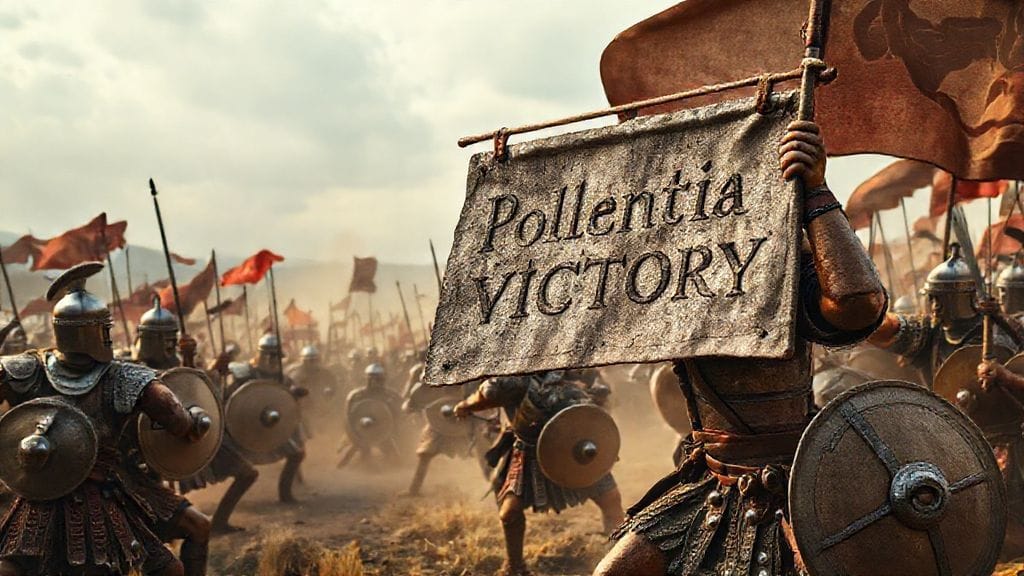
- Yellow Robes at Chenqiao: The Moment a Dynasty Was Born
- From General to Emperor Taizu: Legitimizing the Coup
- Pacifying the Generals: Wine, Lanterns, and the Politics of Fear
- Reforging the Realm: Centralization and the New Imperial Order
- Cities of Ink and Silver: The Economic Miracle of the Northern Song
- The Scholar’s Empire: Examinations, Learning, and Civil Governance
- Borderlands of Anxiety: Military Weakness and Foreign Threats
- Everyday Lives in a Reordered World
- Printing, Thought, and the Birth of a New Chinese Culture
- The Human Cost of Unity: Taxation, Corruption, and Dissent
- Storm Clouds Gathering: From Founding Stability to Looming Crisis
- Legacy Across a Thousand Years: How the Song Shaped Modern China
- Conclusion
- FAQs
- External Resource
- Internal Link
Article Summary: On a cold winter morning in 960, a seasoned general named Zhao Kuangyin was draped in a yellow robe by his own soldiers, an act that signaled the founding of the Song Dynasty and the end of decades of violent fragmentation in China. This article explores how that single moment at Chenqiao became the catalyst for a sweeping transformation of politics, economy, and culture. It traces the turmoil of the Five Dynasties and Ten Kingdoms period, the personal journey of Zhao Kuangyin, and the carefully orchestrated steps he took to legitimize his coup. We then follow the new dynasty as it centralized power, curtailed warlords, and nurtured commerce, cities, and a vibrant scholar-official class. Yet behind the prosperity lay deep anxieties: fragile borders, underfunded armies, and a growing reliance on civil bureaucrats over soldiers. Through narrative episodes and analysis, the article shows how the founding of the Song Dynasty set in motion both a golden age of culture and a structural weakness that later invaders would exploit. By the end, we see that 960 was not merely a date but a hinge of history whose consequences still echo in Chinese identity and statecraft. The founding of the Song Dynasty thus emerges as both a triumph of order over chaos and a cautionary tale about the balance between culture, commerce, and military power.
Before the Song: A Land Exhausted by Fragmentation
The founding of the Song Dynasty cannot be understood without first stepping into the world that preceded it—a world frayed by civil war, broken allegiances, and exhausted people. In the early tenth century, China, once unified and radiant under the Tang, had shattered into a mosaic of contending regimes. Historians call this era the Five Dynasties and Ten Kingdoms, but for ordinary farmers and craftspeople, labels mattered less than the reality of marching boots and shifting banners.
North China, the ancient heartland along the Yellow River, saw five short-lived dynasties rise and fall in rapid succession: Later Liang, Later Tang, Later Jin, Later Han, and Later Zhou. Each regime came to power through violence—a coup in the barracks, a mutiny in the field, or the assassination of a ruler whose authority had never settled into the soil. One general toppled another; one provincial commander replaced his predecessor, only to fall himself a few years later. In the south and southwest, the so-called Ten Kingdoms ruled semi-independently, preserving pockets of stability and culture but remaining fractured, wary, and opportunistic.
Imagine being a villager in Henan during these decades. You might pay taxes to one dynasty one year, and to a new dynasty the next. Your eldest son might be conscripted by a warlord who swore solemn loyalty to the emperor, only to betray him on the next campaign. Harvests went to feed armies, not families. Town walls rose higher, but so did the anxiety inside them. Tales circulated of cities burned when their commanders misjudged which banner to support. The empire that once seemed eternal had become a chessboard where people were the expendable pieces.
The imperial idea, however, never fully died. Even amid chaos, chroniclers continued to write in the language of the Mandate of Heaven. Heaven, they believed, abandoned dynasties that misruled and bestowed its favor on those who restored order. The memory of the Tang—a realm of poetry, cosmopolitan trade, and firm central authority—haunted the ambitions of every general who marched beneath fluttering standards. Each man who seized the capital could envision himself as the next legitimate Son of Heaven.
Yet legitimacy in this age was brittle. Warlords presided over their fiefs with private armies loyal to individuals, not institutions. They collected their own taxes, ran their own administrations, and treated the imperial court—whichever one happened to occupy the northern capital at the moment—as a necessary but negotiable partner. The military had become both the backbone and the poison of the state. Soldiers decided emperors; emperors rarely decided soldiers.
By the middle of the tenth century, the Later Zhou dynasty emerged as one of the more competent of the Five Dynasties. Its rulers undertook reforms, strengthened central administration, and tried to discipline their generals. For a brief moment, it looked as though the endless cycle might be broken. Roads became safer, granaries were stocked, and some farmers dared to believe that the worst might be over.
But this was only the beginning of a deeper transformation. Behind the surface, the very structures that had made the old empires powerful were changing. Gunpowder had appeared on the battlefield in primitive forms, printing presses began multiplying texts, and commercial networks thickened like the veins of a living organism. For this new world, endless coups by cavalry commanders were not merely brutal; they were anachronistic. China needed a different kind of dynasty—one that could harness commerce, literacy, and administration, not just swords. The land was ready for someone who understood that.
The Child of Chaos: Zhao Kuangyin’s Early Life and Ambitions
Zhao Kuangyin, the man who would become Emperor Taizu of Song, was born into this storm-tossed age around 927. As a child, he did not grow up in a tranquil Confucian household presided over by a stable dynasty. He grew up amid rumors of mutinies, tales of destroyed prefectures, and the constant knowledge that one’s status could vanish overnight with the fall of a patron.
His family was of modest but respectable military background. His father, Zhao Hongyin, served as a low-ranking officer, a man of enough ability to wear armor but not enough influence to command his own fate. The young Zhao learned to ride before he could read; his world was that of barracks courtyards, training fields, and the rattle of weapons at dawn. Yet he also absorbed the deep cultural memory that ran through even a divided China: the classics were recited, tales of sages and just rulers passed down. In an almost paradoxical way, chaos instilled in him not just the desire for power, but the longing for order.
Stories from later Song historians depict Zhao Kuangyin as a man of calm bravery, the sort of commander whose presence steadied men in the thick of battle. Perhaps these tales were embroidered to burnish the legend of the founding of the Song Dynasty; perhaps they reflect a core truth. Either way, they show the image his supporters wanted to project: a warrior, yes, but a measured and humane one, different from the brutal warlords who had ravaged the land.
As a young officer serving under the Later Han and Later Zhou, Zhao distinguished himself in campaigns against internal rivals and external tribes. He learned, through hard marches and narrow escapes, how fragile power could be. He watched how generals plotted behind silk screens, how alliances were struck with toasts in the evening and betrayed before sunrise. The lesson was clear: in an age where soldiers made and unmade emperors, any man who wished to survive—let alone rule—needed to understand both the mind of a soldier and the rituals of a statesman.
Another formative influence was his experience of the north’s vulnerability. To the steppe and beyond lay the Khitan Liao dynasty, a formidable power that had carved away key territories and could threaten the Central Plain. Zhao’s campaigns taught him that even as Chinese warlords fought one another, the real danger often rode in from the borderlands. The idea of unification was not just a moral or cultural ideal; it was a strategic necessity. A divided China invited predation.
Yet Zhao Kuangyin was not simply a man of the frontier. He moved through the capital Kaifeng, then a seat of the Later Zhou, and saw a different China: bustling markets, printed books, scholars debating policy, families building fortunes on river trade rather than on the spear. This dual exposure—to the churn of military politics and the quiet resilience of civil life—would mark his vision. He came to believe that a dynasty that relied too heavily on the army was doomed to repeat the cycle of the Five Dynasties, but a dynasty that neglected defense entirely would perish at the hands of its neighbors.
In this crucible, ambition ignited. Zhao was no mere cog in the war machine; he was a man who began to imagine that he could reorder the machine itself. The founding of the Song Dynasty would one day be celebrated as a heaven-ordained inevitability, but in these years, it was still only a dangerous possibility flickering in the mind of a talented commander.
Armies in the Dawn: The Road to the Chenqiao Mutiny
By the late 950s, the Later Zhou dynasty, under Emperor Shizong, had shown signs of genuine strength. Reforms were underway; the central government asserted more control over regional commanders. Zhao Kuangyin, by now a trusted general, rose swiftly through the hierarchy. His reputation for competence and discipline placed him at the center of the regime’s military apparatus.
Then fate took one of its cruel turns. In 959, Emperor Shizong died unexpectedly at a young age, allegedly from illness contracted on campaign. Into the vacuum stepped his seven-year-old son, Emperor Gong, a child on the throne in a world of hardened warriors. A regency was formed, headed by ministers and palace officials who hoped to guide the boy and preserve stability. But to the generals on the frontiers, the sight of a child-king in Kaifeng was an invitation, not a reassurance.
Rumors began to swirl—of uprisings at the borders, of neighboring states testing the mettle of the boy emperor, of opportunists within the court who might use the young ruler as a puppet. In this climate of uncertainty, Zhao Kuangyin’s troops were ordered to march north to confront a supposed incursion by forces said to threaten the capital. It is astonishing, isn’t it, how in moments of greatest danger, the decisions that change history can appear, at first, utterly routine?
Zhao set out from Kaifeng at the head of his forces, heading toward the small station of Chenqiao. The winter air was bitter; the ground, hard and rutted from countless campaigns. The men, many of them veterans of too many wars, grumbled about another march for another master whose dynasty might not last a decade. But among the officers, a different mood simmered. They knew what it meant to command a loyal, battle-hardened army at a time when the throne was occupied by a child.
Here historians begin to debate the exact sequence of events, but the broad strokes are clear. Some claim that certain ministers in Kaifeng, fearful of rival generals, quietly encouraged Zhao’s rise, hinting that Heaven might favor a stronger hand. Others suggest that Zhao’s closest officers, weary of unstable regimes, conspired to place their commander on the throne. A later Song chronicler, trying to gloss over any suggestion of premeditated treason, stressed that Zhao at first resisted, that he was compelled by his men. Yet behind the celebrations that would later greet the founding of the Song Dynasty lay a simple fact: no one can be crowned by surprise if he has not already become indispensable.
On the night of February 3, 960, the army camped at Chenqiao, a small way-station on the road north. Fires flickered in the cold air; soldiers clustered around them, sharing wine, rumors, and fears. Somewhere in the camp—perhaps in a tent lit by flickering lamplight—whispers became plans. By dawn, China would have a new emperor, and no one in Kaifeng yet knew it.
The Night Before Empire: February 3, 960
Reconstructing that night at Chenqiao is an exercise in disciplined imagination. The chronicles offer sparse details, shaped by later political necessity. But we know enough to picture something of the mood.
Zhao Kuangyin, fatigued by years of war and by the knowledge that the young Later Zhou emperor stood atop a shaky throne, must have sensed both danger and opportunity. He had been entrusted with the empire’s main field army at a moment when rumors of external threat turned every march into a potential power play. Did he go to sleep that night planning to become emperor? Or did he lie awake, listening to the murmur of his men and the moan of the wind, knowing that forces he had only partly set in motion were converging on a single, irreversible morning?
Survivors of similar coups across Chinese history speak of a palpable tension in the hours before the deed: the nervous checking of weapons, the subtle clustering of loyal officers, the obscure but unmistakable shift in the demeanors of commanders. At Chenqiao, those who conspired—if conspire they did—likely reminded one another of the unending turbulence of the past half-century. They might have asked: Was it not better for one strong, capable general to seize the Mandate of Heaven than to leave the empire in the hands of a child and his quarreling regents?
In the nearby tents, rank-and-file soldiers were more pragmatic. They spoke of pay, not philosophy. The founding of the Song Dynasty was not yet a concept; it was a possibility that their fortunes might improve under a leader they trusted. Many of them had marched with Zhao before, had seen him share their hardships on campaign. His elevation would bind their loyalty more tightly, and their loyalty in turn might secure his ascendancy.
Somewhere in the darkness, the yellow imperial robe was prepared. Later legend claimed that it appeared almost miraculously, as if Heaven itself had stitched it in the night. In reality, robes of state did not materialize from thin air. Someone acquired or fashioned it; someone knew the size, the color, the symbolism. The ritual of imperial inauguration was being readied not in the palace at Kaifeng, but in a chilly encampment miles away.
By the time the campfires burned low and the men drifted into uneasy sleep, history had already started to turn. What remained was the ceremony—the visible moment when private intention became public fact.
Yellow Robes at Chenqiao: The Moment a Dynasty Was Born
Dawn broke on February 4, 960, cold and pale over Chenqiao. The events of the next few hours would be recounted and embellished for centuries. Yet at their core lay a simple, theatrical scene.
As the soldiers assembled, officers stepped forward and declared that ominous celestial signs and political realities made it clear: the Later Zhou had lost the Mandate of Heaven. A child on the throne, fractious ministers, and regional instability—these, they claimed, were unmistakable portents. The army could no longer march under a banner that Heaven had abandoned. Someone had to take responsibility for the realm.
They turned to Zhao Kuangyin.
In the most famous version of the story, the officers produced the yellow robe—a symbol of imperial authority—and urged Zhao to accept it. He protested, we are told, insisting on his loyalty to the child emperor. They insisted right back, casting his reluctance as virtue and his acceptance as duty. At last, moved by their pleas and by the desperate state of the realm, he allowed the robe to be placed over his armor.
Whether or not these protests actually happened, the symbolism of the scene was powerful. The founding of the Song Dynasty was staged not as a naked grab for power, but as a reluctant assumption of a burden. The mutiny at Chenqiao portrayed Zhao not as a traitor but as a savior pressed into service by anxious troops.
When the robe settled onto his shoulders, a murmur likely passed through the ranks—part awe, part calculation. The men had just chosen sides in a dangerous game. If Zhao failed, they would be rebels crushed by the Later Zhou. If he succeeded, they would be the vanguard of a new dynasty, entitled to rewards and rank.
Trumpets—or their equivalent—sounded. A proclamation was made: the Later Zhou was finished; Zhao Kuangyin was now emperor, soon to be known as Taizu, the Great Ancestor of the new Song Dynasty. Banners were unfurled, perhaps hastily repainted or re-embroidered. Yesterday’s general had become today’s sovereign.
At that very hour, the officials in Kaifeng still rose to their duties believing they served Emperor Gong of Later Zhou. By the time the sun was high, a new reality was marching toward them—one that would, in a matter of days, transform their world. The founding of the Song Dynasty was not accompanied by the thunder of a great battle or a spectacular siege. It came instead with a carefully managed coup on a cold morning, a robe draped over a soldier’s shoulders, and an army turning its steps back toward the capital.
From General to Emperor Taizu: Legitimizing the Coup
Soon after the events at Chenqiao, Zhao Kuangyin led his newly reoriented army south and back toward Kaifeng. The capital’s defenses, never designed to repel the very forces meant to guard it, offered more psychological resistance than actual force. Officials, courtiers, and even palace guards faced a simple, terrifying question: resist in the name of the child emperor and risk annihilation, or accept the fait accompli and pledge loyalty to the new ruler marching toward their gates?
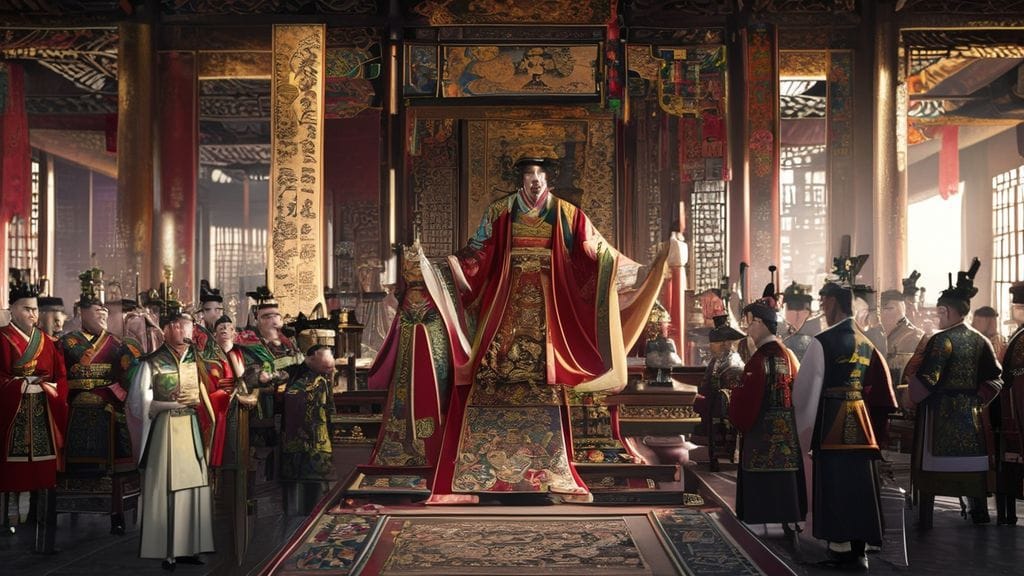
The answer, for most, was swift. Kaifeng capitulated with little bloodshed. Zhao entered the city not as a conqueror after a brutal siege, but as a new master in search of recognition. He was proclaimed emperor, taking the reign title that would mark the beginning of a new era. The founding of the Song Dynasty, while born of military mutiny, quickly took on the trappings of lawful succession.
Zhao’s first challenge was political theater. He needed to demonstrate that his rule was not merely the victory of a mutinous army but an expression of Heaven’s will. Edicts were issued affirming the virtues of the new regime and lamenting the misfortunes of the old. Omens were retrospectively “discovered”—eclipses, strange weather, prophetic dreams—pointing to the inevitability of the change. Historians at the imperial academy would later codify these narratives, embedding them in the grand continuum of Chinese history.
Crucially, Zhao treated the deposed child emperor and his family with relative leniency. Rather than ordering their execution—a common practice in earlier, more brutal transitions—he placed them under house arrest with honorable titles. This choice was not only an act of personal restraint but a calculated signal: the new dynasty would rule with moral authority, not terror. As one later chronicle summarized, “He took the throne with soldiers, but sought to hold it with righteousness.”
Religious and ceremonial acts played their part. Sacrifices were offered to Heaven and Earth, to the ancestral spirits, to the sacred altars of the empire. By performing these rites correctly and publicly, Zhao transformed the memory of the Chenqiao Mutiny into the image of a divinely sanctioned enthronement. The robes, the banners, the incense, the music—all worked together to reframe a coup as a restoration.
He also chose a dynastic name: “Song.” This was not an arbitrary label but a deliberate nod to the Song Prefecture, a region associated with Zhao’s own base of power. It rooted the dynasty in a specific geography while signaling continuity with China’s classical heritage. The founding of the Song Dynasty thus became, in name as well as in fact, the alignment of a personal story with the fate of an entire civilization.
Pacifying the Generals: Wine, Lanterns, and the Politics of Fear
Once enthroned, Emperor Taizu of Song faced a paradox. It was the military that had raised him up—but it was precisely the military that had doomed so many of his predecessors. If generals could make an emperor, generals could unmake one. The founding of the Song Dynasty would mean little if it simply began another round of army-led coups.
Taizu moved swiftly and subtly. One of the most famous episodes, recounted in later texts, is known as the “banquet of releasing the generals.” According to this tale, Taizu invited his leading commanders to a grand feast in the palace, with wine flowing freely and the glow of lanterns bathing the hall in gold. As the night wore on and the men relaxed, the emperor began to speak, not as an aloof sovereign but as a fellow veteran of difficult campaigns.
He reminded them of the decades of turmoil: how many dynasties had fallen at the hands of their own soldiers, how many generals had risen on waves of blood only to be drowned by the next? Did they wish the same for themselves—or for their sons? Was there not a better path, in which they could retire with honor and wealth, leaving the burden of rule to the throne and the administration to civil officials?
One by one, the generals—perhaps sobered by the wine, perhaps chilled by the implications—agreed. They submitted their resignations from active command and accepted comfortable posts or estates far from the centers of power. Whether this story unfolded exactly as told or was polished for posterity, its essence is historically sound: Taizu systematically stripped his military peers of independent armies and folded their forces into units loyal directly to the central government.
This policy went beyond individual banquets. Command structures were reorganized; rotations and overlapping jurisdictions ensured that no single general could build a private fief. Military governors who had once ruled provinces like miniature kings now found themselves under closer scrutiny and tighter financial control. Armies were placed under civil administration in key ways—supplies, promotions, and assignments all passed through bureaucratic channels in the capital.
It was a masterstroke of long-term thinking. The founding of the Song Dynasty became not just a change of ruler, but a fundamental rebalancing of power between sword and brush. Yet the seeds of future vulnerability were sown here as well. By disarming the generals politically, Taizu and his successors also sapped the autonomy and initiative of the army on the battlefield. For now, however, the priority was clear: never again should an emperor wake in fear of his own troops.
Reforging the Realm: Centralization and the New Imperial Order
With the unruly military brought to heel, Emperor Taizu turned to his second great task: stitching back together a fragmented realm and forging a new administrative order. The founding of the Song Dynasty was, in essence, the beginning of a vast consolidation project—political, fiscal, and cultural.
Taizu and his successors set about weakening the power of regional rulers who had, during previous decades, enjoyed almost king-like autonomy. Provincial offices were divided so that no single official controlled both civil administration and military command. Rotation of posts became more systematic; a governor who began to build a local power base could be reassigned before he became too entrenched. Above them, a strengthened central bureaucracy oversaw taxation, justice, and personnel appointments with a zeal that often felt intrusive to those on the ground.
Fiscal reforms were crucial. In times of fragmentation, tax revenues had leaked away into the coffers of warlords and corrupt intermediaries. The Song state sought to reclaim that lost wealth. Detailed land surveys were conducted to determine who owned what and how much they should pay. Tax collection became more regularized, and revenues were increasingly directed toward the central treasury rather than dissipated in local patronage.
At the heart of this system sat the capital, Kaifeng, a city that would come to symbolize the Song order: dense, administratively complex, and humming with commercial energy. From its ministries and bureaus radiated a network of documentation—edicts, reports, registers, examination lists—that bound the distant corners of the empire into a single, paper-woven web. The historian Jacques Gernet once observed that the Song state was “perhaps the most bureaucratic of all Chinese dynasties,” an assessment that captures both its strength and its stiffness.
This centralization was not merely technical. It was justified in moral and ideological terms. The emperor, advised by scholar-officials steeped in Confucian classics, claimed the duty to ensure fairness in taxation, justice in law, and stability in society. Local magnates might resent interference, but the rhetoric of good governance gave the court a powerful language with which to assert its authority. When abuses or famines were reported, the center could intervene, dispatching inspectors or relief grain—acts that further legitimized its reach.
The founding of the Song Dynasty thus marks the rise of a highly literate, document-driven form of empire. Power flowed less from the clash of armies than from the steady, relentless movement of memorials, decrees, and ledgers. In this world, to hold a brush was to hold a kind of weapon; ink became one of the main instruments of imperial control.
Cities of Ink and Silver: The Economic Miracle of the Northern Song
As political centralization took hold, something remarkable unfolded in the fields, rivers, and markets of China. The Song era, particularly in its northern phase, witnessed an economic expansion so profound that some modern scholars have called it a “medieval Chinese economic revolution.” The founding of the Song Dynasty did not create this transformation from nothing, but it accelerated and focused it.
Population grew significantly, perhaps reaching 100 million by the 11th century. Improved agricultural techniques—such as the spread of fast-ripening rice in the south and better irrigation in the north—allowed farmers to produce more food from less land. Surpluses flowed into burgeoning market towns, where they could be traded for tools, textiles, and luxuries.
The state itself played an ambivalent yet crucial role. On one hand, it taxed heavily and regulated key commodities such as salt and tea. On the other, it invested in infrastructure: canals were dredged, dikes repaired, and roads maintained, all of which facilitated larger-scale trade. River transport in particular turned the Grand Canal and connected waterways into the arteries of a vast commercial body.
Kaifeng, and later other major cities, became hubs of astonishing vitality. Contemporary descriptions speak of streets crowded with shops, restaurants, teahouses, and entertainment venues. Night markets glowed with lantern light, and a culture of urban consumption took shape. It is here that the Song differed markedly from many earlier dynasties: wealth increasingly originated not merely from landholding and imperial favor, but from trade, craft, and entrepreneurial activity.
Monetary innovation kept pace. The state minted large quantities of copper coins, but demand surged so much that physical coinage alone could not keep markets fluid. Paper money—initially promissory notes issued by merchants and later taken over by the state—began to circulate. The world’s first government-backed paper currency appeared in the Song era, a quiet revolution that changed how value could be stored and moved. Silver ingots, credit instruments, and complex partnerships knitted merchants together across provinces.
For ordinary people, the effects were mixed but palpable. A peasant might now sell surplus grain or handicrafts at regional markets; a craftsman could find steady work in a city workshop; a boatman could make a living on the busy canals. At the same time, rising commercialization could intensify inequalities: those with capital and connections flourished, while those without might find themselves squeezed by taxes and market fluctuations.
Yet taken as a whole, the prosperity of the Song economy stood in stark contrast to the devastation of the preceding warlord era. The founding of the Song Dynasty thus marked not just the restoration of political unity, but the opening of a new chapter in Chinese economic history—one in which cities, markets, and money played unprecedented roles. While Europe was still in the early stages of its own commercial awakening, Song China had already become one of the most vibrant market-based societies on earth.
The Scholar’s Empire: Examinations, Learning, and Civil Governance
If armies brought Zhao Kuangyin to power, it was scholars who would sustain and define his dynasty. The Song court deepened and regularized the civil service examination system, turning it into the primary route for entry into the ruling bureaucracy. This shift was both ideological and practical—and it was directly linked to the anxieties that had surrounded the founding of the Song Dynasty.
The old order of hereditary aristocratic clans and powerful warlords had shown itself disastrously unstable. Taizu and his successors wanted a different kind of ruling class: men whose primary loyalty was to the state, not to local lineages; men trained in texts, not in tactics alone. The classical Confucian curriculum—focused on moral philosophy, governance, and literary expression—became the foundation of a new meritocratic ideal.
Examinations were held at multiple levels: local, provincial, and metropolitan. Candidates memorized canonical texts, composed essays on policy issues, and demonstrated their mastery of formal prose styles. Success could catapult the son of a modest family into the ranks of the elite. Failure, often repeated over years, could doom a man to obscurity. The emotional intensity of this system is evident in contemporary poems, which lament the sleepless nights, the ink-stained fingers, the crushing disappointment of seeing one’s name absent from the posted results.
Those who passed entered a world of both prestige and constraint. As officials, they were expected to serve in posts across the empire, rotating to prevent local entrenchment. They wrote detailed reports, advised the throne on policy, and sometimes quarreled bitterly with one another over the correct interpretation of Confucian principles. Policy debates on issues like land reform, military spending, and taxation roiled the court. In one famous case cited by later scholars, reformer Wang Anshi in the 11th century championed state interventions to support peasants and increase revenue, only to face fierce opposition from more conservative colleagues.
The intellectual temperature of the age rose. Printing, which flourished under the Song, allowed for the wide dissemination of texts. Commentaries on the classics multiplied; historical works were compiled and corrected; philosophical schools took shape. Neo-Confucianism—a renewed form of Confucian thought that engaged deeply with questions of metaphysics, human nature, and self-cultivation—began to crystallize. Thinkers like Cheng Yi and Zhu Xi, though flourishing slightly later, built on the foundations laid in these early Song decades.
For the common people, scholar-officials were often the human face of the state. They collected taxes, judged legal disputes, coordinated famine relief, and oversaw local public works. A just official could transform the fortunes of a county; a corrupt or cruel one could deepen suffering. In the best cases, they embodied the ideal that had animated the founding of the Song Dynasty: that government should be guided by wisdom and moral responsibility, not merely by force.
Borderlands of Anxiety: Military Weakness and Foreign Threats
For all its internal sophistication and prosperity, the Song state faced a persistent strategic problem: it never fully controlled the northern frontier. Even as Zhao Kuangyin consolidated his rule, significant territories remained under the sway of powerful non-Han regimes, most notably the Khitan Liao dynasty. The founding of the Song Dynasty, therefore, was not the restoration of the Tang’s full territorial extent, but a more modest unification that left important lands and fortresses beyond its grasp.
Taizu and his successors attempted to address this through both diplomacy and force. There were campaigns aimed at recovering lost prefectures, some successful, others disastrous. The balance of power, however, was not in the Song’s favor. Its decision to subordinate the military to civil control, while wise from the standpoint of internal stability, had unintended consequences on the battlefield. Commanders hesitated to take initiative without clear approval from the capital. Resources were sometimes diverted from the army to other state priorities.
Border fortresses became the stage for a tense, chronic standoff. Truces were brokered, tribute missions exchanged, and border markets established. One famous treaty, later known as the Chanyuan Treaty (1005), formalized a peace between the Song and the Liao that would last for over a century, but at the price of regular payments of silver and silk from the Song to its northern neighbor. This arrangement allowed the Song to redirect energy toward internal development, but it was also a stark admission of military limitations.
Ordinary soldiers on the frontiers experienced this strategic malaise in immediate ways. Stationed far from the bustling cities and examination halls, they endured harsh climates, lean rations, and a sense of being valued less than their civil counterparts. Over time, the social prestige of the military declined, particularly in comparison to the exalted status of scholar-officials. As a later saying would put it, “Good iron is not used to make nails; good men do not become soldiers.”
Yet the threats were real. The Song’s long borders touched not only the Liao but, eventually, the Jurchen Jin and other nomadic and semi-nomadic polities. These neighbors had their own sophisticated political cultures and formidable cavalry forces. Any sign of weakness in the Song court—factional struggles, fiscal strain, or domestic unrest—could tempt them to test the empire’s defenses.
Thus, from the very beginning, the founding of the Song Dynasty carried within it a great tension: an empire that excelled at administration and culture, but that was structurally cautious, sometimes timid, in military affairs. The same policies that prevented internal coups also hampered the state’s capacity to project power outward. For the time being, diplomacy and wealth papered over the cracks. But history, as always, was patient.
Everyday Lives in a Reordered World
Grand narratives of dynastic founding, military reform, and economic growth can obscure a simple question: what did all of this mean for the millions of men and women who never saw a battlefield or set foot in the capital? To grasp the human significance of the founding of the Song Dynasty, we must peer into villages, workshops, and markets.
For farmers in the fertile plains of the north or the rice paddies of the south, the most immediate change was relief from the worst chaos of warlordism. Fields burned by rival armies during the Five Dynasties era could now be replanted with greater confidence. Tax demands might still feel heavy—sometimes painfully so—but they were more predictable, issued by a recognized state rather than extorted by whichever militia held the road that month.
Over time, the Song state’s emphasis on documentation and surveys meant that landholding became more clearly recorded. This had mixed consequences. On one hand, it could protect smallholders from arbitrary seizures by local bullies who could no longer pretend that “no one knew” who owned a particular plot. On the other, it made it easier for wealthy families and powerful monasteries to accumulate land through purchase or manipulation, legally consolidating what might previously have been disputed.
In towns and cities, artisans and merchants found new opportunities. A potter’s kiln in a burgeoning market town could secure regular orders from urban retailers; a weaver’s workshop might supply cloth to both local buyers and distant clients via intermediaries. The expansion of riverine trade meant that even modest producers could, indirectly, serve far-flung markets. Households diversified their income: a peasant family might farm in the mornings and spin thread or make simple tools in the evenings for sale.
Social mobility, while still limited by birth and gender, grew more fluid. A bright boy from a rural background might catch the eye of a local teacher, study hard, and attempt the civil service examinations. Success was far from guaranteed, but the mere existence of such a path changed the aspirations of families. Tales of men who rose from obscurity to high office circulated in villages, feeding a cautious hope that learning might offer an escape from backbreaking labor.
Women’s lives were shaped by the same overall conditions but filtered through patriarchal constraints. In poorer households, women labored in the fields and workshops alongside men. In wealthier families, especially in cities, some women engaged in managing household finances or even participating indirectly in trade. Cultural expectations increasingly emphasized chastity and domestic virtue, a trend that would intensify in later Song and Neo-Confucian discourse. Yet within those bounds, women forged networks of kinship, faith, and mutual aid that helped them navigate the shifting economic and social landscape.
Festivals and rituals provided continuity with the past. New Year celebrations, temple fairs, ancestral sacrifices—all continued under the Song, but now with greater state involvement in some cases. Official calendars regulated the rhythm of the year; state-promoted moral texts shaped ideals of family and community. For the majority of the populace, the founding of the Song Dynasty was not a dramatic rupture, but a reorientation: less arbitrary violence, more bureaucracy; fewer roaming armies, more taxes and officials.
Printing, Thought, and the Birth of a New Chinese Culture
Among the most far-reaching consequences of the founding of the Song Dynasty was the explosion of cultural production it helped to foster. Political stability, economic surplus, and a scholar-centered bureaucracy created fertile ground for innovations in printing, literature, and philosophy that would shape Chinese civilization for centuries.
Woodblock printing, which had existed in rudimentary forms earlier, flourished under the Song. Private publishers and government bureaus alike carved blocks and produced books in unprecedented quantities. Classics for examination candidates, Buddhist sutras, medical treatises, poetry collections, encyclopedias—all flowed from workshops where craftsmen inked and pressed wood onto paper in rhythmic repetition. Books became more affordable and more widely available. While still a privilege of the educated, literacy spread beyond a narrow elite.
This proliferation of texts did more than simply make knowledge more accessible; it changed how knowledge itself was organized. Vast compilations were undertaken, such as official histories of previous dynasties and collected works of esteemed authors. Commentarial traditions crystallized, with scholars writing layered interpretations on the classics that would, in turn, become objects of study. One might say that the Song did not just inherit Chinese culture—it curated, systematized, and in many ways reinvented it.
Philosophically, this era laid the roots of what later came to be called Neo-Confucianism. Confronted with the allure and intellectual depth of Buddhism and Daoism, Confucian thinkers responded not by rejecting them outright, but by developing a more comprehensive worldview. They probed questions of cosmology, human nature, and ethics, seeking to ground moral cultivation in a metaphysical understanding of the universe. This synthesis produced rich debates about how to live a good life, how to govern justly, and how to harmonize inner cultivation with external action.
Poetry and prose flowered as well. Song poets like Su Shi (Su Dongpo), who lived in the later 11th century, exemplify the blend of personal expression, political reflection, and technical mastery characteristic of the age. In one famous poem, Su Shi stands beneath the bright moon at the Mid-Autumn Festival and muses, “Men have sorrow and joy, they part and meet again; the moon is bright or dim, it waxes and wanes. This has been going on since the beginning of time.” The lines capture something of the Song sensibility: a keen awareness of transience, a reflective engagement with history, and a search for constancy amid change.
The state both promoted and constrained this cultural efflorescence. Official academies received funding; examination curricula shaped what texts were read and valued. At the same time, censors could punish writings deemed seditious, and factional struggles at court sometimes turned on the interpretation of words. Still, compared to many earlier and later periods, the early Song climate allowed for a relatively open intellectual atmosphere, at least within the bounds of elite discourse.
The founding of the Song Dynasty, by emphasizing scholar-officials and written governance, thus transformed culture from a peripheral adornment of rule into one of its central pillars. To be powerful in the Song world increasingly meant not just to command troops or own land, but to wield language and ideas.
The Human Cost of Unity: Taxation, Corruption, and Dissent
No state, however refined its rhetoric or prosperous its economy, can rule so vast a population without causing pain. Beneath the success stories of the Song lay grimmer tales of heavy taxation, official corruption, and local unrest. The founding of the Song Dynasty had promised an end to chaotic warfare, but it could not eliminate the structural tensions inherent in an agrarian empire.
The very efficiency of the Song bureaucracy enabled the central government to extract more consistent revenue from the population than many previous regimes. Land taxes, labor obligations, and monopolies on key goods like salt weighed heavily on peasants and small producers. In good years, these burdens might be bearable; in bad harvests, they could tip families into ruin. Usurers and landlords capitalized on distress, offering loans that led to the loss of land when debtors could not repay.
Officials, recruited through the examinations and theoretically bound by Confucian ethics, were not immune to temptation. Some skimmed taxes, took bribes, or colluded with local elites to shield wealth from state demands while squeezing the poor. Others, overwhelmed by the complexity of their duties and the expectations of superiors, simply failed to administer relief effectively when disasters struck. The distance between the ideals praised in academy halls and the realities of village life could be painfully wide.
Rebellions, though generally smaller in scale than the great uprisings that toppled some other dynasties, did occur. Local banditry flared when times were hard; secret societies sometimes organized resistance. While the founding of the Song Dynasty had reduced the number of rival claimants to the throne, it had not silenced the resentments produced by inequality and exploitation. The state’s own records—memorials, judicial reports, relief petitions—testify to a constant undercurrent of tension.
Yet it would be wrong to see only cynicism. Many officials took their moral duty seriously, risking their careers to report abuses or advocate reforms. Some took inspiration from the memory of Taizu himself, who had risen from the ranks and, in idealized portrayals, was said to have cared deeply for the common people. Later reformers pointed to the founding of the Song Dynasty as a moment when strong, principled leadership had reshaped the realm—an example they invoked when urging emperors to rein in corruption or adjust policies.
Still, the structural imbalance remained: a sophisticated state, hungry for revenue to fund its bureaucracy and pay for defense, drawing heavily from a rural population whose capacity to bear that burden varied widely with weather, soil, and local conditions. The price of unity and order, for many, was paid in sweat and tears.
Storm Clouds Gathering: From Founding Stability to Looming Crisis
In the decades following 960, the Song Dynasty largely achieved what its founders had set out to accomplish: it ended the chronic civil wars of the Five Dynasties era, stabilized governance, and presided over an extraordinary economic and cultural flourishing. Yet within this success, vulnerabilities slowly hardened into fault lines that later shocks would exploit.
Militarily, the pattern of caution and compromise on the northern front persisted. While not directly attributable to Emperor Taizu’s early policies alone, the institutional suspicion of ambitious generals, the fragmentation of command, and the preference for negotiation over force became ingrained. When new powers emerged on the steppe and forest frontiers—most notably the Jurchen Jin in the early 12th century—the Song faced adversaries that were both militarily agile and politically organized.
Fiscal pressures mounted as well. Sustaining a vast bureaucracy, maintaining infrastructure, paying off border enemies with tribute, and funding periodic military campaigns strained the treasury. Attempts at reform, like those led by Wang Anshi, sparked vehement debate within the scholar-official class. Factions formed around different visions of how to balance state intervention, market forces, and social welfare. These arguments were not mere academic quibbles; they influenced tax rates, military provisioning, and the fate of millions.
Meanwhile, social changes driven by commercialization continued to reshape the fabric of society. Wealth concentrated in the hands of large landowners and merchant families, particularly in the more prosperous regions. Disparities between rich and poor, between regions well-connected to trade networks and those more isolated, created pockets of resentment that could erupt under stress.
None of this was obvious on that winter morning at Chenqiao. The founding of the Song Dynasty seemed, at the time, to mark a decisive break with the chaos of the recent past. But history rarely offers clean breaks. Choices that solve one problem often plant the seeds of another. The decision to tame the generals secured the throne but weakened the frontiers; the drive for efficient taxation funded the state but burdened the peasantry; the promotion of scholars enriched governance but sometimes blinded policymakers to military realities.
When, in 1127, northern invaders would one day seize Kaifeng and carry off the emperor in an event remembered as the Jingkang Incident, later historians would look back to the dynasty’s origins for explanations. Some would argue that the very character of the Song state—its gentleness at home, its caution abroad—had been both its greatest virtue and its fatal flaw, a pattern set in motion from the founding itself.
Legacy Across a Thousand Years: How the Song Shaped Modern China
Although the Northern Song would eventually fall and the dynasty retreat to the south before its final eclipse by the Mongols, the legacy of its founding endured far beyond its political lifespan. The structures, values, and culture that arose from the founding of the Song Dynasty left deep imprints on what it meant, and still means, to be Chinese.
First, the Song solidified the ideal of a scholar-bureaucratic state. While prior dynasties had utilized examinations and Confucian education, the Song made them the central pillars of official recruitment and governance. Subsequent dynasties, even those founded by non-Han conquerors like the Yuan and Qing, adopted and adapted this model, recognizing its power to legitimize rule and harness talent. The image of the morally upright, bookish official laboring in service to the people became a lasting archetype.
Second, the economic transformation of the Song—its integration of markets, its encouragement (and taxation) of commerce, its experiments with paper money—anticipated features of later global capitalism. Some historians argue that had geopolitical circumstances been different, China might have led the world into an early modern economic age centuries before Europe. That it did not is due less to any lack of Song dynamism than to the complex interplay of internal constraints and external pressures, including devastating invasions.
Third, the cultural and intellectual achievements of the Song, especially in Neo-Confucian thought and printed scholarship, became the standard curriculum for East Asia as a whole. Korean, Japanese, and Vietnamese scholars studied Song texts, debated Song commentaries, and imported Song models of governance and ethical life. In this way, the founding of the Song Dynasty had ripple effects far beyond the Yellow and Yangtze Rivers.
In modern China, too, the Song occupies a special place in historical memory. Its technological innovations—gunpowder weapons, advanced shipbuilding, complex clockworks, and more—are often cited as evidence of China’s long-standing scientific ingenuity. Its art, especially painting and ceramics, is admired for its subtlety, its evocation of mood and space. The image of Song cities—bustling, commercial, urban—speaks to contemporary Chinese experiences of rapid urbanization and market expansion.
Perhaps most poignantly, the Song story resonates with modern debates about the balance between culture and power. An empire that prized learning and commerce yet struggled to defend its borders poses questions that are uncomfortably relevant in any age: How should a state allocate resources between education and defense? How much should it centralize power at the cost of local flexibility? Can a society be both deeply humane and strategically secure?
On that February morning in 960, when soldiers at Chenqiao lifted a yellow robe onto the shoulders of their commander, none of them could have foreseen these distant echoes. They were thinking of survival, of pay, of the end of one dynasty and the beginning of another. Yet the founding of the Song Dynasty turned out to be not just a transition in rulers, but a turning point in the long story of Chinese statecraft and civilization, one whose legacies still invite reflection today.
Conclusion
Seen from a distance of more than a millennium, the founding of the Song Dynasty on February 4, 960 appears as both a moment of sharp drama and the opening of a long, intricate unfolding. A general wrapped in a yellow robe at Chenqiao; a child emperor quietly displaced; a capital that opened its gates to a new sovereign—these images mark the visible surface of change. Beneath them lay deeper currents: the exhaustion of a land ravaged by warlords, the hunger for durable order, and the emergence of new economic and cultural forces that demanded a different kind of state.
Zhao Kuangyin’s ascent to the throne as Emperor Taizu was not merely another coup in an age of coups. By taming the army, empowering scholar-officials, and centralizing administration, he and his successors crafted a distinctive model of rule—civil, bureaucratic, and literate—that would shape Chinese governance for centuries. This came at a cost: an undercurrent of military weakness, heavy fiscal demands, and persistent social tensions that later crises would expose. Yet for several generations, the balance held, allowing trade to flourish, cities to grow, ideas to proliferate, and culture to reach astonishing heights.
To trace the story from the chaos before 960 through the careful consolidation of power, the growth of the economy, and the blossoming of Song culture is to witness how a single dynastic founding can redirect a civilization’s trajectory. The Song did not restore the exact world of the Tang; it created something new—more urban, more commercial, more governed by the brush than the sword. In that sense, the founding of the Song Dynasty marks not just the end of one historical chapter and the start of another, but a subtle shift toward patterns of life and rule that feel strikingly modern. Its lessons—about ambition and restraint, culture and security, centralization and local life—remain as alive for us as they were for those who watched a new emperor ride toward Kaifeng under the pale winter sky.
FAQs
- What exactly happened at the Chenqiao Mutiny in 960?
The Chenqiao Mutiny was a pivotal event in which the troops commanded by Zhao Kuangyin, while supposedly marching to counter an external threat, instead proclaimed him emperor. At dawn on February 4, 960, near the station of Chenqiao, officers presented Zhao with a yellow robe symbolizing imperial authority and urged him to accept the throne, arguing that the reigning Later Zhou had lost the Mandate of Heaven. Zhao accepted, turned his army back toward the capital Kaifeng, and quickly secured control of the court. This act is traditionally regarded as the founding moment of the Song Dynasty. - Why did Zhao Kuangyin decide to overthrow the Later Zhou?
Zhao Kuangyin operated in a context of chronic instability: the Later Zhou was led by a child emperor, and external threats loomed on the frontiers. As a leading general, he likely feared both foreign invasion and internal coups by rival commanders. By seizing the throne, he could claim to be restoring order and protecting the realm, not merely advancing personal ambition. Later official histories portray his move as a reluctant assumption of responsibility, though modern historians see a blend of opportunism, calculation, and genuine concern for stability. - How did the founding of the Song Dynasty change the role of the military?
After taking power with the help of the army, Emperor Taizu moved quickly to curb its political influence. He retired or reassigned powerful generals, centralized command structures, and placed the military under tighter civil oversight. This significantly reduced the risk of future coups and strengthened the throne’s security. However, it also contributed over time to a cautious, sometimes ineffective military posture on the frontiers, making it harder for the Song to reclaim or defend certain territories against northern and western rivals. - What was distinctive about Song government compared to earlier dynasties?
Song government was marked by an unusually strong and sophisticated bureaucracy staffed largely through competitive civil service examinations. Scholar-officials, rather than hereditary nobles or powerful warlords, became the main agents of imperial rule. The state relied heavily on written documentation—memorials, reports, fiscal records—and exerted closer control over provinces. This made the government more consistent and rationalized but also more intrusive and, at times, rigid. It set a pattern that later dynasties would emulate. - How did the founding of the Song Dynasty affect ordinary people?
For many commoners, especially peasants, the most immediate benefit was a reduction in the constant warfare that had plagued the Five Dynasties and Ten Kingdoms period. Fields could be farmed with somewhat greater security, and markets revived as trade routes stabilized. Over time, commercialization created more opportunities in crafts and commerce, and the examination system opened limited avenues for social mobility. On the other hand, more efficient taxation and occasional corruption meant that many families still struggled under heavy burdens, and local unrest did not disappear. - Why is the Song Dynasty considered important in world history?
The Song era saw major advances in technology, economy, and culture: the widespread use of printing, early forms of gunpowder weaponry, sophisticated shipbuilding, and the world’s first government-issued paper money. Its urbanization and market development were remarkably advanced by global standards of the time. Intellectually, the Song laid the foundations of Neo-Confucianism, which shaped East Asian thought for centuries. These achievements make the Song a key case study for historians examining the paths to, and detours from, early modernity. - Did the founding of the Song Dynasty immediately reunify all of China?
No. While the Song quickly consolidated control over much of central and southern China, significant northern territories remained under the control of the Khitan Liao dynasty and, later, other non-Han states. The Song made efforts, both military and diplomatic, to recover these lands but never fully restored the broader frontiers once held by the Tang. Its unification was impressive within the core agrarian regions but incomplete in a broader geopolitical sense. - How reliable are the main sources about the Song’s founding?
Much of what we know comes from official histories compiled under later Song and subsequent dynasties, such as the “Song History” (Song Shi). These works aimed not only to record facts but also to justify the dynasty’s legitimacy and promote certain moral lessons. As a result, episodes like the Chenqiao Mutiny are sometimes presented in idealized form, emphasizing Zhao’s reluctance and virtue. Modern historians cross-examine these accounts with other documents and material evidence, recognizing both their value and their biases.
External Resource
Internal Link
Other Resources
- Encyclopaedia Britannica – general search for the exact subject
- Google Scholar – academic search for the exact subject
- Internet Archive – digital library search for the exact subject