Table of Contents
- The Final Day in Assisi: A Quiet Departure Amidst Reverence
- A Life Marked by Transformation and Humility
- Roots in a Prosperous Family and a World in Flux
- The Turning Point: From Youthful Rebellion to Spiritual Awakening
- Embracing Poverty: The Birth of a Radical Ideal
- The Early Franciscan Movement and Its Rapid Spread
- The Social and Religious Landscape of 13th Century Italy
- Illness Strikes: The Waning of Francis’s Physical Strength
- The Last Days: The Stigmatization and Vision at San Damiano
- Assisi on October 3, 1226: The Gathering of Friends and Followers
- Death in Simplicity: The Passing of a Saint Without Shrine
- Burial and Immediate Veneration: Assisi Transformed
- The Speedy Canonization by Pope Gregory IX
- Legacy Beyond the Grave: The Franciscan Order’s Enduring Influence
- Francis in Culture and Memory: From Medieval Saint to Modern Icon
- Reflections on Poverty, Care for Creation, and Interfaith Dialogue
- The Portrayal of Francis in Art, Literature, and Popular Imagination
- The Basilica of Saint Francis: A Testament Carved in Stone
- Pilgrimage and Memory: Assisi as a Site of Spiritual Encounter
- Francis’s Message in a Turbulent World: Relevance Through the Ages
- The Role of Francis in Shaping Christian Mysticism and Ethics
- Controversies and Myths: Untangling History from Legend
- How Francis of Assisi Inspired Movements Beyond the Church
- The Franciscan Order Today: Challenges and Continuity
- Conclusion: The Quiet Death that Echoed Through Centuries
1. The Final Day in Assisi: A Quiet Departure Amidst Reverence
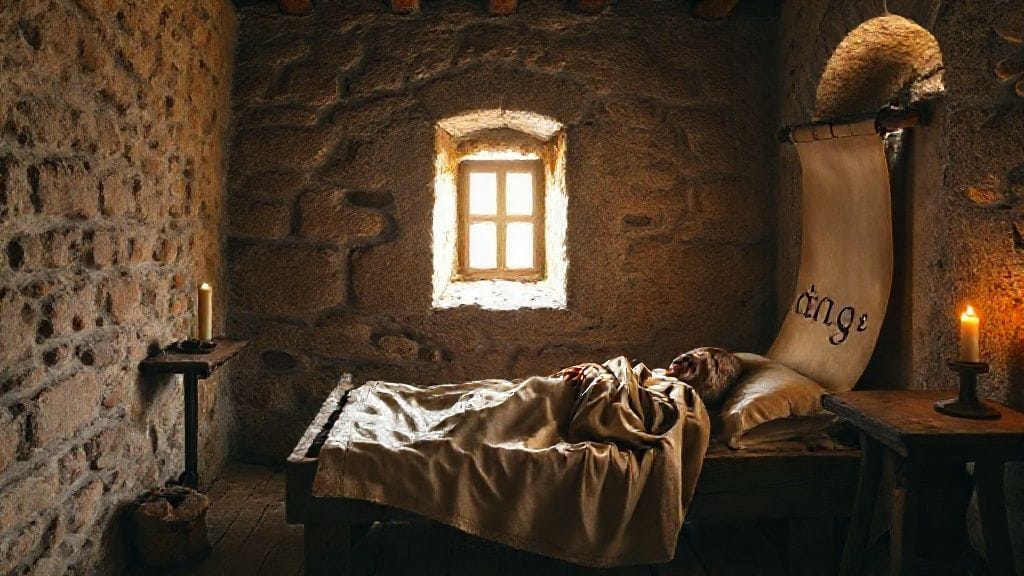
October 3, 1226, dawned cold and gray over the hilltop town of Assisi in central Italy. The early morning mist still clung to the medieval stone walls and cobbled streets, as though nature itself was mourning the imminent loss of a humble man who had forever changed the spiritual landscape of Europe. Francis of Assisi, a figure soaked in legend and lived simplicity, lay weakened and frail on a modest pallet in the little chapel of San Damiano. His breaths were shallow, yet peaceful, surrounded by brothers whose eyes brimmed with sorrow—not only for the coming of death but for the end of an era marked by radical love and uncompromising humility.
The atmosphere was heavy with silent prayers and whispered farewells. Few could have guessed that this quiet departure would echo through the centuries with such resounding influence. Francis’s death was not only the loss of a man but the ignition of a movement that dared to speak of poverty, peace, and care for all creation in a world ruled by greed and conflict.
2. A Life Marked by Transformation and Humility
Francis’s life was a tapestry of transformation: he began as a wealthy merchant’s son, known for his youthful exuberance and dreams of knighthood, only to become a wandering beggar and preacher clothed in rough wool. This transformation was not merely personal; it spoke to a profound spiritual and social challenge to the dominant powers of 13th-century Christendom.
His humility was legendary—he rejected luxury, ministered to lepers (the outcasts of society), spoke to animals as brothers, and embraced poverty not as misfortune but as a pathway to divine freedom. This radical embrace of simplicity confounded contemporaries and inspired generations. His death was the closing chapter of a narrative that combined mysticism, activism, and gentle rebellion.
3. Roots in a Prosperous Family and a World in Flux
Born Giovanni di Pietro di Bernardone in 1181 or 1182, Francis entered a prosperous merchant family in Assisi, a town then marked by political instability and factional conflict between the Guelphs and Ghibellines. His father, a successful cloth merchant, envisioned a similarly comfortable future for his son—a future filled with trade, business, and status.
The turn of the 13th century was a time of change. The feudal order was giving way to burgeoning towns and new economic classes. The Catholic Church was a dominant force, both spiritually and politically, but faced criticism for corruption and moral failure. Into this turbulent world was born a young man whose path would challenge the very foundations of worldly and ecclesiastical power.
4. The Turning Point: From Youthful Rebellion to Spiritual Awakening
Francis’s transformation emerged dramatically after his participation in a local war between Assisi and Perugia. Captured and imprisoned, he experienced firsthand the fragility of life. Upon his return, a profound spiritual experience led him to reject his former life of material indulgence and social ambition.
A pivotal moment occurred when he heard a voice from the crucifix in the abandoned San Damiano chapel, urging him to “repair my church, which is falling into ruins.” Taking these words literally and spiritually, he began repairing chapels, disregarding his father’s anger and disowning his inheritance. This act was the birth of a mission grounded in reconciling the fractured church through living poverty and love.
5. Embracing Poverty: The Birth of a Radical Ideal
Francis’s embrace of poverty was no mere personal asceticism but a revolutionary statement against the swelling wealth and moral decadence of the Church and society. He and his small group of followers wandered from town to town, preaching repentance and the Gospel of simplicity.
His refusal to own property, wear fine clothes, or even accept money set a precedent that shocked both clerics and laypeople alike. The ideal of voluntary poverty proclaimed not weakness but spiritual strength and solidarity with the poor and marginalized.
6. The Early Franciscan Movement and Its Rapid Spread
By 1220, Francis’s movement, officially named the Order of Friars Minor, had appealed to Pope Honorius III. The order’s rapid growth was fueled by its message: brotherhood transcending social status, a deep love for nature, and a call to renew Christian faith through humility.
Thousands flocked to join, drawn by Francis’s charisma and the sincerity of his vision. Unlike traditional monastic orders confined to cloisters, Franciscans roamed urban centers and villages, engaging with the world rather than retreating from it—a bold new form of religious life.
7. The Social and Religious Landscape of 13th Century Italy
Italy in the early 1200s was a patchwork of city-states constantly in conflict. The Church, though spiritual authority, was also a temporal power with complex political alliances. Many citizens viewed the clergy with suspicion or outright disdain due to wealth accumulation and moral laxity.
Francis’s message found fertile ground among those disillusioned with both secular and religious authorities. He offered a vision of Christianity that was accessible, loving, and deeply connected to the everyday struggles of life.
8. Illness Strikes: The Waning of Francis’s Physical Strength
After years of intense travel and austerity, Francis’s health began to deteriorate significantly by the mid-1220s. Blindness, paralysis, and chronic pain afflicted him, yet his spirit remained vibrant. Worn but unbroken, he continued to guide his brothers with patience and love.
The final years were marked by mystical experiences—including the famous reception of the stigmata, wounds resembling those of Christ on his own body—a sign of his intimate union with the suffering of the divine.
9. The Last Days: The Stigmatization and Vision at San Damiano
In the gloom of San Damiano, Francis’s frailty was contrasted by a luminous inner life. Reports tell of moments of ecstatic prayer and visions, including conversations with Christ and angels.
The stigmatization, received around 1224, was both a physical affliction and a spiritual gift, symbolizing his complete identification with the Passion of Christ. These last days were deeply spiritual but also filled with human tenderness; his brothers cared for him tenderly, aware that their guide was soon departing.
10. Assisi on October 3, 1226: The Gathering of Friends and Followers
On his final day, the community of friars, townspeople, and a few notable churchmen gathered quietly around the bed of Francis. The air was thick with grief and reverence. Those present would later recall the serene expression on his face as he passed through death without fear, a living testimony to the peace he preached.
The simplicity of his passing resonated deeply—he died as he lived, without grandeur or pomp. No throne of power, only the humility of a man who had surrendered all to faith and love.
11. Death in Simplicity: The Passing of a Saint Without Shrine
Unlike monarchs or nobles whose deaths provoked grand ceremonies, Francis’s death was marked by profound simplicity. His body was wrapped in a humble cloth, prepared for burial in a modest grave.
Yet, this unassuming departure did not diminish the magnitude of his life. Within weeks, Assisi began to transform as people came to venerate the tomb of a man who cared for the least and taught the language of peace.
12. Burial and Immediate Veneration: Assisi Transformed
Francis was buried in the little church of Santa Maria degli Angeli, within the Portiuncula chapel—a place dear to his heart. The faithful flocked to this small site, bearing witness to miracles and spiritual consolations.
Assisi, once a minor town torn by factional violence, became a center of pilgrimage and devotion. This immediate veneration was exceptional in a time when sainthood was a slow and cautious process.
13. The Speedy Canonization by Pope Gregory IX
In a remarkable gesture, Pope Gregory IX canonized Francis less than two years after his death, in 1228. The pope, once a friend and admirer of Francis, fast-tracked the process, recognizing the profound impact the friar had on Christendom.
The canonization ceremony itself celebrated Francis’s renewal of the Gospel and his challenge to the complacencies of church and society.
14. Legacy Beyond the Grave: The Franciscan Order’s Enduring Influence
Francis’s death did not mark the end but rather the beginning of a new epoch. The Franciscan Order grew into one of the most important religious communities in Europe, producing scholars, missionaries, artists, and reformers.
His ideals influenced not just religious life but also social justice movements, care for the environment, and approaches to intercultural dialogue.
15. Francis in Culture and Memory: From Medieval Saint to Modern Icon
Over the centuries, Francis has been represented in countless ways: as a mystic, a lover of animals, a pacifist, and even a political figure advocating peace. Poets like Dante mention him, artists like Giotto capture his likeness with vibrant frescoes, and modern movements invoke his name in calls for ecological responsibility.
He has become a symbol transcending religious boundaries—an emblem of compassion, simplicity, and hope.
16. Reflections on Poverty, Care for Creation, and Interfaith Dialogue
Francis’s radical poverty and care for "brothers" including animals anticipated modern environmental and ethical concerns. His famous “Canticle of the Creatures” remains one of the earliest literary celebrations of nature’s intrinsic value.
In recent decades, Francis’s message of peace and dialogue has inspired interfaith initiatives, bridging divides in a world often fractured by religious conflict.
17. The Portrayal of Francis in Art, Literature, and Popular Imagination
Artistic renditions of Francis—from the luminous frescoes in Assisi to modern films and books—serve as windows into his enduring appeal. His image with stigmata, surrounded by birds and animals, captures the imagination and invites reflection on humanity’s relationship with all life.
Literature from medieval hagiographies to contemporary novels explore his complexity—combining humility with leadership, mysticism with activism.
18. The Basilica of Saint Francis: A Testament Carved in Stone
Commissioned to honor the new saint, the Basilica of Saint Francis in Assisi stands as a masterpiece of medieval architecture and art. Its walls narrate the life of Francis in frescoes by artists like Giotto, inviting pilgrims worldwide into a visual contemplation of his life and message.
The basilica symbolizes the union of faith and culture, a sacred space that continues to inspire.
19. Pilgrimage and Memory: Assisi as a Site of Spiritual Encounter
Assisi remains a magnet for pilgrims and tourists alike, drawn by the palpable history and spirituality infused in its air. Walking the ancient streets or entering the basilica transports visitors into a dialogue across centuries with a man who lived radical love.
Pilgrimage here is not mere tourism but a quest for meaning inspired by Francis’s example.
20. Francis’s Message in a Turbulent World: Relevance Through the Ages
In every age of conflict and consumerism, Francis’s call to poverty, peace, and care for creation resonates anew. His life challenges modernity’s priorities and invites a reexamination of values centered on simplicity and compassion.
The current global ecological crises and social inequalities find in Francis a patron and a prophet.
21. The Role of Francis in Shaping Christian Mysticism and Ethics
Francis contributed profoundly to Christian spirituality. His fusion of active service with contemplative prayer shaped mysticism and ethical practice. His approach contrasted with scholastic theology by emphasizing experience and relationship with God through creation.
His teachings influenced later saints, theologians, and reform movements.
22. Controversies and Myths: Untangling History from Legend
Over time, myths surrounding Francis abound—from stories of preaching to wolves to miraculous healings. Scholars continue to analyze sources, distinguishing history from pious embellishments.
This disentangling deepens appreciation of who Francis really was—neither simple myth nor distant saint but a complex historical figure.
23. How Francis of Assisi Inspired Movements Beyond the Church
Francis’s ideals transcended ecclesiastical boundaries, influencing figures like Mahatma Gandhi and Martin Luther King Jr., who found inspiration in his principles of nonviolence and service.
Beyond Christianity, Francis represents a universal voice of compassion and peace.
24. The Franciscan Order Today: Challenges and Continuity
Today’s Franciscans grapple with maintaining the founder’s radical ideals amidst modern complexities. Issues of poverty, social justice, and environmental stewardship remain central.
The order continues its mission worldwide, adapting Francis’s vision to contemporary needs while preserving its foundational charism.
25. Conclusion: The Quiet Death that Echoed Through Centuries
Francis of Assisi’s death on that chilly October day in 1226 was quiet, humble, almost unnoticed beyond the walls of a small chapel. Yet the echo of his life has resonated loudly through history. His radical poverty, unconditional love, and fierce commitment to peace sparked a renewal of faith and humanity.
Long after his passing, Francis’s life invites each generation to rediscover the radical joy of simplicity and the profound power of mercy. In a world still torn by conflict and suffering, his legacy remains a beacon of hope—an enduring reminder that sometimes the quietest departures can ignite the greatest revolutions.
Conclusion
Francis of Assisi’s death was more than an end; it was a threshold opening onto a new horizon of faith, simplicity, and universal love. This man from a small hill town transformed medieval Christendom by embodying the Gospel’s most challenging demands—poverty, humility, and care for all creation.
His life invites continuous reflection: what does it mean to live with radical authenticity? How do we embrace the vulnerable and the marginalized in our times? The shadow of his humble passing in Assisi still inspires a restless humanity searching for meaning beyond wealth and power.
In the silent chapel where he breathed his last, the heart of Francis beats on—in every act of kindness, every step toward justice, and every care for the fragile earth that he called “Brother Sun” and “Sister Moon.” His story reminds us that true greatness often walks wrapped in simplicity.
FAQs
Q1: What led Francis of Assisi to reject his wealthy upbringing?
Francis underwent a profound spiritual awakening after experiences with war, imprisonment, and contemplation of the Gospel, leading him to reject material wealth and embrace a life of poverty and service.
Q2: How was Francis’s death received by his contemporaries?
His death was met with mourning among his followers and townspeople, sparking immediate veneration that eventually led to his rapid canonization by Pope Gregory IX.
Q3: What is the significance of Francis’s stigmata?
The stigmata symbolized his deep spiritual union with Christ’s suffering, marking him as a living witness to the Passion and underscoring his mystic experience.
Q4: How did Francis’s ideals influence the Church and society?
His emphasis on poverty, humility, and care for the marginalized inspired the foundation of the Franciscan Order and influenced social and religious reforms within and beyond the Church.
Q5: Why is Assisi an important pilgrimage site today?
Assisi houses Francis’s tomb and the Basilica of Saint Francis, making it a spiritual destination for those seeking inspiration from his life and teachings.
Q6: How is Francis relevant to contemporary issues?
Francis’s teachings on poverty and care for creation have become central to modern ecological movements and dialogues on social justice and interfaith peace.
Q7: What myths surround Francis, and how have historians addressed them?
Stories such as preaching to wolves or miraculous healings blend fact and legend; historians strive to contextualize these tales to understand the historical Francis amid devotional narratives.
Q8: What challenges does the Franciscan Order face today?
Balancing the founder’s radical ideals with modern realities of church life, poverty, and global environmental crises remains an ongoing challenge for the order.