Table of Contents
- The Final Morning at Warm Springs: A Nation Holds Its Breath
- The Journey to Warm Springs: Roosevelt’s Lifeline and Sanctuary
- The Man Behind the Presidency: A Life Marked by Struggle and Resilience
- The Years of War and Leadership: The Weight of a Global Conflict
- Warm Springs, Georgia: The Quiet Town’s Unlikely Place in History
- The Day the World Stood Still: April 12, 1945
- Immediate Reactions: Shock and Mourning Across America
- The Impact on WWII Strategy and Allied Leadership
- Eleanor Roosevelt: The Widow’s Enduring Legacy
- The Nation’s Grief: Public Mourning and Memorials
- The Political Aftermath: Truman’s Unexpected Rise
- Roosevelt’s Health: The Hidden Battle Behind the Presidency
- Warm Springs’ Legacy: From Rehabilitation to Historical Pilgrimage
- The Myths and Realities Surrounding Roosevelt’s Death
- Roosevelt’s Final Hours: Eyewitness Accounts and Anecdotes
- The Broader Implications: War, Peace, and the American Future
- Remembering Roosevelt: Monuments, Memorials, and Memory
- Lessons from Leadership: Roosevelt’s Death as a Turning Point
- The Global Response: Allies and Enemy Reactions
- The Continuity of Vision: Roosevelt’s Influence Beyond His Lifetime
- Conclusion
- FAQs
- External Resource
- Internal Link
The Final Morning at Warm Springs: A Nation Holds Its Breath
It was a quiet, humid spring morning in Warm Springs, Georgia, on April 12, 1945. The sun had barely begun to warm the air as Franklin D. Roosevelt, the 32nd President of the United States, rose from his bed in the Little White House where he sought refuge from the relentless pressures of a world at war. But this morning, unlike many before, would be timeless. In a matter of hours, the nation’s leader—its symbol of hope and steady resolve in the depths of depression and the fury of global conflict—would breathe his last. The news would cascade across the globe, carrying with it an overwhelming shock and a profound sorrow. A titan of history had fallen, and the world was about to change irrevocably.
The Journey to Warm Springs: Roosevelt’s Lifeline and Sanctuary
Franklin Delano Roosevelt had discovered Warm Springs not as a head of state but as a vulnerable man in search of healing after the poliovirus struck him down in 1921. The warm mineral waters of this small Georgian town, long thought to have therapeutic properties, promised relief from the paralysis that confined Roosevelt’s legs. What began as a quest for physical rehabilitation became, over more than two decades, an emotional and spiritual sanctuary. Warm Springs was where Roosevelt found strength, hope, and a rare semblance of normalcy away from the towering responsibilities that would later define his presidency.
This refuge, nestled amid pine trees and pastel skies, was more than a clinical retreat. It was a crucible where Roosevelt’s relentless spirit rekindled, where he honed the resilience that would see him through the Great Depression and the fires of World War II. It was here that Roosevelt often retreated to recharge and reflect—away from the marble-and-brass corridors of power—finding solace in the simplicity of the community and the healing embrace of the springs.
The Man Behind the Presidency: A Life Marked by Struggle and Resilience
Before he became the enduring figure of presidential might, Roosevelt was a man acquainted with vulnerability. Born into privilege, he navigated the treacherous waters of politics and personal hardship with unyielding tenacity. His contraction of polio at age 39 threatened not only his health but his entire political future. Yet Roosevelt refused to be defined by his disability. Instead, he transformed it into a source of empathy and determination, crafting from adversity a signature of his leadership style.
Throughout his career, Roosevelt personified the American spirit of perseverance. His New Deal policies reshaped the United States, restoring faith in the government’s ability to act in the service of its people amid economic ruin. And come 1941, with the attack on Pearl Harbor, Roosevelt’s voice and vision steered the nation through the storm of global war. His fireside chats inspired millions, yet behind the public image was a man bearing immense physical pain and exhaustion—burdens largely concealed from the public eye.
The Years of War and Leadership: The Weight of a Global Conflict
By 1945, the world was engulfed in cataclysmic conflict—the Second World War had consumed nations and redefined geopolitics. Roosevelt’s leadership was pivotal, not just at home, but on the international stage. The alliance he forged with Winston Churchill and Joseph Stalin would determine the shape of the post-war order. Decisions made in secluded conferences and war rooms had direct consequences on millions of lives and the future of nations.
Yet Roosevelt’s health was visibly declining, even if largely hidden from public scrutiny. War, endless diplomatic maneuvering, and the demand of holding together a fractured world burdened him profoundly. The strain was palpable at Yalta in February 1945, where amidst the snow and political tension, the president showed signs of weariness that even his allies could not ignore.
Warm Springs, Georgia: The Quiet Town’s Unlikely Place in History
Once a modest resort town known primarily to those seeking relief from physical ailments, Warm Springs gained an indelible historical cachet by association with Roosevelt. The selection of Warm Springs as his sanctuary was no accident—it reflected his deep personal connection and the town's therapeutic fame. Its landscape of rolling hills and spring-fed pools stood in stark contrast to the scenes of battlefields and warfronts elsewhere in the world.
On that fateful April day, Warm Springs, with its modest population and rural calm, transformed into an epicenter of global historical significance. The outdoor simplicity paired with the gravity of what was unfolding epitomized the profound nexus where private human frailty met the destiny of empires.
The Day the World Stood Still: April 12, 1945
At approximately 3:35 p.m. Eastern Standard Time, the president suffered a massive cerebral hemorrhage while sitting for a portrait in the Little White House. Despite immediate attention, Franklin Roosevelt succumbed to the stroke shortly after, leaving Vice President Harry S. Truman to assume the mantle of leadership without warning.
The news traveled like wildfire—radio broadcasters interrupted programming, newspapers flashed breaking headlines, and Americans everywhere paused in stunned silence. The man who had been almost omnipresent in American life for over a dozen years was suddenly gone.
Immediate Reactions: Shock and Mourning Across America
From New York to San Francisco, and in towns and cities throughout the nation, the news struck like thunder. People wept openly in streets; communities gathered to honor a leader who felt almost familial to millions. Secretary of the Navy James Forrestal captured the national mood when he said, “The voice of Roosevelt was the voice of the nation.” Indeed, Roosevelt was more than a president—he was a symbol of endurance, a very human beacon through tumultuous times.
Across the oceans, allies shared the grief. Winston Churchill described the loss as a “great sorrow.” Newspapers everywhere grappled with how to chronicle the departure of a man who had become synonymous with hope and leadership.
The Impact on WWII Strategy and Allied Leadership
Roosevelt’s death came just weeks before the Allied victory in Europe—Victory in Europe Day would be celebrated on May 8, 1945. Yet his absence loomed large over the final negotiations and military strategy. Truman, almost unknown on the world stage prior to this moment, was suddenly thrust into the role of supreme commander of the American war effort.
The transition was fraught with uncertainty. Allies questioned how Truman’s policies might differ from Roosevelt's, while Axis powers eyed the change with both suspicion and hope. The decisions that followed—especially regarding the use of atomic weapons and the post-war order—were inevitably shaded by Roosevelt's absence.
Eleanor Roosevelt: The Widow’s Enduring Legacy
Eleanor Roosevelt’s strength in the aftermath was monumental. Far from retreating into private mourning, she became a vocal advocate for human rights and social change, carrying forward many of the ideals championed by her husband. Her activism shaped the United States long after Franklin’s death, particularly through her role in the United Nations.
Her poignant statement, “Where, after all, do universal human rights begin? In small places, close to home,” reflected a continuation of the empathy and vision she and Franklin had nurtured together. Eleanor’s life post-1945 stands as a testament to resilience and public service under melancholy personal circumstances.
The Nation’s Grief: Public Mourning and Memorials
The country entered a prolonged period of national mourning. Flags flew at half-mast, and tens of thousands lined the procession routes as Roosevelt's body was transported from Warm Springs to Washington, D.C., and finally to Hyde Park, New York.
The extensive state funeral showcased a nation united in sorrow but determined to honor the legacy of its fallen leader. Special commemorations, including the eternal flame and Roosevelt’s memorial in the nation’s capital decades later, serve as enduring reminders of his impact.
The Political Aftermath: Truman’s Unexpected Rise
Harry Truman’s ascension was one of the most dramatic examples of sudden leadership change in modern American history. Having been Vice President for only 82 days and largely kept out of Roosevelt’s inner circle, Truman faced immediate challenges of colossal scale.
Though initially overwhelmed, Truman soon demonstrated decisive leadership, guiding the nation through the final stages of the war and into the tense, perilous dawn of the Cold War era. The world would come to recognize his firm hand in shaping the post-Roosevelt era.
Roosevelt’s Health: The Hidden Battle Behind the Presidency
The president’s formidable public image masked significant health struggles. Years of hypertension, heart disease, and the unrelenting stress of office took an invisible toll. His secret wellbeing was a closely held matter, with only a few aides and family members fully aware.
Historians have since debated how Roosevelt’s health affected his decision-making, noting especially his diminishing vitality at Yalta and later. His death casts a stark light on the physical cost of leadership and the fragility underlying even the most powerful figures.
Warm Springs’ Legacy: From Rehabilitation to Historical Pilgrimage
Today, Warm Springs remains a site of pilgrimage, its cottages and pools preserved as historic relics. The Roosevelt Warm Springs Institute for Rehabilitation, founded by the president, continues to help polio survivors and others, embodying his enduring commitment to healing and hope.
The fusion of medical innovation and heartfelt community care at Warm Springs narrates a story not only of history but also of human dignity and perseverance. The town’s quiet streets whisper the memory of Roosevelt’s final days.
The Myths and Realities Surrounding Roosevelt’s Death
Over time, Roosevelt’s death has attracted myths—rumors about concealment, secretive medical decisions, and the dramatic aura associated with his passing. Yet careful examination of historical records offers clarity, revealing a complex truth about a leader who guarded his privacy but was ultimately human and vulnerable.
Unpacking these narratives contributes to a richer understanding of Roosevelt—not as a mythic figure, but as a deeply nuanced individual confronting fate.
Roosevelt’s Final Hours: Eyewitness Accounts and Anecdotes
Eyewitness testimonies paint a poignant picture of Roosevelt’s last moments. His close aide, Missy LeHand, was reportedly summoned immediately, but the president’s condition deteriorated rapidly. Artist Elizabeth Shoumatoff’s unfinished portrait captured the haunting reality of the encounter.
These personal recollections bring an emotional depth to the historic event, reminding us that behind the grandeur of history are fragile human moments.
The Broader Implications: War, Peace, and the American Future
Roosevelt’s death coincided with the turning of a global tide. A victorious yet war-weary world stood at a crossroads, and the U.S., under new leadership, faced enormous responsibility. Roosevelt’s vision for international cooperation, embodied in the nascent United Nations, was a beacon for a hopeful peace.
Yet the world he left was precarious—fueling tensions that would lead to the Cold War. The end of Roosevelt’s life was thus also the start of a new, uncertain chapter for America and the globe.
Remembering Roosevelt: Monuments, Memorials, and Memory
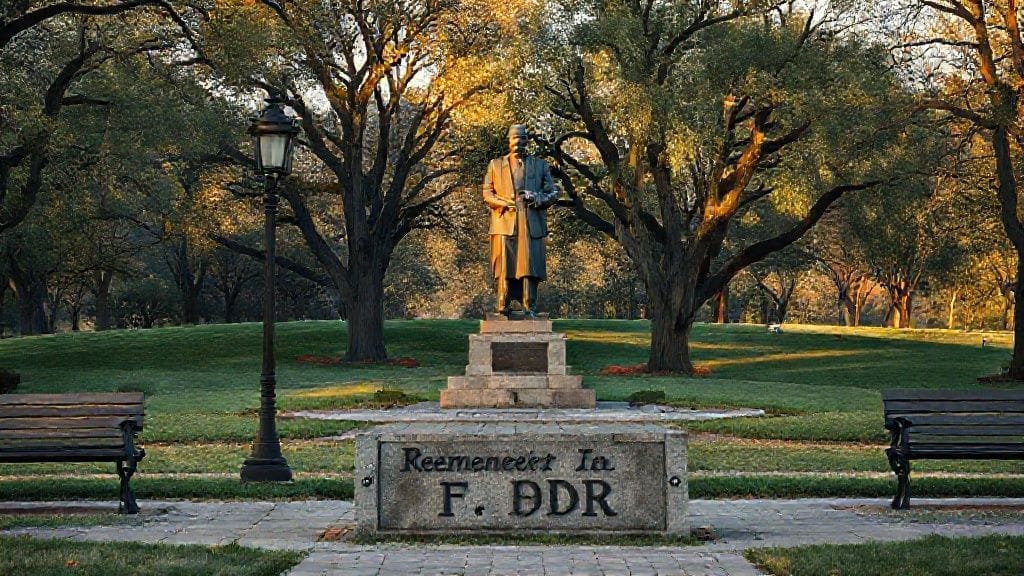
From the Franklin Delano Roosevelt Memorial on the banks of the Potomac to countless statues, schools, and public spaces, Roosevelt’s name and legacy are woven throughout America’s landscape. They serve as reminders of courage, innovation, and the complex challenges of leadership in turbulent times.
These sites allow generations to engage with history, inspiring reflection on the costs and triumphs of public service.
Lessons from Leadership: Roosevelt’s Death as a Turning Point
The sudden passing of a world leader at the height of conflict underscores the vulnerability of human institutions. Roosevelt’s death instilled in Americans a renewed awareness of the unpredictable nature of history and the importance of resilience.
His life and death offer timeless lessons on the interdependence of strength and compassion, vision and pragmatism—qualities vital for leadership in any era.
The Global Response: Allies and Enemy Reactions
International reactions ranged from deep sorrow among the Allies to opportunistic calculation by the Axis powers. The death of Roosevelt destabilized established relationships and accelerated shifts in diplomatic behavior.
Winston Churchill mourned a close friend; Joseph Stalin faced a new American counterpart; meanwhile, Germany and Japan pondered uncertain futures. This global reverberation illustrates the intimate link between individual lives and the tides of world history.
The Continuity of Vision: Roosevelt’s Influence Beyond His Lifetime
Even after his death, Roosevelt’s ideals shaped American policy and international relations for decades. Concepts such as the “Four Freedoms” and the vision of shared prosperity echo through time.
His role as an architect of modern America and the post-war peace order cannot be overstated. Roosevelt remains a monumental figure whose imprint endures beyond the years of his life.
Conclusion
Franklin D. Roosevelt’s death on April 12, 1945, in Warm Springs was more than the end of a presidency; it was a profound turning point in world history. The man who had carried a nation through unprecedented crises left behind a complex legacy of hope, resilience, and vision. His final hours in the quiet warmth of a Georgian spring contrasted with the sweeping impact of his departure—a moment where personal fragility met the colossal forces of global destiny.
In mourning Roosevelt, the world recognized not only a leader but a human being shaped by struggle, unwavering commitment, and an unshakable belief in progress. His life and death invite us to reflect on the burdens leaders bear and the enduring power of courage in the face of uncertainty.
FAQs
Q1: What caused Franklin D. Roosevelt’s death?
A1: Roosevelt died from a cerebral hemorrhage, a massive stroke that occurred while he was at his retreat in Warm Springs on April 12, 1945.
Q2: Why was Roosevelt at Warm Springs when he died?
A2: Warm Springs was a therapeutic retreat where Roosevelt sought treatment and respite from polio-related paralysis and the immense stresses of his presidency.
Q3: How did the public react to Roosevelt’s death?
A3: The nation was shocked and grieved deeply. Roosevelt was seen as a symbol of hope and strength during challenging times, and his passing was mourned nationwide.
Q4: What was the immediate political consequence of Roosevelt’s death?
A4: Vice President Harry S. Truman assumed the presidency unexpectedly and had to navigate the final stages of WWII and the emerging post-war world.
Q5: How did Roosevelt’s health affect his presidency?
A5: Roosevelt’s declining health was largely kept from the public but likely affected his energy and decision-making, particularly in the later years of WWII.
Q6: What is the legacy of Warm Springs today?
A6: Warm Springs continues as a rehabilitation center and historic site, preserving Roosevelt’s vision of healing and hope for polio survivors and the disabled.
Q7: How did Roosevelt’s death influence the end of WWII?
A7: His death shifted leadership dynamics among the Allies, influencing military and diplomatic decisions in the war’s closing months.
Q8: How is Roosevelt commemorated today?
A8: Roosevelt is commemorated through memorials such as the FDR Memorial in Washington, public buildings, named institutions, and ongoing historical study.

