Table of Contents
- The Dawn of a New Era: Paris, March 10, 1831
- France in Turmoil: The July Revolution Aftermath
- King Louis-Philippe: The Citizen King’s Challenge
- The Need for a Foreign Legion: Political and Military Pressures
- Recruitment Beyond Borders: The Vision Behind the Legion
- The Birth of the French Foreign Legion: Official Founding Decree
- The First Volunteers: Who Were the Legionnaires?
- Training and Discipline: Forging a New Kind of Soldier
- The Legion’s Early Engagements in Algeria: Blood and Sand
- The Role of the Legion in French Colonial Ambitions
- Internal Struggles and Harsh Conditions: Survival of the Fittest
- The Legion’s Unique Distinction: Identity and Camaraderie
- From Outcasts to Heroes: The Legion’s Reputation Grows
- Political Use of the Legion: A Tool for Regime Stability
- The Symbolism of the Legion: France’s Exotic Military Force
- Challenges and Controversies: Desertions and Discipline Issues
- The Legion’s Impact on Future Foreign Military Units
- The Legacy of the French Foreign Legion: Myth and Reality
- The Legion in Literature and Popular Culture
- Conclusion: The Enduring Spirit of the French Foreign Legion
- FAQs: Understanding the Origins and Significance of the Legion
- External Resource: French Foreign Legion – Wikipedia
- Internal Link: Visit History Sphere
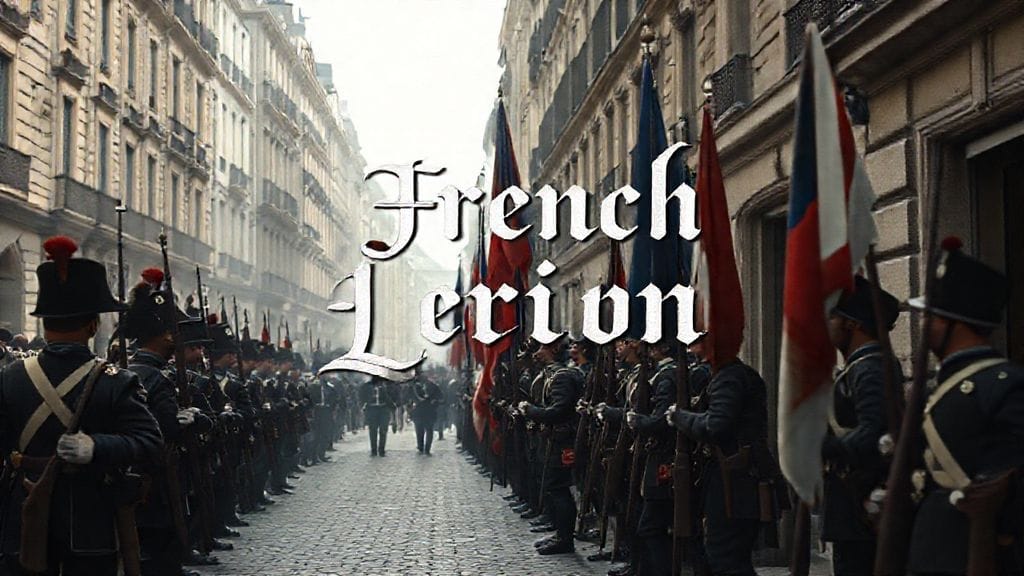
On a chilly spring morning in Paris, March 10, 1831, history was quietly forged behind closed doors in the heart of a nation still reverberating from revolution and insecurity. The City of Light, shimmering under a fragile peace, bore witness to an act destined to carve its name indelibly into the annals of military history — the creation of the French Foreign Legion. Yet this was no ordinary military reform; it was a bold, pragmatic, and deeply symbolic answer to the chaos of post-revolutionary France and its imperial ambitions abroad.
France in Turmoil: The July Revolution Aftermath
The years that led to 1831 were marked by turbulent upheavals. The July Revolution of 1830 had thrust Louis-Philippe onto the throne—“the Citizen King”—who promised a constitutional monarchy more attuned to liberal ideals. But the new regime was fragile. France’s political landscape was fractured between royalists, republicans, and a fragile center hungry for stability.
Economically battered and politically isolated, France was also militarily overstretched, its forces thin across numerous restive colonies. The recent loss of territories and ongoing rebellions in Algeria alarmed King Louis-Philippe’s government. More than ever, the military needed reinforcement—the question was from where.
King Louis-Philippe: The Citizen King’s Challenge
Louis-Philippe, a monarch with a sense of bourgeois practicality, realized that France’s future rested not only on political reform but also on military prowess. Yet the French army was plagued by issues—many native Frenchmen were unwilling to serve abroad for long periods, and domestic opinion was wary of protracted colonial warfare. The government needed soldiers who could operate with discipline, loyalty, and a distinct separation from the French citizenry.
This idea was born not purely of military necessity, but also of political calculation. With revolutionary fervor still simmering beneath the surface at home, expatriate soldiers and foreign adventurers offered a resource the crown could exploit: fighters with nothing to lose and everything to prove.
The Need for a Foreign Legion: Political and Military Pressures
France was embroiled in the harsh and relentless colonization of Algeria, beginning a decade earlier in 1830. The military campaigns were brutal and often costly. French troops faced guerrilla warfare, unfamiliar terrain, and hostile populations. The troops suffered heavy casualties; morale was low.
To address this dilemma, the idea was to create a separate corps of non-French volunteers, able to absorb the bloodshed without affecting French morale or draining political prestige. Foreigners, often outlaws, political exiles, or displaced adventurers, would form a distinct, expendable force—one that could fight effectively without drawing sympathy or public scrutiny.
Recruitment Beyond Borders: The Vision Behind the Legion
The French Foreign Legion was conceived as a sort of military melting pot—a unique blend of the world's dispossessed, dreamers, soldiers of fortune, and political refugees from across Europe. From Italians fleeing chaos in Lombardy, to Poles desperate to fight tyranny, to Germans scarred by failed revolutions, a motley collection of men found hope in the ranks of the Legion.
The concept was radical: entrust the fate of France’s honor and colonial dreams not just to its own sons, but to foreigners who came in search of redemption, purpose, or simply survival.
The Birth of the French Foreign Legion: Official Founding Decree
On March 10, 1831, King Louis-Philippe’s government promulgated the formal decree establishing the French Foreign Legion. This special corps was placed under the Ministry of War but distinctively separate from regular French regiments.
The decree was succinct but powerful: a military unit composed exclusively of foreigners, commanded by French officers, sworn to fight and live by the Legion’s strict code, and ready to deploy wherever the nation demanded. This was not simply a battalion; it was an experiment in military sociology—a disciplined wave of outsiders shaping France’s future.
The First Volunteers: Who Were the Legionnaires?
The Legion’s earliest recruits were as diverse as they were desperate. Some were condemned men recasting their fate; others were political refugees seeking new allegiances. Notorious characters, hardened criminals, and idealistic exiles all converged under the Legion’s flag, bound by the promise of anonymity and freedom.
Many came with forged papers, a few with tragic stories of betrayal or lost homelands. Whatever their story, they shared a singular survival instinct and a willingness to endure hardships most French citizens would balk at.
Training and Discipline: Forging a New Kind of Soldier
The challenge was immense. The Legion had to be more than a ragtag assembly—it had to become a team, a brotherhood. Training began immediately, brutal and relentless. Commanders imposed a strict regimen to weed out the weak and mold the tough. Every recruit learned French military discipline, marksmanship, and the brutal art of survival in foreign lands.
Yet while harsh, the training also sparked a unique esprit de corps, a fierce pride built on shared adversity and the freedom of shedding past identities.
The Legion’s Early Engagements in Algeria: Blood and Sand
Not long after its founding, the Legion found its baptism of fire on the arid battlegrounds of Algeria. The harsh environment was unforgiving—scorching heat, rugged mountains, and unrelenting guerilla attacks marked most of their campaigns.
These first battles tested the Legion’s mettle and solidified its reputation as an elite fighting force, feared by enemies and respected by allies. Despite staggering losses, the Legion’s resilience shone through. Tales of heroism emerged from the dust and blood—moments of courage etched forever into storied campaigns.
The Role of the Legion in French Colonial Ambitions
The Legion became France’s spearhead in its complex colonial ambitions in North Africa. More than just soldiers, Legionnaires were agents of French civilization—or conquest, depending on perspective.
Politically, the Legion’s involvement in Algeria and later campaigns sent a clear message: France was committed to empire, and willing to commit men willing to fight without hesitation in far-flung territories. The Legion was the tool that allowed Paris to project power without risking domestic backlash.
Internal Struggles and Harsh Conditions: Survival of the Fittest
Life in the Legion was brutal beyond the battlefield. Supplies were thin, discipline unyielding, and fatalities frequent—not only from combat but disease, exhaustion, and exposure. Desertion was a problem, but desertion was often punished by the harshest measures.
The men endured barracks punishment, manual labor, and the psychological toll of a life far from home and in constant danger. Yet despite this, a deep loyalty grew among them, born from their shared suffering and camaraderie in the face of adversity.
The Legion’s Unique Distinction: Identity and Camaraderie
Remarkably, despite their diverse origins and backgrounds, Legionnaires developed a unique identity. Bound by the Legion’s motto, “Legio Patria Nostra” (“The Legion is our Fatherland”), they transcended nationalities. The Legion was no longer just a military unit; it became a home, a brotherhood where past deeds and origins were secondary to loyalty and courage.
This culture remains one of the Legion’s enduring legacies—a testament to the power of shared purpose in forging unity.
From Outcasts to Heroes: The Legion’s Reputation Grows
Years passed, and the Legion’s mythos grew. Tales of last stands, heroic charges, and unsung sacrifices entered French lore. Though initially viewed with suspicion, Legionnaires became symbols of bravery and steadfast commitment.
Their exploits inspired not only French military doctrine but also captured the imagination of writers, artists, and filmmakers. The Legion came to embody the paradox of exile and belonging, of anonymity and glory.
Political Use of the Legion: A Tool for Regime Stability
For Louis-Philippe and successive governments, the Legion was more than a fighting force—it was a political asset. At home, it kept potentially dangerous foreign mercenaries busy abroad. Overseas, it maintained order and expanded French influence at relatively low political cost.
The Legion allowed governments to sidestep unpopular conscription debates and yet retain a potent military presence. This delicate balance was part of France’s strategy navigating the volatile 19th-century political landscape.
The Symbolism of the Legion: France’s Exotic Military Force
The French Foreign Legion quickly acquired a mystique as an exotic, almost otherworldly force. Clad in distinctive uniforms, speaking a babel of languages, and living by codes unknown to the regular army, the Legion symbolized France’s reach across continents and cultures.
It appealed to the romantic and to the adventurous, forging a global image of a military unit unlike any other.
Challenges and Controversies: Desertions and Discipline Issues
Yet the Legion was not without flaws. Harsh conditions, brutal discipline, and the diverse makeup naturally led to tensions. Desertions, clashes among ethnic groups, and disciplinary problems frequently tested officers.
The French government periodically faced criticism over human rights abuses and the Legion’s harsh regimes. Nonetheless, reforms were slow, impeded by the very nature of the Legion’s tough mission.
The Legion’s Impact on Future Foreign Military Units
The model of the Foreign Legion inspired other nations to consider similar formations. Spain, Italy, and even Germany took note of the idea of a separate corps made up of foreigners, although few could replicate the success and mystique of the French experiment.
The Legion’s structure and tradition influenced military thinking on the value of multinational units and the integration of disparate peoples into cohesive fighting forces.
The Legacy of the French Foreign Legion: Myth and Reality
Nearly two centuries after its foundation, the French Foreign Legion remains a symbol of foreign service, sacrifice, and identity forged anew. Its legacy is complex—part heroic, part controversial—but undeniably iconic.
Through countless wars, from colonial campaigns to two World Wars and modern conflicts, the Legion has proven its adaptability and resilience, carrying forward the original vision set in that snowy Parisian dawn.
The Legion in Literature and Popular Culture
Beyond the battlefield, the Legion became a fertile ground for storytelling. From Joseph Conrad and P.C. Wren’s famous novel Beau Geste to numerous films and songs, the Legion’s romantic and tragic elements captivated imagination.
This popular fascination helped preserve the Legion’s legend and ensured that its stories reached far beyond military history buffs to the wider public conscience.
Conclusion
The birth of the French Foreign Legion on March 10, 1831, was not merely an administrative decree but a bold answer to France’s turbulent post-revolutionary reality. Out of political necessity and military complexity rose a force that embodied exile and belonging, hardship and loyalty, anonymity and heroism.
For these men—from all corners of Europe and beyond—the Legion offered a second chance, a new identity forged in the crucible of battle. From dusty Algerian sands to distant battlefields, the Legion’s story is one of transformation and resilience, a testament to how hope and discipline can emerge from chaos.
The Foreign Legion stands not only as a military marvel but as a human saga, a living reminder that history’s greatest endeavors are made up of individual lives, each seeking meaning amid the storm.
FAQs
Q1: Why was the French Foreign Legion created in 1831?
A1: It was created to provide France with a dedicated military unit composed of foreign volunteers to support colonial campaigns, particularly in Algeria, while minimizing domestic political risk and maintaining army strength.
Q2: Who were the first Legionnaires?
A2: The initial recruits were political refugees, adventurers, exiled soldiers, and sometimes criminals from various European countries, united mainly by their desire for a fresh start and survival.
Q3: What role did the Legion play in French colonial expansion?
A3: The Legion was integral in establishing and maintaining French control in Algeria and other colonies, acting as frontline forces in harsh and dangerous environments.
Q4: How did the Legion develop its unique identity?
A4: Through rigorous training, shared hardship, and its motto "Legio Patria Nostra", the Legion developed a brotherhood that transcended nationality and past affiliations.
Q5: How was the Legion viewed politically and socially in France?
A5: Initially viewed with suspicion and seen as a tool for political exploitation, it gradually gained a heroic reputation and became a symbol of bravery and endurance.
Q6: What challenges did the Legion face internally?
A6: Harsh discipline, diverse ethnic tensions, desertions, and the physical toll of colonial warfare made life difficult, requiring constant adaptation from commanders.
Q7: Did the French Foreign Legion influence other countries?
A7: Yes, its model inspired other nations to consider foreign-only military units, though few matched its success or legendary status.
Q8: How is the French Foreign Legion remembered today?
A8: It is remembered as an elite, storied unit symbolizing sacrifice, resilience, and the complexities of identity and belonging in military history.