Table of Contents
- Introduction
- The Economic Imbalance Before the Revolution
- Tax Burdens on the Third Estate
- The Role of the Church and Nobility in Wealth Concentration
- Rise of Revolutionary Ideals
- The Storming of the Bastille and Symbolic Shift
- National Assembly and the Abolition of Feudal Privileges
- Confiscation of Church Lands
- Redistribution Through Assignats
- Creation of a New Class of Landowners
- Effects on Rural and Urban Populations
- Economic Chaos and Inflation
- Long-Term Impact on French Society
- Conclusion
- External Resource
- Internal Link
1. Introduction
On the morning of July 14, 1789, a crowd of Parisians stormed the Bastille, a fortress-prison symbolic of the monarchy’s unchecked authority. While the immediate trigger was the fear of royal repression, this moment ignited something far greater—a revolution not only of political structures but of economic power. It was the beginning of a dramatic wealth redistribution that would reshape France and influence future revolutions around the globe.
In a society where the nobility and clergy controlled vast estates while commoners struggled under heavy taxes, this redistribution of wealth was more than symbolic—it was transformative. Let’s explore how 1789 redefined who owned what in France.
2. The Economic Imbalance Before the Revolution
Before the revolution, France was an incredibly unequal society. The First Estate (clergy) and Second Estate (nobility) made up less than 2% of the population but controlled over 40% of the land. The rest—the Third Estate—consisting of peasants, artisans, and bourgeoisie, were burdened with taxes and had little to no political representation.
Much of the peasantry lived in subsistence conditions, often dependent on the whims of their feudal lords. Rent, tithes, and feudal dues drained what little they had. It was a system designed to protect the privileged while extracting resources from the majority.
3. Tax Burdens on the Third Estate
The taille (a direct land tax), the gabelle (a tax on salt), and various feudal dues placed overwhelming pressure on the Third Estate. Meanwhile, the nobility and clergy enjoyed widespread tax exemptions. This imbalance stoked growing resentment, especially as the national debt soared from war expenditures, including aid to the American Revolution.
By 1788, France was teetering on bankruptcy. The burden to fix the crisis, predictably, fell on those least able to bear it.
4. The Role of the Church and Nobility in Wealth Concentration
The Catholic Church was the largest landowner in France, holding over 10% of the country’s territory. It collected tithes from peasants, controlled education, and enjoyed vast wealth while paying no direct taxes. The nobility, for their part, held ancestral estates and extracted income from their tenants.
These two estates formed a power bloc that preserved wealth through inherited privilege. They not only controlled land but dominated political institutions like the Estates-General, reinforcing their hold over both resources and policy.
5. Rise of Revolutionary Ideals
Inspired by Enlightenment thinkers like Rousseau and Montesquieu, and by the recent success of the American Revolution, French intellectuals and commoners alike began questioning the legitimacy of inherited privilege. “Liberté, égalité, fraternité” became more than a slogan—it was a challenge to centuries of inequality.
Public pamphlets, salons, and even tavern discussions buzzed with new ideas. Economic justice became a rallying cry, not just a dream.
6. The Storming of the Bastille and Symbolic Shift
The fall of the Bastille was both literal and symbolic. It marked the collapse of royal authority and the rise of people power. In the wake of the event, the National Assembly quickly moved to abolish feudal privileges and restructure French society.
It wasn’t just about freeing prisoners—it was about freeing wealth from hereditary monopolies.
7. National Assembly and the Abolition of Feudal Privileges
On August 4, 1789, less than a month after Bastille Day, the National Assembly issued the Abolition of Feudalism decree. Nobles were stripped of feudal rights like hunting privileges, judicial authority, and rents on peasant lands.
This wasn’t just a legal change. It was a radical economic one. For the first time, peasants could hope to own the land they worked.
8. Confiscation of Church Lands
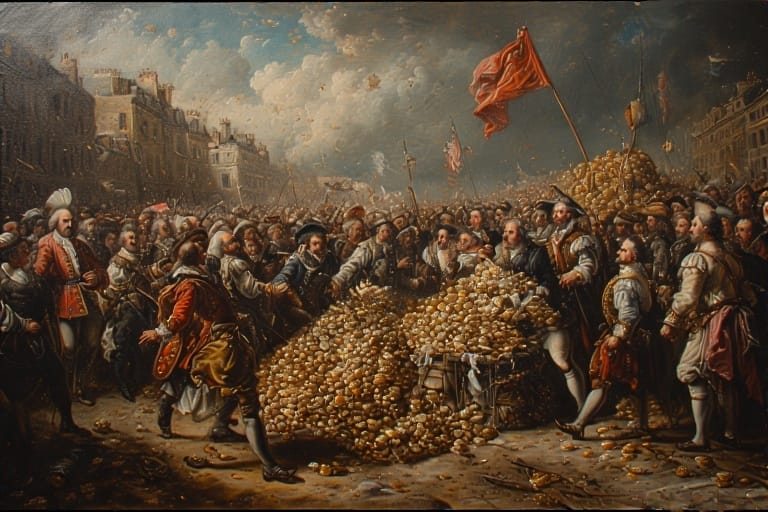
Perhaps the most dramatic economic move came in November 1789, when the Assembly nationalized Church lands. These were sold off to raise funds for the bankrupt government.
This amounted to about 10% of French land, redistributed primarily to bourgeois buyers, but also to peasants when affordable. The act simultaneously broke the Church’s economic power and injected property into the hands of new classes.
9. Redistribution Through Assignats
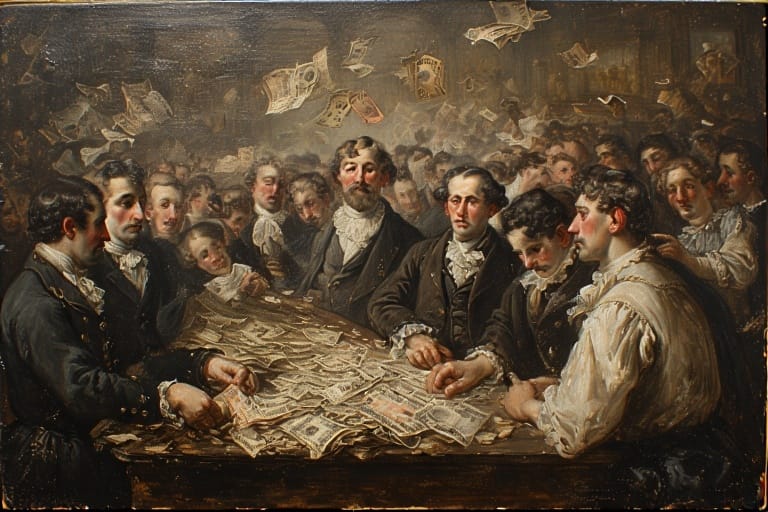
To manage the sale of confiscated lands, the government issued assignats—paper currency backed by the value of these lands. Initially, it facilitated land ownership among the broader population, stimulating short-term economic activity.
However, overprinting led to massive inflation and currency devaluation, ultimately contributing to financial chaos.
10. Creation of a New Class of Landowners
While large chunks of land were acquired by wealthier urbanites, many former peasants managed to buy smaller plots, often collectively. This began to erode the centuries-old divide between those who owned and those who worked the land.
A new class of rural bourgeoisie began to emerge—landowners who had once been serfs or tenant farmers. This reshaping of the landholding map would have lasting implications for French society.
11. Effects on Rural and Urban Populations
In rural areas, the redistribution allowed for greater autonomy and productivity. However, in cities, rising food prices (exacerbated by inflation) and continued unemployment led to riots and further unrest.
Urban workers, who had hoped to benefit from the revolution, often felt excluded from the new economic order. Their frustrations would help fuel the radicalism of the Jacobins and the eventual Reign of Terror.
12. Economic Chaos and Inflation
The assignats, once a promising tool of redistribution, spiraled into hyperinflation. By 1795, they were virtually worthless. This economic instability undermined confidence in the revolutionary government and led to waves of speculation, hoarding, and famine.
Still, the structural transformation of land ownership remained intact—France was no longer a country ruled by nobles and bishops.
13. Long-Term Impact on French Society
Despite economic turmoil, the revolution set a precedent for state-led redistribution of wealth and land. The Code Napoléon, established a few years later, would codify property rights and reinforce many of the gains made by former peasants and the bourgeoisie.
The aristocracy’s grip on land was broken, and even though economic disparities persisted, wealth was no longer seen as synonymous with birthright. It was a radical notion at the time—one that would echo into the revolutions of the 19th and 20th centuries.
14. Conclusion
The French Revolution was not just a battle for liberty—it was a battle for economic equity. July 14, 1789, lit the fuse, but it was the subsequent years that dismantled centuries of privilege.
Land changed hands, classes shifted, and for the first time, a European country attempted to build an economy rooted in merit and not in lineage. The road was chaotic and often violent, but the legacy of wealth redistribution in 1789 still shapes debates on economic justice today.
15. External Resource
🌐 Wikipedia – French Revolution