Table of Contents
- A Child is Born in the Sand: Leptis Magna, 159 CE
- Leptis Magna: Pearl of Roman Libya and Crucible of Ambition
- Families of Status: The Fulvii, the Severi, and Local Power
- Growing Up Between Desert and Empire
- The Making of an Imperial Insider
- Friendship with Septimius Severus: From Provincial Boys to Roman Powerbrokers
- From Leptis Magna to the Heart of Rome
- Praetorian Prefect: The Moment Gaius Fulvius Plautianus Steps into the Light
- The Architecture of Power: Wealth, Marriage, and Control
- Enemies in the Shadows: The Rise of Paranoia and Suspicion
- The Fatal Rift: Plautianus versus Caracalla
- Conspiracy, Accusation, and the Night That Changed Everything
- Aftermath of a Fall: Confiscations, Erasures, and Broken Memories
- Leptis Magna in the Age of Severus and Plautianus
- The Human Cost of Imperial Proximity
- Historians, Bias, and the Problem of Plautianus
- From a Cradle in Libya to a Cautionary Tale of Rome
- Conclusion
- FAQs
- External Resource
- Internal Link
Article Summary: This article follows the life of gaius fulvius plautianus from his birth in 159 CE in the bustling provincial city of Leptis Magna to his meteoric ascent as praetorian prefect and, finally, to his spectacular and bloody downfall. It opens with the world into which he was born: a North African port where Roman marble met Libyan sand and local elites learned to speak the language of empire. From there, the narrative traces his intertwined fate with Septimius Severus, another son of Leptis, whose rise to the imperial purple lifted Plautianus to the pinnacle of Roman power. The article explores the political and emotional cost of such proximity to the emperor—how friendship turned into dependence, and dependence into suspicion. It examines the architecture of his power, his arranged family ties with the imperial house, and the ruthless bureaucracy he commanded. Yet behind these achievements lie darker currents: accusations of cruelty, paranoia, and an inevitable clash with the heir, Caracalla. By the end, the article places his life in the broader context of Roman North Africa and the Severan dynasty, showing how one child’s birth in a provincial city echoed through the palaces, barracks, and archives of the Roman world.
A Child is Born in the Sand: Leptis Magna, 159 CE
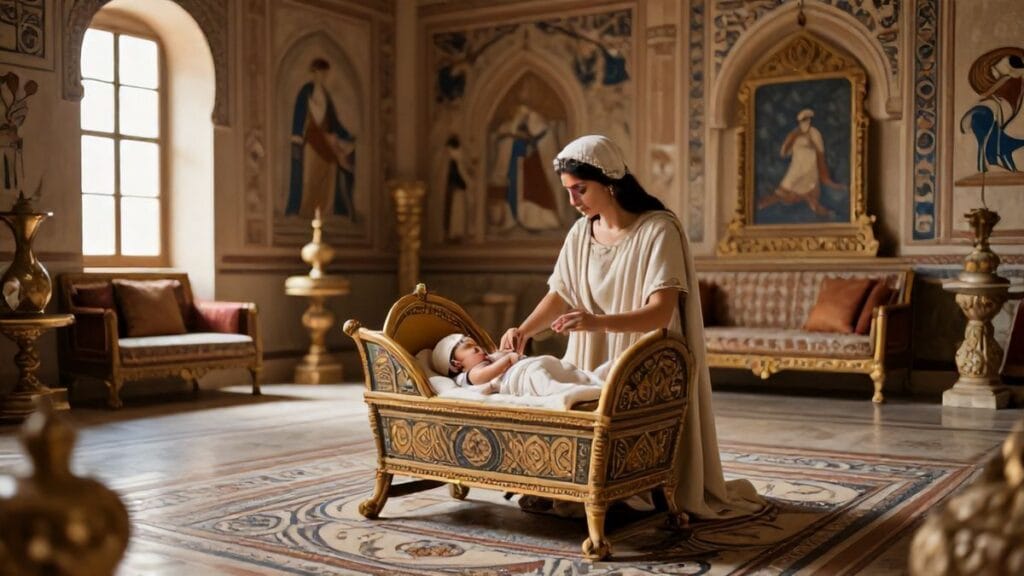
The year was 159 CE, and the air over Leptis Magna shimmered with heat and the smell of salt. Ships creaked in the harbor, laden with olive oil, grain, and fine pottery, while, farther inland, the desert stretched in vast, pale sheets toward a horizon that never seemed to move. Somewhere behind the whitewashed walls of a comfortable town house, a cry split the heavy afternoon. A boy had just been born—another inhabitant of Rome’s booming African frontier—whose name, still soft in his mother’s mouth, would one day be spoken with dread in the marble corridors of the Palatine: Gaius Fulvius Plautianus.
The birth itself would not have seemed remarkable to those present. Infancy was precarious in the Roman world; surviving the first weeks of life was a victory in itself. Yet this child entered a household where the chances were better than most. The Fulvii were no obscure family among the dusty lanes of Leptis Magna. They were part of that thin but influential stratum of provincial elites who had learned to weave their local roots into the wider fabric of Roman authority. Their home was likely adorned with mosaics, their table set with imported wares, their voices carrying traces of both Latin and the local Punic tongue. This was the environment that greeted the newborn gaius fulvius plautianus: a world half-African, half-Roman, and entirely steeped in ambition.
Outside, Leptis Magna thrummed with activity. Dockworkers shouted in a mixture of languages, camel caravans groaned under loads bound for the desert, and Roman officials inspected cargoes with precise, bureaucratic eyes. A provincial governor somewhere in the city signed edicts under the watchful gaze of imperial statues. None of them could have guessed that the boy who had just entered the world would one day command the praetorian guard, dictate the fate of senators, and challenge the heirs to the throne. As evening fell and the baked city slowly cooled, the first day of Gaius Fulvius Plautianus’s life closed quietly, unnoticed by history yet already caught in its current.
But this was only the beginning. The sands of Libya have always hidden stories, and this child would grow to be one of the most enigmatic figures to emerge from Rome’s African provinces. From the safety of his family’s domus, from the markets and temples of Leptis, from the rhythms of provincial life, he would journey to the very core of imperial power. His birth in 159 was not yet fate—but it was possibility, and in the Roman Empire, possibility could be as dangerous as it was dazzling.
Leptis Magna: Pearl of Roman Libya and Crucible of Ambition
To understand the significance of that birth in 159, we must first understand Leptis Magna itself. The city, perched on the Mediterranean coast of what Roman administrators called Tripolitania, had been a Carthaginian and Punic settlement long before the eagle standards appeared on its horizons. By the second century CE, however, Leptis Magna had become one of the jewels of Roman Libya—a thriving commercial hub where the empire’s power felt less like an occupying force and more like a framework within which local ambition could flourish.
Walk its streets in the time of gaius fulvius plautianus’s childhood and you would see a city caught beautifully between worlds. The old Punic quarter, with its cramped alleys and ancestral shrines, coexisted with grand Roman forums and colonnaded streets. The great market, the macellum, buzzed with vendors selling dates, figs, and salted fish under arched stone ceilings. There were Roman baths humming with conversations about politics, contracts, and distant campaigns; there were temples where Jupiter and local deities seemed to nod at one another across sculpted stone. The theater and circus drew crowds who cheered Latin inscriptions and African charioteers alike.
The city’s prosperity rested on more than its harbor. The hinterland of Leptis Magna was a patchwork of fertile land reclaimed from the semi-arid environment through terracing, irrigation, and careful management. Olive oil from the region was renowned, poured into amphorae that would be stacked by the thousands in warehouses along the Tiber. Roman engineers had left their mark in aqueducts that carried water with serene inevitability into fountains and baths. Yet beneath this infrastructure lay generations of local knowledge—Berber, Punic, and Libyan systems of survival adapted to the empire’s appetite.
This mixture of local resilience and imperial overlay created a fertile breeding ground for powerful families. The city council, or ordo decurionum, contained men whose grandfathers might have been Punic magistrates, but who now wore Roman togas and bore Latin names. These were the men who arranged trade contracts, funded public buildings, and sent their sons to study in better schools, perhaps even in Carthage or Rome. Plautianus was born into this environment, where the language of power was Roman, but the rhythms of daily life remained profoundly North African.
Leptis Magna’s status would only grow in the decades following his birth. It was not simply a remote provincial town but a node in a tightly woven net of commerce and patronage. The empire needed its oil and grain; the city, in turn, needed the empire’s favor. In such a context, the birth of a boy like gaius fulvius plautianus meant entering a world in which identity was negotiable and loyalty could be parlayed into influence. His birthplace was not a mere backdrop; it was a training ground, a stage where learning to move between cultures and expectations was the first lesson in survival.
Families of Status: The Fulvii, the Severi, and Local Power
Little is known with certainty about the early generations of the Fulvii in Leptis Magna, but their trajectory can be read in the silences and patterns of Roman provincial life. In a city like Leptis, families who rose to prominence often did so by carefully aligning themselves with Roman institutions while never forgetting the value of local alliances. They might fund a new shrine, sponsor games, or pay for paving a street, gaining honors inscribed forever in stone. Their names, carved in Latin, would blend seamlessly into Rome’s epigraphic chorus.
Among these families was another that would change the course of history: the Severi. Born only a few years before gaius fulvius plautianus, Septimius Severus also came from Leptis Magna and from a milieu very much like that of the Fulvii: provincial, wealthy, and increasingly Romanized. It is no coincidence that these two names—Plautianus and Severus—would become entwined. In small elite circles of a city like Leptis, social distance shrinks. Families knew each other through business, marriage, and municipal politics. Children met in households, temples, and classrooms long before imperial crowns and purple garments ever entered their orbit.
We can imagine the Fulvii and the Severi sharing the same social spaces: attending the dedication of a new temple, nodding to each other in the baths, arguing over civic matters in the curia. Perhaps Plautianus’s father or uncles had already served as local magistrates or priests in Roman cults. The adoption of the tria nomina—three-part Roman names—signals their integration into the structures of Roman citizenship. To call a child Gaius Fulvius Plautianus was to write Roman belonging into his very identity, to plant the seed of a career that could, with luck and patronage, reach far beyond Leptis.
Local power in such cities hinged on the ability to mediate between community and empire. Men like the elder Fulvii collected taxes, supplied troops, and ensured that edicts from distant emperors were translated into the concrete realities of North African life. They were, in the modern historian Fergus Millar’s phrase, “the brokers of empire”—those who stood at the crossroads where Roman law met provincial custom. Their houses would have been filled with the chatter of clients, scribes, and messengers. A boy like gaius fulvius plautianus would grow up in an atmosphere where information was currency and where watching how his elders negotiated favor and obligation was itself an education.
Such families also looked outward. Education was a key avenue of advancement; rhetoric and law were passports to a broader world. As the second century progressed under the so-called “Good Emperors,” the Roman Empire opened its higher ranks more generously to provincial elites. Men from Spain, Syria, and North Africa were already rising to senatorial and equestrian status. The door was not fully open, and prejudice remained, but the path existed. For the Fulvii and Severi, this meant that the birth of a clever son could be more than a cause for domestic rejoicing—it could be the first step on a journey toward the capital itself.
Growing Up Between Desert and Empire
Childhood in Leptis Magna for a boy of Plautianus’s background would have been a careful blend of privilege and discipline. The climate itself imposed a rhythm: early mornings before the heat grew oppressive, midday pauses in shuttered rooms, evenings that belonged to the cooler air and the lamplight. In these hours, young gaius fulvius plautianus would have absorbed the languages and stories that framed his world.
Latin, the tongue of law and administration, would form the backbone of his formal education. A grammaticus, perhaps a freedman educated in Carthage or Rome, might drill Plautianus and his peers in declensions and conjugations, in the poetry of Virgil, in the speeches of Cicero. Behind the Latin, however, there would have been whispers of other languages: Punic spoken by older relatives or servants, Berber languages heard from rural visitors in the markets, Greek used in trade and learning. This multilingual environment sharpened the boy’s ear, teaching him early that power often depends on saying the right thing in the right tongue.
His days would have been punctuated by rituals both domestic and civic. Household gods in the lararium received offerings of incense and wine; temples to Roman deities structured the public calendar with festivals and sacrifices. In such ceremonies, young Plautianus learned not just reverence but hierarchy—watching who stood closest to the magistrates, who delivered the prayers, who received the most approving murmurs from the crowd. A child of his class learned early that power is visible, that it arranges bodies in space and gestures in time.
Beyond the city’s walls lay another teacher: the landscape itself. The sea brought wealth, but the semi-arid hinterland taught caution. The balance between abundance and scarcity was fragile, dependent on rainfall, careful cultivation, and imperial investment. Periodic droughts or crop failures could remind even the comfortable elite of the precarity underlying their prosperity. When Rome funded roads, aqueducts, and fortifications, it tied Leptis Magna more tightly to imperial structures. To a young observer, the message was unmistakable: security and wealth flowed through the channels of Roman favor.
In this environment, gaius fulvius plautianus learned perhaps the most crucial lesson of all: that being provincial did not mean being small. His city contributed soldiers, taxes, and goods to an empire that stretched from Britain to Mesopotamia. News of distant campaigns and imperial decrees filtered into Leptis Magna through letters, visiting officials, and gossip in bathhouses. A boy sitting in the shade of a colonnade could hear of emperors he would never see, of wars beyond horizons he would never cross—at least, so it might have seemed. Yet for some, like Plautianus and his compatriot Septimius Severus, these distant names and places were not just the stuff of stories. They were opportunities waiting to be grasped.
The Making of an Imperial Insider
As Plautianus grew into adolescence and then young adulthood, his pathway into the Roman power structure would have followed the established routes open to ambitious provincial elites of equestrian standing. If, as seems likely, his family was already enrolled among the Roman equites, the “knights” who occupied a crucial tier below the Senate, his future would revolve less around local municipal offices and more around the broader imperial service.
Such a trajectory might begin with minor administrative roles in the province: posts in the governor’s staff, management of tax collection, overseeing imperial estates or customs stations. These jobs required not just literacy and numeracy but discretion, loyalty, and an instinct for how far one could push local populations without provoking unrest. They were training grounds in the delicate art of exercising authority in the emperor’s name while remaining useful rather than threatening to one’s superiors.
In the shadows of inscriptions and fragmentary records, we can imagine the young gaius fulvius plautianus traveling beyond Leptis Magna—perhaps to other cities in Africa Proconsularis, perhaps across the sea to Italy. Each journey would have deepened his understanding of the empire as a machine of paperwork and power. He would have learned that behind the splendor of forums and temples lay warehouses filled with papyrus, officials hunched over wax tablets, and a ceaseless stream of petitions, reports, and orders.
At some point, likely during these formative years, Plautianus’s path began to dovetail more closely with that of Septimius Severus. The two shared not only a birthplace but a class background and, eventually, overlapping networks of patronage. While Severus pursued a senatorial career—arguably more prestigious but also more exposed—Plautianus’s route would incline toward the equestrian military and administrative posts that could bring a man, if he were ruthless and skilled enough, into the orbit of the praetorian guard and the security apparatus of the state.
What set Plautianus apart from the thousands of other provincial youths seeking advancement? Historians can only infer. Some ancient sources present him as clever, calculating, and coldly ambitious, a man who understood early on that proximity to the imperial person—first through friendship, later through family ties—was the surest anchor in Rome’s turbulent seas. Others hint at a more complex personality, a man whose intense loyalty to Severus grew alongside his appetite for power. Either way, the habits of mind cultivated in his youth—watchfulness, adaptability, a keen sense for hierarchy—would serve him well in the brutal arenas of imperial politics.
Friendship with Septimius Severus: From Provincial Boys to Roman Powerbrokers
In the story of gaius fulvius plautianus, one relationship towers over all others: his bond with Septimius Severus. Both men born in Leptis Magna, both scions of its elite, they seem to have known each other from relatively early life, if not childhood then certainly from the period when both were setting out on their respective careers. The exact nature of their early friendship is hidden from us, but the later record makes one thing clear: Severus trusted Plautianus in ways he trusted very few.
Imagine them as young men meeting again in Rome, years after the streets of Leptis. One a rising senator, treading the carefully choreographed cursus honorum; the other an equestrian official with his own ladder to climb. They would have shared memories of the same winds off the Libyan coast, the same festivals, the same local notables. In a city dominated by old Italian families and a welter of provincial accents, the familiarity of a fellow Leptitan must have been both comforting and politically useful. Provincial solidarity could harden into a powerful mutual support network.
Severus advanced through posts in the imperial bureaucracy and commands in the army. Plautianus, though less visible in the surviving sources during this period, appears to have become increasingly attached to Severus’s fortunes. When the death of the emperor Commodus in 192 CE plunged the empire into the chaos of civil war, Severus emerged as one of the principal contenders for the throne. It is at this moment that Plautianus truly steps into the historical spotlight.
Severus’s bid for power depended not only on military victories but on securing Rome itself, and Rome was, in a very real sense, the city of the praetorian guard—the elite soldiers who guarded the emperor and could, when displeased, make and unmake emperors at swordpoint. To control the capital, Severus needed absolute loyalty in this dangerous institution. Who better to trust with such a task than a man he had known for years, a fellow African who shared his background and, so he believed, his interests? Thus, in the upheavals that followed Commodus’s death, the stage was set for Plautianus’s meteoric rise.
Yet behind the celebrations of their shared success lay seeds of future tragedy. Friendship, in the Roman political world, was never merely personal. It was also a currency, a weapon, a mutual binding that could crush one if the other fell. Plautianus would become, in time, more than a friend: he would become an extension of Severus’s will, and then, perhaps, something far more unsettling—a rival center of power in his own right.
From Leptis Magna to the Heart of Rome
By the late 190s, the distance between Leptis Magna and Rome was no longer measured only in miles. It was measured in influence. Septimius Severus had seized the purple; the civil wars against rivals like Pescennius Niger and Clodius Albinus would soon consolidate his authority. In this vortex of reordering, gaius fulvius plautianus emerged as a key architect of the new regime in the capital.
For the boy born in 159 under the blazing Libyan sun, arriving in Rome in a position of real authority must have been both awe-inspiring and sobering. The city still bore the marks of recent violence—emperors murdered, statues pulled down, rumors clinging to the forums like smoke. The Senate, that ancient body of Roman aristocrats, eyed newcomers with suspicion, especially those from distant provinces whose accents betrayed their origins. Yet the reality was inescapable: under Severus, the periphery was invading the center, and men like Plautianus were at the vanguard.
The journey from provincial official to imperial insider required more than mere appointment. It demanded learning the codes of Rome’s most exclusive circles: how to navigate the competing expectations of senators, soldiers, and urban plebs; how to perform Romanitas—“Roman-ness”—at the highest level. Plautianus, with his mixture of administrative experience, loyalty to Severus, and perhaps a certain ruthless pragmatism, proved exactly the kind of man the new emperor wanted close at hand.
Rome itself exerted a transforming pressure. The scale of the city dwarfed anything in Africa. Its sprawling neighborhoods, its layers of history, its monumental architecture—all signaled that this was the axis around which the world turned. The palaces of the Palatine, the massive imperial baths, the Colosseum looming like a stone storm cloud: these were not just buildings but statements. For gaius fulvius plautianus, every step through these spaces would have been a reminder of how far he had come—and how far he might still fall.
Yet, astonishingly, this provincial from Leptis Magna did not merely adapt to Rome’s political climate; he began to shape it. The instrument of that power was the praetorian prefecture, the office that, under Severus, would become the most potent non-imperial position in the entire state.
Praetorian Prefect: The Moment Gaius Fulvius Plautianus Steps into the Light
The praetorian prefect, at least in theory, was the commander of the emperor’s personal guard, the praetorian cohorts stationed in and around Rome. But by the time of Severus and Plautianus, the office had grown far beyond its original military function. It had become the linchpin of the imperial security system: part police chief, part intelligence director, part chief of staff. To entrust this role to someone was to grant them access to the emperor’s most intimate fears and most delicate secrets.
Severus did more than entrust the office to Plautianus; he restructured the praetorian guard itself to ensure it would be loyal to them both. In the wake of the civil wars, the emperor disbanded the old praetorian cohorts, whose complicity in earlier palace coups was notorious, and replaced them largely with soldiers drawn from the legions that had supported his own rise. In this refashioned corps, commanded by a trusted friend from his African hometown, Severus hoped to neutralize the perennial threat of praetorian treachery.
For gaius fulvius plautianus, this appointment was the culmination of decades of careful advancement. He now commanded not only a formidable military force but also the surveillance and enforcement apparatus that maintained order in the capital. Informers, secret investigations, arrests of dissidents or suspected conspirators—these fell under his purview. As one later historian would dryly note about the office in this period, “the praetorian prefect was the emperor’s right hand, and sometimes his clenched fist.”
Ancient sources paint a dark picture of Plautianus’s tenure, though we must read them with caution. Cassius Dio, a senator with his own reasons to resent equestrian upstarts, describes him as greedy, cruel, and overbearing—accusations routinely leveled at powerful imperial officials. According to Dio, Plautianus used his position to accumulate enormous wealth, confiscating property under the pretext of treason trials and filling his own coffers in the process. Whether or not every charge is fair, it is clear that his authority reached into almost every corner of public life.
But power in Rome was never static. Each new prerogative gained by Plautianus created fresh resentments and fears. Senators grumbled that an equestrian from Africa now wielded more influence than they did. Officers in the guard watched their prefect carefully, judging when loyalty might be forced to bend. Even within the imperial family, the presence of such a dominant figure—loyal to Severus, yet not of imperial blood—created tension. As Plautianus rose, so too did the unease swirling around him.
The Architecture of Power: Wealth, Marriage, and Control
Raw office alone does not explain the extent of Plautianus’s influence. To turn authority into something approaching hegemony, he needed to construct an intricate architecture of power: wealth amassed and strategically deployed, family ties woven into the imperial dynasty, and a network of clients and subordinates who depended on him for their own advancement.
Wealth came through multiple streams. As praetorian prefect, Plautianus had wide discretion over the handling of confiscated estates, fines, and other penalties imposed on those accused—rightly or wrongly—of disloyalty. His control over certain administrative channels allowed him to steer lucrative contracts and appointments toward allies. Over time, his private resources grew to rival those of some of the oldest senatorial families. There were whispers in Rome that he was not just rich but obscenely so, his houses and gardens stuffed with spoils extracted from those unfortunate enough to fall under suspicion.
Yet it was through marriage that Plautianus made his most audacious move. His daughter, Plautilla, was married to Caracalla, the elder son and designated heir of Septimius Severus. This union transformed Plautianus from the emperor’s trusted confidant into his in-law—almost, though never fully, an extension of the imperial bloodline itself. In a society where family ties were foundational to politics, this alliance seemed to cement his position at the very heart of the regime.
The wedding itself was a carefully staged spectacle of unity. Rome’s elite gathered to witness the joining of the Severan and Plautianus households. Statues were dedicated; coins were minted bearing the images of Caracalla and Plautilla. Official rhetoric spoke of harmony, continuity, and the secure future of the empire. But beneath the ceremony, fault lines were already visible. Caracalla reportedly despised both his bride and her father, resenting the prefect’s overbearing presence and the sense that he was being maneuvered like a piece on Plautianus’s political chessboard.
Through this marriage, however, gaius fulvius plautianus achieved a form of power that no law explicitly granted: he became, in effect, the gatekeeper between the powerful present and the imagined future of the dynasty. If his grandson—through Plautilla and Caracalla—were to inherit the purple, Plautianus’s bloodline would be fused with that of the emperors. The implications were staggering. A boy born in Leptis Magna to a provincial family could, within two generations, be the grandfather of an emperor of Rome.
But this architecture of power had a fatal flaw. It relied on a delicate balance of personalities and loyalties: Severus’s unshaken trust, Caracalla’s reluctant compliance, the guard’s obedience, and the Senate’s sullen acceptance. Any significant shift in this balance could turn Plautianus’s scaffolding into a trap.
Enemies in the Shadows: The Rise of Paranoia and Suspicion
As the 200s dawned, the position of gaius fulvius plautianus began to look less like an apex and more like an overhang. The very concentration of authority he had worked so hard to build now drew the gaze of enemies from every direction. The Senate, sidelined and resentful, muttered that Rome was no longer governed by her ancient aristocracy but by African parvenus. Rival courtiers whispered to Caracalla that his father’s friend was becoming too powerful, that the praetorian prefect might one day use his soldiers to dictate terms even to the imperial family.
The culture of the Severan court did nothing to ease these tensions. Septimius Severus himself, hardened by civil war and deeply conscious of the fragility of imperial legitimacy, encouraged a climate of vigilance bordering on paranoia. Treason trials were not uncommon; conspiracies, both real and imagined, were uncovered with disquieting frequency. In such an atmosphere, a man who controlled the mechanisms of investigation and punishment was in a uniquely dangerous position—for others and for himself.
Ancient accounts portray Plautianus as increasingly suspicious and harsh in these years, quick to see threats and ruthless in extinguishing them. Whether this picture is exaggerated or not, the psychological pressures he faced were immense. Every new confiscation, every arrest of a supposed plotter, may have seemed necessary to secure his and Severus’s position. Yet each act also fed the narrative that he was building a personal tyranny within the empire, a dark twin to the emperor’s public rule.
Caracalla, growing into young adulthood and conscious of his own destiny as heir, found this intolerable. To be watched, judged, and constrained by a father-in-law he despised; to see his wife as a pawn in Plautianus’s designs; to witness the guard’s professional loyalty directed more toward the prefect than toward himself—these were humiliations that a future emperor could not accept indefinitely. Tension thickened the palace air. Banquets and ceremonies continued, but behind the formal smiles lay mutual loathing.
“It is astonishing, isn’t it,” one might imagine a senator whispering to another over a quiet dinner, “that a child born in Leptis Magna now holds more lives in his hands than any man save the emperor himself?” To those who had grown up in the shadow of Rome’s old nobility, Plautianus’s rise seemed less a testament to merit and more a symptom of imperial decay. As their envy and fear hardened into resolve, he became not just an obstacle but a target.
The Fatal Rift: Plautianus versus Caracalla
The marriage between Caracalla and Plautilla, far from healing the rift between the emperor’s heir and the praetorian prefect, deepened it. Caracalla is said to have openly insulted his wife, refusing to live with her and proclaiming that he would gladly kill both her and her father if only he could. Whether these reported outbursts are literal or stylized by later writers, they convey a real hostility. In Caracalla’s eyes, Plautianus was not a loyal servant of the dynasty but a usurper in all but name, a man who had inserted himself into the imperial family’s most intimate circle.
Plautianus, for his part, could not ignore these signs of hatred. He knew that Severus would not live forever. When the emperor died, the delicate balance that had allowed him to flourish would evaporate. He would be at the mercy of a new ruler who had already expressed open contempt. The prefect’s survival instincts must have been in constant overdrive: to neutralize threats, to fortify his position, perhaps even to imagine scenarios in which Caracalla’s power could be contained or redirected.
Historians debate whether Plautianus ever seriously contemplated a coup. Some sources, hostile to him, suggest that he was plotting against the imperial family, assembling weapons and allies for a decisive move. Others see these allegations as part of a smear campaign orchestrated by Caracalla and his supporters, eager to dismantle the man who stood between them and unchallenged dominance. The truth, as so often in imperial history, lies entangled in the interests of those who recorded it.
What is clear is that by the early 200s, the relationship between gaius fulvius plautianus and Caracalla had become irreconcilable. Every gesture was interpreted through a lens of suspicion, every decision weighed for its political implications. The palace became less a home than a battlefield of glances and insinuations. Severus, aging but still formidable, found himself caught between his love for his son and the loyalty he felt toward the friend who had underpinned his reign.
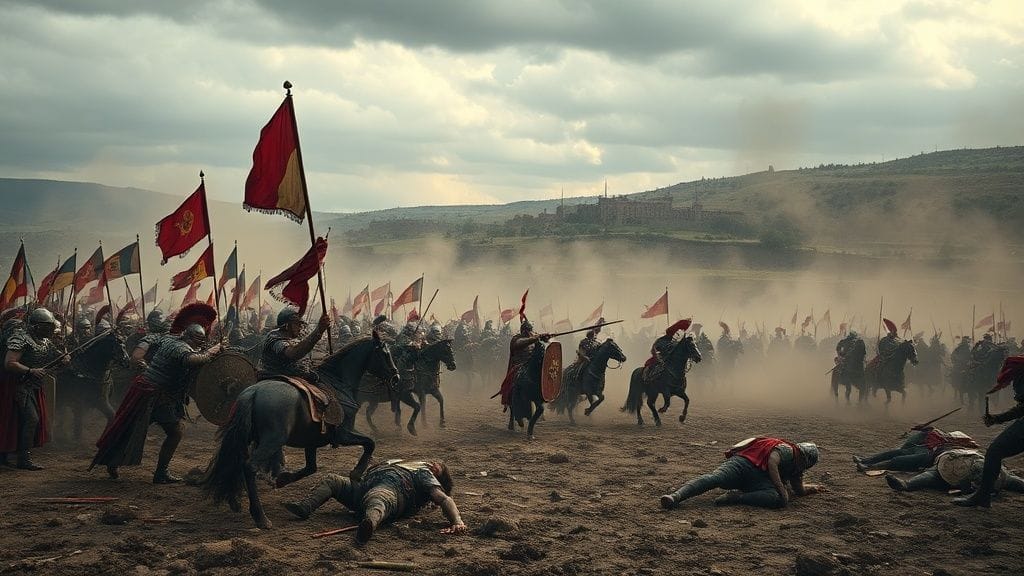
A turning point came when accusations surfaced—whether fabricated or based on genuine evidence—that Plautianus was preparing armed men and stockpiling weapons in secret. Caracalla seized on these charges with ferocity, pressing his father to act. Severus’s hesitation, if any, could not last forever. The emperor who had weathered civil wars and toppled rival claimants could not afford to appear blind to a possible traitor in his inner circle. The scene was set for a showdown that would be as swift as it was brutal.
Conspiracy, Accusation, and the Night That Changed Everything
The final act in the life of gaius fulvius plautianus unfolded with the chilling efficiency of a prearranged performance. Ancient narratives place the climax one night when Plautianus was summoned to the imperial palace, ostensibly to discuss grave matters of state. Secure in his long-standing intimacy with Severus, he came, perhaps wary but likely convinced that his presence was necessary to dispel the clouds of rumor gathering around him.
What happened next has come down to us in versions tinged with drama, but the core elements converge. As Plautianus entered the palace, he encountered not the familiar warmth of an emperor’s confidant but the icy choreography of a man already condemned. Soldiers loyal to Caracalla, perhaps members of the guard he himself had once commanded, moved into position. Accusations were read aloud—charges of treason, of plotting to overthrow the emperor, of assembling a private arsenal in Rome.
Some accounts, like that of Cassius Dio, describe a tense confrontation in which Caracalla himself took the lead, producing alleged evidence and denouncing his father-in-law. Severus, whether persuaded by the proofs or cornered by political necessity, did not intervene to save his old friend. In that moment, the decades-long bond forged in the streets of Leptis Magna, the trust that had survived wars and upheavals, snapped under the strain of imperial succession.
The execution was quick. Plautianus was killed within the palace precincts, his body removed, his name already beginning its journey into infamy. There was no public trial, no chance to rally supporters. The very machinery of power he had helped build ensured that his fall would be complete and sudden. One evening he entered the palace as praetorian prefect and imperial relative; by dawn, he was a traitor, a cautionary tale, perhaps already a whispered warning among those who had once courted his favor.
The fate of his family was no less grim. Plautilla, Caracalla’s unwanted wife and Plautianus’s daughter, was soon exiled to the barren island of Lipari. There, far from the marble and clamor of Rome, she would live out a quiet and miserable existence until, in time, she too was put to death on the orders of a husband who had always despised her. The dynasty thus erased not only the man they deemed dangerous but the branch of their own family tree that led back to him.
That night in the palace was the inversion of everything the birth in 159 had promised. The boy of Leptis Magna who had risen higher than almost any non-imperial Roman of his day ended his life not in the dignified old age of a retired statesman but in the abrupt silence of a political execution. The empire that had seemed to reward his loyalty revealed its other face: cold, unsentimental, willing to devour even its most devoted servants when the calculus of survival demanded it.
Aftermath of a Fall: Confiscations, Erasures, and Broken Memories
In Rome, power does not merely shift; it rewrites. After the death of gaius fulvius plautianus, the machinery of imperial retribution swung fully into motion. His estates were confiscated, his wealth absorbed by the state or redistributed among those whose loyalty needed rewarding. Properties that had once echoed with the footsteps of petitioners and servants were sealed, inventoried, and reassigned. The man who had controlled the fate of others now had no possessions, no legal existence.
The Romans knew well the art of symbolic erasure. Names could be chiseled from inscriptions, faces scratched off reliefs, statues toppled or recarved. Although Plautianus was not subjected to the formal damnatio memoriae—the “condemnation of memory” reserved for some especially hated emperors—the spirit of that practice informed his posthumous treatment. Where once his name had stood next to Severus’s in dedicatory texts, scribes now hesitated. In the years that followed, official narratives would minimize his contributions and emphasize his alleged crimes.
The guard he had commanded was reoriented. New prefects were appointed, men more pliable to Caracalla’s will. The Senate, which had watched his ascendancy with alarm, drew a sharp breath of relief. One more equestrian climber from the provinces had been cut down before he could eclipse Rome’s traditional aristocracy entirely. Yet even among his enemies, there must have been some who understood the deeper lesson: that proximity to the imperial center was increasingly lethal, that no office, however exalted, could shield a man from the suspicions of an emperor-in-waiting.
For Leptis Magna, the news of Plautianus’s fall must have arrived with a disquieting mixture of fear and resignation. The same sea that had once carried word of his rise now brought accounts of his destruction. In the forums and baths of his hometown, people who had known his family would discuss the matter in low voices. Some might insist he had overreached, that his ambition had been bound to end badly. Others, perhaps, would recall favors granted, positions obtained, municipal projects funded during the years when a son of their city held sway in Rome.
One thing is certain: the memory of Gaius Fulvius Plautianus fractured along social and political lines. In official histories commissioned under the Severan dynasty, he was largely cast as a villain, an object lesson in the dangers of excessive power. Among those who had benefited from his patronage, a more sympathetic portrait likely survived, one that emphasized his loyalty to Severus and glossed over the harsher aspects of his rule. Time, as always, proved the final arbiter, leaving us a patchwork of perspectives rather than a single, simple verdict.
Leptis Magna in the Age of Severus and Plautianus
The story of Plautianus cannot be separated from that of his birthplace, for Leptis Magna reached its own apogee precisely when its two most famous sons were at the height of their influence. Under Septimius Severus, the city enjoyed imperial favor on a scale that astonished contemporary observers. Massive building projects transformed its urban landscape: a grand new forum, an expanded harbor, a lavish basilica whose carved columns and richly decorated ceilings still impress archaeologists today.
These works were not mere gifts; they were a dialogue carved in stone between emperor and city. Severus, conscious of his origins, invested heavily in Leptis as a way of honoring his roots and projecting the message that the Roman Empire could be led by men from beyond Italy. The city’s monuments became, in effect, a stone biography of a provincial boy who had become emperor. And in the background of this transformation, the presence of gaius fulvius plautianus, as praetorian prefect and imperial relative, added another layer of connection between Rome’s heart and its African limb.
Inscriptions from this period sometimes mention both Severus and his African associates, underscoring the tight web of patronage that linked the metropolis and the province. Local elites in Leptis Magna, perhaps including relatives or allies of the Fulvii, benefited from this unique moment of attention. New offices were created, trade routes strengthened, the city’s civic pride burnished by imperial recognition. For ordinary inhabitants, this meant jobs on construction sites, increased commerce, and a sense that their city stood closer than ever to the center of the world.
But such golden ages always carry shadows. The same imperial favor that enriched Leptis exposed it to new vulnerabilities. Changes in dynasty could bring abrupt reversals of policy; what one emperor built, another might neglect or even dismantle. When Plautianus fell and later, after Severus’s own death, when the Severan line splintered under the weight of internal rivalries, Leptis Magna’s privileged position began to erode. The great buildings remained, but the constant flow of imperial attention slackened.
From the vantage point of history, it is tempting to see the early third century as both zenith and prelude to decline—for Plautianus, for Severus, and for their shared city. Yet such narratives risk flattening the complex reality. For decades after their deaths, Leptis Magna remained a vibrant urban center. The memory of the emperor who had sprung from its streets and of the prefect who had once walked its colonnades lingered, embedded in the very stone. Even as political fortunes turned, the fact that such men had risen from its soil was itself a legacy, a proof of what provincial Africa could produce.
The Human Cost of Imperial Proximity
It is easy, when speaking of prefects and emperors, to lose sight of the human beings behind the titles. Gaius Fulvius Plautianus appears in many histories as a type rather than a person: the overmighty favorite, the dangerous minister, the shadow ruler behind the throne. Yet to reduce him to this stock figure is to overlook the profound emotional and personal costs that came with his ascent and downfall.
Consider the arc of his life: born into a comfortable but not extraordinary provincial family, he climbed through a maze of offices to a position where his signature could mean life or death for thousands. Along the way, he had to navigate betrayal, shifting allegiances, and the ever-present risk of imperial displeasure. Trust, in such circumstances, was both priceless and perilous. His bond with Septimius Severus, which began as a shared provincial kinship, was tested in the fires of civil war and palace intrigue. To live daily in the knowledge that one’s survival depended on the continued affection and confidence of a single man—the emperor—must have exerted an immense psychological strain.
His family, too, paid a steep price. Plautilla, married for reasons of policy rather than love, became a symbol of an alliance that neither she nor Caracalla desired. Her later exile and execution are often mentioned only in passing in the sources, yet they speak volumes about the cruelty baked into the structures of Roman power. Children, siblings, cousins—anyone connected to a fallen favorite—could find their lives abruptly curtailed or bent into shapes they had never chosen.
Even Plautianus’s reputed harshness, if we accept that he was indeed a severe and often ruthless prefect, can be seen in part as a response to the logic of his position. To command the praetorian guard and oversee state security under a suspicious regime was to live in constant expectation of plots. Mercy, in such a role, was a luxury; miscalculation could mean not just one’s own death but the persecution of one’s family. The line between necessary vigilance and paranoid violence is razor-thin, and Plautianus may have crossed it more than once. Still, the pressure that pushed him there deserves acknowledgement.
It is this human dimension that makes his story more than an anecdote about a powerful minister who flew too close to the sun. Gaius Fulvius Plautianus embodies the double-edged nature of imperial service in Rome: the dazzling opportunities open to those of talent and ambition, and the equally dazzling speed with which fortune could turn. The same empire that could lift a boy from Leptis Magna to the pinnacle of power could, in a single night, plunge him and his household into oblivion.
Historians, Bias, and the Problem of Plautianus
Our understanding of Plautianus is shaped less by what he left behind than by what others wrote about him. This poses a challenge. The surviving literary sources—figures like Cassius Dio and the author of the Historia Augusta—were senators or men close to senatorial circles. Their perspective was not neutral. They tended to view equestrian officials who wielded immense power with suspicion, especially when those officials hailed from the provinces and bypassed traditional aristocratic pathways.
Cassius Dio, writing in Greek and steeped in the values of the Roman senatorial elite, portrays gaius fulvius plautianus as a tyrannical and corrupt figure, a man who abused his office to enrich himself and terrorize others. Yet Dio himself acknowledges the closeness between Plautianus and Severus, noting that the emperor entrusted him with extraordinary responsibilities. Modern historians, such as Anthony Birley in his work on the Severan dynasty, have pointed out that such trust is itself evidence of competence and reliability—at least for a time.
When evaluating the charges against Plautianus—that he plotted a coup, that he accumulated weapons, that he schemed to control or even supplant the imperial family—we must remember who benefits from these narratives. Caracalla, eager to justify his elimination of a powerful rival, had every incentive to present Plautianus as a traitor. Subsequent imperial propagandists, wishing to absolve the Severan house of blame for the execution of a long-time ally, could readily amplify this depiction.
This does not mean that Plautianus was innocent of all wrongdoing. The nature of his office virtually guaranteed involvement in harsh measures against perceived enemies of the regime. But the image of him as a one-dimensional villain obscures a more complex reality: a man navigating a treacherous political terrain, making choices that were shaped as much by the structures of Roman power as by any innate cruelty.
Modern scholarship tends to adopt a more nuanced view. Some historians see in Plautianus an archetype of the powerful praetorian prefect, comparable in certain ways to later figures like Sejanus under Tiberius, yet distinct in his roots as a provincial friend of the emperor. Others emphasize the provincialization of Roman power in the Severan age, with Plautianus’s career serving as a vivid example of how men from the margins could dominate the center. In this reading, his life becomes less a morality tale about hubris and more a case study in the shifting sociology of imperial rule.
Ultimately, the problem of Plautianus for historians is the problem of voice. He left no memoirs, no surviving letters, no self-defense. What we have are the voices of his enemies, softened only by the distant, sometimes skeptical commentary of modern scholars. Between them, we can glimpse a figure who was neither demon nor hero but something more unsettling: a highly capable, deeply embedded participant in an imperial system that rewarded ruthlessness and punished vulnerability.
From a Cradle in Libya to a Cautionary Tale of Rome
When we return, at last, to the house in Leptis Magna where a child cried out in 159 CE, the arc of the story feels almost unreal. How could that infant, swaddled against the desert night, have become the towering and terrifying figure described in Rome’s chronicles? How could a provincial boy, whose earliest memories were of dusty streets and the crash of Mediterranean waves, end his life as the most feared man in the capital and then as a swiftly erased memory?
The answer lies in the Roman Empire itself, in its vastness and its contradictions. It was an empire that opened doors for talented provincials like gaius fulvius plautianus, bringing new blood into its governing institutions and reshaping the social geography of power. But it was also an empire in which ultimate authority was deeply personal, centered on the figure of the emperor and the precarious dynamics of his household. To rise close to that center was to step into a zone where traditional protections fell away.
Plautianus’s life, from birth to execution, traces the possibilities and perils of this world. His birthplace, Leptis Magna, shows us how deeply Roman structures had penetrated local societies, creating hybrid elites who could operate fluently in both provincial and metropolitan contexts. His friendship with Septimius Severus reveals the strength of personal bonds in a system where institutional checks were weak. His tenure as praetorian prefect illustrates the concentration of power in a few key offices, and his fall dramatizes the violent resolution of competing claims to loyalty and legitimacy.
In the end, what endures is not only the image of a man cut down at the height of his powers but also the lingering question of how many others like him lived and died in the orbit of Rome’s emperors, their stories lost or flattened into convenient stereotypes. Gaius Fulvius Plautianus stands out because his journey from Leptis Magna to Rome’s inner sanctums was unusually dramatic and unusually well documented. But he was also part of a much larger pattern: that of an empire both enriched and endangered by the ambitions it fostered in those who served it.
From the cradle in Roman Libya to the execution chamber in the imperial palace, the life of Plautianus reads like a cautionary epic. It warns of the costs of drawing too near to absolute power, yet it also testifies to the startling mobility possible within Rome’s sprawling dominion. His birth in 159 did not determine his fate, but it placed him in a world where the line between provincial obscurity and global prominence could be crossed—if one was willing, as he was, to risk everything on the vicissitudes of imperial favor.
Conclusion
The birth of Gaius Fulvius Plautianus in Leptis Magna in 159 CE was an event no contemporary chronicler thought to record, yet its reverberations spread across the Roman world. From the commerce-scented streets of a North African port, he climbed into the nerve center of imperial power, shaping the fortunes of emperors, senators, and soldiers. His life encapsulates the paradox of the Roman Empire in the early third century: a system that invited talented provincials into its highest echelons while remaining ruthlessly unforgiving to those who misjudged the balance of loyalty and ambition.
Seen against the backdrop of Severan rule, Plautianus’s story illuminates both the possibilities opened to men from outside Italy and the fragility of those gains. His partnership with Septimius Severus built a formidable architecture of power—military, bureaucratic, and familial—that seemed at moments almost impregnable. Yet his inability to reconcile this edifice with the ambitions and resentments of the next generation, especially Caracalla, proved fatal. The same proximity to the emperor that had enabled his ascent turned abruptly into a liability.
Leptis Magna, meanwhile, stands as the silent witness to this drama. Its monuments, many raised in the Severan age, remind us that imperial politics was not confined to Rome’s hills but stretched out across the Mediterranean, binding cities and individuals in webs of patronage and identity. In the mosaics and ruins of the city, we catch glimpses of the world that formed Plautianus: a hybrid culture where Roman law met Libyan landscapes, and local elites learned to speak the empire’s language in their own accents.
In the end, Plautianus’s fate—his execution, the destruction of his family, the erosion of his memory—shows how thin the line was between indispensable ally and expendable enemy. His life has come down to us largely through the voices of those who had reason to condemn him, yet even within their hostile accounts the outline of a more complex figure emerges: loyal, ambitious, hard, and ultimately trapped by the very structures he helped sustain. To trace his journey from that birth in 159 is to confront the dizzying heights and terrifying drops of power in Rome’s imperial age, and to recognize that in the empire’s ceaseless stories of rise and fall, the human cost was always incalculably high.
FAQs
- Who was Gaius Fulvius Plautianus?
Gaius Fulvius Plautianus was a Roman equestrian from Leptis Magna in Roman Libya, born in 159 CE, who rose to become praetorian prefect under Emperor Septimius Severus. A close friend and fellow townsman of the emperor, he wielded enormous authority over the imperial guard and state security before being executed on charges of treason. - Why is his birth in Leptis Magna significant?
His birth in Leptis Magna highlights the growing importance of Rome’s provinces, especially North Africa, in supplying key figures to the imperial administration. It underscores how provincial elites could move from local prominence to central power, reshaping the social and political landscape of the empire. - How did Plautianus rise to power?
Plautianus advanced through equestrian administrative posts, building a reputation for competence and loyalty. His longstanding friendship with Septimius Severus, a fellow native of Leptis Magna, proved crucial; when Severus became emperor, he appointed Plautianus praetorian prefect and entrusted him with reorganizing and commanding the praetorian guard. - What was his relationship with the imperial family?
He was both a trusted minister and, for a time, a member of the extended imperial family. His daughter Plautilla married Caracalla, Severus’s son and heir, making Plautianus the emperor’s in-law. This alliance greatly increased his influence but also intensified tensions with Caracalla, who resented both the marriage and Plautianus’s power. - Why was Gaius Fulvius Plautianus executed?
He was accused of plotting against the imperial family, allegedly stockpiling weapons and organizing a conspiracy. Summoned to the palace, he was confronted by Caracalla and swiftly executed, probably with Severus’s reluctant consent. Many historians suspect that political rivalry and Caracalla’s hostility played at least as large a role as any real evidence of treason. - How reliable are our sources about Plautianus?
Our main literary sources come from senatorial authors who tended to distrust powerful equestrian officials, particularly provincial upstarts. Their accounts likely exaggerate his cruelty and ambition. Modern historians approach these texts critically, balancing them against inscriptions, coinage, and the broader context of Severan politics to form a more nuanced picture. - What happened to his family after his fall?
Following his execution, Plautianus’s properties were confiscated and his family persecuted. His daughter Plautilla was exiled to the island of Lipari and later executed, probably on Caracalla’s orders. Any wider kinship network linked to him in Rome would have faced, at minimum, political marginalization and fear. - How did his career affect Leptis Magna?
His career, alongside that of Septimius Severus, contributed to the extraordinary favor Leptis Magna enjoyed in this period, seen in massive building projects and increased imperial attention. Though Severus was the primary patron, the presence of another powerful Leptitan at court reinforced the city’s status as a key provincial center. - Was Plautianus unique among praetorian prefects?
In some ways, he followed a familiar pattern of powerful prefects who became kingmakers or near-co-rulers. However, his combination of provincial origins, deep personal connection to the emperor, and familial tie to the heir made his position unusually intense and precarious. His story is often compared to figures like Sejanus but remains distinct in its Severan context. - What broader lessons does his life illustrate about the Roman Empire?
Plautianus’s life illustrates the opportunities and dangers inherent in Rome’s imperial system: the opening of high office to provincial elites, the centrality of personal relationships to political power, and the lethal volatility of the imperial court. His trajectory from North African cradle to Roman execution chamber exemplifies both the empire’s integrative reach and its ruthless capacity for self-preservation.
External Resource
Internal Link
Other Resources
- Encyclopaedia Britannica – general search for the exact subject
- Google Scholar – academic search for the exact subject
- Internet Archive – digital library search for the exact subject