Table of Contents
- The Dawn of a New Chapter: August 31, 1980, in Gdańsk
- Poland on the Brink: A Nation in Turmoil
- Rising Tensions: The Seeds of Protest in the Shipyard
- The Role of Lech Wałęsa: From Electrician to Leader
- The Workers’ Strike: A Collective Voice Breaking the Silence
- Negotiations Begin: Between Authorities and Rebels
- The Birth of Solidarity: An Unprecedented Agreement
- Demands and Concessions: The Thirteen Points of Change
- The Agreement’s Impact on Polish Society
- Ripples Beyond Borders: The Cold War and International Reactions
- A Movement is Born: Solidarity’s Growth and Influence
- The State’s Initial Response: Repression or Accommodation?
- Stories from the Shipyard: Personal Accounts of Courage
- The Role of the Catholic Church and Pope John Paul II
- The Weight of History: Gdańsk’s Symbolism in Polish Identity
- From Agreement to Revolution: The Path Toward 1989
- The Legacy of August 31: How Solidarity Changed the World
- Reflections on Leadership, Solidarity, and Courage
- Myths and Realities: Understanding the Complexities
- Conclusion: Echoes of Gdańsk in Modern Poland
- FAQs on the Gdańsk Agreement and Solidarity
- External Resource
- Internal Link
1. The Dawn of a New Chapter: August 31, 1980, in Gdańsk
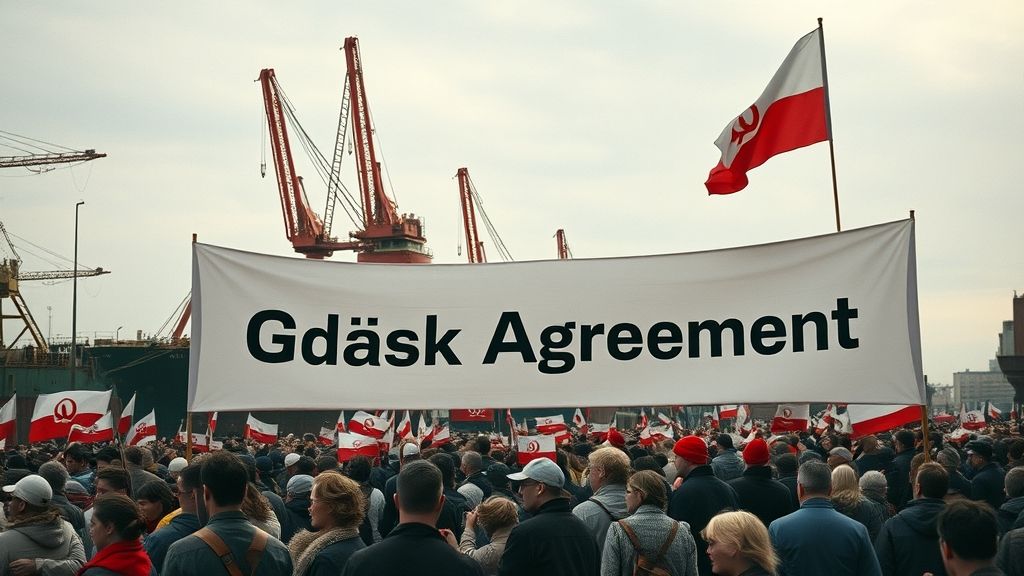
The air was thick with anticipation and tension as dawn broke over the Gdańsk Shipyard on that late August morning. Exhausted workers, their faces marked by months—if not years—of injustice and hardship, gathered for what would become a historic turning point in modern European history. Conversations hushed into a collective breath held tight, eyes searching the horizon, waiting for the result of marathon negotiations. Outside, the city held its own quiet hope, sensing that they stood on the edge of a storm about to break shattered the old order. When finally the Gdańsk Agreement was signed on August 31, 1980, it was more than a piece of paper—it was the genesis of a revolution that would shake the foundations of communist Poland and send ripples throughout the Cold War world.
2. Poland on the Brink: A Nation in Turmoil
To fully grasp the magnitude of the Gdańsk Agreement, one must first understand the Poland of 1980—a country burdened by decades of political repression, economic stagnation, and social unrest. The post-war Polish People's Republic, under Soviet influence, was governed by a Communist Party apparatus increasingly disconnected from the grim realities of its people’s daily lives. Chronic shortages of basic goods, skyrocketing prices, and a widespread sense of disillusionment crippled the working class, while the bureaucracy and nomenklatura grew bloated and indifferent.
Yet this was not merely a story of economic despair. Beneath the surface simmered a potent mix of nationalist sentiment, religious conviction, and a fierce desire for dignity. The scars left by World War II, combined with the heavy hand of Stalinism, had fueled a deep-rooted longing for freedom—political and spiritual. Traditional institutions like the Catholic Church still commanded enormous moral authority, offering a sanctuary for expression beyond party propaganda.
It was into this cauldron that the events at the Lenin Shipyard in Gdańsk unfolded, igniting hopes that had long been suppressed.
3. Rising Tensions: The Seeds of Protest in the Shipyard
August 1980 was, by many accounts, the hottest summer Poland had endured in years. But the stifling heat was nothing compared to the pressure accumulating inside the shipyard walls. The spark came in mid-August when the government announced a sudden increase in food prices—especially meat—striking a devastating blow to workers already struggling to feed their families. This decision was the last straw; simmering anger erupted into open revolt.
At the Lenin Shipyard, popularly known as the "Gdańsk Shipyard," thousands of workers decided to cease production. It was no ordinary strike. Unlike previous spontaneous outbursts quickly crushed by authorities, this time the strike was organized, strategic, and infused with a broader political vision. From the very beginning, the workers demanded not just better wages or conditions but fundamental changes to their right to organize, freedom of speech, and an end to censorship.
4. The Role of Lech Wałęsa: From Electrician to Leader
Among the sea of faces that swarmed the shipyard, one stood out. Lech Wałęsa, an electrician known for his wit, charisma, and unyielding spirit, quickly emerged as the voice of the movement. His background was far from that of a revolutionary: a devout Catholic, a dedicated family man, and a worker who knew the hardships firsthand.
Yet Wałęsa’s ability to articulate the collective frustration and hope of the workers turned him into a natural leader. His negotiations style was firm but conciliatory, combining courage with pragmatism. He also demonstrated a rare talent for communication—connecting with the workers, the public, and even the wary officials with a personal authenticity few could resist.
Wałęsa’s rise was emblematic of Solidarity’s very essence: a grassroots, human-centered movement emerging not from ideological elites but from the heart of the working class.
5. The Workers’ Strike: A Collective Voice Breaking the Silence
As the strike expanded beyond the shipyard to engulf other factories and sectors in Gdańsk and throughout Poland, the movement became a phenomenon of unprecedented scale. Approximately 17,000 workers participated initially, but within days tens of thousands had joined, each workplace contributing its own demands and stories, tied together by a shared spirit of resistance.
During the strike, the shipyard became a city within a city. Inside, a social order flourished: committees held meetings, food was distributed, cultural and religious ceremonies took place, and slogans and songs filled the air. The strikers were disciplined yet determined, blending traditional Polish pride with modern protest tactics.
The strike committees crafted a list of 21 demands, ranging from economic improvements to the right to form free trade unions—a direct challenge to the Communist Party’s monopoly on workers’ representation.
6. Negotiations Begin: Between Authorities and Rebels
The government, taken by surprise by the scale and unity of the strike, was faced with a dilemma. Early threats of repression were tempered by concerns over the potential for widespread violence and international condemnation. After tense days of deliberations, the authorities agreed to talks.
Negotiations formally began on August 26 and stretched deep into the night on August 30 and 31. Both sides navigated a treacherous path, with negotiators balancing pressure from their bases with the necessity to avoid bloodshed. Wałęsa and his team maintained their demands firmly but avoided provocations that might close the door to compromise.
The tension was palpable—the weight of history pressing down on every word spoken, every concession given. The world watched silently as these ordinary Poles waged a battle that could redefine not only their fate but the global order.
7. The Birth of Solidarity: An Unprecedented Agreement
At 2:45 a.m. on August 31, 1980, the Gdańsk Agreement was signed—less a simple document than a profound milestone. Key among its terms was the recognition of independent trade unions, a historic first behind the Iron Curtain. The agreement acknowledged workers’ right to strike peacefully and allowed for greater freedom of expression and information.
This was no small victory. The Communist Party, notoriously rigid and intolerant, had bowed—however partially—to the will of its citizens. The birth of Solidarity (“Solidarność”) was officially declared, marking the dawn of an independent labor federation that would soon transform into a national movement.
8. Demands and Concessions: The Thirteen Points of Change
The agreement was detailed, codifying thirteen essential concessions. Among them:
- The right to create free trade unions independent of the Communist Party.
- The right to strike as a legitimate form of protest.
- The release of political prisoners who had been detained during the strike.
- Guarantees of freedom of speech and publication for workers’ newspapers.
- Improvements in working conditions and pay.
For the workers, these demands embodied years of frustration and hope. For the regime, they were compromises made under duress but reluctantly accepted for the sake of national stability.
9. The Agreement’s Impact on Polish Society
In the weeks following, the effect of the Gdańsk Agreement spun beyond the strike corridors. It invigorated not only workers but students, intellectuals, and clergy who saw in Solidarity a new outlet for political and social expression.
Solidarity chapters mushroomed in factories across Poland, with rapid and enthusiastic membership growth—reportedly reaching over 10 million by 1981. This movement transformed Polish society into an arena of collective dialogue and contestation, marking a significant crack in the Communist monolith.
10. Ripples Beyond Borders: The Cold War and International Reactions
News of the agreement traveled swiftly beyond Poland’s borders. Western media hailed the strike as a courageous stand against Soviet hegemony while Communist bloc nations watched with alarm. The United States and European democratic countries expressed cautious support, seeing Solidarity as a beacon of hope in a world divided by ideological conflict.
For the Soviet Union, the agreement posed a dire challenge. It threatened to inspire unrest in other satellite states and called into question the inviolability of the Warsaw Pact. Yet, at least initially, Moscow refrained from immediate intervention, burdened by its own internal difficulties.
11. A Movement is Born: Solidarity’s Growth and Influence
Solidarity quickly grew from a trade union to a mass social movement encompassing a wide swathe of Polish society. It became a forum not only for labor rights but also for broader political debates: democratization, human rights, and national sovereignty.
Its charismatic leaders, including Wałęsa, became symbols of peaceful resistance. The movement’s newspaper, “Solidarność,” spread the message far and wide, fostering a communal spirit that defied earlier imposed silence.
12. The State’s Initial Response: Repression or Accommodation?
Despite the initial concessions, the Communist government remained wary and constrained. Signs of cracks in the official consensus began to appear as they attempted to navigate a balance between repression and dialogue.
In December 1981, the imposition of martial law would temporarily crush Solidarity’s legal presence but fail to extinguish its spirit. The Gdańsk Agreement, though momentarily shelved, remained a symbol and blueprint for eventual change.
13. Stories from the Shipyard: Personal Accounts of Courage
Within the massive narrative, countless personal stories illustrate the human cost and courage behind the movement. Gdańsk shipyard worker Anna Kowalska recounted risking her job and safety to distribute underground pamphlets. Janusz, a young electrician, described how the strike transformed his outlook, teaching him that collective action could alter fate.
Such testimonies add texture and depth, reminding us that history is made not only by leaders but by the courage of ordinary people.
14. The Role of the Catholic Church and Pope John Paul II
Crucial to Solidarity’s moral and spiritual backbone was the Catholic Church, whose relationship with the Communist state was at once tense and enduring. Pope John Paul II, the first Polish pontiff, became a symbol of hope and resistance, providing a global platform that amplified the movement’s voice.
The Church offered material support, shelter, and a network for communication, legitimizing Solidarity’s struggle in the eyes of millions.
15. The Weight of History: Gdańsk’s Symbolism in Polish Identity
Gdańsk, long a contested city at the crossroads of German and Polish history, bore deep symbolic weight. It was the birthplace of the Polish state in medieval times and had endured Nazi occupation and repression.
That its shipyard became the cradle of a movement reclaiming national dignity and sovereignty against authoritarianism resonated profoundly—linking the struggle of 1980 to centuries of Polish resilience.
16. From Agreement to Revolution: The Path Toward 1989
The Gdańsk Agreement set in motion a chain of events leading inexorably to the eventual fall of communism in Poland and throughout Eastern Europe. Solidarity’s persistence, coupled with shifting global geopolitics and economic decline, culminated in the Round Table Talks of 1989 and Poland’s first semi-free elections.
These milestones broke the Iron Curtain, inspiring revolutions throughout Central and Eastern Europe.
17. The Legacy of August 31: How Solidarity Changed the World
More than a national event, the Gdańsk Agreement represented the power of organized, peaceful resistance in confronting tyranny. It showed that labor movements could transcend economic grievances to become vehicles of democratic change.
Its legacy continues to remind us of the potency of solidarity—the human capacity to stand together for justice against overwhelming odds.
18. Reflections on Leadership, Solidarity, and Courage
Looking back, the story is one of leadership forged in adversity, communities united despite fear, and individuals who dared dream differently. Wałęsa’s transformation from worker to Nobel laureate symbolizes the unexpected ways history shapes and is shaped by ordinary lives.
Solidarity’s blend of pragmatism and idealism remains a template for social movements worldwide.
19. Myths and Realities: Understanding the Complexities
While often mythologized, the movement was complex and fraught with internal divisions, strategic debates, and harsh compromises. The government’s concessions were tactical, and the road ahead was rocky and violent at times.
Understanding these nuances helps avoid simplistic narratives and honors the human intricacies behind epochal change.
20. Conclusion: Echoes of Gdańsk in Modern Poland
Fifty years on, the echoes of Gdańsk still resonate—in Poland’s democratic institutions, civil society, and collective memory. The Gdańsk Agreement is more than history; it is a testament to the enduring human spirit and a beacon for those seeking freedom and dignity.
It teaches an invaluable lesson: that even in the darkest moments, ordinary people can ignite extraordinary transformations.
Conclusion
The Gdańsk Agreement of August 31, 1980, stands as a monument to courage, hope, and the power of collective will. It shattered the myth of invincible authoritarian regimes, revealing the cracks where human dignity and solidarity could sprout. This watershed moment transcended Poland’s borders and inspired a domino effect that redefined the 20th century’s political landscape.
Yet, beyond geopolitics and ideologies, it is the story of individuals—the workers, the organizers, the dreamers—who risked everything for a chance at freedom that continues to inspire. The legacy of Solidarity reminds us of the fragile but unyielding power found in united hearts and minds.
The history of that heated August in Gdańsk is not just a chapter in a book; it is a living testament to the possibility of change.
FAQs on the Gdańsk Agreement and Solidarity
Q1: What were the main causes leading to the Gdańsk Agreement of 1980?
The key causes included chronic economic crisis, sudden food price hikes, political repression, and workers’ demands for freedom to organize independent unions. Long-standing resentment against the Communist regime’s failure to address social grievances boiled over in the shipyard strikes.
Q2: Who was Lech Wałęsa and why was he important to the movement?
Lech Wałęsa was an electrician at the Lenin Shipyard who emerged as the charismatic leader of the strike and Solidarity movement. His ability to unify workers, negotiate with authorities, and communicate a hopeful vision was pivotal to the movement’s success.
Q3: What were the significant demands included in the Gdańsk Agreement?
Among the demands were the right to establish independent trade unions, the right to strike, release of political prisoners, increased workers’ rights, and freedom of speech. Thirteen major concessions formed the backbone of the agreement.
Q4: How did the international community react to the Gdańsk Agreement?
Western democracies cautiously supported Solidarity, seeing it as a beacon against Soviet totalitarianism. The Soviet Union and Warsaw Pact countries viewed it as a dangerous precedent but initially refrained from direct intervention.
Q5: What role did the Catholic Church play in the Solidarity movement?
The Catholic Church provided spiritual, moral, and logistical support. Pope John Paul II’s influence elevated the movement’s profile internationally, offering a protective and legitimizing force against Communist repression.
Q6: Did the Gdańsk Agreement end Communist rule in Poland immediately?
No, the Communist regime retained power for several more years. The agreement sparked a wave of resistance but was met with repression, including martial law in 1981. However, it laid the groundwork for the peaceful transition in 1989.
Q7: Why is the city of Gdańsk symbolically important in Polish history?
Gdańsk’s history as a free port, its suffering during WWII, and its contested sovereignty imbue it with strong symbolic meaning as a place of national resilience and democratic awakening.
Q8: What is the legacy of the Gdańsk Agreement today?
The agreement stands as a symbol of the power of peaceful resistance and solidarity. It helped bring down communist regimes in Eastern Europe and serves as an inspiration for social justice movements worldwide.