Table of Contents
- A Dawn Shattered: The Early Hours of April 9, 1940
- The Strategic Importance of Denmark and Norway in Hitler’s Plans
- The Shadow of War: Europe on the Brink in Early 1940
- Denmark’s Vulnerability: A Small Nation Caught Unprepared
- Norway’s Complex Position: Neutrality Amid Rising Storms
- Operation Weserübung: The German Masterstroke
- The Blitzkrieg Across the Skies: Airborne Assaults and Naval Landings
- Chaos in Copenhagen: Denmark’s Swift Surrender
- Norse Resistance: The Battle for Norway Begins
- The Role of Allied Forces: Britain and France Respond
- The German Navy’s Gamble: The Battles of Narvik
- Norwegian Civilians in War’s Grip: Stories from the Occupation
- Churchill’s Rising Star: How Norway Shaped His Leadership
- The Impact on Nazi Strategy: A Stepping Stone for the Western Campaign
- The Economic Stakes: Control of the North Atlantic and Swedish Iron Ore
- The Human Cost: Soldiers, Civilians, and the Scars of Occupation
- Histories Written in Blood: Memory and Myth-Making in Denmark and Norway
- Long Shadows: The Occupation’s Legacy in Scandinavian Politics
- Norway’s Government-in-Exile: A Beacon of Defiance
- Denmark’s Quiet Resistance: From Capitulation to Underground Movement
- The Scandinavian Front within World War II: Forgotten but Pivotal
- How the Invasion Changed Global Warfare
- Conclusion: Reflections on Courage and Catastrophe
- FAQs: Addressing the Key Questions of the 1940 Invasion
- External Resource
- Internal Link
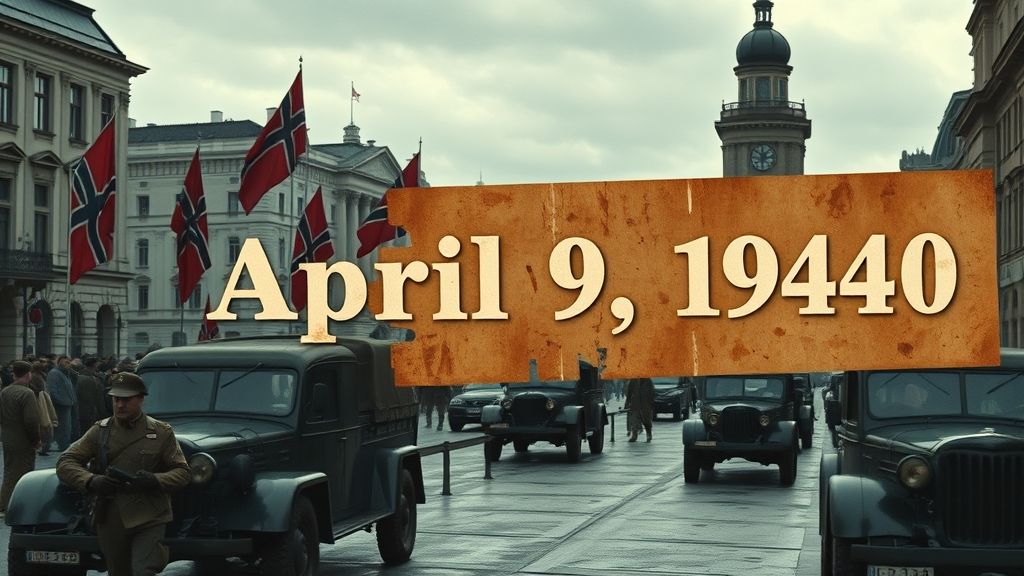
April 9, 1940 — the date that forever altered the tranquil fjords of Norway and the rolling farmlands of Denmark. As the first light crept quietly over the northern horizon, a violent storm of war erupted, shattering centuries of peace and neutrality. It was a day when the soaring ambitions of Nazi Germany collided explosively with the fragile sovereignty of two small nations, setting the stage for a brutal struggle for control of the Northern European corridor.
1. A Dawn Shattered: The Early Hours of April 9, 1940
Imagine the cold morning air of the Scandinavian spring—sharp, clear, deceptively calm. Fishermen pulled in their nets on the Danish coasts, shopkeepers began their routine in Oslo’s winding streets. Suddenly, the roar of warplanes split the dawn as German aircraft soared low above the fjord waters. Simultaneously, naval vessels sliced through the icy sea. The serene silence that had blanketed Denmark and Norway was shattered by sudden gunfire, the clatter of boots on cobblestones, and the cries of confusion and defiance.
This was the first thunderclap of Operation Weserübung—Hitler’s bold and meticulously crafted invasion plan that sought control over Denmark and Norway. It was neither a spontaneous act nor a simple conquest; it was the harsh prelude to Europe's deeper descent into chaos.
2. The Strategic Importance of Denmark and Norway in Hitler’s Plans
Why target Denmark and Norway? To the casual observer, two peaceful, neutral Nordic nations might seem of limited consequence. Yet, for Hitler and the German High Command, they were the key to securing vital resources and strategic naval advantages. Norway’s long Atlantic coastline offered access for naval bases that could disrupt British sea routes, sway control of the North Sea, and challenge British naval supremacy. Denmark was the gateway to the Baltic Sea and control over Sweden’s iron ore shipments—critical to Germany’s industrial war machine.
The invasion was a gambit to forestall British efforts to cut off supplies and to ensure Germany’s northern flank remained secure for the looming conflicts to the west.
3. The Shadow of War: Europe on the Brink in Early 1940
The invasion did not happen in a vacuum. Across Europe, the seeds of conflict from the failed peace of 1919 had blossomed into full-scale war. By early 1940, Poland had fallen, France and the Low Countries were teetering, and Britain stood isolated, desperately seeking allies. Germany, emboldened by rapid military successes and Nazi ideology, saw control over Scandinavia as essential to continuing expansion and crippling the British Isles.
Amid this tense geopolitical chessboard, the neutrality declared by both Denmark and Norway was no guarantee of peace, and as the April morning unfolded, that neutrality was violently breached.
4. Denmark’s Vulnerability: A Small Nation Caught Unprepared
Denmark, with its flat terrain and limited armed forces, was ill-equipped to resist an invasion of this scale. Political factions debated the risks and responsibilities of resistance, but when German troops landed rapidly at multiple strategic points, including Copenhagen, the government made a heart-wrenching decision. Within mere hours—a staggering demonstration of speed and shock—Denmark capitulated.
The choice was agonizing yet pragmatic, aimed at sparing the population from destruction and avoiding needless bloodshed. However, this swift surrender marked the beginning of a five-year occupation that would deeply affect Danish society and identity.
5. Norway’s Complex Position: Neutrality Amid Rising Storms
Norway’s mountainous beauty belied a complex political atmosphere. The government was determined to maintain neutrality, but its geopolitical position was precarious. With a small, under-resourced military and a divided political landscape, Norway faced an invasion unlike any in its history.
Unlike Denmark, Norway resolved to resist. German forces, landing by sea and air, encountered fierce opposition in cities like Oslo, Trondheim, and Narvik. Norwegian civilians, soldiers, and even the royal family became symbols of national defiance in one of the longest and most grueling early campaigns of the war.
6. Operation Weserübung: The German Masterstroke
The launch of Operation Weserübung was a remarkable display of coordination and surprise. German forces capitalized on new military tactics—combining swift naval assaults, paratrooper drops, and sabotage behind enemy lines. This sophisticated approach aimed to overwhelm and paralyze defenders before they could organize resistance.
In Norway especially, airborne operations near Oslo’s Fornebu Airport and naval landings in key ports aimed at decapitating military and governmental resistance quickly. The operation reflected the growing sophistication of blitzkrieg warfare—fast, overwhelming, and brutal.
7. The Blitzkrieg Across the Skies: Airborne Assaults and Naval Landings
The assault was characterized by the unprecedented use of paratroopers and naval infantry. German Ju-52 transport planes disgorged soldiers onto targets like the airfield at Fornebu near Oslo, while Kriegsmarine destroyers and troop transports landed forces along the coast simultaneously.
This multi-pronged surprise attack disoriented defenders and gave German forces control of vital communications and infrastructure within hours—an operation that would influence future amphibious and airborne invasions in the war.
8. Chaos in Copenhagen: Denmark’s Swift Surrender
While Norway fought back, Denmark’s fate was sealed within hours. The German forces' overwhelming presence in Copenhagen and key cities forced the Danish government to surrender at 6 p.m. on April 9. The decision spared Denmark from widespread destruction, but consigned the nation to occupation and collaboration dilemmas.
King Christian X remained the symbolic figurehead, riding daily through the streets as a quiet emblem of national spirit amid occupation. But beneath the surface, Danish resistance movements would soon awaken.
9. Norse Resistance: The Battle for Norway Begins
Resistance to the German invasion in Norway was fierce and protracted, unlike Denmark. Although Oslo fell after intense fighting and the government went into exile, battles raged on in northern Norway, particularly around Narvik, where Hitler's navy suffered devastating losses.
Norwegian fighters, aided by British and French forces, turned the terrain into an advantage. Rugged fjords and mountains became battlegrounds of guerrilla warfare, and the civilian population played a crucial role in intelligence and sheltering resistance fighters.
10. The Role of Allied Forces: Britain and France Respond
Britain and France, watching the invasion unfold, quickly intervened to support Norwegian resistance. British naval forces engaged the Kriegsmarine in the fjords while ground troops attempted to push back the Germans.
Although this campaign ultimately ended with an Allied withdrawal due to strategic pressures elsewhere, it marked an early phase in the larger Battle of the Atlantic and demonstrated the increasing global scale of the conflict.
11. The German Navy’s Gamble: The Battles of Narvik
Narvik became the site of heroic naval engagements. British destroyers clashed with German destroyers in a series of battles that temporarily tipped control of the strategic port.
Despite sinking much of the German naval force, the Allies could not capitalize fully on this victory due to escalating crises on the Western Front. Nevertheless, Narvik remains a symbol of fierce resistance and tactical naval warfare in harsh Arctic conditions.
12. Norwegian Civilians in War’s Grip: Stories from the Occupation
Under occupation, Norwegian civilians faced hardships that tested their resilience. Stories abound of families hiding resistance fighters, of underground newspapers defying censorship, and of the quiet courage shown by ordinary people.
The occupation forced the Norwegians to confront the moral ambiguities of collaboration, resistance, and survival—experiences that would resonate in the country’s collective memory for generations.
13. Churchill’s Rising Star: How Norway Shaped His Leadership
Winston Churchill’s role in the Norwegian campaign catapulted him into British leadership. Although the campaign ended in withdrawal, his passionate support for intervention and defiance of appeasement signaled the Britain’s determination.
Churchill’s speeches invoked the Norwegian struggle as emblematic of the broader fight against tyranny—a narrative that helped cement his wartime legacy.
14. The Impact on Nazi Strategy: A Stepping Stone for the Western Campaign
Securing Denmark and Norway provided Germany with crucial long-range naval and air bases. These served as launch points for operations against the United Kingdom and later across Western Europe.
Moreover, the campaign tied up Allied resources and contributed to Hitler’s decision to accelerate plans against France, changing the course of World War II in profound ways.
15. The Economic Stakes: Control of the North Atlantic and Swedish Iron Ore
Beyond military considerations, the invasion secured vital economic lifelines. Swedish iron ore, transported through the Norwegian port of Narvik during winter when the Baltic was frozen, was essential for German armaments production.
By controlling these routes, Germany aimed to choke off British trade and secure raw materials critical to sustaining its war machine.
16. The Human Cost: Soldiers, Civilians, and the Scars of Occupation
The price in lives was steep. Thousands of soldiers—German, Norwegian, British, French—perished in battles scattered along rugged coastlines and pier shops. Civilians faced bombings, reprisals, and displacement.
The scars of occupation—physically on towns and psychologically on peoples—would last well beyond the war’s end.
17. Histories Written in Blood: Memory and Myth-Making in Denmark and Norway
Both countries have wrestled with the legacy of April 9, 1940. Denmark’s rapid surrender was sometimes seen as pragmatic or betrayal, while Norway’s resistance became a source of national pride.
Historical narratives evolved, blending facts with myth and shaping national identities centered on heroism, victimhood, or resilience.
18. Long Shadows: The Occupation’s Legacy in Scandinavian Politics
The wartime occupation accelerated political changes. Norway’s post-war governments embraced social democracy and sovereignty, shaped decisively by their resistance.
Denmark, grappling with collaboration and resistance, saw shifts toward political reform and a reevaluation of neutrality as a defense policy.
19. Norway’s Government-in-Exile: A Beacon of Defiance
Escaping to London, the Norwegian government-in-exile kept the flame of sovereignty and resistance alive. Allied diplomatic recognition and support emboldened Norwegian underground fighters and equipped the Free Norwegian forces.
This government played a critical role in maintaining legitimacy and planning post-war reconstruction.
20. Denmark’s Quiet Resistance: From Capitulation to Underground Movement
Despite the initial surrender, Denmark’s resistance grew steadily, focusing on intelligence sharing, sabotage, and protecting Danish Jews.
The courage of “The Rescue of the Danish Jews” in 1943, where over 7,000 Jews were ferried to safety in Sweden, remains a poignant testament to moral bravery.
21. The Scandinavian Front within World War II: Forgotten but Pivotal
Often overshadowed by the battles in France, the Eastern Front, or the Pacific, the Nordic campaigns were nonetheless critical.
They shaped naval warfare, diplomacy, and resistance movements, carving out a unique chapter in the global conflict.
22. How the Invasion Changed Global Warfare
Operation Weserübung highlighted the efficiency of combined arms—air, sea, and land forces in rapid coordination.
This tactical innovation would echo in future large-scale amphibious invasions like D-Day, marking a turning point in modern military doctrine.
23. Conclusion: Reflections on Courage and Catastrophe
The invasion of Denmark and Norway was both tragedy and testament. It exposed the vulnerabilities of small states caught between giants, yet also illuminated the indomitable spirit of peoples faced by conquest.
In the bloodied streets of Oslo and quiet towns of Denmark, lessons of freedom, sacrifice, and resistance were etched into history—reminders that even in darkness, courage can burn bright.
Conclusion
April 9, 1940, remains etched in the annals of history as a pivotal moment when the calm of Northern Europe was brutally ruptured by the engines of war. The German invasion of Denmark and Norway was not merely a strategic military maneuver—it was a human story woven with acts of pragmatism, defiance, and profound sacrifice.
For Denmark, the swift surrender was a tragic concession to a brutal reality, a choice sparing immediate bloodshed but ushering in years of occupation and moral quandaries. For Norway, the invasion ignited a fierce resistance that embodied national pride and reshaped its destiny.
The campaign underscored the brutal calculus of war, where geography, resources, and ideology intertwine, and where the fate of nations hangs in terrifying balance. As Europe plunged deeper into conflict, the echoes of April 9 resonated far beyond the fjords and fields—shaping the strategies, politics, and human stories of the Second World War.
In the end, the saga of April 9 teaches us that even amid overwhelming force, human courage and the quest for freedom endure—echoing through decades as both warning and inspiration.
FAQs
Q1: Why did Germany invade Denmark and Norway in April 1940?
A1: Germany sought to secure strategic advantages—naval bases, control of the North Atlantic, and access to essential Swedish iron ore shipments—while preventing British control of the region.
Q2: How did Denmark respond to the German invasion?
A2: Denmark surrendered after only a few hours to avoid unnecessary casualties and destruction, leading to five years of occupation but also spawning later resistance movements.
Q3: What was unique about the Norwegian resistance during the invasion?
A3: Norway mounted a prolonged defense involving conventional battles, guerrilla warfare, and civilian support, displaying significant resilience despite eventual occupation.
Q4: What role did Allied forces play in the Norwegian campaign?
A4: Britain and France deployed troops and naval forces to support Norwegian resistance, though they eventually withdrew due to broader strategic pressures.
Q5: How did Operation Weserübung influence future military tactics?
A5: It demonstrated the effectiveness of coordinated airborne, naval, and land assaults, influencing later large-scale amphibious operations like D-Day.
Q6: What was the legacy of the invasion in Scandinavian politics?
A6: The occupation spurred post-war social and political changes, strengthening Norway’s democratic resolve and prompting reforms in Denmark regarding neutrality and resistance.
Q7: How is April 9 remembered in Denmark and Norway today?
A7: In Norway, it symbolizes valiant resistance and national pride; in Denmark, it is a complex reflection on pragmatic surrender and moral resistance, both remembered as defining moments.
Q8: What was the human cost of the invasion?
A8: Thousands of soldiers and civilians died; many suffered under occupation, and the psychological scars lasted for generations.