Table of Contents
- Dawn over the Five Rivers: Setting the Stage in Early Eleventh-Century Punjab
- From Ghazna to the Indus: The Rise of Mahmud and the Ghaznavid Empire
- Lahore before the Storm: Hindu Shahi Punjab on the Eve of Conquest
- Crossing the Frontier: Early Raids and the Opening of the Indian Gate
- The Fall of the Shahis: Warfare, Betrayal, and the Road to Annexation
- The Crucial Year 1021: How Punjab Was Formally Drawn into Ghaznavid Rule
- Lahore, the New Jewel: Turning a Conquered Province into a Strategic Capital
- Courts, Mosques, and Mandis: Everyday Life under Ghaznavid Administration
- Merchants, Monks, and Mercenaries: Social Transformations in Annexed Punjab
- Faith and Power: Temples, Mosques, and the Politics of Sacred Space
- Counting the Spoils: Economy, Tribute, and the Wealth of the Borderland
- Voices from the Frontier: Poets, Chroniclers, and the Memory of Conquest
- Resistance and Accommodation: Local Elites under Ghaznavid Governors
- The Long Shadow: How the Annexation Reshaped North Indian Politics
- From Ghaznavids to Ghurids and Delhi Sultans: A Legacy of Empire-Building
- Cartography of Power: Borders, Forts, and the Militarization of Punjab
- Memory, Myth, and Modern Histories: Interpreting the Annexation Today
- Conclusion
- FAQs
- External Resource
- Internal Link
Article Summary: In the early eleventh century, the ghaznavid annexation of punjab transformed a fertile frontier of temples, trade-routes, and fortified cities into the eastern pillar of a rising Central Asian empire. This article traces the story from the twilight of the Hindu Shahi dynasty to the moment, around 1021, when Punjab was no longer merely raided but firmly incorporated into Ghaznavid administration. It follows Mahmud of Ghazni across the passes, into the markets of Lahore and the monasteries of the Salt Range, showing how conquest intertwined with commerce, religion, and local politics. Through narrative reconstruction and close reading of chronicles, it explores how governors, merchants, Brahmins, Sufis, and soldiers all reshaped the new province. The article argues that the ghaznavid annexation of punjab created political and cultural patterns that would later be used by Ghurids, Delhi Sultans, and even the Mughals. Yet behind imperial strategies, it recovers the human experiences of dislocation, negotiation, and adaptation that marked the lives of ordinary Punjabis. By examining economy, sacred spaces, and social hierarchies, it reveals how a frontier became a heartland and how this turning point still echoes in modern historical debates.
Dawn over the Five Rivers: Setting the Stage in Early Eleventh-Century Punjab
The story of the ghaznavid annexation of Punjab begins long before the year 1021, in a land where five rivers braided through fields of barley and wheat, and where caravan bells rang in the twilight as traders moved between the Iranian plateau and the Gangetic plain. Punjab, “the land of five waters,” was not a quiet backwater of the Indian subcontinent; it was a crossroads. Here armies marched, pilgrims wandered from shrine to shrine, and tax-collectors stood at dusty toll-gates counting the coins of half a continent.
On the eve of the eleventh century, Punjab sat at the eastern edge of the Hindu Shahi kingdom, a polity with roots stretching back generations, ruled by a highland dynasty that commanded the passes and plateaus from Kabul to the Salt Range. Their forts—Nandana, Udabhandapura (near modern Hund), and others—clung to rocky outcrops, watching the approaches from Central Asia. Below, along the river valleys, smaller chiefs, guilds, temple councils, and village assemblies governed the daily grind of plowing, harvesting, and local dispute. Yet everyone knew that power in this land ultimately flowed from control of two things: the mountain gates to the northwest and the agricultural wealth to the southeast.
The early medieval subcontinent was a patchwork. To the east, deeper in the plains, the great lineages of northern India—such as the Gurjara-Pratiharas earlier and their successors—vied for dominance. To the north and west, over the mountains, new powers were rising from the ruins of the Samanid and Abbasid worlds. Filtering into Punjab, news traveled slower than goods, but it traveled nonetheless: news of Turkic slave-soldiers turned rulers, of courts speaking Persian in cities like Ghazna, and of rulers who now looked toward India not as a distant land of legends, but as a tangible source of wealth and legitimacy.
This was a world haunted by rumors: tales of armored horsemen who could cover in days what an ox-cart would cross in weeks, and of rulers who broke temples and built mosques, yet also struck coins depicting ancient motifs to pay their new subjects. Meanwhile, in rural Punjab, life went on—ploughs biting the soil, cattle grazing, Brahmins reciting at dawn, Buddhist and Shaiva monasteries tending to their quiet routines. The horizon, however, was darkening. A new power, centered in Ghazna, was learning to look east with cold calculation rather than passing curiosity. The ghaznavid annexation of Punjab would not fall from a clear sky; it would emerge from years of probing, raiding, and testing borders, all building toward that decisive moment when a raider became a ruler.
From Ghazna to the Indus: The Rise of Mahmud and the Ghaznavid Empire
To understand why Punjab was annexed, one must first understand Ghazna, the mountain city that became an empire’s heart. In the late tenth century, Ghazna was scarcely destined to be the capital of a realm stretching from Khurasan to the Indus. It was a provincial stronghold, caught between rival powers: the fading Samanids in Transoxiana and Khurasan, and the newer dynasties carving out fiefdoms from former Abbasid lands. Yet it was from this rugged town that Sabuktigin, a Turkic military slave risen to prominence, crafted the foundations of a new order.
Sabuktigin’s ascent blended opportunity with ruthlessness. Appointed governor of Ghazna under the Samanids, he gradually turned theoretical vassalage into practical independence. This required two parallel strategies: securing legitimacy in the Islamic world by styling himself as a defender of the faith, and building a power base among local elites and the growing corps of Turkic and Persian soldiers and administrators. The lands to his east—particularly Kabul and the frontier zones near the Indus—represented both a threat and an opportunity. Control of these areas, where the Hindu Shahis still held sway, would protect Ghazna from rival coalitions and open channels of wealth that could fund further expansion.
When Sabuktigin died, his son Mahmud inherited not simply a city, but an ambition. Mahmud of Ghazni, later remembered in chronicles as a champion of Islam and a scourge of India, was also a pragmatic state-builder. His campaigns into the subcontinent, which began near the turn of the millennium, were not random bursts of plunder. They were carefully choreographed performances—military expeditions that projected his power outward while signaling, to both Islamic jurists and local allies, that he was the man who could tame the frontier. Historian C. E. Bosworth notes in his study of the Ghaznavids that Mahmud’s reign (998–1030) marked the transition from a regional principality to an imperial force whose gaze was firmly fixed on both west and east.
Mahmud needed money, men, and legitimacy. The west—Khurasan, Rayy, the old lands of the Samanids—offered prestige through control of Islamic heartlands, but they were contested and costly. The east, by contrast, held the promise of extraordinary wealth in temples, treasuries, and trade. It was thus no accident that the ghaznavid annexation of Punjab emerged from the rhythm of repeated raids. Mahmud’s early incursions across the Indus tested both the resolve of the Hindu Shahis and the deeper economic veins of Punjab. Every success in India translated into coin and captives he could use to pay his troops and adorn Ghazna’s mosques and palaces, securing his status among contemporaries and in the chronicles that would later glorify him.
Yet Mahmud was not merely a marauder. His court patronized scholars, poets, and theologians; it minted coins that circulated across regions; it issued firmans (decrees) that tried to impose consistent rule over vast and diverse lands. To maintain an army that could gallop between Herat and the plains of Punjab, he had to stabilize the routes and nodal cities along the way. Punjab, sitting as a wedge between the Central Asian uplands and the Indian interior, thus moved from being a tempting target to an indispensable cornerstone. The logic of empire pushed inexorably: raids might enrich, but annexation secured.
Lahore before the Storm: Hindu Shahi Punjab on the Eve of Conquest
While Ghazna’s star was rising, the Hindu Shahis watched the horizon with growing anxiety. Their origins remain debated among modern historians, but by the tenth century they were firmly entrenched as lords of the Kabul–Gandhara–Punjab region. Their kingdom straddled cultures and religions: in Kabul, they confronted Islam’s expanding frontiers; in Gandhara’s valleys, they presided over a Buddhist and Hindu landscape dotted with stupas and shrines; in Punjab, they oversaw fertile tracts populated by a mosaic of communities—agriculturalists, artisans, pastoralists, and urban traders.
Lahore, which would later become a Ghaznavid jewel, was already an important node in this network. It sat near the Ravi River, linking caravan routes from the northwest with river-borne commerce flowing toward the deeper plains. Its streets, though smaller than those of cities like Multan or Kanauj, bustled with cloth merchants, metalworkers, scribes, and priests. Beyond the city, in the semi-rural hinterland, Brahmin landholders and local chiefs (often belonging to powerful clans) balanced their allegiance between the Shahis and more immediate concerns: tax obligations, water rights, and clan rivalries.
The Shahi rulers, such as Jayapala and his son Anandapala, cultivated alliances with Rajput lineages to the east and south. Inscriptions and later chroniclers hint at grand rituals, temple endowments, and a court culture steeped in Sanskritic prestige. Yet beneath the ceremonial surface lurked a basic reality: the Shahis were a frontier dynasty under constant pressure. They had already faced Sabuktigin’s probing expeditions in the late tenth century, suffering defeats that cost them strongholds west of the Indus. Anandapala’s generation was forced to reckon with a new kind of adversary—one who commanded disciplined cavalry, could mobilize religious legitimacy, and possessed a strategic depth stretching across Khurasan.
Punic echoes of earlier centuries resounded here. Just as Rome and Carthage had once contested the western Mediterranean, so now Ghazna and the Shahis contested this hinge region between Central Asia and India. For the peasantry of Punjab, these geopolitical struggles manifested as heavier tax demands to support armies, compulsory corvée labor for fortification work, and the looming possibility that their fields would one day feel the thunder of foreign hooves.
Yet on an ordinary morning around the year 1000, life in Punjab could still feel timeless. Ritual fires were kindled in courtyards, monks walked in single file to receive alms, Muslim traders from Sindh negotiated with local brokers in the marketplaces, and scribes etched land deeds on palm leaves. The idea that within a generation the ghaznavid annexation of Punjab would make Lahore an Islamic provincial capital, and weave the region into a Persianate imperial fabric, would have seemed distant, almost unthinkable. And yet, the conditions for that transformation were already in place—political overextension, military imbalance, and an emerging Ghaznavid strategy that saw permanent control, not just episodic raiding, as the key to lasting power.
Crossing the Frontier: Early Raids and the Opening of the Indian Gate
Between roughly 1000 and 1015, Mahmud’s armies pounded at the gates of northern India with increasing force. These were the years when the pattern of campaigning took shape: winter or early spring departures from Ghazna, crossings of the snow-draped passes, descents into the warmer valleys of Gandhara and Punjab, assaults on fortresses and cities, and then triumphant returns laden with spoils. Chroniclers like al-Utbi, writing from within Mahmud’s circle, depicted these raids as holy wars against infidel rulers, framing them in the language of jihad and divine reward. Yet behind the pious rhetoric, an unmistakable logic of profit and positional advantage drove each move.
The early clashes with the Shahis, such as the battle near Peshawar in 1001, were brutal affairs. Jayapala’s defeat set the tone; according to later Persian chronicles, he was so shamed by the loss that he immolated himself. Whether or not the details are embroidered, the core fact is clear: the Shahi frontier was breached, and Mahmud tested the defenders of Punjab’s approaches. The ghaznavid annexation of Punjab was not yet on the table, but the future province was being mapped in blood and negotiations. After Jayapala, Anandapala took up the mantle, organizing coalitions with other Indian rulers to resist the invader. Some battles were fiercely contested, but Mahmud’s combination of mobile cavalry, siege tactics, and relentless follow-up assaults wore down his opponents.
Early Ghaznavid incursions also targeted religious and economic centers beyond strictly Shahi-held territory. The famous raid on the temple city of Somnath in Gujarat (1025–26) would come later, but even before that, campaigns against Multan and other cities showed Mahmud’s dual motives. He struck at Ismaili Shi‘i communities in Multan, defending Sunni orthodoxy in the narrative crafted for his contemporaries, but he also extracted massive booty. Such campaigns sent a clear message across the subcontinent: a new power had arrived, one not bound by existing diplomatic norms or ritualized warfare. Punjab, bridging Ghaznavid lands and these deeper targets, became more than a route; it became a staging ground.
With each successful raid, Mahmud’s prestige soared, both in the Islamic world and among some Indian elites. Certain local chiefs and urban notables in frontier regions began to hedge their bets, opening quiet channels of communication with Ghazni. For them, paying tribute or agreeing to grant rights to a Ghaznavid-appointed official might be preferable to watching their town sacked. Perhaps they reasoned that a predictable overlord—Muslim, Persianate, distant though he might be—was better than perpetual devastation. These calculations, repeated in city after city, smoothed the path toward the eventual ghaznavid annexation of Punjab. The frontier was learning to live with Ghazna’s shadow, and once fear turned into habit, administrative integration was not far behind.
The Fall of the Shahis: Warfare, Betrayal, and the Road to Annexation
The Hindu Shahis’ last decades read like a tragedy in slow motion. Anandapala and his successors fought valiantly, yet each defeat chipped away at their capacity to rally allies and retain control of strategic passes. Sources diverge on the precise sequence of events, but what emerges is a portrait of a dynasty caught between military inferiority and diplomatic isolation. Neighboring Indian powers, wary of Mahmud but also wary of each other, provided intermittent and often half-hearted support. Coalitions formed and dissolved with alarming speed, their cohesion no match for Mahmud’s single-minded command.
Consider the climactic battles near the Indus, where Shahi-led coalitions attempted to bar Mahmud’s entry into the deeper plains. Some chroniclers speak of elephants arrayed in glittering armor, their foreheads painted, facing ranks of Ghaznavid cavalry whose composite bows and disciplined formations allowed them to harry the elephants and break their lines. Dust, shouted commands in many tongues, the clash of iron on leather and bone—these were the sensory realities behind abstract phrases like “the fall of the Shahis.” Each loss pushed the Shahi rulers farther east and south, eroding their revenue base and their ability to maintain fortified lines.
There were also episodes of betrayal and calculated defection. Certain local chiefs, temple authorities, and even mercenary commanders saw the writing on the wall. In exchange for retaining their estates or gaining new privileges, they shifted allegiance to Mahmud, opening gates, withdrawing support from Shahi war efforts, or providing intelligence on fortifications and supply routes. In this grim arithmetic, loyalty became a luxury. If one’s overlord could no longer protect one’s lands, pragmatism demanded reevaluation. Such dynamics, recorded in both Muslim and later Hindu accounts, show how conquest is rarely a clean clash of monolithic “sides.” It is a fracturing of societies, a scrambling of loyalties.
By the second decade of the eleventh century, the Shahi polity was effectively broken. The remaining members of the dynasty retreated into the eastern hill regions or vanished into the obscurity of minor local roles. Their fall removed the primary buffer between Ghazna and the Punjabi plains. Now Ghaznavid troops could move more freely, and the question was no longer whether Mahmud could raid Punjab, but how he would choose to govern it. The ghaznavid annexation of Punjab, usually dated by historians to around 1021, thus represents the formalization of a reality that battlefield outcomes had already created: the land of five rivers now lay open to foreign rule.
The Crucial Year 1021: How Punjab Was Formally Drawn into Ghaznavid Rule
The year 1021 occupies a symbolic place in the narrative of the ghaznavid annexation of Punjab. By then, Mahmud had already conducted multiple campaigns into the region and beyond. Tribute arrangements, garrisons, and appointed officials existed in embryonic form. But 1021 marks that moment when Mahmud moved from episodic dominance to structured governance, particularly with the appointment of loyal lieutenants to manage key Punjabi centers, especially Lahore.
One such figure, often associated with this transition, is Malik Ayaz, a ghulam (military slave) who rose through the ranks to become one of Mahmud’s trusted commanders and administrators. Later tradition, both Persian and Indo-Muslim, invests Ayaz with almost mythic qualities: the just governor, the loyal slave-turned-statesman, the man who transformed Lahore from a conquered city into a flourishing provincial capital. Legends tell of Mahmud’s affection and respect for Ayaz, crystalizing in stories of their conversations on loyalty, humility, and power. While some details are surely embellished, the broader pattern rings true: Mahmud relied heavily on a cadre of Turkic and Persian officers who owed their status to his patronage and whose fortunes were tied to the success of Ghaznavid rule in annexed lands.
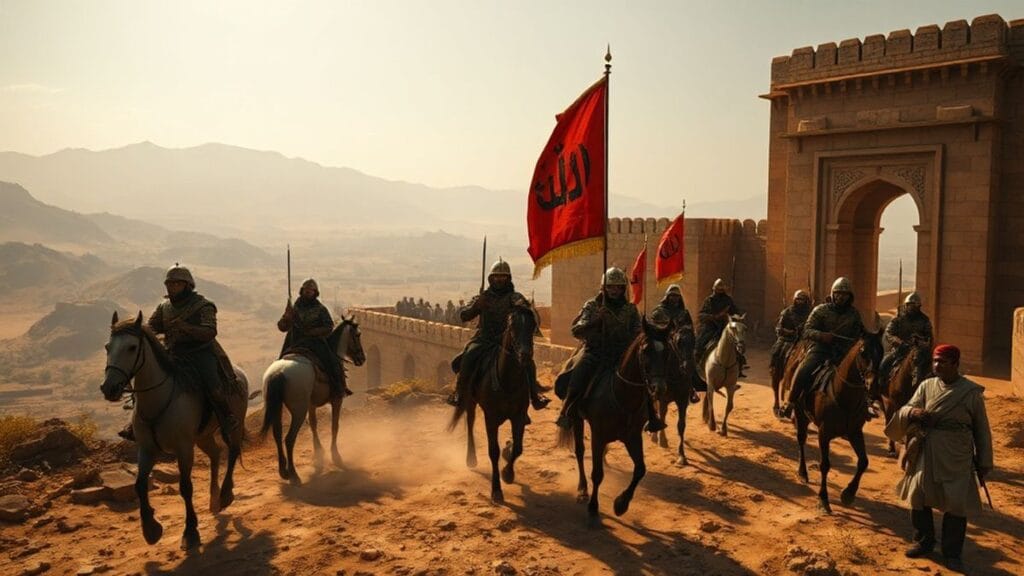
This is how annexation unfolded on the ground. A Ghaznavid governor rode into Lahore, flanked by bodyguards and scribes. He took up residence in a fortified compound or former royal palace. Orders went out to local officials: taxes were now to be collected in the name of Mahmud of Ghazni; coins bearing his name and titles would become the standard in major transactions; justice would be administered according to a mix of local custom and Islamic law, with qadis (judges) appointed to oversee certain disputes. The city’s leading merchants and notables were invited—or compelled—to attend ceremonies where oaths of loyalty were sworn. A new Friday sermon (khutba) would invoke Mahmud’s name, audibly inscribing his sovereignty into weekly religious life.
But this was only the beginning. Annexation also required controlling the countryside. Ghaznavid envoys rode to nearby forts and market towns, assessing which chiefs could be kept in place as vassals and which needed to be replaced. In some cases, grants of land (iqta‘s in later terminology) were made to Ghaznavid officers, tying their income directly to the productivity of Punjabi soils. Local landlords, temple authorities, and guild leaders found themselves navigating an unfamiliar political landscape in which Persian documents, Arabic legal formulas, and the demands of Turkish commanders intermixed with older practices of Sanskrit-documented grants and customary village law. The ghaznavid annexation of Punjab therefore did not erase existing structures; it laid a new layer of authority atop them, creating a complex, sometimes tense, hybrid order.
It is astonishing, isn’t it, how swiftly a political order can shift? Within a generation, families that had paid tax to the Shahis were now petitioning Ghaznavid officials for relief from flood damage or banditry. Children born in 1021 would grow up knowing no ruler but Mahmud and his successors, no authority but the one proclaimed in mosques and stamped on silver dirhams. For them, the annexation was not an event but a condition of life, as deeply embedded as the seasons and the flow of the rivers.
Lahore, the New Jewel: Turning a Conquered Province into a Strategic Capital
Once Punjab was annexed, Lahore’s importance soared. It became, in effect, the eastern capital of the Ghaznavid realm, a city where Central Asian and Indian worlds collided and fused. From Ghazna’s vantage point, Lahore was ideally positioned: close enough to Punjab’s agricultural heartlands and trade arteries, yet far enough east to serve as a forward base for deeper incursions into the Gangetic plain. The ghaznavid annexation of Punjab thus had a centripetal effect, drawing the flow of revenue and talent toward Lahore, even as it tied Lahore more tightly to Ghazna.
Imagine the city in those early decades after 1021. New construction projects reshaped its skyline. Mosques rose in quarters where temples and shrines already stood, adding minarets to a spiritual landscape dominated by spires and stupas. Administrative buildings were erected or repurposed: spaces where scribes fluent in Persian and Arabic managed tax records, land surveys, and legal cases. Caravanserais would have expanded to accommodate the increased flow of goods and people—soldiers on campaign, merchants from Khurasan and beyond, scholars seeking patronage at Mahmud’s extended courtly network, and artisans following the money.
Lahore’s markets pulsed with new rhythms. Persian became, increasingly, the language of high administration and elite culture, joining the cacophony of Punjabi dialects, Sanskrit recitations, and merchant argots. A visitor might hear a qadi debating a point of Islamic jurisprudence in one quarter, while just streets away, Brahmin priests recited Vedic hymns and itinerant Jain and Buddhist monks preached ethical teachings to clusters of townspeople. Ghaznavid governors walked a delicate tightrope: they had to project Muslim imperial authority while ensuring that the economic engine kept running. Too severe an approach toward non-Muslim subjects—especially wealthy merchants and landed elites—risked choking off revenue; too lenient a stance might raise questions among hardline religious critics back in Ghazna.
The city’s defenses were also enhanced. Walls were repaired and extended, gates reinforced, and a garrison of Ghaznavid troops stationed in key positions. Fortified Lahore served as both shield and sword: it could repel incursions from rival Indian rulers to the east, and it could launch Ghaznavid forces downriver and across the plains. The militarization of urban space changed daily life. Drums and trumpets signaled the changing of the guard; drills and musters filled open grounds. Local youths, seeing the prestige and pay associated with Ghaznavid service, sometimes joined the ranks, adding Punjabis to the ethnically mixed armies that had once seemed so foreign.
Under governors like Malik Ayaz, Lahore also became a symbol of Ghaznavid cosmopolitanism. Chroniclers later celebrated Ayaz’s patronage of learning, his just dealing with subjects, and his beautification of the city. Whether or not every praise is historically precise, they reflect a real phenomenon: Punjab, after annexation, was not merely exploited; it was also invested in. Ghaznavid rulers understood that to hold the province, they needed more than forts. They needed a city that their officers could call home, a place where Persian poetry could be recited in lamp-lit courtyards and where tax caravans from the countryside arrived in steady, predictable cycles.
Courts, Mosques, and Mandis: Everyday Life under Ghaznavid Administration
Annexation is often told from the vantage point of kings and generals, but the true measure of its impact lies in everyday routines. In Ghaznavid Punjab, the rhythms of life were altered not only by new flags and new Friday sermons, but by changes in how disputes were resolved, how taxes were collected, and how people imagined authority.
At the heart of this new order stood the courts. Ghaznavid-appointed qadis handled cases involving Muslims, particularly in matters of personal law, contracts, and certain criminal disputes. Their decisions drew on Hanafi jurisprudence, transmitted through Arabic legal texts but often filtered through Persian explanations. In mixed or local matters, however, customary law and the practices of village assemblies remained powerful. A boundary quarrel between two farming communities might still be thrashed out by elders in a dusty courtyard, with only the most contentious cases reaching urban administrators. Thus, while the ghaznavid annexation of Punjab introduced Islamic legal institutions, it did not completely displace pre-existing systems; instead, a layered, sometimes confusing, judicial landscape emerged.
Taxation, too, reflected a blend of continuity and change. Land revenue was the backbone of the Ghaznavid fiscal system in Punjab. Surveyors and officials assessed fields, often relying on local knowledge to determine their productivity. Taxes could be collected in kind—grain, cotton, ghee—or in coin, especially in more monetized zones. Mandis (markets) became key nodes where villagers turned produce into cash, selling surplus and paying dues. Ghaznavid officers, or local intermediaries working for them, kept careful records, often in Persian. For a peasant, the difference between a Shahi-era collector and a Ghaznavid one might be less about ideology and more about rates, enforcement methods, and flexibility in years of bad harvest.
Mosques multiplied in urban centers and along key routes, not only serving religious needs but also signaling the presence of the state. The main congregational mosque (jami‘) in a city like Lahore was both a place of worship and a public stage where the ruler’s name was proclaimed. Smaller neighborhood mosques became venues for instruction, charity distribution, and informal dispute resolution. Yet even as these institutions took root, temples and shrines continued to draw Hindu and Buddhist devotees. In some cases, Ghaznavid authorities appropriated temple wealth, either through direct plunder in earlier raids or through later confiscations. In others, they allowed religious endowments to persist, especially when doing so stabilized local society and kept influential Brahmin lineages on their side.
Commerce flourished in the interstices. Traders from Transoxiana and Khurasan brought textiles, horses, metalware, and luxury goods. From the Indian interior came spices, sugar, precious stones, and artisan-produced items. Punjab’s own contribution—grain, cotton, indigo, and manufactured goods—flowed outward, linking the province to a wider economic world that stretched from the Oxus to the Bay of Bengal. Under Ghaznavid oversight, these flows became more regular, even as occasional military campaigns disrupted them. The annexation thus tied Punjab not only to a new political center, but also more firmly into transregional circuits of trade and culture.
Merchants, Monks, and Mercenaries: Social Transformations in Annexed Punjab
The ghaznavid annexation of Punjab did not create a blank slate; it rearranged an already diverse social mosaic. In the wake of conquest, old and new groups jostled for position, forging alliances and rivalries that would shape the region for centuries.
Merchants were among the earliest to adapt. For them, stability and predictable tolls often mattered more than the identity of the ruler. Some of the most enterprising traders quickly learned Persian phrases, cultivated ties with Ghaznavid officials, and secured contracts supplying the army or provisioning urban garrisons. Guild leaders might pool resources to repair roads and bridges, knowing that efficient trade routes served both private profit and public order. Over time, certain mercantile families rose in status, acting as informal brokers between local communities and the Ghaznavid state.
Religious communities responded in varied ways. Buddhist monasteries, already in decline in parts of northwestern India, sometimes struggled to maintain their endowments under the new regime. Hindu temples, especially those of prominent deities with wide patronage networks, faced a more complex fate. Some had earlier been raided in the course of Mahmud’s campaigns; others endured as local focal points of worship and social organization. Brahmin lineages that controlled temple lands adapted by negotiating with Ghaznavid authorities, emphasizing their role in social cohesion and agricultural management. In some cases, temple lands were taxed; in others, they may have been granted exemptions in exchange for political loyalty.
Meanwhile, the Muslim population of Punjab expanded. Some Muslims were descendants of earlier settlers and traders from Sindh and the northwest. Others arrived in Ghaznavid service as soldiers, administrators, artisans, or scholars. Turkic cavalrymen, Persian scribes, Arabic-speaking jurists, and even slaves brought from distant lands settled in cities and, gradually, in some rural enclaves. Intermarriage, clientage relationships, and commercial partnerships tied them into local society. Sufi ascetics and scholars would become more prominent in later centuries, but even in the Ghaznavid period, forms of Islamic piety that emphasized personal devotion and community-building began to take root, offering new spiritual options to a population long familiar with multiple religious idioms.
Mercenaries, always a feature of frontier societies, multiplied under Ghaznavid rule. Some were Turko-Persian soldiers from the core lands of the empire; others were local fighters seeking pay and plunder. Service in the Ghaznavid army could be a path of mobility for a young man of modest background. The army’s ethnically mixed composition also fostered new networks, as Punjabi recruits fought alongside men from Khurasan, Transoxiana, and beyond. These bonds—sometimes forged in battle, sometimes fractured by competition for loot—became another thread in the complex tapestry of annexed Punjab.
Yet behind the celebrations of imperial cosmopolitanism lay more somber stories. Displaced Shahi retainers, dispossessed landholders, and peasants uprooted by military campaigns or new tax demands faced uncertain futures. Some turned to banditry; others sought refuge in more remote villages or in the service of rival Indian rulers. Social hierarchies shifted, but they did not vanish. Caste structures among Hindus persisted, now overlaid by new distinctions between Muslim and non-Muslim, Turk and local, free and enslaved. The annexation thus did not create equality; it reshuffled privilege, creating winners and losers in a game whose rules few fully understood at the outset.
Faith and Power: Temples, Mosques, and the Politics of Sacred Space
Few aspects of the ghaznavid annexation of Punjab have attracted as much later controversy as its religious dimension. Was Mahmud primarily a zealot bent on destroying “idols,” or a rational ruler using religious rhetoric to justify economic and strategic aims? Modern historians, parsing chronicles and inscriptions, tend to emphasize the pragmatic side: Mahmud’s raids targeted wealthy temples because they were treasuries as much as sacred spaces. Nonetheless, to contemporaries, the destruction or conversion of temples carried intense symbolic weight.
In Punjab, the landscape of sacred sites evolved in complex ways under Ghaznavid rule. Some temples, especially those associated with powerful local constituencies, survived relatively intact, continuing to receive offerings and host festivals. Others had their lands seized or their endowments taxed more heavily. Mosques were often built in prominent locations—near marketplaces, in former royal precincts, or on elevated ground—making them visible markers of the new sovereignty. The Friday sermon, with its mention of Mahmud’s name and titles, turned weekly congregational worship into a ritual of political affirmation.
At the same time, everyday religious coexistence was more nuanced than the stark imagery of temple-smashing might suggest. In mixed cities and market towns, Hindus, Buddhists, and Muslims rubbed shoulders in commercial dealings and shared certain social practices: attendance at fairs, respect for local saints and holy men (regardless of formal religious labels), and participation in community defense. Over time, some non-Muslims found it advantageous to convert, whether out of genuine conviction, desire for better access to state networks, or both. Others remained firmly within their inherited traditions, yet learned to navigate Islamic legal and administrative frameworks.
Writing several generations later, the scholar al-Biruni, who spent time in India during the Ghaznavid era, offered one of the most detailed outsider accounts of Indian religions and sciences. His work, while not focused solely on Punjab, shows a striking level of curiosity and respect for Hindu learning even as he remained embedded in an Islamic worldview. He criticized mutual prejudices between Hindus and Muslims, suggesting that misunderstanding and arrogance flowed both ways. Al-Biruni’s testimony, often cited in modern scholarship, reminds us that the ghaznavid annexation of Punjab produced not only acts of violence and appropriation, but also encounters of knowledge—translations, debates, and the first systematic attempts by Muslim scholars to comprehend the intellectual landscape of their new subjects.
Sacred space, then, became a contested yet shared arena. A temple’s courtyard might witness arguments about land boundaries now subject to Ghaznavid taxation; a mosque’s portico might host discussions on trade deals involving Hindu and Muslim partners; a roadside shrine might attract offerings from peasants of all backgrounds seeking protection from drought or disease. The politics of religion in annexed Punjab was neither simple domination nor idyllic harmony; it was an evolving negotiation over which gods, which texts, and which rituals would anchor a society being drawn into a new imperial framework.
Counting the Spoils: Economy, Tribute, and the Wealth of the Borderland
The wealth of Punjab was one of the central reasons for its annexation. Grain from its fields fed armies; taxes from its villages filled Ghaznavid coffers; tolls from its roads and rivers enhanced imperial revenues. To maintain the vast military machine that allowed Mahmud to campaign from Khurasan to Gujarat, he needed steady income, and Punjab’s annexation provided exactly that.
Before annexation, Ghaznavid raids had extracted wealth in the form of booty—gold, silver, precious stones, high-quality textiles, and captives who could be ransomed or sold as slaves. These windfalls were spectacular but episodic. Once Punjab became a province, revenue became more regular, if less dazzling. Land tax assessments sought to measure not just current yields but potential, encouraging the state to invest in irrigation and security where this promised higher returns. State officials, working with local intermediaries, attempted to standardize dues and reduce the arbitrary exactions that might drive peasants to flee or rebel.
Tribute from subordinate chiefs continued, but now it was framed as part of a hierarchical imperial order. Some local rulers retained considerable autonomy in their internal affairs, paying a lump sum each year in gold, grain, or horses, and providing troops when called upon. Others were more tightly integrated, their lands effectively treated as crown estates administered directly by Ghaznavid officers. The mosaic of arrangements reflected geographic, military, and political realities: remote hill chiefs could bargain for better terms; fertile, easily accessible tracts were more likely to come under direct control.
Urban markets thrived in this context. Lahore, Multan, and other Punjabi centers became processing and distribution hubs. Artisans benefited from both local demand and the needs of the army and administration—producing textiles for uniforms and tents, metalwork for weapons and armor, and luxury items for court consumption. Coin circulation increased, with Ghaznavid dirhams and dinars joining older Indian coinages. The presence of standardized coins facilitated long-distance trade, linking Punjab to Ghazna, Nishapur, and beyond.
Yet economic integration under Ghaznavid rule also had its vulnerabilities. Heavy reliance on military expenditure meant that much of Punjab’s surplus was siphoned off to fund campaigns in far-flung theaters. In years of poor harvest or when war disrupted trade, the burdens could become acute for peasants and townsfolk alike. Instances of localized resistance, tax evasion, and banditry were part of the hidden transcript of annexation—the grievances that rarely appear in glowing chronicles but left their mark in the form of occasional punitive expeditions and policy adjustments.
Still, in the broader sweep of the eleventh century, the ghaznavid annexation of Punjab stitched the region more firmly into a Eurasian economic zone. Caravans that once hesitated to cross unstable frontiers now traversed a realm where, despite sporadic conflict, an overarching authority tried to guarantee safe passage. Punjab’s fields and workshops thus became a vital underpinning of a transregional imperial economy, their output fueling ambitions that stretched far beyond the five rivers themselves.
Voices from the Frontier: Poets, Chroniclers, and the Memory of Conquest
We know the ghaznavid annexation of Punjab largely through voices that were themselves products of empire: court chroniclers, poets seeking patronage, and scholars who relied on rulers’ goodwill. Their works are rich, eloquent, and partisan. They celebrate victories, rationalize defeats, and gloss over the ambiguities of frontier life. Yet if read carefully, they also reveal tensions, silences, and unexpected moments of empathy.
Al-Utbi, the author of the “Tarikh al-Yamini,” composed in the early eleventh century, is one of the main sources for Mahmud’s campaigns. Writing in Arabic, he describes the Indian expeditions as a series of divinely sanctioned triumphs over idolatry, emphasizing the destruction of temples and the capture of enormous booty. His narrative, cited frequently by later historians, is both a treasure trove of detail and an exercise in royal glorification. Modern scholars such as Bosworth have noted that al-Utbi’s omissions—failed campaigns, negotiated compromises, local suffering—are as instructive as his descriptions.
Persian poets at Mahmud’s court, most famously Firdausi, inhabited a slightly different world. Firdausi’s “Shahnameh,” or “Book of Kings,” while not a chronicle of Ghaznavid conquests, provided a grand narrative of Iranian kingship and heroism that Mahmud attempted to harness for his own legitimacy. The courtly milieu that supported such works inevitably extended its influence into annexed provinces like Punjab. When Persian verse was recited in Lahore’s palaces, it carried with it themes of just rule, noble valor, and cosmic order—ideals that Ghaznavid governors sought to embody, or at least to project, in their dealings with subject populations.
Not all voices, however, were so celebratory. Local Indian traditions, some preserved in later Sanskrit and vernacular texts, remembered Mahmud and his successors in a harsher light—as temple-breakers, looters, and foreign tyrants. In some Rajput genealogies and heroic ballads, battles against Ghaznavid forces became emblematic struggles for dharma and honor. These narratives, though composed or compiled later, preserve echoes of the anxieties and resentments that annexation generated among certain segments of society.
Then there were the quieter voices of scholars like al-Biruni, who, as mentioned earlier, undertook to describe Indian religious and scientific traditions in detail. Though employed within the Ghaznavid milieu, al-Biruni displayed a critical distance both from Indian society and from the triumphalist perspective of some of his Muslim contemporaries. In his work “Kitab al-Hind,” he lamented the mutual ignorance between Hindus and Muslims and criticized the arrogance that drove them apart. Such reflections suggest that at least some in Ghaznavid circles saw annexation not only as an opportunity for enrichment, but also as a challenge of understanding and governance.
These textual voices, combined with the sparse epigraphic record from early Ghaznavid Punjab, form a fragmented chorus. Through them, the annexation emerges not as a single, clean event but as a contested process, remembered differently by conquerors, collaborators, and those who bore its costs. The historian must listen carefully, reading between lines of praise and condemnation to reconstruct the lived reality behind the rhetoric.
Resistance and Accommodation: Local Elites under Ghaznavid Governors
Annexation is negotiated as much as it is imposed. In Punjab after 1021, Ghaznavid power rested on a patchwork of agreements with local elites—landed magnates, temple authorities, mercantile leaders, and even surviving remnants of Shahi-era aristocracy. Some resisted openly; others acquiesced reluctantly; many tried to turn the new order to their advantage.
Large landholders, often from entrenched clans, had several options. They could oppose Ghaznavid rule, risking confiscation and exile; they could flee to neighboring polities, offering their military expertise to rival kings; or they could approach the new governors, offering continued management of their estates in exchange for recognizing Mahmud’s overlordship and paying taxes. Many chose the latter path. For a Ghaznavid administrator with limited knowledge of local agrarian structures, it was often expedient to confirm existing elites in their positions, provided they were loyal and fiscally productive. In this way, Shahi-era social hierarchies often persisted, now cloaked in the language of Ghaznavid vassalage.
Temples and their associated Brahmin lineages also negotiated. Some had already suffered during Mahmud’s earlier raids, their treasuries looted. Others, particularly those not directly targeted, worked to present themselves as indispensable institutions for maintaining social harmony and agricultural fertility. Ghaznavid authorities, while ideologically committed to Islamic supremacy, had practical reasons to avoid unnecessary disruption of temple-centered rural life. In certain cases, they may have recognized temple land rights while imposing taxes on surplus or requiring special levies in times of war.
Urban elites—merchants, guild leaders, scribes, and religious specialists—played a crucial intermediary role. Their cooperation could make or break a governor’s tenure. A wise Ghaznavid appointee attended to their grievances, mediated disputes within and between communities, and involved them in public works such as canal repairs and market regulation. In return, these elites lent social legitimacy to the new regime, helping to foster an image of order and prosperity under Ghaznavid auspices.
Yet beneath the surface of accommodation, embers of resistance smoldered. Occasionally, local chiefs rebelled, refusing to pay taxes or sheltering bandits who preyed on Ghaznavid caravans. Some Hindu and Buddhist monasteries became centers of quiet dissent, preserving memories of pre-annexation autonomy and telling stories of past glory. Popular rumors might exaggerate Ghaznavid misdeeds or attribute natural disasters to divine displeasure with foreign rule. The response from Lahore and Ghazna alternated between repression—military expeditions, executions, confiscations—and conciliation, as when new governors were appointed with explicit instructions to reduce abuses and win hearts as well as pockets.
In this tug-of-war, the ghaznavid annexation of Punjab settled into a dynamic equilibrium. The empire’s grip was firm enough to extract revenue and sustain military operations, but not so suffocating as to obliterate local autonomy and identity. The balance would hold for several generations, until larger geopolitical shifts unsettled the Ghaznavid realm itself.
The Long Shadow: How the Annexation Reshaped North Indian Politics
The consequences of the ghaznavid annexation of Punjab reached far beyond the lifetime of Mahmud and his immediate successors. By turning Punjab into a bridgehead of a Central Asian–Persianate empire, the annexation altered the strategic geometry of northern India. Subsequent invaders and empire-builders would operate on a landscape already reconfigured by Ghaznavid precedent.
First, the annexation demonstrated that sustained Muslim rule east of the Indus was not only possible but profitable. Earlier incursions by Arab forces into Sindh in the eighth century had established a toehold on the subcontinent’s western margins, but their impact on the core of North Indian politics had been limited. Ghaznavid Punjab, by contrast, sat directly astride traditional routes into the heart of the Gangetic plain. From Lahore, armies could march eastward in a matter of weeks, threatening or supporting Rajput and other Indian polities. This new reality forced those polities to rethink their defensive strategies, forge new alliances, or, in some cases, resign themselves to tributary status.
Second, the annexation entrenched a model of frontier governance that combined military settlements, revenue extraction, and cultural patronage. The Ghaznavids’ use of Turkic slave-soldiers, Persian administrators, and Islamic legal authorities in Punjab provided a template later adopted and modified by the Ghurids and the early Delhi Sultans. When Muhammad of Ghor and his generals pushed into northern India in the late twelfth century, they encountered a Punjab already habituated—though not necessarily reconciled—to being ruled from beyond the mountains. The path to Delhi, in a sense, ran through the institutional and social precedents set in eleventh-century Ghaznavid Punjab.
Third, the annexation contributed to a gradual Persianization of high culture in parts of northern India. Courts and administrative circles in Punjab and beyond increasingly adopted Persian as a language of governance and literary expression. Even non-Muslim elites, seeking patronage or recognition, learned to operate within this cultural sphere. Over time, this would give rise to rich Indo-Persian literary and artistic traditions, blending local themes with imported forms. The seeds of that later florescence were planted when Ghaznavid scribes and poets first took up residence in cities like Lahore around the time of annexation.
Finally, the annexation set in motion patterns of migration and demographic change. The settlement of soldiers, administrators, craftsmen, and religious figures from the Islamic world into Punjab contributed to the region’s evolving religious and ethnic composition. These early waves were modest compared to later centuries, but they established lineages and communities that would play significant roles under subsequent regimes. The enduring presence of these groups, often intermarried with local populations, ensured that the memory of Ghaznavid rule, however dim, remained part of Punjab’s historical consciousness.
From Ghaznavids to Ghurids and Delhi Sultans: A Legacy of Empire-Building
The Ghaznavid Empire did not last forever. Over the twelfth century, it faced mounting pressures—from the Seljuqs in the west, from internal fragmentation, and from new upstarts like the Ghurids. Yet even as Ghaznavid power waned, the structures they had created in Punjab persisted, ready to be repurposed by the next wave of conquerors.
The Ghurids, emerging from the highlands of present-day Afghanistan, gradually supplanted Ghaznavid control over much of eastern Iran and Afghanistan. Leaders like Muhammad of Ghor looked eastward, recognizing that to dominate northern India they had to command Punjab. By the time they arrived, the idea that this region could be governed from beyond the passes was no longer novel. Lahore and other Punjabi cities had decades of experience with Turkic-Persian Muslim rule, making their incorporation into the Ghurid framework both a continuation and a transformation.
When, in 1192, Muhammad of Ghor’s forces defeated the Chahamana (often called Chauhan) king Prithviraj III at the Battle of Tarain, they were drawing on logistical lines and political assumptions laid down a century earlier. Troops moved along routes once used by Mahmud; tax and information networks built in Ghaznavid times were reactivated and expanded. The early Delhi Sultanate, which emerged from the Ghurid conquests, inherited both the practical machinery and the symbolic capital of ruling from the northwest into the subcontinent.
In this sense, the ghaznavid annexation of Punjab can be seen as the first act in a longer drama: the centuries-long presence of Turkic and Afghan dynasties in northern India. Each subsequent regime—Ghurid, Mamluk, Khalji, Tughluq—put its own stamp on institutions and culture, yet all operated within a frontier paradigm first fully articulated by Mahmud’s generation. The notion of the “Sultan of Delhi” as a figure whose authority extended across Punjab and into the Gangetic heartland was, in part, the culmination of processes that began when Lahore became a Ghaznavid capital.
Modern historians, such as Andre Wink in his studies of the early Islamic presence in South Asia, have emphasized this continuity. Rather than treating each wave of conquest as a discrete event, they trace lines of connection—administrative practices, settlement patterns, military traditions—that run from Ghaznavid times through the Delhi Sultanate and beyond. Punjab, annexed in 1021, sits at the pivot of these narratives, a laboratory where techniques of empire were tested, refined, and eventually exported deeper into the subcontinent.
Cartography of Power: Borders, Forts, and the Militarization of Punjab
Annexation reshapes maps. Under Ghaznavid rule, the mental and physical cartography of Punjab changed dramatically. What had once been a contested buffer zone between the Shahis and various Indian polities now became a frontier province of a transregional empire, its borders patrolled, its forts refitted, its landscapes surveyed with new strategic eyes.
Along the western approaches, fortresses guarding the passes—some inherited from Shahi times, others expanded—became linchpins of defense against rival powers and rebellious hill chiefs. Garrison towns sprouted or grew in importance along major roads, their markets catering to soldiers as well as civilians. The Indus and its tributaries served not only as sources of irrigation, but as arteries for moving men and supplies, and as natural lines of defense in times of crisis.
Within Punjab, the distribution of forts and outposts reflected both geography and politics. Key river crossings, trade junctions, and fertile tracts were overseen by fortified centers, each under the command of an officer whose loyalty to Lahore and Ghazna was crucial. The presence of permanent garrisons meant that the countryside lived with the constant awareness of armed force. For villagers near such forts, soldiers were part of daily life—buyers of produce, consumers of services, but also potential sources of harassment or sudden requisitions.
The militarization of space affected social dynamics. Some communities specialized further in providing supplies and services to the army—smiths, carpenters, horse-doctors, muleteers. Others diversified their strategies, maintaining both agrarian livelihoods and roles in local militias or watch-groups. The blurred line between soldier and civilian, always a feature of frontier societies, became even more pronounced.
Maps, in our modern sense, were rare, but Ghaznavid scribes and commanders developed a working geographic knowledge of their province: distances between towns, the location of wells and fords, the timing of river floods, the character of hill terrain. This functional cartography underpinned both governance and war. When later powers inherited Punjab, they inherited this knowledge, often transmitted orally through experienced guides and veterans.
Thus, the ghaznavid annexation of Punjab did not simply redraw borders; it inscribed military logic onto the land itself, creating a frontier consciousness that would endure through successive regimes.
Memory, Myth, and Modern Histories: Interpreting the Annexation Today
A thousand years have passed since 1021, yet the ghaznavid annexation of Punjab remains a point of contention in modern historical and political debates. Nationalist narratives, religious polemics, and regional identities have all sought to claim or condemn this moment, often projecting contemporary concerns backward onto the medieval past.
In some South Asian nationalist frameworks, Mahmud of Ghazni appears primarily as a foreign invader, a prototype of later conquerors who disrupted a supposedly unified and harmonious pre-Islamic civilization. Temples sacked during his campaigns become emblems of historical trauma; annexation is cast as the onset of a long night of subjugation. In certain Pakistani narratives, by contrast, Mahmud may be celebrated as an early harbinger of Islam’s political and cultural presence in the region, with the annexation of Punjab framed as a milestone in the making of a larger Muslim polity in South Asia.
Both views, while rooted in legitimate emotional investments, can obscure the complexity of the eleventh century. Modern scholarship, drawing on a wider range of sources and comparative perspectives, stresses that conquest, annexation, and hybridization were recurrent features of South Asian history long before Mahmud, and long after him. The Ghaznavids were not the first to cross cultural and geographic frontiers in pursuit of power, nor were they the last to integrate diverse populations into an imperial framework.
Historians today pay increasing attention to local agency: the ways in which Punjabi communities shaped, resisted, and reinterpreted Ghaznavid rule. Instead of seeing the annexation as a one-sided imposition, they highlight the role of intermediaries, collaborators, and everyday negotiators who influenced how policies were implemented and how identities evolved. Archaeological work, numismatic studies, and close readings of inscriptions have added nuance to what was once an almost exclusively text-based narrative derived from courtly chronicles.
At the same time, there is a growing recognition that emotions—fear, pride, resentment, hope—are part of historical reality, not just modern projection. People in eleventh-century Punjab felt the shock of foreign rule, the uncertainty of new taxes, the excitement of economic opportunity, and the curiosity or alarm provoked by unfamiliar religious practices. Recovering these emotional textures complicates tidy stories of either civilizational clash or seamless synthesis.
In the end, the ghaznavid annexation of Punjab challenges us to hold together multiple truths: that it involved violence and dispossession, but also administration and cultural creativity; that it was driven by imperial ambition, yet shaped in crucial ways by local choices; that its memory has been repeatedly remade to serve later agendas, even as historians continue to sift evidence in search of the lives behind the legends.
Conclusion
The annexation of Punjab by the Ghaznavids around 1021 was neither an isolated event nor a simple turning of a page. It was the culmination of decades of raids, battles, negotiations, and shifting loyalties, and the beginning of a new political and cultural configuration that would shape the region for centuries. From Ghazna’s mountain fastness, Mahmud and his successors extended their reach across the Indus, transforming Punjab from a frontier of the Hindu Shahis into a keystone of a Turkic-Persianate empire.
On the ground, this transformation unfolded in the registers of daily life: in the language of tax receipts and court petitions, in the architecture of mosques rising beside older temples, in the new routes of caravans and the altered rhythms of market days. Local elites bargained for survival and advantage, peasants and artisans adapted to new masters, and religious communities redefined their positions within an evolving landscape of sacred and political authority. Out of this fraught process emerged a hybrid order—neither wholly imposed nor purely continuous with what had come before.
In retrospect, the ghaznavid annexation of Punjab stands as a foundational episode in the longer history of Muslim rule in northern India. It established patterns of frontier governance, economic integration, and cultural interaction that later empires would inherit and reshape. At the same time, it remains a site of contested memory, invoked today in debates over identity, heritage, and the meanings of conquest and coexistence. To study it with care is to be reminded that history is rarely a tale of clear-cut villains and heroes, but rather a dense weave of ambitions, fears, accommodations, and unintended consequences.
FAQs
- What was the Ghaznavid annexation of Punjab?
The Ghaznavid annexation of Punjab refers to the process, reaching a critical point around 1021, by which the Ghaznavid Empire under Mahmud of Ghazni transformed Punjab from a raided frontier into a governed province. This involved the defeat of the Hindu Shahi rulers, the appointment of Ghaznavid governors (notably in Lahore), and the integration of local fiscal, legal, and military structures into an imperial framework. - Why was Punjab so important to the Ghaznavids?
Punjab’s importance stemmed from its fertile agriculture, its position astride key trade routes between Central Asia and the Indian plains, and its role as a strategic gateway for deeper incursions into northern India. By annexing Punjab, the Ghaznavids secured a steady revenue base, a forward military base at Lahore, and control over vital routes that underpinned their broader imperial ambitions. - How did the annexation affect local populations?
Local populations experienced both disruption and continuity. There were episodes of warfare, plunder, and displacement, especially during the initial campaigns. Over time, however, everyday life settled into new patterns under Ghaznavid administration: taxes were collected in the name of Mahmud, Islamic legal institutions coexisted with customary law, and new economic opportunities emerged through expanded trade. Many local elites retained their positions by accommodating the new rulers, while some groups suffered loss of status or property. - Did the Ghaznavids forcibly convert the population of Punjab?
Evidence suggests that while the Ghaznavids promoted Islam and built mosques, they did not undertake systematic mass forced conversions in Punjab. Conversions did occur, motivated by a mix of personal conviction, social and economic incentives, and integration into Muslim administrative and military structures. Many Hindu and Buddhist communities continued to practice their religions under Ghaznavid rule, though they faced varying degrees of taxation and legal discrimination. - What role did Lahore play after annexation?
After annexation, Lahore became a major Ghaznavid provincial capital and military base. It housed governors such as Malik Ayaz, hosted administrative offices staffed by Persian-speaking scribes, and developed as a commercial hub linking Central Asia to the Indian plains. Its mosques, markets, and fortifications symbolized and sustained Ghaznavid authority in eastern territories. - How do historians know about the Ghaznavid annexation of Punjab?
Historians rely on a combination of sources: Arabic and Persian chronicles written by Ghaznavid-era authors like al-Utbi and al-Biruni; later Indo-Persian and Sanskrit texts that preserve memories and legends of the period; inscriptions and coinage from Punjab and neighboring regions; and, increasingly, archaeological and numismatic evidence. By comparing and critically assessing these sources, scholars reconstruct the chronology and character of annexation. - What long-term impact did the annexation have on Indian history?
The annexation had far-reaching consequences. It established a durable pattern of Muslim rule east of the Indus, provided a model of frontier administration that later Ghurid and Delhi Sultanate rulers would adopt, and encouraged cultural and economic exchanges between Central Asia and northern India. It also reshaped regional politics by making Punjab a permanent arena of contestation and integration between transregional empires and subcontinental powers. - Was the annexation purely a religious conflict?
No. While religion played a significant role in legitimizing Ghaznavid campaigns and shaped aspects of policy—such as temple plunder and mosque construction—the fundamental drivers of annexation were strategic and economic. Control of revenue-rich lands, trade routes, and military corridors was crucial. The conflict certainly had a religious dimension, but it cannot be reduced to religion alone. - How did the Ghaznavid annexation of Punjab influence later empires?
Later empires, especially the Ghurids and the Delhi Sultanate, inherited both the physical infrastructure and the institutional templates created under the Ghaznavids. The use of Punjab as a gateway to the Gangetic plain, the deployment of Turkic military elites and Persian administrative language, and the balancing of Islamic authority with local structures all have clear precedents in Ghaznavid Punjab. These patterns shaped the way later rulers imagined and governed northern India.
External Resource
Internal Link
Other Resources
- Encyclopaedia Britannica – general search for the exact subject
- Google Scholar – academic search for the exact subject
- Internet Archive – digital library search for the exact subject

