Table of Contents
- The Dawn of a New Power: Moscow in the Mid-15th Century
- The Shadow of the Mongol Yoke: Rus’ under Tartar Rule
- Ivan III: The Architect of Sovereignty
- Fragmented Rus’: A Land of Princes and Pawns
- The Marriage of Power: Ivan III and Sophia Palaiologina
- The Gathering Storm: Moscow’s Growing Assertiveness
- The Great Stand on the Ugra River: Breaking the Chains
- The Diplomacy of Defiance: Negotiations and Threats
- The End of the Mongol Dominance over Rus’
- The Emergence of Moscow as the Third Rome
- Consolidation of Authority within the Grand Duchy
- Military Reforms and Expansionist Ambitions
- The Role of the Orthodox Church in Moscow’s Rise
- Cultural Renaissance: From Isolation to Influence
- The Legacy of the Asserted Sovereignty: A New Russia
- Global Repercussions and the European Context
- Myths, Legends, and Historical Memory of the 1480s
- Conclusion: Sovereignty as a Birthright
- FAQs: Unveiling the Grand Duchy of Moscow’s Rise
- External Resource
- Internal Link
1. The Dawn of a New Power: Moscow in the Mid-15th Century
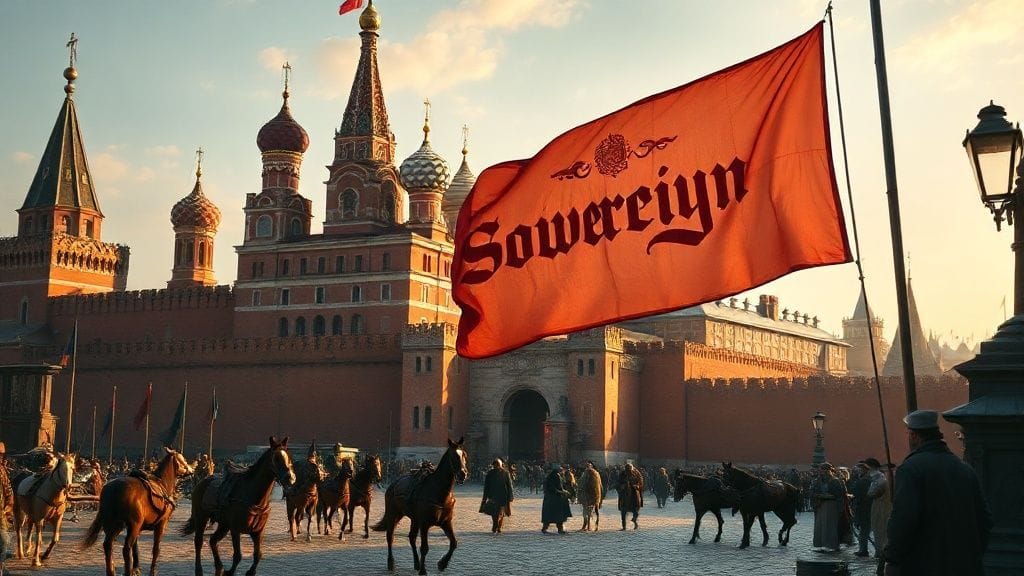
Amidst the snow-laden forests and sprawling steppes of Eastern Europe, the city of Moscow in the 1470s was a pulsating node of ambition and quiet might. The air was crisp, as if nature itself held its breath, awaiting a moment that would reshape the destinies of millions. The Grand Duchy of Moscow—once a modest principality—stood at the cusp of transformation. Its prince, Ivan III, moved with the weight of centuries of Rus’ hopes upon his shoulders, yearning not just to survive but to redefine sovereignty itself in the shadow of a seemingly invincible Mongol Empire.
This was not a straightforward tale of rebellion but a complex mosaic woven from dynastic marriages, religious symbolism, and calculated military brinkmanship. The land was divided, the people weary, but the heart of Rus’, beating in Moscow, was beginning to roar. The 1470s and ’80s were to witness a watershed moment: the unequivocal assertion of Moscow’s sovereignty, an unspoken declaration that a new power had risen.
2. The Shadow of the Mongol Yoke: Rus’ under Tartar Rule
At the heart of the Rus’ territories stretched the dark imprint of Mongol domination. For over two centuries since the Mongol invasions of the early 13th century, the Golden Horde exerted a tight, often brutal grip on the fragmented Rus’ principalities. These lands paid tribute, bowed to laws dictated by distant khans, and endured relentless threats of raids and reprisals.
Yet this “Mongol yoke” was far from a monolith. Over time, the Golden Horde fragmented into smaller khanates, and its grip weakened. But its legacy pervaded — a complex system of submission, tribute collection, and political influence that Moscow, like other principalities, had to navigate carefully.
It was in this uneasy status quo that Moscow’s leadership found an opportunity. To assert sovereignty was to challenge centuries of imposed submission—a risky gamble that demanded cunning, both on the battlefield and in the royal chambers. The Mongol shadow loomed large, but its edges were fraying.
3. Ivan III: The Architect of Sovereignty
Ivan III Vasilyevich, later known as Ivan the Great, began his reign in 1462 amid a landscape riddled with rival princes, foreign overlords, and internal discord.
Ivan was not a warrior-king forged solely by sword and shield. Instead, he was a man of grand vision and meticulous strategy. He understood that sovereignty was more than military might; it was about legitimacy, identity, and uniting disparate Rus’ lands under a single banner.
Throughout his reign, Ivan pursued policies that sought to weaken Tartar hold, consolidate territory, and bolster Moscow’s spiritual authority by nurturing the Orthodox Church. His diplomatic skills were as vital as his tactical genius.
4. Fragmented Rus’: A Land of Princes and Pawns
The Rus’ lands in the 15th century resembled a patchwork quilt—divided principalities, each ruled by competing princes often at odds with one another. Novgorod in the north clung to its republican traditions, while Tver, Pskov, Ryazan, and other duchies guarded their own ambitions and autonomy.
This fragmentation was both a curse and an opportunity. Moscow’s idea of sovereignty necessitated the absorption or subjugation of these rival centers to forge a unified Rus’. This was no easy task—prince against prince, shifting alliances, betrayals, and open warfare framed this turbulent era.
Ivan III skillfully exploited this dynamic, using marriage, diplomacy, and military campaigns to pull these puzzle pieces toward Moscow’s growing orbit.
5. The Marriage of Power: Ivan III and Sophia Palaiologina
Perhaps one of the most symbolic moves in Moscow’s assertion of sovereignty was the marriage in 1472 of Ivan III to Sophia Palaiologina, niece of the last Byzantine Emperor Constantine XI.
This union was a masterstroke of political symbolism. The Byzantine Empire had fallen to the Ottomans in 1453, shaking the foundations of Eastern Christendom. By marrying Sophia, Ivan claimed not only a connection to the prestigious Byzantine imperial line but also asserted Moscow as the rightful inheritor of Orthodox Christendom’s legacy.
In this act arose the concept of Moscow as the “Third Rome,” a spiritual and political successor to Rome and Constantinople, destined to lead and protect the Orthodox world. It was a legitimization of power far beyond the battlefield.
6. The Gathering Storm: Moscow’s Growing Assertiveness
The late 1470s saw a gradual but unmistakable shift. Moscow sent secret envoys, forged tentative alliances, and refused to bow unconditionally to the Horde’s demands.
Ivan III consistently delayed tribute payments to the Mongol khans and increased his territorial ambitions, notably annexing Novgorod in 1478—a critical economic and strategic center.
This boldness unsettled the Golden Horde’s new khan, Akhmat, who was determined to restore the Horde’s supremacy and re-impose the traditional order.
7. The Great Stand on the Ugra River: Breaking the Chains
The climax of Moscow’s assertion of sovereignty erupted in 1480 at the Ugra River, a chapter historians often hail as the “Great Stand.”
In a tense face-off, Ivan III’s forces confronted the army of Khan Akhmat across the riverbanks. No battle ensued, but this standstill effectively broke the Mongol yoke. Neither side crossed to fight; both waited, maneuvered, and gauged strength.
Eventually, the Horde retreated, signaling the end of direct Mongol domination over the Rus’ lands. Moscow’s sovereignty was thus not declared with a thunderous battle cry but with a quiet, resolute demonstration of resolve. This psychological victory altered the course of Eastern European history.
8. The Diplomacy of Defiance: Negotiations and Threats
Behind this standoff lay an elaborate game of diplomacy. Ivan III leveraged diplomatic channels, cultivating relations with Poland-Lithuania and the Crimean Khanate to isolate Akhmat politically.
Muscovy also mobilized its growing military forces, showcasing strategic patience and a refusal to be cowed. This careful balancing act turned potential conflict into a demonstration of Moscow’s rising power on the international stage.
9. The End of the Mongol Dominance over Rus’
The 1480s represent a turning point, the symbolic and practical end of the Mongol yoke in Rus’. The tribute payments ceased, and the political subservience that had characterized the last two centuries began to erode.
Although the Golden Horde lingered for a few more decades in fragmented form, the bloodline of official Mongol supremacy over Moscow snapped. Sovereignty had been earned, not merely claimed.
10. The Emergence of Moscow as the Third Rome
With the Mongol threat receding, Moscow’s rulers intensified the claim of their city as the “Third Rome,” the new center of Orthodox Christianity after the fall of Constantinople.
Ivan III adopted Byzantine court ceremonies, displayed imperial regalia, and fostered Church support, intertwining religion and statecraft to solidify his position.
This ideological positioning reshaped the identity of Moscow and influenced national narratives for centuries to come.
11. Consolidation of Authority within the Grand Duchy
Following the assertion of sovereignty, Ivan III moved swiftly to centralize authority, curbing the power of boyars (noble landlords) and local princes aligned with rivals.
He codified laws, expelled opposing factions, and rewrote the administrative framework to support a centralized autocracy emerging from the chaos of feudal fragmentation.
12. Military Reforms and Expansionist Ambitions
Aware that sovereignty was fragile without force, Moscow invested heavily in military reforms.
Ivan III incorporated emerging technologies like cannon artillery, reorganized the army, and expanded fortifications. The Grand Duchy began absorbing neighboring territories, setting the stage for later imperial expansions.
13. The Role of the Orthodox Church in Moscow’s Rise
The Orthodox Church was more than a spiritual force; it was a pillar supporting Moscow’s claim to legitimacy.
Patriarchal leaders aligned with the Grand Duke, reinforcing the narrative of divine favor and elevating Moscow as the protector of Orthodoxy under threat from Catholic Poland-Lithuania and Islamic powers.
14. Cultural Renaissance: From Isolation to Influence
The assertion of sovereignty sparked a cultural renaissance in Moscow. Byzantine influences blended with native traditions, fostering new art, architecture, and literature.
Cathedrals rose anew, icons flourished, and Moscow proclaimed itself a beacon of Slavic civilization, distinct yet inheriting a grand heritage.
15. The Legacy of the Asserted Sovereignty: A New Russia
The 1470s–1480s set in motion the trajectory toward the Russian Empire.
From humble beginnings as a tributary principality, Moscow’s sovereignty assertion rekindled national pride, reshaped political boundaries, and emboldened rulers who saw themselves as heirs to imperial and divine mandate.
16. Global Repercussions and the European Context
Moscow’s rise echoed beyond its borders. Western Europe watched a new Orthodox power emerge as the Mongol shadow faded.
The event influenced diplomatic alignments, trade routes, and provided a Christian bulwark in Eastern Europe against Ottoman advances.
17. Myths, Legends, and Historical Memory of the 1480s
Stories from the Ugra stand-off and Ivan’s reign grew into legend: the “Defender of Rus’”, the “Gatherer of Lands.”
Chroniclers, bards, and later historians imbued this era with heroic narratives that fueled Russian nationalism and shaped historical memory enduring to contemporary times.
Conclusion: Sovereignty as a Birthright
Looking back from today’s vantage point, the assertive sovereignty proclaimed by the Grand Duchy of Moscow in the late 15th century was a defining moment not just in Russian history but in the broader saga of state-building.
It was a story steeped in patience, vision, and symbolic power—a political testament that freedom, once thought shackled and remote, could be reclaimed through perseverance and strategy.
Ivan III’s reign taught that sovereignty is not merely inherited or granted—it is earned, defended, and lived. The echoes of that triumph still resound, reminding us that every great nation’s birth is a narrative woven from struggle, identity, and hope.
FAQs
Q1: Why was the Mongol yoke significant for the Rus’ principalities?
A1: The Mongol yoke represented over two centuries of Mongol dominance, requiring tribute payments and political submission. It shaped the political, military, and cultural developments of Rus’, influencing their paths to sovereignty.
Q2: How did Ivan III contribute to Moscow’s assertion of sovereignty?
A2: Ivan III centralized power, expanded territory, refused tribute payments, married into Byzantine imperial lineage, and strategically confronted the Golden Horde, culminating in Moscow’s political independence.
Q3: What was the importance of the marriage between Ivan III and Sophia Palaiologina?
A3: It symbolically linked Moscow to the fallen Byzantine Empire, bolstering Ivan's legitimacy and supporting Moscow’s claim as the “Third Rome,” the new religious and imperial center.
Q4: Why did the Great Stand on the Ugra River matter so much?
A4: Although no battle was fought, the standoff marked the end of Mongol political control and tribute over Moscow, making it a symbolic and practical assertion of Moscow’s sovereignty.
Q5: How did the Orthodox Church play a role in Moscow’s rise?
A5: The Church provided spiritual legitimacy and ideological support, positioning Moscow as the protector of Orthodox Christianity, which reinforced political authority.
Q6: What were the long-term consequences of Moscow’s sovereignty assertion?
A6: It laid the groundwork for the Russian Empire, altered Eastern European political dynamics, inspired cultural revival, and influenced religious and national identity.
Q7: How did European powers react to Moscow’s rise?
A7: Western Europe cautiously observed, recognizing Moscow as a new Orthodox stronghold, affecting alliances and trade, especially given the Ottoman threat in the region.
Q8: Is the “Third Rome” concept historically accurate or symbolic?
A8: It is symbolic, a powerful ideological narrative that framed Moscow’s role in the Orthodox world and justified political and cultural ambitions.

