Table of Contents
- Constantinople, July 16, 1054: A City on the Brink
- The Roots of Division: Diverging Paths of East and West
- Theological Tensions and Lingering Discord
- Political Rivalries and the Shadow of Empire
- The Key Figures: Patriarch Michael Cerularius and Cardinal Humbert
- The Papal Legate’s Arrival: A Diplomatic Mission Turned Stormy
- The Fateful Meeting at Hagia Sophia
- The Excommunication Decree: Breaking Ties Publicly
- The Symbolism and Ceremony of the Schism Day
- Immediate Reactions: Shockwaves in Constantinople and Rome
- The Eastern Church’s Response: Isolation and Defiance
- The Roman Curia’s Theological Justifications
- The Schism in the Christian World: Ripple Effects Across Europe and Asia
- Cultural and Liturgical Divergences Solidified
- Political Fallout: Byzantium’s Waning Influence
- The Schism’s Impact on Relations with the Emerging Muslim Powers
- Attempts at Reconciliation Over the Centuries
- The Long Shadow: How 1054 Still Divides Christianity
- Memory and Myth: The Schism in Modern Orthodox and Catholic Thought
- The Great Schism in Historical Perspective: Conflict and Coexistence
- Lessons from the Schism: Unity, Division, and Faith
- Conclusion: Echoes of a Broken Alliance
- FAQs: Unraveling the Great Schism
- External Resource
- Internal Link
Constantinople, July 16, 1054: A City on the Brink
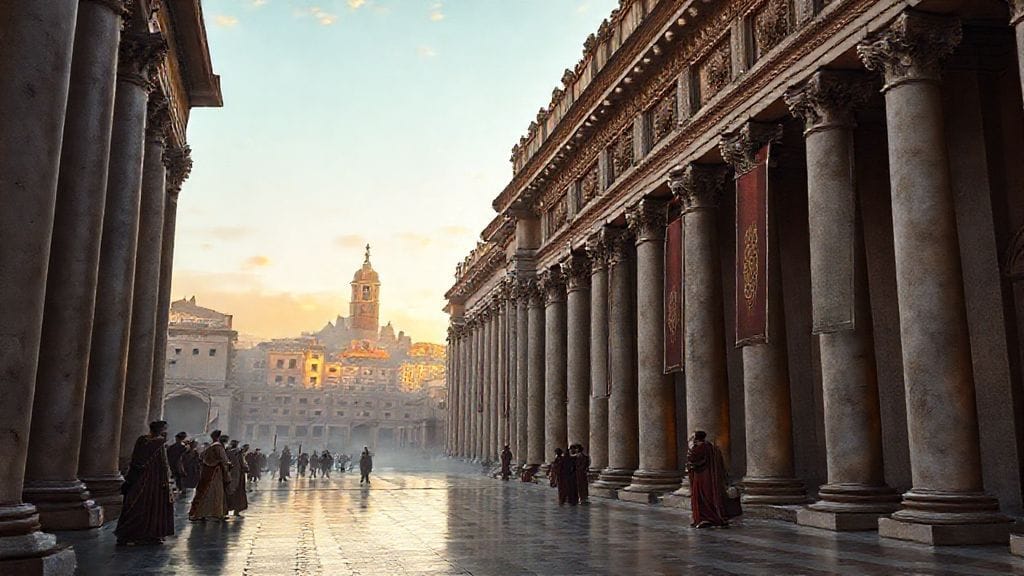
The sun blazed over the imposing domes and minarets of Constantinople as the summer heat settled like a heavy cloak over the city. The air was thick with the scent of incense, mingled with salt from the nearby Bosphorus. Thousands thronged the streets, their murmurs blending with the distant calls of merchants and the clang of blacksmiths hammering metal. In the grand halls of the Hagia Sophia, the center of Byzantine spiritual and political life, something unprecedented was about to unfold.
It was July 16, 1054, a day that would be etched in history—not for the triumph of armies or the signing of treaties, but for the formal breach within Christendom itself. The Great Schism, a rift that severed the Christian world into East and West, was no longer a simmering tension or a theological debate; it was now a formal, undeniable reality. The placement of excommunication bulls within the majestic sanctuary marked the culmination of centuries of dissent, misunderstandings, and competing ambitions.
But to grasp the enormity of this moment—how a once unified Christian faith fractured so deeply—we must journey back through medieval corridors of power, doctrine, and identity. This event was not born from a single act, but from a complex tapestry woven over hundreds of years.
The Roots of Division: Diverging Paths of East and West
Christianity in the first millennium was far from monolithic. While sharing common scriptures and a universal creed, the beliefs, liturgical practices, and ecclesiastical governance had begun evolving distinctly between the Latin-speaking West and the Greek-speaking East. The Roman Empire’s division into Eastern and Western halves after Emperor Theodosius I’s death in 395 birthed two capitals: Rome and Constantinople, each with its own sphere of influence.
In the West, the papacy in Rome increasingly asserted its supremacy, anchoring itself as the spiritual and, sometimes, political authority over Western Europe. The bishop of Rome claimed direct apostolic succession from Saint Peter, positioning himself as the ultimate arbiter of Christian doctrine.
To the East, the Patriarch of Constantinople was second among equals—still powerful but sharing influence with other patriarchs like those in Alexandria, Antioch, and Jerusalem. The Byzantine emperors saw themselves as God’s representatives on earth and maintained tight control over the Church’s affairs, blending religious and imperial authority.
These structural differences sowed the seeds of discord—each side’s vision of “unity” differed sharply, both in theology and governance.
Theological Tensions and Lingering Discord
Over centuries, theological differences simmered beneath the surface. The filioque clause—West’s addition to the Nicene Creed stating that the Holy Spirit proceeds from the Father and the Son—became a particular bone of contention. The Eastern Church objected strenuously to this unilateral alteration, seeing it as doctrinal innovation and a breach of ecumenical agreement.
Other liturgical customs also diverged: the Eastern liturgy preserved ancient rites in Greek, celebrated with incense and elaborate chant, while the West moved toward Latin, embracing different sacramental emphases.
But above all, the question of ecclesiastical authority haunted the relationship. Was the pope’s supremacy absolute, or should patriarchs and councils share governance? The answer seemed impossible to reconcile.
Political Rivalries and the Shadow of Empire
Religious disagreements intertwined deeply with political ambitions. By the 11th century, Byzantium was both a Christian empire and a formidable power straddling Europe and Asia. Yet, its diplomatic relationship with the West grew fragile—Rome’s authority challenged Constantinople’s pre-eminence in the Christian world, while both eyed control over strategic territories.
The Normans in Southern Italy, the rising powers in France and Germany, and the looming Seljuk Turks in the East created a shifting garden of alliances and threats. Each Church faction saw politics as inseparable from faith, making reconciliation a matter not only of theology but of empire.
The Key Figures: Patriarch Michael Cerularius and Cardinal Humbert
In 1043, Michael Cerularius became Patriarch of Constantinople, a man of sharp intellect and fierce pride. He loudly championed Eastern traditions and condemned Western practices as corrupt innovations. He was not merely a religious man but a politico-spiritual leader determined to defend Byzantine identity.
Opposing him was Cardinal Humbert of Silva Candida, an envoy of Pope Leo IX. A fierce defender of papal primacy and Latin theology, Humbert was determined to assert Rome’s authority over the Eastern Church. Sent with a firm mandate, his arrival was not designed for conciliation but confrontation.
The Papal Legate’s Arrival: A Diplomatic Mission Turned Stormy
Cardinal Humbert and his delegation crossed the Dardanelles with the weight of papal authority. Their mission was to rectify breaches, address Cerularius’ bans on Latin practices, and bring the Eastern Church under Rome’s jurisdiction.
Yet, from the moment of arrival in Constantinople, tensions exploded. Rumors swirled, communications faltered, and courtesies broke down. Humbert’s stern demeanor clashed with the Byzantine court’s pride. Conversations devolved into accusations, with neither side willing to retreat.
The Fateful Meeting at Hagia Sophia
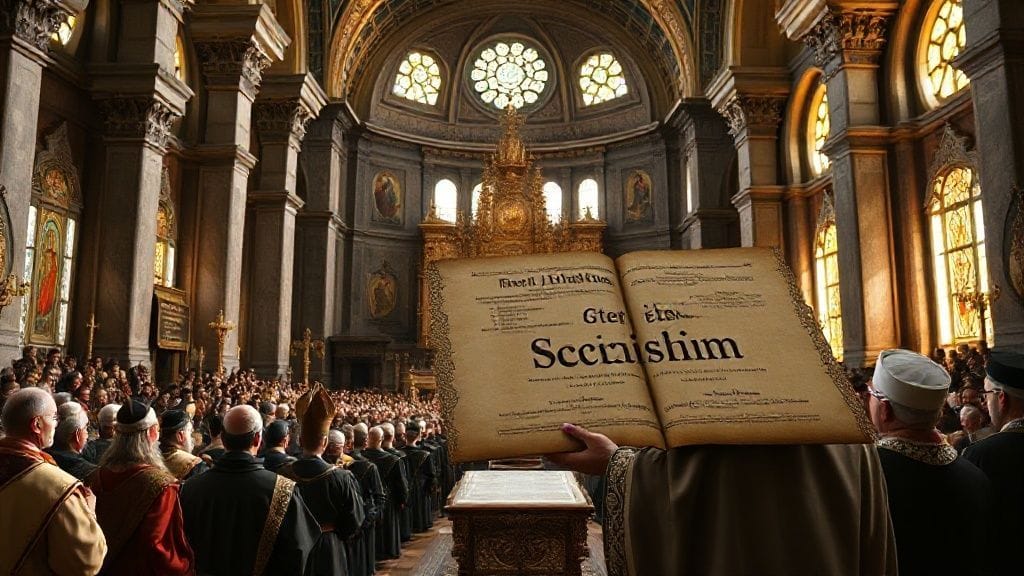
On July 16, 1054, the two parties met in the most sacred of spaces—the Hagia Sophia itself. Traditional protocol was abandoned as theological polemics flew thick. Ultimately, Humbert, in a dramatic and symbolic act, placed a bull of excommunication on the altar, branding Patriarch Michael Cerularius and his followers as schismatics.
The Patriarch, in turn, convened a synod that excommunicated the legates. The rupture was no longer private. The universal Church was fractured before an audience of the faithful, who watched as their spiritual leaders tore apart centuries of unity.
The Excommunication Decree: Breaking Ties Publicly
The bull, a terse document, condemned the actions and teachings of the Patriarch and declared separation from the Eastern Church’s communion. It was a declaration as much of power as of belief—a statement that Rome no longer recognized Constantinople’s ecclesiastical autonomy.
For many Byzantines, however, this was viewed as an act of aggression—an insult to their ancient traditions and dignity. The schism was now formal, symbolizing centuries of rivalry crystallized in ink and ceremony.
The Symbolism and Ceremony of the Schism Day
The gravitas of the moment was palpable. The walls of Hagia Sophia, adorned with mosaics of Christ Pantocrator and saints, bore silent witness as the excommunication was placed upon the altar steps. The act was meant to be absolute and eternal.
Yet, fate would intervene: Cardinal Humbert died shortly after the mission, and the pope did not sanction the extreme decision, revealing fissures even within the Western Church.
Immediate Reactions: Shockwaves in Constantinople and Rome
News traveled swiftly. In Constantinople, the population was stunned, some horrified by the open breach, others emboldened by Patriarch Michael’s defiance. In Rome, there was a mix of triumph and trepidation—was this the final answer to Eastern dissent, or merely the beginning of a prolonged conflict?
Local churches in the Balkans and Italy felt the shock, with clergy uncertain how to navigate the newly created divide.
The Eastern Church’s Response: Isolation and Defiance
Constantinople doubled down, emphasizing its apostolic traditions and rejecting the papal claim to universal jurisdiction. The Eastern Orthodox Church henceforth saw itself as the true guardian of Christian orthodoxy, resisting what it termed Western overreach and Latin innovations.
The schism hardened lines, leaving efforts at dialogue laid aside for centuries, replaced often by hostility and rivalry.
The Roman Curia’s Theological Justifications
In Rome, scholars and theologians composed treatises defending the filioque clause and papal supremacy. Arguments referenced Augustine, Jerome, and councils, justifying the West’s position both spiritually and canonically.
The schism became not only a political crisis but a theological watershed, defining identities by opposition.
The Schism in the Christian World: Ripple Effects Across Europe and Asia
The rupture was not confined to Constantinople and Rome but reverberated across Christendom. Slavic lands, Scandinavia, the Middle East, and North Africa felt the seismic shift. Loyalties were tested; dioceses divided; new patriarchates formed.
This division shaped alliances for the Crusades, influenced missions to convert pagan populations, and reshaped the cultural map of medieval Christianity.
Cultural and Liturgical Divergences Solidified
Over generations, the schism entrenched distinct Christian cultures. Icon veneration, monastic traditions, clerical celibacy, and language set East and West apart.
Festivals, rites, and ecclesiastical calendars diverged, making the split evident even to the most casual observer and cementing identities through practice as much as belief.
Political Fallout: Byzantium’s Waning Influence
Politically, the East’s alienation weakened Byzantium’s western alliances. With the rise of Norman and later Ottoman threats, Constantinople found itself increasingly isolated.
Western Europe’s rising powers, particularly the Holy Roman Empire, aligned with Rome’s spiritual leadership, marginalizing Byzantium on the continental stage.
The Schism’s Impact on Relations with the Emerging Muslim Powers
As the Christian world fractured, Muslim empires such as the Seljuk Turks and later the Ottomans capitalized on the division. The lack of unity both militarily and spiritually among Christian states diminished coordinated resistance.
The Crusades, often seen as a reaction to Islamic expansion, were themselves complicated by East-West Christian enmity, sometimes pitting allies against each other instead of a common foe.
Attempts at Reconciliation Over the Centuries
Occasional efforts sought to heal the breach—councils at Lyon (1274) and Florence (1439) opened doors to dialogue, but these were largely unsuccessful, viewed in the East as submission to Roman demands.
Mutual distrust and entrenched identities overwhelmed gestures of union, leaving the schism a defining feature of Christian geopolitics.
The Long Shadow: How 1054 Still Divides Christianity
More than nine centuries later, the Great Schism remains alive in the consciousness of Orthodox and Catholic believers. Venues for dialogue exist, ecumenical efforts continue, but full communion remains elusive.
The legacy of 1054 informs ecclesiastical policies, theological discourse, and even political relations in Orthodox and Catholic majority countries.
Memory and Myth: The Schism in Modern Orthodox and Catholic Thought
In narratives passed through generations, the 1054 rupture has been both demonized and mourned. Orthodox tradition recalls Rome’s “papal tyranny,” while Catholic perspectives emphasize the tragic misunderstanding and call for unity.
This contested memory fuels religious identity and informs contemporary ecumenical dialogues.
The Great Schism in Historical Perspective: Conflict and Coexistence
Historians today view the schism not as a sudden catastrophe but as a long process, marked by conflict yet punctuated with moments of coexistence and cooperation.
It reflects broader themes of cultural divergence, power struggles, and the challenge of sustaining universal faith in a diverse world.
Lessons from the Schism: Unity, Division, and Faith
The Great Schism invites reflection on the fragility of unity built on complex human networks. It is a cautionary tale about pride, miscommunication, and the dangers of dogmatism but also a testament to faith’s endurance amid division.
It challenges modern believers and historians alike to seek understanding beyond historical wounds.
Conclusion: Echoes of a Broken Alliance
The events of July 16, 1054, in the heart of Constantinople did more than split a church; they redefined civilizations. The clash at Hagia Sophia was the culmination of theological debates, political ambitions, and cultural pride, echoing through centuries.
Yet even in division, echoes of a shared past and yearning for reconciliation persist. The story of the Great Schism is a powerful reminder of faith’s complexity, the human impulse for power, and the perennial hope for unity amid diversity.
FAQs
Q1: What were the main causes of the Great Schism of 1054?
The schism resulted from longstanding theological differences, particularly over the filioque clause, political rivalries between Rome and Constantinople, cultural and linguistic divergence, and conflicting views on papal authority.
Q2: Who were the central figures responsible for the schism?
Patriarch Michael Cerularius of Constantinople and Cardinal Humbert, papal legate for Pope Leo IX, were pivotal. Their confrontation in Hagia Sophia culminated in mutual excommunications.
Q3: Why did the filioque clause cause controversy?
The Western Church inserted the phrase “and the Son” into the Nicene Creed without an ecumenical council’s consent, which the Eastern Church saw as both a theological error and an illegal innovation.
Q4: What were the immediate consequences for the Byzantine Empire?
Byzantium faced strained relations with the West, weakening political alliances and complicating threats from Normans and Muslim forces.
Q5: Have there been attempts to heal the split?
Yes, notably at the Councils of Lyon and Florence, and in modern ecumenical dialogues, but none have yet restored full communion.
Q6: How did the Great Schism shape Christian cultures?
It solidified differences in liturgy, theology, clerical structures, and religious identity between Eastern Orthodoxy and Roman Catholicism.
Q7: Is the Great Schism still relevant today?
Absolutely. It influences inter-church relations, ecumenical efforts, and understanding of Christian history and identity.
Q8: Where can I learn more about the Great Schism?
The Wikipedia page on the Great Schism of 1054 offers detailed information and sources.