Table of Contents
- The Dawn of Liberation: Kalamata, March 25, 1821
- The Ottoman Empire’s Grip on Greece Before the Revolt
- Seeds of Revolt: The Rise of Greek Nationalism
- The Filiki Eteria: Secret Societies and Revolutionary Plots
- Baptism by Fire: The First Uprising in the Peloponnese
- Heroes of Kalamata: The Leaders Who Sparked the Rebellion
- The Fall of Kalamata: Strategic Triumph and Symbolic Victory
- The Spread of Revolt: How the Flame of Freedom Ignited Greece
- Ottoman Response: Repression, Retaliation, and Stalemate
- The Role of Religion and the Orthodox Church
- The International Context: Philhellenism and Global Sympathy
- The Women of the Revolution: Courage Beyond the Battlefield
- The Cost of Freedom: Bloodshed, Massacres, and Refugees
- The Proclamation of the Greek Revolution: Political Symbolism
- The Peloponnesian Assembly and the Struggle for Governance
- The Naval Battles: Control of the Seas and Supply Lines
- European Powers: Interference, Aid, and Diplomacy
- The Legacy of March 25: National Identity and Modern Greece
- Remembering Kalamata: Memory, Myth, and Modern Commemorations
- Conclusion: From Rebellion to Nationhood—A Journey Unfolding
- FAQs: Understanding the Greek War of Independence Origins and Impact
- External Resource
- Internal Link
The Dawn of Liberation: Kalamata, March 25, 1821
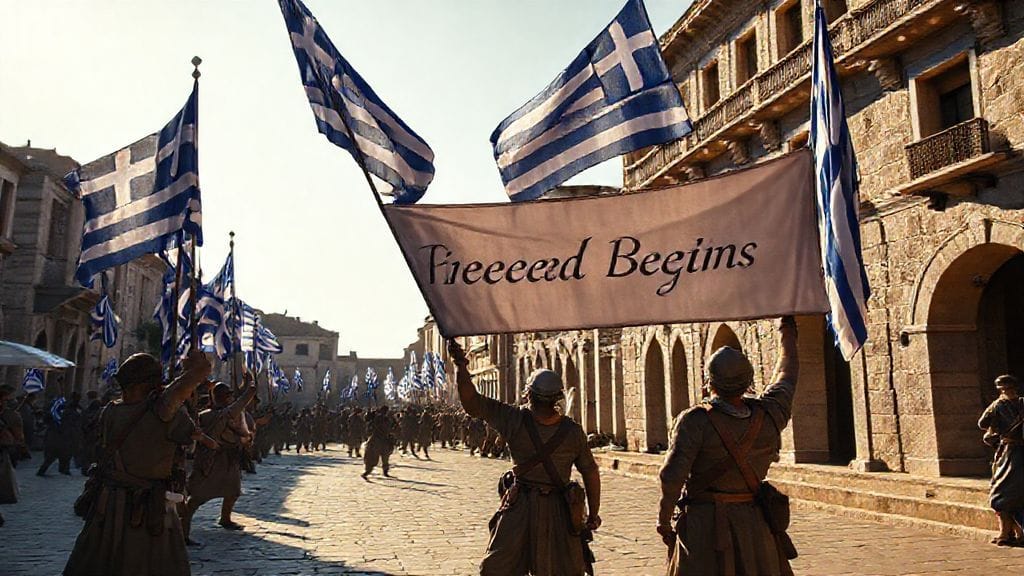
The morning of March 25, 1821, dawned crisp and clear over the olive-groves and sun-kissed hills surrounding Kalamata, a serene port city nestled in the southern Peloponnese. But beneath this fragile peace was a simmering tension—an undercurrent of hope and defiance against centuries of Ottoman domination. At first light, the quiet streets began to stir not with the usual sounds of merchants and fishermen, but with the sharp crackle of gunfire and the roar of armed insurgents. Greek rebels led by daring local captains and clansmen, fueled by an unyielding desire for freedom, took control of Kalamata from the Ottoman garrison. This moment was more than a simple military victory—it was the flashpoint that ignited the Greek War of Independence, a seminal chapter in the quest for nationhood that would reverberate across Europe and the world.
As the red banner of revolution fluttered over Kalamata’s hills, it signaled a bold claim for liberty and self-determination. But this dramatic seizure was just the first ripple of an uprising that would cascade into a brutal, protracted war, filled with heroism, tragedy, and political intrigue. Behind the gunfire, beneath the whispered prayers in churches turned fortress, lay a complex web of history, identity, and resilience—one that had been brewing for generations.
The Ottoman Empire’s Grip on Greece Before the Revolt
For more than three centuries before that March morning, the Greek-speaking peoples had been under the control of the Ottoman Empire, a sprawling and formidable power that ruled over much of Southeast Europe, Western Asia, and North Africa. From 1453 onward, Greek lands were absorbed into a system where the Ottomans enforced their rule through provincial governors (beys) and local authorities, exacting tribute, imposing taxes, and maintaining militarized order.
But the Ottoman grip was as much a system of social and religious hierarchy as military control. The millet system allowed Orthodox Christians certain religious freedoms but kept them politically marginalized. Greeks were relegated to the status of “rayah” — protected subjects but without political rights or autonomy. The pressures of taxation and land tenure, coupled with religious discrimination and economic hardship, sowed widespread discontent.
Still, Ottoman sovereignty was not unchallenged. The empire’s power fluctuated, and internal decay—bureaucratic corruption, military defeats, and economic strains—created openings for resistance. Greek communities nurtured a quiet sense of identity based on language, Orthodox faith, and history that contrasted sharply with Ottoman rule.
Seeds of Revolt: The Rise of Greek Nationalism
By the late 18th and early 19th centuries, a profound transformation was underway. The Enlightenment, ideas of liberty, sovereignty, and nationalism — once exclusive to Western Europe — began to penetrate Greek intellectual circles. The diaspora, particularly merchants based in Russia, Western Europe, and the Ottoman capitals, became conduits for these revolutionary ideals. Writers and thinkers like Rigas Feraios and Adamantios Korais invoked the glory of classical Greece and the Byzantine legacy, urging a cultural and political awakening.
Meanwhile, the weakening Ottoman Empire—called the “Sick Man of Europe” — seemed vulnerable. The Napoleonic Wars destabilized the region and spread ideas of nationalism and self-determination. Greek pirates, klephts (bandits resisting Ottoman rule), and armatoles (Ottoman-sanctioned militia, at times double agents for rebels) formed a patchwork of armed groups prefiguring formal revolution.
The Filiki Eteria: Secret Societies and Revolutionary Plots
Central to the orchestration of the forthcoming revolt was the Filiki Eteria (Society of Friends), a secret organization founded in 1814 in Odessa by Greek merchants and intellectuals. Inspired by Freemasonry and revolutionary brotherhoods elsewhere, the Filiki Eteria’s clandestine mission was to unify Greek insurgents and coordinate a widespread uprising.
Members took solemn oaths, adopting secret codes and rituals, and worked relentlessly to infiltrate all levels of Greek society—merchants, clergy, military leaders, and common villagers. Their network extended into Constantinople, the islands, and the diaspora. Their plan was audacious: simultaneous revolts meant to cripple Ottoman control.
Yet, the chaos of conspiracies also bred divisions. Some leaders preferred cautious diplomacy; others were impatient to seize the moment. None foresaw how rapidly things would accelerate in early 1821.
Baptism by Fire: The First Uprising in the Peloponnese
The Peloponnese—known to Greeks as Morea—was a region ripe for revolt. Its rugged mountains, fiercely independent clans, and history of resistance made it a natural cradle for rebellion. On the evening of March 23, 1821, revolutionary leaders convened secretly in Areopoli, a town not far from Kalamata.
By March 25, coordinated efforts erupted across the region. Armed bands converged on Ottoman strongholds with a ferocity born of desperation and hope. Kalamata’s fall was rapid and decisive. Thousands of Greek insurgents overwhelmed the modest Ottoman garrison, forcing surrender and sparing the town from widespread destruction. This victory was pivotal: it provided a strategic foothold in the south and a symbolic beacon of success.
Heroes of Kalamata: The Leaders Who Sparked the Rebellion
The capture of Kalamata was orchestrated by charismatic leaders whose names echo in Greek history. Figures like Petros Mavromichalis, a respected military captain and head of the powerful Maniot clan, and Papaflessas, a fiery Orthodox priest and fervent revolutionary, played critical roles. Their ability to rally disparate groups—klephts, peasants, merchants—under a common cause united factions that otherwise might have remained fractured.
Mavromichalis’s choice to spare the lives of surrendered Ottoman troops and protect local civilians won crucial support, building a reputation for the revolutionaries as legitimate liberators, not mere rebels. Meanwhile, Papaflessas’s impassioned sermons inflamed nationalist zeal and framed the revolt as a sacred duty.
The Fall of Kalamata: Strategic Triumph and Symbolic Victory
The swift collapse of Ottoman defenses in Kalamata stunned the authorities in Constantinople. The town became a symbolic cradle of the revolution, marking the first liberated territory under Greek control. For the Greek insurgents, it was a tangible proof that centuries of subjugation could be overturned.
Kalamata’s strategic position allowed the rebels to import weapons and supplies via the sea, function as a staging ground for further attacks, and coordinate with revolutionary leaders elsewhere. Yet, it also marked the beginning of brutal reprisals by Ottomans determined to quash the rebellion before it spread.
The Spread of Revolt: How the Flame of Freedom Ignited Greece
Following Kalamata’s fall, revolts erupted in the surrounding Peloponnese towns and villages, in the mountainous regions of central Greece, and on key islands such as Hydra and Spetses. Spontaneous uprisings challenged Ottoman governors, barracks, and tax farms.
The rebellion’s momentum reflected not only strategic planning but the long pent-up frustrations of a population yearning for change. Peasants, merchants, clerics, and warriors joined the cause, binding social classes in a common struggle. But it also drew harsh attention and provoked vicious cycles of violence.
Ottoman Response: Repression, Retaliation, and Stalemate
The Ottoman Empire, although weakened, was no pushover. Istanbul dispatched reinforcements and appointed experienced commanders determined to crush the insurgency. Retaliatory massacres, village burnings, and mass executions became grim realities. The rebellion shifted from swift victories to grinding warfare.
Yet the empire’s ability to fully contain the revolt was hampered by internal divisions, slow communications, and the growing support for Greek independence internationally. The Ottomans faced simultaneous unrest in the Balkans and elsewhere, stretching their military thin.
The Role of Religion and the Orthodox Church
Religion played a paradoxical role—both unifying and dividing. The Orthodox Church was a bearer of Greek identity under Ottoman rule, and many clergymen supported the revolution as a fight for faith and nationhood. However, some bishops feared the repercussions and sought to negotiate or suppress violence.
Orthodoxy provided a potent rallying cry: the revolution was cast as a holy war for liberation of “the Christian Greeks.” The use of religious symbolism, icons, and Easter imagery on the day of Kalamata’s fall reinforced this narrative, enveloping political rebellion in spiritual significance.
The International Context: Philhellenism and Global Sympathy
The Greek revolt quickly captured the imagination of Europe’s elite and intelligentsia. Philhellenism—an admiration for Greek culture and cause—grew among poets, artists, politicians, and ordinary citizens. Figures such as Lord Byron traveled to Greece to support fighters, donating money and risking life.
European powers watched cautiously, balancing against Ottoman sovereignty and their own geopolitical interests. Still, public support translated into diplomatic pressure, fundraising, and ultimately intervention, making the Greek independence movement one of the first modern nationalist causes to gain widespread global attention.
The Women of the Revolution: Courage Beyond the Battlefield
While battlefields and political chambers dominated accounts, women played essential roles. They smuggled arms, tended wounded fighters, gathered intelligence, and maintained households under extraordinary stress. Many endured brutal reprisals—burnings, rapes, imprisonment.
Figures such as Laskarina Bouboulina, a naval commander from Spetses, exemplify this courage. Bouboulina commanded warships and funded operations, breaking gender norms and inspiring both contemporaries and future generations.
The Cost of Freedom: Bloodshed, Massacres, and Refugees
War demanded a terrible toll. Sieges and battles destroyed towns. Civilians caught in the crossfire suffered atrocities and forced displacement. The brutal nature of the conflict, with rival atrocities on both sides, is preserved in the grim tales of massacre and revenge.
Thousands became refugees, fleeing to islands or diaspora communities. Hunger and disease ravaged populations. The price of freedom was steep—an enduring imprint on the Greek collective memory.
The Proclamation of the Greek Revolution: Political Symbolism
March 25 was not only a military victory but also a political declaration. The rebels proclaimed the intention to establish a free Greek state, rejecting Ottoman sovereignty. The declaration married nationalist and religious symbolism, coinciding with the feast of the Annunciation, underscoring themes of rebirth and divine favor.
This political act framed the revolution as a legitimate quest for self-determination and provided a rallying point for international supporters.
The Peloponnesian Assembly and the Struggle for Governance
With territories under rebel control, leaders grappled with building administrative structures. The Peloponnesian Assembly sought to organize governance amid warfare, attempting to balance local clan loyalties, revolutionary councils, and emerging political factions.
While unity was essential, internal rivalries and differing visions often obstructed coherent governance. This tension foreshadowed the complexity of nation-building after liberation.
The Naval Battles: Control of the Seas and Supply Lines
Greece’s extensive coastline and islands made naval power decisive. Small but agile Greek fleets, mostly privately funded, challenged the Ottoman navy. Control of the seas allowed the rebels to transport troops, receive foreign aid, and isolate Ottoman garrisons.
Battles off islands like Hydra, Spetses, and Psara became legendary, highlighting the maritime dimension of the revolution, often overlooked yet pivotal.
European Powers: Interference, Aid, and Diplomacy
Britain, France, and Russia played a complicated role. They balanced cautious diplomacy with public pro-Greek sentiment at home and strategic rivalry with the Ottomans. Russian Orthodox ties stirred sympathy, while Britain feared destabilization.
Ultimately, their intervention—culminating in the Battle of Navarino in 1827 where Ottoman-Egyptian fleets were decimated—turned the tide. But this foreign involvement also shaped Greece’s future borders and political structure.
The Legacy of March 25: National Identity and Modern Greece
March 25 became enshrined as Greek Independence Day, a symbol of national rebirth and sacrifice. The memory of Kalamata’s uprising is invested with almost mythic status, epitomizing courage against overwhelming odds.
Greece’s path from rebellion to a modern nation-state was fraught but inspired by these roots. The revolution influenced later independence movements worldwide and continues to define Greek historical consciousness.
Remembering Kalamata: Memory, Myth, and Modern Commemorations
Today, Kalamata honors its revolutionary past with festivals, monuments, and educational programs. The day is marked by parades and solemn ceremonies, connecting present generations to their heritage.
Historians debate the myths and realities of the revolt, reflecting on the delicate balance between nationalist narratives and critical inquiry. Yet, the emotional power of those early days remains undeniable.
Conclusion: From Rebellion to Nationhood—A Journey Unfolding
The seizure of Kalamata on March 25, 1821, was more than a military event—it was the heartbeat of an awakening people. Against the weight of empire, from a secret oath to the thunder of muskets, Greeks embarked on a perilous journey that would reshape their identity and territory.
This story is woven from the fire of hope, the shadow of loss, the clashing ideals of leaders and clans, and the steadfast faith of a marginalized nation dreaming of freedom. The War of Independence was neither swift nor easy, but it was a testament to human resilience and the powerful currents of history.
The echoes of that spring morning continue—in celebration and solemn remembrance—as a defining genesis of modern Greece.
FAQs
Q1: Why did the Greek War of Independence begin in Kalamata?
A1: Kalamata was a strategic and symbolic site in the Peloponnese, a region with a strong tradition of resistance and autonomy. Its capture gave the rebels a crucial foothold and galvanized wider revolts.
Q2: What role did the Filiki Eteria play in the revolution?
A2: The Filiki Eteria was a secret organization that coordinated revolutionary efforts, recruited members throughout Greek society, and planned simultaneous uprisings designed to maximize impact against Ottoman forces.
Q3: How did religion influence the Greek revolt?
A3: The Orthodox Church was a key part of Greek identity under Ottoman rule. Many clergy supported the revolution, framing it as a holy fight for faith and nationhood, which helped unify diverse groups.
Q4: What impact did European powers have on the Greek War of Independence?
A4: European states were initially cautious but gradually supported the Greek cause due to public sympathy and strategic interests. Their involvement culminated in military intervention that helped secure Greek independence.
Q5: Who were some notable leaders in the initial uprising?
A5: Leaders like Petros Mavromichalis and Papaflessas were instrumental. Mavromichalis was a military and clan leader who coordinated the assault on Kalamata, while Papaflessas was a revolutionary priest who inspired fighters.
Q6: What were some of the human costs of the revolution?
A6: The war caused widespread casualties, destruction, and displacement. Both sides committed atrocities, and many civilians suffered starvation and refugee status.
Q7: Why is March 25 chosen as Greek Independence Day?
A7: March 25 coincides with the feast of the Annunciation in the Orthodox calendar, linking religious symbolism of rebirth and hope to the political act of rebellion.
Q8: How is the memory of Kalamata’s uprising preserved today?
A8: Through annual national celebrations, monuments, educational programs, and public commemorations that connect modern Greeks to their revolutionary heritage.