Table of Contents
- A Night of Horror: The Gujarat–Kathiawar Tsunami Unfolds
- The Precarious Coastline: Geography and Vulnerability of Kathiawar
- Colonial India in Turmoil: The Broader Historical Context of 1945
- The Invisible Threat: Understanding Tsunamis in the Indian Ocean
- The Earthquake That Shook the Seas: Triggering the Deluge
- The Warning Ignored: Absence of Early Detection and Communication
- Waves of Disaster: The Tsunami’s Impact on Coastal Gujarat
- Communities Swept Away: The Human Toll and Personal Stories
- Rescue and Relief: The Struggle to Respond Amidst Chaos
- The Colonial Administration’s Role and Criticisms
- Economic Devastation: Fisheries, Trade, and Livelihoods in Ruins
- Cultural Trauma: Folklore, Memory, and Collective Mourning
- Scientific Expeditions: Charting the Tsunami's Path in Aftermath
- The Gujarat–Kathiawar Tsunami in Indian Ocean Tsunami History
- Lessons Ignored and Lessons Learned: Impact on Future Preparedness
- The Roofs Above the Waves: Community Resilience and Reconstruction
- The Unseen Ripple: Political Implications Amidst India’s Independence Movement
- Remembering 1945: Memorials, Documentation, and the Fading Collective Memory
- From Tragedy to Awareness: How the 1945 Tsunami Shaped Indian Coastal Policy
- Conclusion: Endurance and the Indomitable Spirit of the Gujarat Coast
- FAQs: Understanding the Gujarat–Kathiawar Tsunami
- External Resource
- Internal Link
1. A Night of Horror: The Gujarat–Kathiawar Tsunami Unfolds
It was late on November 28, 1945, when the tranquil waves of the Arabian Sea transformed into a harbinger of devastation along the western coast of India. Fishermen and coastal villagers of Gujarat and the Kathiawar Peninsula found themselves staring into an ocean’s dark secret—a giant wave, born from the tremors of a deep undersea earthquake, racing towards their shores. The night sky, usually scattered with stars, bore silent witness to a fury few could comprehend, as the tsunami swallowed villages whole, uprooted lives, and shattered the brittle cocoon of coastal routine.
The air was thick with salt and fear. In moments, entire communities were submerged or swept away, their homes reduced to driftwood, survivors scrambling on debris or high ground. The ocean, once a giver of life and sustenance, turned into a relentless destroyer. Yet amidst the ruin, stories of survival emerged — tales of courage, loss, and the intrinsic bond between people and sea. This was not just a natural event; it was a human catastrophe that rippled through the final years of British India’s twilight.
2. The Precarious Coastline: Geography and Vulnerability of Kathiawar
The peninsula of Kathiawar, fringed by the Arabian Sea, has for centuries been a crucible of maritime culture and commerce. The coastline’s long stretch of sandy beaches, inlets, and estuaries supported a thriving fishery economy and vibrant communities that depended on the sea’s caprices. However, this beauty belied a precarious relationship with nature. The region sits near active tectonic boundaries — the western margin of the Indian tectonic plate — making it susceptible to seismic events capable of stirring deadly waves.
Kathiawar's geographic isolation and low-lying coastal spread made its villages vulnerable to sudden surges. Traditional knowledge warned of unusual ocean behavior, but technology and scientific understanding in 1945 offered only limited insight. This gap between human settlement and natural risk made the tsunami’s impact especially catastrophic.
3. Colonial India in Turmoil: The Broader Historical Context of 1945
The tsunami did not occur in a vacuum. November 1945 was a pivotal moment not only for Gujarat but for all of India. The Second World War had just concluded, and India was on the verge of independence after nearly two centuries of British colonial rule. Political tensions ran high, and administrative priorities were often focused on nationalist movements and war recovery.
The Kathiawar region was also undergoing social and economic shifts, with local leadership grappling with colonial bureaucracy and the nascent calls for self-governance. Infrastructure remained fragile, and public health systems were rudimentary — factors that magnified the human toll when natural disaster struck. The tsunami would compound the challenges of a subcontinent already struggling to reconcile aspirations for freedom with the unsettling realities of colonial neglect.
4. The Invisible Threat: Understanding Tsunamis in the Indian Ocean
In the mid-20th century, awareness of tsunamis in the Indian Ocean was minimal, especially compared to the Pacific “Ring of Fire” where such occurrences were better documented. The Indian Ocean, often perceived as relatively calm, was ill-prepared for the rupture of tectonic plates deep beneath its surface.
Tsunamis, known as “tidal waves” colloquially, were mystified by local communities and misunderstood by many scientists. Unlike regular sea waves driven by wind, tsunamis travel at jetliner speeds underwater and can increase suddenly in height upon landfall. The Gujarat–Kathiawar tsunami would later be studied as a wake-up call about the dangers lurking in the Indian Ocean, highlighting the need for earthquake and tsunami monitoring in the region.
5. The Earthquake That Shook the Seas: Triggering the Deluge
The epicenter of the devastating event was traced to a powerful undersea earthquake whose seismic tremors reverberated through the Arabian Sea. Geological records estimate the earthquake’s magnitude between 7.5 and 8.1 on the Richter scale, releasing tremendous energy that displaced millions of tons of seawater.
The rupture occurred along a fault line underwater near the Makran coast, a known seismic zone. The sudden vertical displacement of the ocean floor generated a series of waves racing at speeds near 800 kilometers per hour. In less than an hour, these waves struck the shores of Kathiawar, carrying with them destruction that no one living there had witnessed before.
6. The Warning Ignored: Absence of Early Detection and Communication
Unlike today’s sophisticated tsunami warning systems, there was no mechanism in 1945 to alert coastal populations of the impending catastrophe. Seismographs in India were sparse and slow to broadcast data, while warnings from the British colonial administration were not timely or effectively communicated.
Many villagers noticed the sea retracting unusually far from the shore—a classic sign of an approaching tsunami—but had no context to act decisively. The communication gap between scientific knowledge, administrative authorities, and local communities meant that precious minutes were lost, with catastrophic consequences.
7. Waves of Disaster: The Tsunami’s Impact on Coastal Gujarat
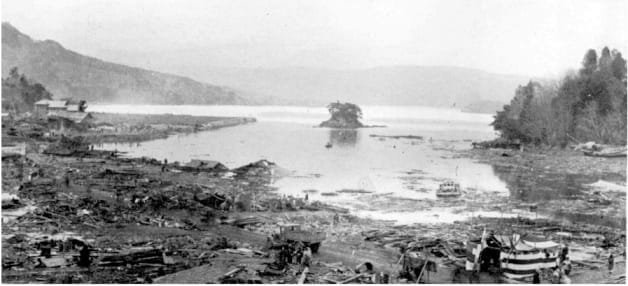
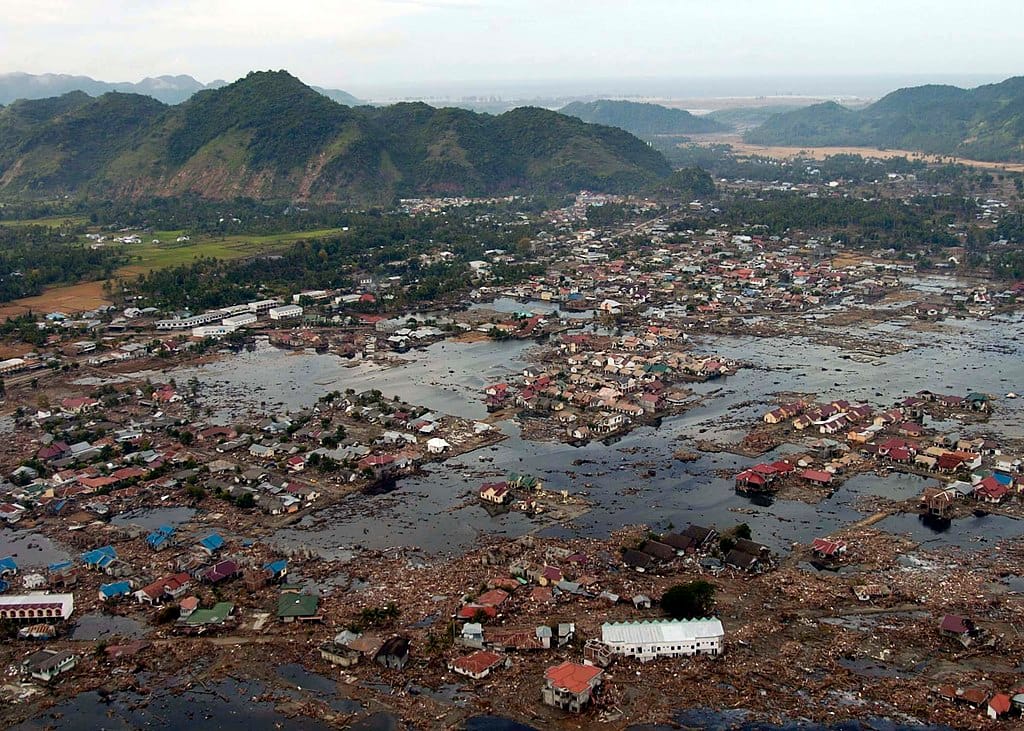
The tsunami struck with unforgiving force, sweeping through fishing hamlets, salt pans, and agrarian settlements. Entire villages were engulfed as walls of water, reportedly up to 10 meters high in some areas, crashed inland. The Arabian Sea, which traditionally lapped the shores gently, now roared with a destructive hunger.
In places like Porbandar, Veraval, and smaller coastal clusters, homes, boats, and infrastructure were obliterated. Salt fields, crucial for local economics, were inundated with brackish water, ruining the year’s harvest. The lack of early rescue coordination led to harrowing scenes of families clawing for survival amid debris.
8. Communities Swept Away: The Human Toll and Personal Stories
Precise numbers vary, but estimates suggest that thousands perished in the Gujarat–Kathiawar tsunami. Among the victims were fishermen out at sea, families caught in their homes, and entire fishing communities whose generational livelihoods were decimated. Survivors spoke of nightmare nights filled with screaming children, frantic efforts to climb trees or high ground, and the agonizing loss of relatives.
One poignant account comes from a fisherman’s widow in Velan, whose husband was lost at sea; she recounts hearing the roar of the wave approaching, “like a thousand lions,” and praying for a miracle that never came. Another survivor vividly described how the receding ocean water sucked all the sand beneath their feet, pulling people into the abyss before the wave crashed upon them.
These personal stories reveal not just the scale of the tragedy but the intimate human tragedy behind the numbers.
9. Rescue and Relief: The Struggle to Respond Amidst Chaos
In the immediate aftermath, rescue efforts were hampered by ruined communication lines and damaged infrastructure. Colonial government officials, local volunteers, religious groups, and neighboring communities mobilized hastily to retrieve survivors and tend to the injured.
Field hospitals were set up in makeshift conditions, while supplies of food and water were flown in from inland cities. However, the breadth of devastation meant that many aid efforts arrived too late or could not reach remote hamlets cut off by flooding. Disease outbreaks, malnutrition, and exposure compounded the initial effects of the tsunami.
Despite these challenges, the resilience of Gujarat’s people shone through—neighbors aiding neighbors, communal prayers and rituals underpinning collective mourning and hope.
10. The Colonial Administration’s Role and Criticisms
The British colonial government’s response was mixed. While there was an evident effort to provide relief and rebuild, criticism arose regarding the slow pace and bureaucratic nature of intervention. Resources were stretched thin in the post-war period, and priorities often sidelined coastal communities deemed peripheral to colonial economic interests.
Some reports suggest colonial officials underestimated the scale of the disaster initially, delaying more robust measures. Local leaders voiced frustration at the lack of consultation and the focus on urban centers over rural coastal villages. These shortcomings weakened trust in colonial authorities already strained by nationalist sentiments.
11. Economic Devastation: Fisheries, Trade, and Livelihoods in Ruins
Gujarat’s coastal economy hinged on fishing, salt production, and trade — all sectors devastated by the tsunami. Boats were destroyed, nets lost, and entire fish populations disrupted by environmental damage. Salt beds, critical for both local and export economies, took years to be rehabilitated after being flooded by seawater.
Loss of income plunged many families into poverty; traditional knowledge on monsoon fishing cycles became difficult to apply with altered shorelines. The ripple effect spread inland, affecting markets and supply chains interconnected with the coast. Recovery was slow and arduous, necessitating decades of rebuilding efforts.
12. Cultural Trauma: Folklore, Memory, and Collective Mourning
The tsunami left an indelible mark on Gujarat’s cultural fabric. Oral traditions transformed the event into folklore—a symbol of nature’s unpredictable wrath and the fragility of human life. Poems, songs, and community narratives passed down stories of loss and survival, embedding the tsunami into local identity.
Annual commemorations and religious ceremonies emerged in some villages, blending grief with hope. Yet, paradoxically, the event also faded from formal historical narratives, overshadowed by India’s independence struggle and subsequent nation-building efforts.
13. Scientific Expeditions: Charting the Tsunami's Path in Aftermath
In the years following, Indian and foreign scientists began to analyze the tsunami’s causes and patterns. Marine geologists, seismologists, and oceanographers embarked on expeditions to understand the seismic faults of the Arabian Sea and the dynamics of tsunamigenic earthquakes beyond the Pacific.
The Gujarat–Kathiawar tsunami became a case study that expanded global knowledge of undersea seismic hazards in the Indian Ocean basin. Research efforts laid groundwork for later early-warning systems and disaster preparedness programs still being developed decades later.
14. The Gujarat–Kathiawar Tsunami in Indian Ocean Tsunami History
While overshadowed internationally by the Japanese tsunami of 1946 and later the 2004 Indian Ocean tsunami, the 1945 Gujarat–Kathiawar event remains a significant milestone in Indian Ocean natural disaster history. It proved that even regions less known for seismic activity bore latent risks.
This tsunami was one of the earliest recorded large-scale oceanic waves in western India, challenging assumptions and highlighting the necessity for coastal hazard assessment—lessons brutally learned by the people and governments affected.
15. Lessons Ignored and Lessons Learned: Impact on Future Preparedness
Despite the clear warning signs, India’s path to comprehensive tsunami readiness was slow. Technology and infrastructure in the mid-20th century remained insufficient, and it took several more decades and further tragedies for widespread investment in monitoring and emergency response.
Nonetheless, the Gujarat tsunami quietly influenced regional policies on coastal zoning, disaster management, and public education. It underscored the importance of integrating traditional knowledge with scientific advancement and reinforced community-based disaster resilience models.
16. The Roofs Above the Waves: Community Resilience and Reconstruction
In the wake of destruction, Gujarat’s coastal peoples demonstrated remarkable resilience. Villagers rebuilt homes from the wreckage, innovate fishing practices adapted to changed shorelines, and social bonds tightened in the face of shared trauma.
Migration patterns shifted slightly as some families moved to safer areas, while others stayed, refusing to abandon ancestral lands. Incremental infrastructure improvements, including mangrove planting and embankment construction, began to shape a defense against future floods.
17. The Unseen Ripple: Political Implications Amidst India’s Independence Movement
The tsunami’s timing amidst India’s final moments under British rule gave it a complex political overlay. Local grievances over colonial administrative neglect intertwined with the disaster’s aftermath, fueling calls for stronger regional governance and self-determination.
The event exposed fissures in colonial emergency response capacities, offering nationalist leaders additional rhetoric about the need for Indian control over disaster management. In some ways, the tsunami accelerated dialogue on state responsibility and community empowerment during a fraught political transition.
18. Remembering 1945: Memorials, Documentation, and the Fading Collective Memory
Unlike other tragic events, the Gujarat–Kathiawar tsunami did not receive widespread commemoration or permanent memorialization. Physical memorials are sparse, and official documentation remains limited. Oral histories risk being lost as survivors pass away.
Historians and disaster scholars emphasize the importance of reviving memory—through archives, education, and commemorative acts—to honor the victims and maintain awareness of natural hazard risks. In recent years, efforts by local NGOs and academic bodies have sought to fill these gaps.
19. From Tragedy to Awareness: How the 1945 Tsunami Shaped Indian Coastal Policy
The legacy of the 1945 tsunami resurfaced most visibly in post-2004 Indian Ocean tsunami policy reforms, where Gujarat’s experience informed hazard mapping and community training programs. Coastal disaster management units incorporated historical data, improving preparedness.
The event’s history formed an early chapter in India’s evolving relationship with its seas—from a source of livelihood to a domain demanding respect and caution. Policies balancing development and environmental stewardship gained traction partly due to the hard-learned lessons of 1945.
20. Conclusion: Endurance and the Indomitable Spirit of the Gujarat Coast
The Gujarat–Kathiawar tsunami of November 1945 stands as a profound example of nature’s unpredictability and humankind’s vulnerability. Yet beyond loss and devastation, it shines a light on resilience—the stubborn will of communities to rise, rebuild, and remember.
This catastrophe carved a tragic but instructive scar on Indian history, reminding us that the ocean’s depths conceal both bounty and peril. As climate change raises new seas and shifting plates continue to tremble beneath waves, the story of the 1945 tsunami remains a timeless testament to preparedness, solidarity, and human endurance.
Conclusion
The Gujarat–Kathiawar tsunami is more than a forgotten footnote; it is a vivid testament to the entwined fates of human communities and their natural environment. In 1945, at a time when India stood on the cusp of political transformation, nature asserted an overwhelming presence—one that challenged colonial structures and imbued local societies with both sorrow and strength.
This cataclysm forged a harsh, tangible lesson about the fragility of coastal life and the pressing need for vigilance against natural disasters. As decades passed, the memory of that fateful night lives on in stories, scars, and the slow but steady evolution of disaster science and preparedness in the region.
In honoring the thousands lost and the communities rebuilt, the Gujarat–Kathiawar tsunami invites reflection not just on tragedy, but on survival, adaptation, and hope embedded deep within the human spirit.
FAQs
Q1: What caused the Gujarat–Kathiawar tsunami of 1945?
A1: The tsunami was triggered by a powerful undersea earthquake in the Arabian Sea region near the Makran coast, which displaced large volumes of seawater, creating devastating waves that hit the Gujarat and Kathiawar coastlines.
Q2: How many people were affected by the tsunami?
A2: Estimates vary, but it is believed that thousands of people perished, with many fishing communities nearly wiped out. Precise figures are difficult due to limited records from the period.
Q3: Why was there no warning before the tsunami?
A3: At the time, there was no established tsunami early-warning system in the Indian Ocean, and communication channels were inadequate to warn coastal populations in time.
Q4: How did the colonial government respond to the disaster?
A4: The British colonial administration initiated relief efforts but faced criticism for slowness and poor coordination, compounded by logistical challenges in the post-war period.
Q5: What impact did the tsunami have on local economies?
A5: The disaster heavily damaged fisheries and salt production, essential economic activities for coastal communities, leading to prolonged economic hardship.
Q6: Is the 1945 tsunami well remembered in Gujarat today?
A6: Memory of the event persists mainly through oral traditions, with few formal memorials or widespread recognition, although recent efforts seek to preserve its history.
Q7: Did the Gujarat tsunami influence disaster preparedness in India?
A7: Although initially overlooked, the event contributed to scientific awareness and, decades later, influenced coastal disaster management policies, especially post-2004.
Q8: How does this tsunami fit into the larger history of Indian Ocean tsunamis?
A8: It is one of the earliest documented major tsunamis in the Indian Ocean region, highlighting the seismic risks beyond better-known Pacific tsunami zones.