Table of Contents
- The Spark that Ignited the World: The Recording of the Gunpowder Formula
- Ancient Alchemy and the Birth of a Dangerous Secret
- Tang Dynasty’s Cultural Flourishing and Scientific Curiosity
- The Mystics and Monks: Custodians of Esoteric Knowledge
- The First Written Account: A Moment Frozen in Time
- The Components and Chemistry Behind the Formula
- From Medicine to Mayhem: Early Uses of Gunpowder
- The Political Landscape of 9th Century China
- The Spread of Gunpowder Knowledge Within China
- The Role of the Daoists and Taoist Alchemy
- The Military Implications: A New Era of Warfare
- Tales of the First Explosions and Fire Arrows
- Transmission along the Silk Road: East Meets West
- The Transformative Impact on Global Power Dynamics
- Myths and Legends around the Gunpowder Discovery
- The Cultural and Technological Legacy in China
- The Delicate Balance Between Creation and Destruction
- The Silent Revolution: Gunpowder’s Unseen Influence on Civilization
- Reflections in Modern Science and Technology
- Conclusion: The Enduring Flame of Innovation
- FAQs: Demystifying the Dawn of Gunpowder
- External Resource
- Internal Link
The Spark that Ignited the World: The Recording of the Gunpowder Formula
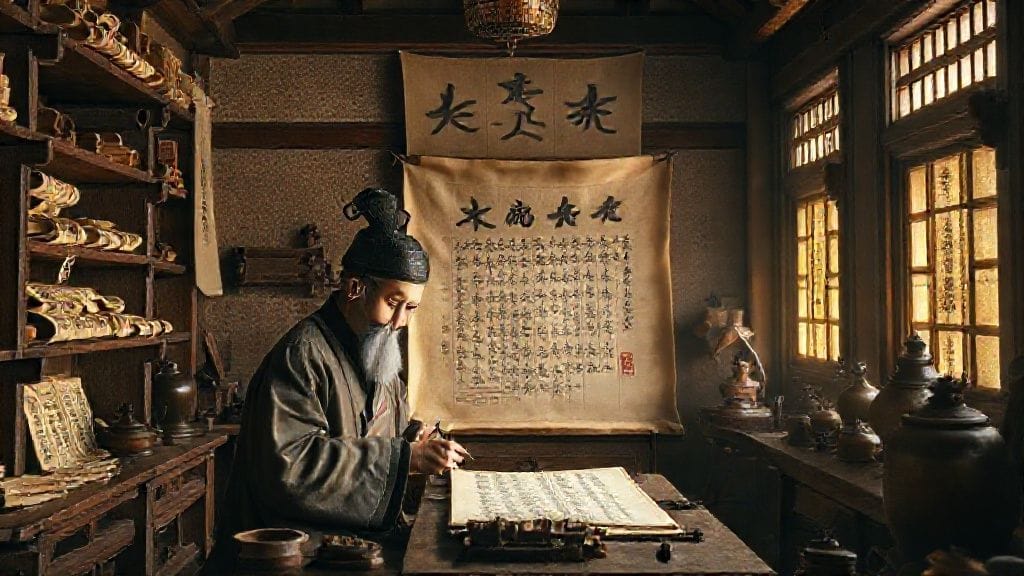
Picture the air thick with incense smoke, flickering shadows cast by warm candlelight, and the steady murmur of ancient scribes carefully inscribing characters onto fragile bamboo slips. Somewhere in 9th century China, scholars and alchemists were piecing together a mysterious recipe that would, unknowingly, alter the course of human history forever. This was no ordinary formula; it held the volatile key to power, destruction, and transformation—gunpowder.
The year was around 850 CE during the Tang Dynasty, a civilization pulsating with intellectual vigor and cultural brilliance. Within this melting pot of knowledge and belief, the gunpowder formula was recorded in writing for one of the first times ever. To understand how this seemingly scientific footnote became the catalyst for centuries of warfare, exploration, and political upheaval, we must delve deep into the story behind the scene—the alchemists’ quest, the societal turbulence, and the ominous whispers of a world on the cusp of explosive change.
Ancient Alchemy and the Birth of a Dangerous Secret
In the realm of ancient China, alchemy was more than just chemical experimentation; it was entwined with spiritual pursuit. The search for immortality and heavenly elixirs led Taoist alchemists deep into laboratories filled with strange herbs, minerals, and minerals alike. Paradoxically, it was in their fervent experimentation with sulfur, charcoal, and saltpeter—a mixture thought to lengthen life—that they stumbled upon something far more potent.
It was a secret fiercely guarded. Like the flame that burns uncontained, gunpowder was a breakthrough of both awe and dread. Among these early chemists, knowledge was a form of power, but also a burden. The volatile mix was not a simple medicine; it could shatter stone and ignite the heavens. The recording of this formula was a milestone – a crystallization of knowledge that until then was whispered, tested, and hidden from common eyes.
Tang Dynasty’s Cultural Flourishing and Scientific Curiosity
The Tang Dynasty (618–907 CE) is often heralded as a golden age in Chinese history, a beacon of art, literature, and science. Yet this dazzling cultural efflorescence belied the simmering tensions of court politics and external threats. Against this backdrop, scientific curiosity flourished. Scholars and inventors moved beyond theoretical musings, experimenting boldly with natural elements in pursuit of progress.
During this period, the Chinese bureaucracy encouraged the compilation and preservation of knowledge, from astronomy to medicine. It was within this intellectual climate that the earliest known references to gunpowder appeared—most notably in texts such as the "Zhenyuan miaodao yaolüe" (Essential Formulas of the Mysterious Dao of the True Origin), where alchemical recipes were meticulously cataloged. The recording of the formula was both a scientific artifact and an emblem of the period's experimental spirit.
The Mystics and Monks: Custodians of Esoteric Knowledge
Far removed from the political machinations of palaces, Daoist monks and alchemists held tight to ancient wisdom passed down through generations. These custodians navigated a world where science and spirituality melded, their experiments often conducted in secluded temples or mountain retreats. The gunpowder formula was a treasure concealed within their texts, treated with reverence and fear.
Their meticulous recordings involved not only the ingredients but also exact processes—ratios of sulfur, charcoal, and potassium nitrate—that balanced on the edge of safety and catastrophe. The alchemists believed these mixtures could unlock secret energies of the cosmos, granting power over both life and death. This dual vision of gunpowder as a divine elixir and a destructive force encapsulates the paradox at the heart of its invention.
The First Written Account: A Moment Frozen in Time
The precise documentation of the gunpowder formula in Chinese manuscripts circa 850 represents more than a recipe—it is a turning point where the intangible became tangible, where myth edged toward reality. The "Zhenyuan miaodao yaolüe" and similar texts codified the components: sulfur to fuel the flame, charcoal as the burning agent, and saltpeter to oxygenate the fire’s fury.
This moment, encapsulated by ink on bamboo or paper, marked the beginning of a technological revolution quietly unfolding. It was an age unassuming in its own time but destined to ripple across centuries and continents with unstoppable force.
The Components and Chemistry Behind the Formula
To modern eyes, the formulation may seem straightforward, yet its alchemical inception was the result of trial, error, and intuition. Sulfur provides the necessary flammable quality; charcoal acts as the carbon source; and saltpeter (potassium nitrate) supplies oxygen, allowing rapid combustion even in enclosed spaces.
This basic mixture, when combined in the right proportions—typically around 75% saltpeter, 15% charcoal, and 10% sulfur—creates a powder that burns rapidly, producing gas and heat, leading to an explosive expansion. Such knowledge revolutionized the understanding of combustion and paved the way for weaponry beyond archers and swordsmen.
From Medicine to Mayhem: Early Uses of Gunpowder
Gunpowder’s original intent was far removed from war. Early texts suggest attempts to use it as a medicinal elixir or as a way to repel evil spirits through smoke and fire. However, it wasn’t long before military minds recognized its devastating potential.
By the late 9th and early 10th centuries, rudimentary weapons such as fire arrows and primitive bombs filled with gunpowder were deployed in skirmishes and sieges. The deadly marriage of science and warfare had begun, transforming the nature of conflict from close combat to distance engagements powered by unseen chemical reactions.
The Political Landscape of 9th Century China
This era of invention coincided with the weakening of the Tang Dynasty, beset by internal rebellion, court intrigue, and external pressures from nomadic tribes. The fragmentation of imperial power created pockets of competing warlords and regional governors eager to harness every advantage.
In such volatile conditions, knowledge of gunpowder was not just an academic curiosity but a potential kingmaker. The ability to wield explosive force could tip the balance in local conflicts, inspiring both fear and fascination. The recording of the formula thus found itself entwined with political currents that would shape China for decades.
The Spread of Gunpowder Knowledge Within China
Despite its initially secretive nature, gunpowder knowledge gradually spread through military treatises, alchemical manuals, and oral transmission. Song dynasty military encyclopedias later expanded on these early works, integrating gunpowder technology into systematic warfare doctrines.
The dissemination of this knowledge was uneven. Some guarded the secrets zealously; others embraced innovation openly. But once unleashed, the technology’s proliferation was inevitable, paralleled by growing administrative interest in leveraging it for both defense and offense.
The Role of the Daoists and Taoist Alchemy
Gunpowder’s creation is inseparable from the spiritual underpinnings of Taoist alchemy. Daoist practitioners sought harmony between humans and the cosmos, experimenting to find the essential "elixir of life."
Their chemical explorations were inspired by beliefs in transformation and transcendence. Ironically, in their quest for eternal life, they produced a substance that would cause instant death and destruction on unprecedented scales. This duality—creation leading to destruction—is a recurring motif in Chinese philosophy, embodied perfectly in the story of gunpowder.
The Military Implications: A New Era of Warfare
By the 10th century, Chinese armies integrated gunpowder weaponry alongside traditional arms. Explosive bombs lobbed from catapults, fire arrows streaking through smoky battlefields, and primitive firearms fundamentally shifted combat.
Gunpowder weapons allowed armies to breach fortified walls previously impervious to siege engines, altered naval battles, and redefined military strategy. The explosive potential of this new technology ushered in an age where mass destruction was mechanized and industrialized.
Tales of the First Explosions and Fire Arrows
Historical accounts vividly describe the psychological shock inflicted by early gunpowder weapons. The crackle, smoke, and sudden conflagrations were more than physical threats; they were tools of terror.
Soldiers unfamiliar with the violent science recoiled from deafening blasts that shattered the night. The legend of “fire arrows” darting like burning dragons across the sky became not only fact but symbol—a harbinger of a changing world order.
Transmission along the Silk Road: East Meets West
The march of gunpowder beyond China’s borders was slow but unstoppable. The Silk Road facilitated not just trade in silk and spices, but the exchange of ideas and technologies.
By the 13th century, Mongol conquests and expanding trade spread knowledge of gunpowder westward. Arab scholars and European alchemists adapted the formulas, leading eventually to the creation of cannons, muskets, and culminating in the explosive weaponry that shaped the modern world.
The Transformative Impact on Global Power Dynamics
Gunpowder was not just a weapon but a great leveler. Its proliferation undermined traditional fortifications, empowered smaller states, and reshaped empires. It accelerated age-old rivalries while also enabling new conquests.
In Europe, gunpowder fueled the Age of Exploration, colonialism, and the rise of modern nation-states. Its influence echoed in battles, politics, and colonization that would redraw the map of the world.
Myths and Legends around the Gunpowder Discovery
The discovery of gunpowder is shrouded in myth—stories of celestial inspiration, divine accidents, and secret alchemical rites. These narratives reveal the awe and mystery surrounding the powder’s arrival.
Legend credits figures like Wei Boyang, a semi-mythical alchemist, with early incendiary experiments. Such stories reflect humanity’s eternal fascination with fire’s dual nature: creator and destroyer.
The Cultural and Technological Legacy in China
Today, the birthplace of gunpowder honors this legacy through festivals, museums, and scholarship. Fireworks, born from early military uses, became a symbol of celebration, blending science and art.
China’s early scientific advancements laid foundations still explored in chemistry, engineering, and materials science—an enduring testament to its medieval innovators.
The Delicate Balance Between Creation and Destruction
Gunpowder embodies one of history’s greatest paradoxes: a creation aimed at immortality that delivered mortality; a science born from the quest for life that sparked an era of death.
This tension underscores broader human themes—our simultaneous impulse to innovate and destroy, to harness nature’s forces while fearing their consequences. Gunpowder is neither hero nor villain; it is a reflection of ourselves.
The Silent Revolution: Gunpowder’s Unseen Influence on Civilization
Beyond battles and empires, gunpowder affected trade routes, urban design, and economic models. It influenced social structures as warfare professionalized, and technology began to dominate power dynamics.
Its rise marks a silent revolution in human organization, law, and culture—not just in China, but globally.
Reflections in Modern Science and Technology
Modern chemistry, explosives engineering, and even rocket propulsion trace threads back to the original alchemists recording that fateful formula in 850. Understanding their breakthrough deepens appreciation for scientific progress as cumulative, cross-cultural, and unpredictable.
Gunpowder’s story reminds us that discovery often emerges at intersections—between mysticism and experiment, peace and war, chemistry and philosophy.
Conclusion: The Enduring Flame of Innovation
The recording of the gunpowder formula in 9th century China was more than an ancient scientific note; it was a spark that would set ablaze centuries of transformation. From the flicker of Taoist experimentation through fiery battlefields and across trade routes to distant lands, gunpowder reshaped civilization's destiny.
Yet, more than a tale of explosives, it is a human story: of curiosity, danger, hope, and consequence. It challenges us to reflect on our own creations and the fires they may kindle—reminding us that in every formula lies the power to build or destroy.
FAQs
Q1: Who first recorded the gunpowder formula in China?
The exact individual is unknown, but Taoist alchemists and scholars of the Tang Dynasty are credited with codifying the earliest formulas around 850 CE, primarily in alchemical manuscripts such as the "Zhenyuan miaodao yaolüe".
Q2: What were the main components of ancient Chinese gunpowder?
The traditional mixture consisted of approximately 75% saltpeter (potassium nitrate), 15% charcoal, and 10% sulfur.
Q3: How soon after its invention was gunpowder used as a weapon?
Gunpowder transitioned from medicinal and alchemical use to military applications within a century, with early descriptions of fire arrows and explosive bombs appearing in the 10th century.
Q4: Why was gunpowder kept secret initially?
Due to its destructive potential and the delicate balance of its components, alchemists and political leaders treated it as a guarded secret to prevent misuse and maintain strategic advantage.
Q5: How did gunpowder spread beyond China?
Gunpowder knowledge spread slowly over centuries, initially through trade routes like the Silk Road and later through Mongol conquests and diplomatic exchanges to the Middle East and Europe.
Q6: What impact did gunpowder have on warfare?
Gunpowder revolutionized warfare by enabling long-range explosives, rendering traditional fortifications vulnerable and shifting military strategies towards artillery and firearms.
Q7: Are there cultural legacies of gunpowder in China beyond warfare?
Yes, notably in fireworks, which evolved from military technology into widespread cultural celebrations symbolizing joy and festivity.
Q8: How does the story of gunpowder reflect broader human themes?
Its discovery and use illustrate humanity’s dual desires for knowledge and power, creation and destruction, reminding us of the profound responsibilities accompanying technological progress.